
Currants are densely growing shrubs that require proper care in the fall, otherwise their yield will decline each year. Eventually, the bush will have to be removed and replaced with a new one. With proper care, the bush can be extended to 15 years or more in fruiting season. Let's explore what autumn currant care involves.
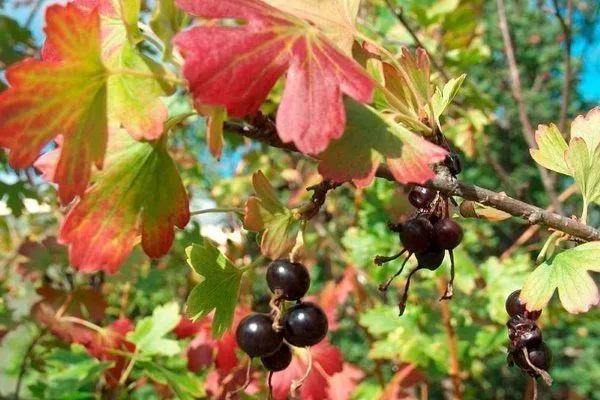
Trimming
Pruning is a cultural practice used on all berry bushes to increase their yield. Properly trained bushes produce 3-4 times more berries than neglected plants, where unwanted growth drains much of their life force. Pruning also helps achieve the following:
- destroy up to 85% of all parasites, fungi and bacteria;
- form a healthy crown (after pinching, the shoots stop growing in length, and several fruiting branches begin to develop on each of them);
- increase the process of photosynthesis by providing sufficient illumination to the remaining shoots;
- prepare the bush for winter (a properly formed bush will withstand severe frosts, even 10°C lower than an unkempt one);
- get a good harvest with excellent quality and commercial characteristics.
Of course, to achieve such results, it is necessary to choose the right time to carry out this gardening manipulation, as well as follow a number of rules for its implementation.
When to prune?
It's best to perform formative and rejuvenating pruning of shrubs in the fall, waiting until the leaves have yellowed and fallen. This allows the roots to absorb assimilants from older branches—organic compounds released during photosynthetic fixation and reduction of carbon dioxide in plants. These assimilants will help the shrubs survive the winter by acting as reserve nutrients.
After the summer harvest, only preventative or sanitary pruning can be performed. The spring flow of currant sap begins quite early, so bud break can be observed as early as March.
How to trim?
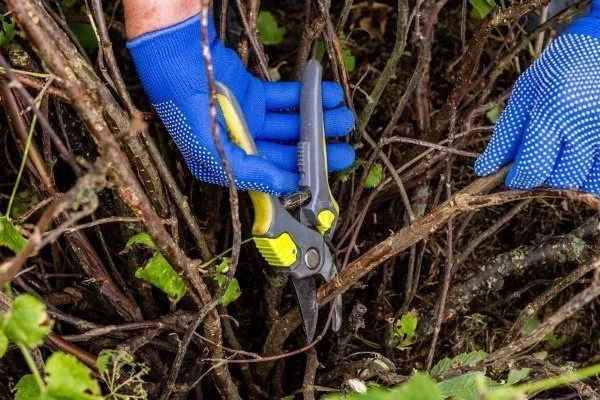
There are different varieties of shrubs, but the pruning principles are the same. The following branches must be removed with pruning shears:
- weak and thin, with few shoots;
- broken and diseased (damaged by pests, covered with moss);
- old ones (thicker than young ones, have dark-colored bark, even black, and a cinnamon-colored cut, not white, like young shoots);
- growing inside the bush and thickening it;
- lying on the ground around the bush.
It is advisable to cut the shoots completely to ground level, without leaving stumps.
Experienced gardeners recommend pruning young blackcurrant shoots by a third to encourage branching. White and red currants don't need to be pruned as much, as most of the berries appear at the top of the branches.
It is worth taking into account another varietal difference: in black currant, shoots that have reached 4-5 years of age are considered old, while in red and white currants, shoots that have reached 7-9 years of age are considered old.
To ensure the bush produces fruit well and remains disease-free, it needs good light and ventilation. To achieve this, trim the tops of overgrown annual shoots. These can be used as cuttings for propagating currants.
According to the rules of formation, a blackcurrant bush consists of 6-8 main branches of varying ages, while red and white currant bushes consist of 10-12. The crown should be renewed gradually: each year, leave five promising young shoots, and remove the same number of old ones.
Renewal and loosening of the tree trunk circle
Renewing the tree trunk circle is a gardening technique that involves renewing the old layer of mulch and clearing the area of fallen leaves. This is necessary to protect the area from various overwintering pests.
All collected mulch and fallen leaves must be put into compost or burned if the plant was sick in any way.
After clearing the area, carefully and shallowly loosen the soil with a hoe or pitchfork, keeping a distance from the bush to avoid damaging its sensitive root system. Loosening the soil will protect it from freezing during the winter frosts.
After tilling the soil, a new hole should be dug to facilitate watering and fertilizing. After this, the area should be mulched again.
Watering
In the fall, special attention must be paid to strictly adhering to the irrigation regime. The bushes produced abundant fruit throughout the growing season and are therefore extremely sensitive to soil moisture deficiency. Insufficient watering will significantly slow their growth, the berries will become smaller, and the plant's yield will be reduced.
In case of an excessively dry autumn, correct and abundant watering of the bushes will help prevent currants from freezing during the winter.
A currant bush or 1 square meter of planting area should be watered with 4-6 buckets of water to moisten the dry soil to a depth of 50 cm. During periods of heavy rainfall, irrigation is not necessary, especially if the bushes are properly mulched. If the weather is dry, water the plant until winter.
Top dressing
In the fall, it's essential to fertilize the soil, as during the fruiting period, the shrub draws all its organic matter, including potassium and phosphorus, from it. It's important not only to replenish these nutrients and nourish the plant for the winter, but also to prepare for next year.
If the berry harvest was completed by mid-summer, fertilizers with a fairly high nitrogen content can be used, but in August or autumn, they are strictly prohibited. The following are permitted for additional feeding during this period:
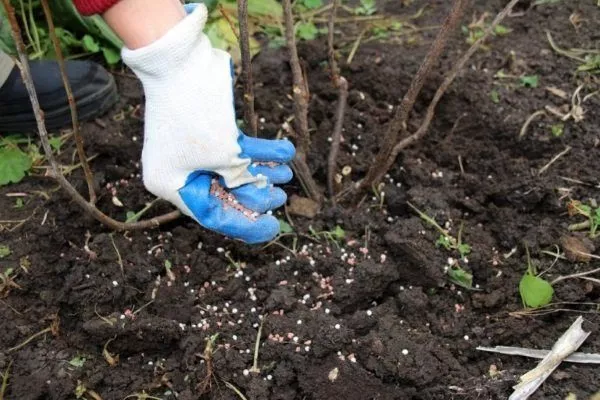
- Phosphorus and potassium fertilizers (superphosphate, potassium sulfate)These are long-lasting components that don't affect plant growth but instead increase the quantity and quality of berries during the fruiting period. The bush's root system begins actively absorbing them in late May, which inevitably impacts the quality of the berries. Thus, even under heavy loads, all the berries will be ripe and sweet. Fertilizers should be used in the form of concentrated granules.
- Compost, cow dung, chicken manureThese components are essential for the active development of vegetative mass, meaning they stimulate shrub growth. They should be applied before frost, sprinkled directly into the tree trunk circle. Over the course of 3-4 months, they decompose into simpler elements and are absorbed by the soil at the right time.
Humus and compost should be added to the soil as late as possible—in October or November. They will only decompose over a couple of months, so the plant will receive the necessary chemical elements closer to spring, when it will most need them.
- AshIt's applied both as fertilizer and as mulch, as it helps retain moisture under the soil for as long as possible. This prevents the soil from cracking in the spring, as can happen under garden shrubs or trees.
To avoid burning the plant or damaging its root system, gardeners should consider the following absolutely must-not-do items in the fall:
- Add concentrated humusThe nitrogen level in the manure is too high; it will take about three months for it to evaporate and retain only safe components. To avoid burning the plant and destroying vegetative mass, the fertilizer should be applied 25 cm from the plant stem. Only non-concentrated fertilizers, i.e., diluted with water, should be applied directly under the bush.
- It's too early to apply fertilizerIn this case, premature sap circulation in the plant will occur, leading to its death at the first frost.
- Apply fertilizer in excess of the amount stated on the label.An excess of nutrients will slow down the growth of the bush, so even with abundant watering, it will remain "in place" in the spring.
Proper fertilization will help prepare your currant bush for winter and ensure a bountiful, high-quality harvest in the future.
Pest and disease control
In the fall, currant care also involves treating the bushes for diseases and pests (bud mites, aphids), although most of this work is done in the spring. Chemical or biological sprays can be used for plant protection, with the following being particularly popular:
- Bordeaux mixture (1% solution);
- Bitoxybacillin;
- Fitoverm;
- Fitosporin;
- Aktara;
- Alatar;
- Fast;
- Topaz;
- Fundazol.
Experienced gardeners recommend treating the plant with systemic agents—fungicides and insecticides. These penetrate plant tissue and have a gradual effect throughout the entire plant, even in areas where the solution doesn't reach. This is how these agents differ from contact agents, which only work when they directly contact the inflammatory site or pest.
Spray the bushes when the temperature is at least 20°C. Otherwise, wrap them in plastic. Delaying treatment can put the entire plant at risk. For example, it could be infected by bud mites. Females penetrate currant buds and cause them to swell. When the infected buds open, the mites emerge and penetrate new buds.
To kill them, spray the plant with a 2% solution of Nitrafen or a 0.2% solution of Karbofos. Repeat the treatment after 10 days. After flowering, spray the bushes with a solution of Karbofos or a 1% solution of colloidal sulfur, but home remedies such as garlic, wormwood, or tobacco tincture can also be used.
Bending branches and covering them for the winter
Proper care of currant bushes in the fall will allow the plant to withstand even the most severe frosts and prevent branch breakage. Some gardeners neglect to bend branches and cover them, as currants are frost-hardy and can withstand temperatures as low as -25°C. However, temperatures can drop below this threshold, causing branches to die back and a less abundant harvest. Drafts can also cause similar consequences.
To prepare a bush for severe frosts down to -50°C and protect it from any negative impacts, it should be properly winterized. To do this, after the leaves have fallen, bend the branches so that they are as close to the ground as possible. Several methods can be used:
- Gather the branches into a bundle and tie a cobblestone to them. Then bend the bundle away from the center to prevent the branches from breaking and the stem from twisting. This is best done in late October, when the branches are still soft and easily twisted into a "ram's horn."
- Drive a stick or twig into the center of the bush and tie all the stems to it. Wrap it with agrofibre or other insulating material, and add mineral wool if desired. You can use one stick and one rope (thick nylon thread is best). To ensure the plant can breathe freely, avoid covering it with plastic. When sap flow is high, bend the stems to one side and cover them with a 5 cm layer of snow to keep the plant warm.
- Bend the branches down and weigh them down with something heavy, like a brick. It's best to use 6-7 bricks, distributed among all the branches, rather than just one.
- Cover the bent branches with soil, which is a good natural insulator. Under this cover, the above-ground portion of the plant can withstand temperatures down to -35°C. In the cases mentioned above, the plant can withstand temperatures as low as -50°C to -45°C.
- Small bushes can be covered with wooden boxes or burlap. Care must be taken to ensure that the wind doesn't blow away the covering, and when snow begins to fall, they can be removed completely, as snow provides the best shelter for plants.
- Stop watering 2 weeks before covering to reduce the risk of damping off.
- Before covering, treat the bushes with a fungicide to prevent fungal diseases.
- Use only natural materials for covering, such as agrofibre or spruce branches.
It's crucial to remove the covering promptly in early spring, otherwise the above-ground portions of the berry crop will rot. Furthermore, with the onset of thaw, it's crucial to remove snow, otherwise it will crust over and become heavy. The shoots won't be able to support its weight and will break.
Features of autumn care for young berry bushes
In the fall, the seedlings are planted in their permanent location in open ground. Afterward, all the leaves are removed and the shoots are cut using pruning shears to a height of no more than 40 cm from the soil surface. The cut area is treated with garden pitch.
To help the plant adapt before winter arrives, young bushes need to be watered generously for 2 weeks after transplanting, and then the intensity of watering can be reduced.
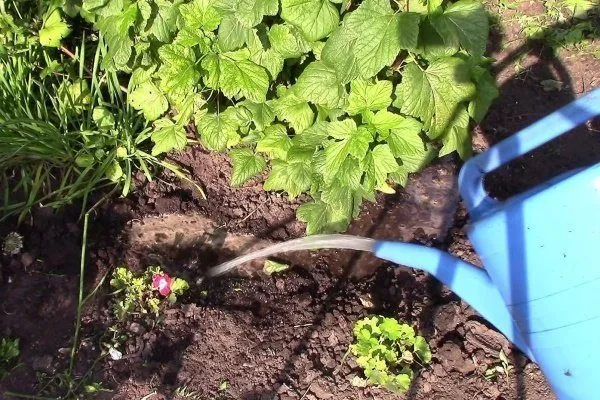
In addition, immediately after planting and watering the seedling for the first time, cover the area around the trunk with a layer of mulch at least 7 cm thick. For the next three years, the plant will not require additional feeding if the soil for the seedlings is properly prepared, fertilizing it with complex fertilizers, rotted manure, and wood ash.
Young currants are quite cold-resistant, but can be completely killed by frost in severe frosts. To prevent this, the base of the bush should be covered with the first snow and lightly compacted. Subsequently, as precipitation increases, a snow "fur" should be formed over the bush. The cover should be removed when the weather thaws.
Features of caring for different varieties of currants
There are different varieties of currant crops, although the red and black varieties are the most popular. Generally, autumn care for them involves the same steps, but there are some special considerations depending on the plant's variety.
Caring for red currants
The shrub requires proper care, taking into account the following rules:
- Plant the plant in early fall to allow it to fully establish itself over the winter. Prepare a hole in advance to allow the soil to settle and the fertilizer to soak in. After planting, compact the soil around the bush, water, and mulch. Prune the seedlings, leaving a pair of buds on each shoot.
- At the end of September or the beginning of October, if there is not enough rainfall, moisten the areas around the bushes.
- Feed the plant with organic and mineral fertilizers: add 10-12 kg of compost or rotted manure, 100 g of superphosphate, and 50 g of potassium chloride under each bush. Dig the area to ensure the fertilizer penetrates deep into the soil.
- In late autumn, after the fruiting period has ended and the dormant period has begun, carry out sanitary pruning – remove broken, damaged, dried and deformed branches.
Red currant shoots bear fruit longer than black currant shoots, so they do not require frequent rejuvenating pruning.
Caring for black currants
In autumn, when caring for black currants, special attention should be paid to the following rules:
- After harvesting, feed the shrub with potassium-phosphorus fertilizer to encourage the formation of future buds. For successful overwintering, superphosphate and potassium chloride should be added. It's best to apply the fertilizer in liquid form when watering the plant.
- Remove diseased branches and branches growing inward. In addition, to prepare the bush for winter, a full sanitary pruning should be performed. At the same time, it's a good idea to carry out preventative treatment against diseases and pests by spraying the bushes with Malathion and Bordeaux mixture.
- At the end of August, pinch the shoots to reduce the risk of powdery mildew developing in the fall.
- Remove fallen leaves from the area, add fertile soil or compost to the currant bushes, and lightly sprinkle with wood ash. In dry weather, moisten the soil by watering the bushes thoroughly.
- Spreading bushes are tied and supported on a wooden frame, which is installed around the perimeter of the bushes.
Autumn is also the best time to root blackcurrants. Cuttings should be planted in late September to allow them time to adapt and prepare for winter. Young plants don't require fertilizing or pruning, as these procedures are performed during planting.
Watch a video about preparing black currants for winter:
Autumn mistakes of gardeners
Beginner gardeners often make mistakes that subsequently reduce the quantity and quality of their harvest. These include:
- Applying fresh manure under the bushesIt is a useful fertilizer, but it should be applied under the bushes not in the fall, but in winter, when cold weather sets in and shoot growth stops. At this time, excess nitrogen in the manure will not have a negative impact, as it will break down into simple elements by spring, which the currants can easily absorb. Autumn application of manure should be avoided entirely if there is standing meltwater in the spring, as flooding completely washes away all the beneficial elements.
- Adding large amounts of organic matter under the bushesIf you add excessive amounts of organic matter after fruiting, the plant will develop excess foliage and forget to set flower buds. Overfed plants will be unable to stop growing in time and prepare for frost. Experienced gardeners also note that bushy bushes do not produce a bountiful harvest.
- Trimming a bush with improvised tools or by breaking off branchesSome gardeners break off branches or trim them with nippers, knives, or scissors. As a result, broken, torn, and damaged bushes don't survive the winter well and may become diseased or susceptible to pest attacks. Therefore, to prune bushes, you should use special tools:
- pruning shears – for branches up to 1.5 cm thick;
- lopper – for branches from 1.5 to 3 m thick;
- garden saw – for old branches;
- knife – for cleaning up unsuccessful cuts.
- Using synthetic materials to insulate bushesDuring the winter months, clean air must have unimpeded access to the branches. Covering the bushes with plastic or other similar materials can cause the plant to die. For covering, you can use agrofibre, mineral wool, spruce branches, fallen pine needles, or forest leaves.
Proper care of currant bushes in the fall can ensure a harvest of delicious berries in the future. Bushes must be properly pruned, fertilized, protected from pests and diseases, and prepared for winter. Care specific to the currant variety should also be taken into account.