
Tamerlan is a relatively new currant variety developed in Russia. It is distinguished by its large, delicate, and sweet berries, as well as impeccable productivity. The berries are transport-resistant and have an attractive appearance, making it ideal for both personal and commercial cultivation.
History of the variety's creation
Tamerlan is a blackcurrant variety developed by breeders T.S. Zvyagina and T.V. Zhidekhina at the I.V. Michurin Federal Scientific Center. The Black Pearl and Ojebyn varieties were used as the basis for the new variety.
In 2001, an application for registration was submitted, and after passing all the necessary tests, it was officially registered in the register of breeding achievements of Russia in 2004.
Description of the black currant variety Tamerlan
Tamerlan has won the hearts of gardeners thanks to its impressive yield. When harvest time arrives, the bush produces large clusters of delicious currants with excellent marketability.
Bush
The Tamerlan bush structure is typical of perennial shrubs. By the age of six, it reaches its maximum height—115 to 130 cm. The bush width does not exceed 100-130 cm.
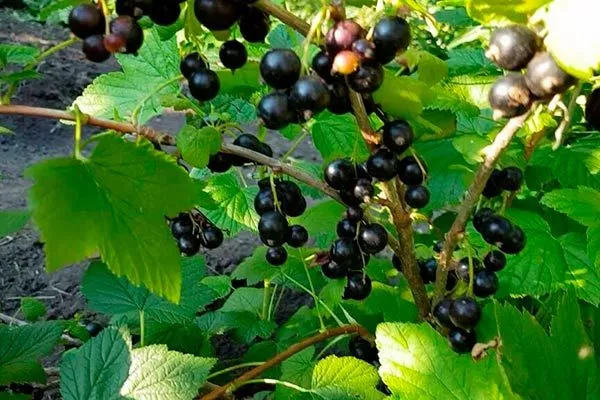
With age, the shoots become less dense and woody, but they are not pubescent and have a grayish tone with a yellowish tint, and the tops acquire a yellowish-brown color.
Other varietal characteristics:
- During the first year of life, the bush does not form lateral shoots, and branching begins in the second year. By the third or fourth year, the bush develops into a robust perennial branch with extensive branching, which grows actively and produces fruit.
- The buds on the bush are medium-sized, elongated-ovoid in format, located on a short stem and slightly deviating from the shoot.
- The leaf scar is rounded-wedge-shaped. The foliage is dense, creating a compact cover. The leaves are large, pentagonal, and have a deep greenish hue. On older branches, they are more saturated in color, unlike the young leaves located at the top.
- Shaped like a heart, they have a rough, leathery surface with a depression along the central vein. The central part of the leaf is pointed and significantly wider than the spaced lateral segments, sometimes with additional lateral projections.
- The petioles are thickened, green and of medium length, slightly inclined downwards relative to the stem.
- The buds are small, bell-shaped. The edges of the tubular calyx have a pinkish tint, and the petals are yellowish. There are five stamens within. The petals are slightly curved. The flower racemes are multi-flowered, reaching 5-7 cm in length, and are cylindrical or straight in shape.
- The flowering stem is thickened and the petiole is absent. The duration of flowering depends on weather conditions – under favorable average temperatures, flowering lasts approximately 10-15 days.
When planting currants from a seedling, the root system does not have a dominant root, but has a well-developed system of fibrous root shoots.
Berries
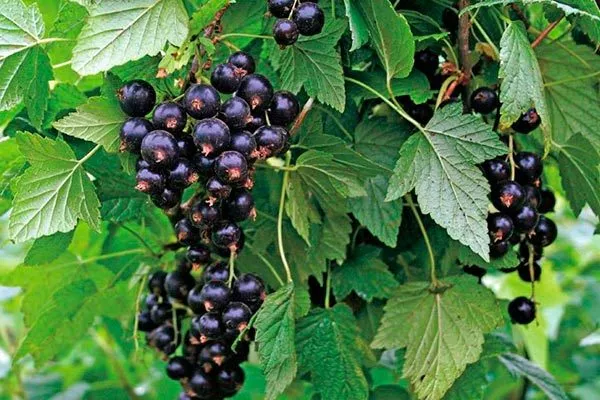
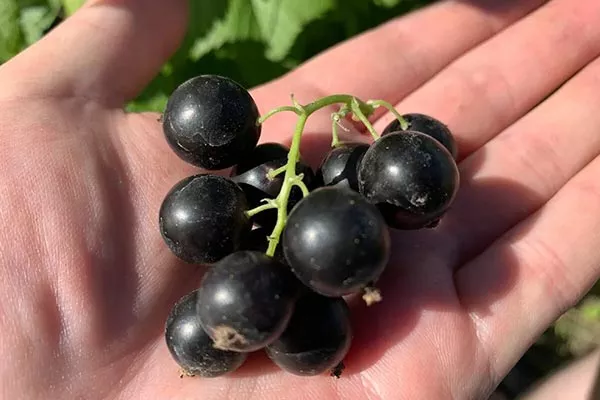
Tamerlane currant berries are large. They have a smooth, hard, dark-black shell. These round berries weigh between 1.3 and 2.4 g. The center of the firm fruit contains egg-shaped seeds.
Characteristics of the variety
The Tamerlan currant variety is distinguished by its productivity and rapid ripening. Its berries are large and tasty, suitable for both home-grown and commercial production.
Taste and benefits
Tamerlan berries are characterized by a pleasant sweetness with a slight tartness. The variety earned a high rating of 4.6 out of 5 possible points in the tasting. The pulp of these berries provides juice and aroma, and their dry matter content reaches only 17.2%.
The Tamerlan currant berries contain a wide variety of dry extractive substances, including sugars, nitrogen-containing compounds, tannins, organic and phosphoric acids, pectins, glycosides, antibiotics, and other components.
Scope of use
Currants are versatile in their uses—the berries are delicious freshly picked, as an ingredient in compotes, juice, jam, jellies, and baked goods. They can be frozen for long-term storage, up to 8-12 months. This preserves most of their nutrients, including vitamin C.
Blackcurrant leaves contain essential oils, making them a valuable ingredient in vegetable preserves and as a flavoring agent. They are also used to brew a medicinal tea.
Ripening time
Tamerlan is an early-ripening variety, and the ripe berries can be harvested as early as July 15th. Ripening occurs sequentially, starting from the lower parts of the cluster, and continues for 6-10 days.
Productivity
Tamerlan's productivity is high, reaching almost 4 kg per mature bush. In commercial settings, up to 12.9-13 tons can be harvested per hectare. For the best yield, regular irrigation, fertilization, soil loosening, and weeding are recommended.
Resistance to adverse climatic conditions
The official description of the variety notes its excellent resistance to low winter temperatures. However, it's worth noting that this resistance is only achieved within the crop's primary cultivation zones and under more favorable climatic conditions.
This variety has average tolerance to high temperatures and drought, so special attention should be paid to watering.
Suitable climate
The Tamerlan currant is successfully growing in the Central Black Earth Region and the Lower Volga region. Special measures will need to be taken in other areas:
- in the south – During the summer heat, water and shade plants frequently;
- in the Central Belt and more northern regions – cover for the winter and properly prepare for the cold season.
How to plant?
Growing the Tamerlan blackcurrant variety doesn't require any specific methods compared to other varieties. The key is to start by purchasing healthy, strong seedlings and following the correct planting procedure.
Optimal timing
The best time for planting is in the fall, from September 20 to October 15. Planting can be done throughout the growing season, but the best survival rate is observed among plants planted between August 20 and 31.
Site requirements
To ensure young currant seedlings successfully take root in your garden and subsequently delight you with a bountiful harvest, it's important to choose the right location. Site criteria:
- sufficient lighting – currant bushes prefer to grow in sunny areas or in light shade, but if the place is too dark, the yield will decrease;
- fertile, loose soil with weak or neutral acidity - such soil provides plants with nutrients, promotes root ventilation and the penetration of solar heat and oxygen;
- the depth of groundwater is at least 75-100 cm from the surface - currants appreciate moist soil, but when it accumulates, the roots begin to rot;
- Protection from cold winds – drafts and wind reduce the immunity of bushes, which leads to a decrease in fruiting and also increases the risk of damage from diseases and pests.
- ✓ The optimal soil acidity for Tamerlan currant should be within the pH range of 6.0-6.5.
- ✓ The distance between bushes when planting should be at least 1.5 meters to ensure sufficient ventilation and lighting.
Tamerlan currant seedlings should be purchased exclusively from specialized nurseries. Young bushes should have a well-developed root system with two or three main roots, one or two shoots, and a healthy appearance. Two-year-old seedlings, approximately 35-45 cm tall, are ideal for planting.
Preparation
Successful planting of seedlings requires careful site preparation. The following steps are important:
- At least three weeks before the planned work, thoroughly dig up the soil, removing all plant remains and their roots.
- Dig planting holes about 45-55 cm deep and of a diameter corresponding to the depth, placing them at least 150 cm apart.
- Add 8-10 kg of compost, 180-250 g of superphosphate, and 40-50 g of wood ash to each hole, then cover with a thin 10 cm layer of garden soil. The amount of fertilizer depends directly on the level of soil fertility.
Planting step by step
Instructions for planting Tamerlan currant:
- Fill the bottom of the hole with 5-6 liters of water, which you have preheated.
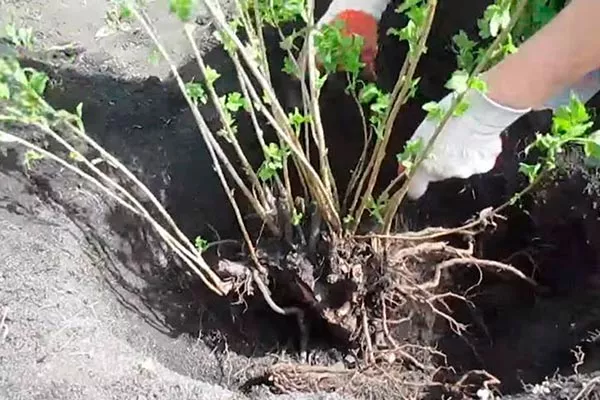
- Carefully place the plant roots on the bottom at a 45 degree angle, with the root collar at a depth of 4-6 cm from the top layer of soil.
- Carefully distribute the roots over the entire surface of the soil mound consisting of a nutrient medium to prevent them from twisting.
- Fill the hole around the seedling with loose soil, lightly compacting it with your hands.
- Water each young currant bush with 10-12 liters of warm water.
- After the water has completely absorbed, cover the area around the plant with peat or dry sawdust.
Care instructions
To get a bountiful harvest of sweet and healthy berries every year, you should follow several important conditions:
- Throughout the summer, it's important to regularly water the soil around the bushes, ensuring it remains moderately moist. Each bush will require approximately 25 liters of water, and watering should be done at least once every five days.
- In March, before the buds appear, 80-90 g of ammonium nitrate and 50-60 g of urea are added under each bush, after which it is necessary to loosen the soil around the currant bushes.
- Weeds should be removed as soon as they appear, and the soil around the bushes should be loosened to a depth of 5 cm - this process is most effective if carried out after watering.
- A protective layer of peat or straw will keep the soil moist and loose for longer. So, don't skip mulching.
- In June, fertilize with 10-14 kg of compost, which will stimulate the formation of numerous ovaries.
- When the time comes for the berries to ripen, the bushes are sprayed with a solution made up of 10 liters of water, 5 g of potassium sulfate, 45 g of iron sulfate and 2-3 g of boric acid, which ensures the correct and timely ripening of the fruits.
- Towards the end of September, currants are fed with mineral mixtures, according to the instructions on the package, which helps strengthen the plant and its successful transition into the winter period.
Pruning and shaping the bush
To maintain the aesthetic appearance and health of blackcurrant bushes, regular pruning is essential. This process not only helps give the bush a healthy shape, but also ensures uniform ripening of the berries and serves as a disease and pest prevention method.
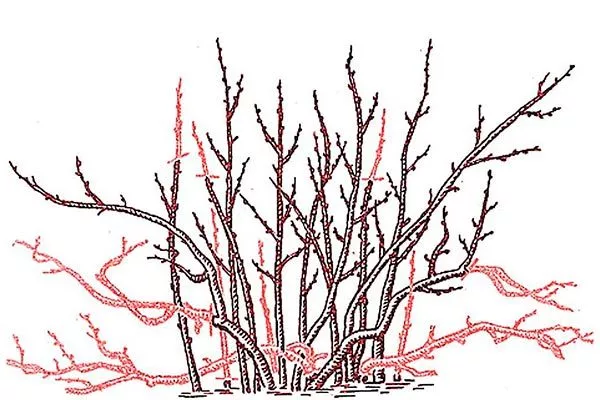
Pruning techniques include the following rules:
- At the beginning of spring, dry and damaged branches are removed;
- a sharp tool is used for the work, and it is recommended to treat the cut areas on thicker branches with garden pitch;
- in summer, branches remaining after spring sanitary pruning are shortened by 5 buds;
- at the end of September, formative pruning is carried out, during which underdeveloped stems growing inside the bush are removed;
- In autumn, rejuvenating pruning is recommended, during which 3-year-old shoots are left on the bush, on which berries will form next year;
- On each bush, no more than 12-15 stems should be left, and the remaining branches should be removed.
Wintering
To ensure your plant survives the winter and begins its vigorous spring awakening immediately after the warmer weather arrives, carefully prepare it for the cold. Here's what to do:
- clear the soil around the bush of fallen leaves, plant debris and debris;
- in case of insufficient precipitation, spray the plants once a week, using 20 to 30 liters of water per bush so that the soil is saturated to a depth of approximately 50-60 cm;
- Dig up the soil around the bushes to destroy pest larvae overwintering in the soil and increase fruiting in the next season;
- in October, sprinkle the currant trunk with earth, creating a small mound, and protect the soil in the beds with dry straw or a layer of peat;
- when the temperature drops below zero, the trunks of the bush are tied with a rope in the form of a spiral, connecting them into a compact bundle and fixing the rope at the top of the bush with a clothespin;
- After the snow falls to the ground, it is carefully placed on the branches of the plant, completely covering the currants - this provides additional protection from frost and winter wind.
Pest and disease control
If you follow established planting and care standards, the Tamerlan currant variety demonstrates a high level of protection, making it resistant to various diseases and pests.
However, if growing conditions are not ideal or care guidelines are not followed, plants may be at risk of infection and insect attacks:
- Anthracnose – This is a fungal disease that manifests itself as small, brown, raised spots on the foliage. Over time, this infection spreads throughout the currant plant, causing the leaves to turn yellow and dry out.
To get rid of the fungus, remove the affected parts of the plant and treat the currants with a Bordeaux mixture solution at a concentration of 1-3%. The concentration depends on the severity of the fungus. - Powdery mildew - This is a fungal infection that causes a characteristic white coating. It initially affects the leaves but can then spread to the fruit, causing them to become deformed and fall off.
To combat this fungus, it is recommended to use an iodine solution at a ratio of 1 bottle per 10 liters of water or Fitosporin. Both methods require generous spraying of affected plants. - Kidney mite. This insect attacks bud formations on currant bushes before flowering, causing them to enlarge and become rounded. As a result, ovaries fail to form, leading to a decrease in currant yield.
To combat the mite, it is necessary to remove the affected buds and treat the bushes with sulfur-containing chemicals, such as Kinmix. - Firefly. This grayish butterfly lays its eggs in currant blossoms, and the hatched larvae feed on the berry juices. Affected bushes are covered in a fine webbing, covering the branches and fruit, as well as damaged berries that are unsuitable for transportation and storage.
This plant is not treatable, but the moth's presence can be prevented by covering the soil around the bushes with a layer of roofing felt. This prevents the insects from emerging from the soil where they overwinter, leading to their death. - Fruit sawfly. The larvae of this pest can completely destroy a blackcurrant crop by eating the berries from the inside. The fruits become misshapen and fall prematurely, while the larvae, trapped in the soil, migrate to healthy bushes.
To stop the spread, it is necessary to collect all damaged fruits and treat the currants with any insecticide.
Prevention of plant diseases and protection from pests is achieved through the following measures:
- autumn digging of the soil around the bush and between the rows;
- removal of fallen leaves, weeds, broken branches;
- regular pruning of plants;
- strict adherence to the watering and fertilization regime;
- loosening the soil surface;
- recycled treatment of soil and shrubs with Bordeaux mixture at intervals of 10-12 days.
Harvesting and storage
The Tamerlan variety is distinguished by its firm berries, which allow them to withstand long-distance transportation and preserve well. To extend their shelf life, it is recommended to can or freeze fresh berries. Washing should be done immediately before eating to prevent the currants from decomposing.
When harvesting and storing Tamerlan currants, the following features should be taken into account:
- collect the berries when they turn black;
- do this early in the morning or late in the evening in dry and not sunny weather to avoid spoilage due to moisture;
- the berries must be carefully separated from the stems and placed in a shallow and wide box in a 3 cm layer;
- Freshly picked currants should be immediately placed in the refrigerator or cellar;
- For transportation and long-term storage, select berries of the correct shape with smooth and elastic skin without any damage;
- Transportation of currants should be organized immediately after harvesting, since during storage the berries may lose their shape and elasticity;
- At a temperature of around 0 degrees Celsius, fresh currants can be stored for up to a month by packing them in a plastic bag, releasing the air and closing it tightly, then placing them in the refrigerator.
Reproduction
There are two main methods for propagating black currants:
- Cuttings. In the fall, young shoots are removed from the bush, the leaves are removed, and two cuttings with 5-6 buds are formed. To ensure strong plants, the cuttings should be more than 5 mm in diameter. The cuttings are rooted in previously prepared soil at an angle, leaving 1-2 buds exposed.
- Layers. They are taken from the healthiest bushes, thereby replacing less profitable plants. In the spring, 2-3 two-year-old branches should be attached to the ground, covered with peat, and an earthen parapet should be built. By autumn, roots will form where the branch is covered with soil.
Positive and negative qualities
Reviews
Tamerlan currant is easy to care for and winter-hardy, making it attractive to beginning gardeners. This versatile variety produces large berries suitable for fresh consumption, freezing, and canning.