
The Sokrovishche currant is an ideal choice for those who value consistency and quality. It easily adapts to various climates and produces an excellent harvest even in the most challenging weather conditions. This variety requires little care and tolerates winter frosts well, making it attractive to both novice and experienced gardeners.
Story
The currant was developed at the M.A. Lisavenko Siberian Horticultural Research Institute, located in the Altai Krai, with an emphasis on adaptation to the region's conditions. The author is L.N. Zabelina, PhD in agricultural sciences.
Among the variety's "parents," the famous Nestor Kozin stands out—an early, stable, large-fruited variety with excellent flavor, possessing only two drawbacks: a weak bush and high soil requirements. The second "parent" was the selected Black Bunch variety (5-67-2), which is resistant to winter frosts and cold during the flowering period.
Botanical description
Blackcurrant berries are rich in vitamins and beneficial microelements, making them more valuable than red varieties. The plant's leaves are also used in cooking, for preserving and pickling.
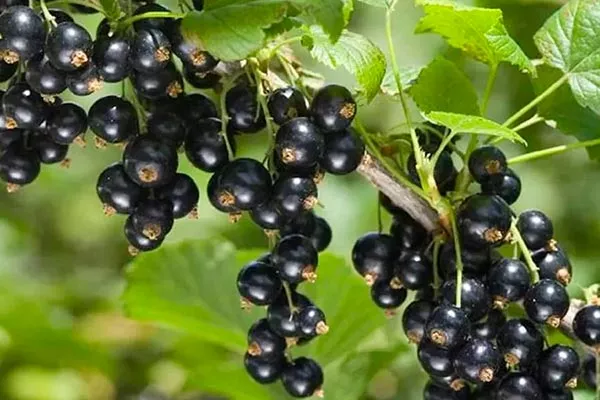
One of the most striking representatives of black currant is the Treasure variety:
- Bush. Characterized by medium height and density, the shoots are sparsely branched and do not spread out. The plant reaches a height of 1.3-1.5 m. The branches are straight, medium thick, and slightly pubescent.
Young shoots are green, turning brownish as they mature. Buds are solitary, light green, medium-sized, and ovoid. - Leaves. They are light green in color. Their medium-sized, wrinkled leaf blades consist of three lobes. The leaves are attached to the shoot at a 45° angle by green petioles.
- Flowers. Medium-sized, they feature creamy or yellow-green petals with pinkish sepals. They bloom simultaneously in spring. The inflorescences are formed by small flowers gathered in racemes, usually three in each.
The flowers are shaped like small cups. The peduncles are short and slightly pubescent. - Fruit. Large, oval-shaped, weighing between 2 and 2.5 grams. The skin is a rich black-blue color, dense in texture, and matte. It contains numerous seeds.
Blackcurrants are rich in vitamins and valuable microelements, making them superior to red varieties in their beneficial properties.
- ✓ The variety has high resistance to powdery mildew and anthracnose, which reduces the need for chemical treatments.
- ✓ The berries of the Sokrovishche variety have a dense skin, which makes them ideal for transportation and long-term storage.
Characteristics
The currant cultivar "Sokrovishche" (Treasure) possesses qualities that make it an excellent choice for growing even in the harshest weather conditions. It's important to understand the crop's key characteristics:
- Self-fertility and pollinators. The variety is 65% self-fertile, so even a single plant will produce a bountiful harvest. However, to maximize the yield, it's recommended to plant similar varieties nearby.
- Ripening period. This is a mid-season variety, although it is sometimes considered early due to its extended fruiting period, which lasts several weeks. Harvesting begins on July 20, approximately 40-50 days after flowering.
- Productivity. The crop is highly productive: 4-5 kg of berries are harvested per bush, and up to 6.3 tons can be harvested per hectare. With intensive farming, yields can reach 17.8 tons per hectare. The fruits are easy to pick: they do not fall off, separate easily from the stalk, and are suitable for mechanical harvesting.
- Taste qualities. The berries have a sweet, pleasantly tart flavor. Agronomists rate them 4.5 out of 5. This variety is ideal for making preserves, jellies, marmalades, juice, wine, and liqueurs.
- Composition of berries. Blackcurrant is a berry rich in vitamins and nutrients. 100 g of the fruit contains 102 mg of vitamin C, 90 mg of ascorbic acid, and over 8% saccharides. The acidity is 2.5%, and the dry matter content reaches 14.5%.
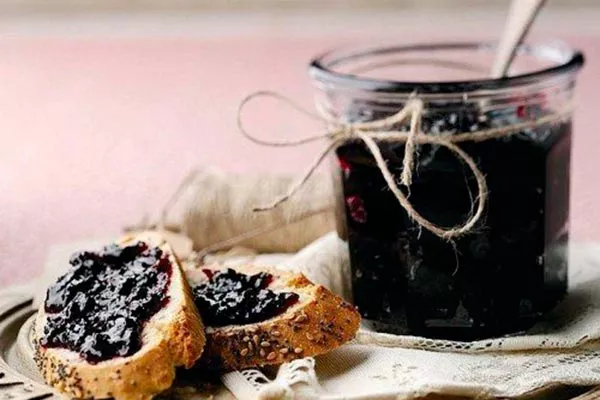
- Application. The berries are eaten both fresh and preserved. They make delicious jams, preserves, compotes, and marmalades.

- Necessary climatic conditions. The variety is intended for cultivation in Western and Eastern Siberia, where a sharply continental climate prevails with harsh winters and changeable, unstable summers – short, often accompanied by prolonged cold rains and dry heat reaching +35…40°C.
- Winter hardiness. The plant is characterized by high frost resistance. The shrub easily withstands temperatures down to -40°C, provided the root system is securely covered with snow. In northern regions, it is recommended to mulch young seedlings with sawdust for the winter.
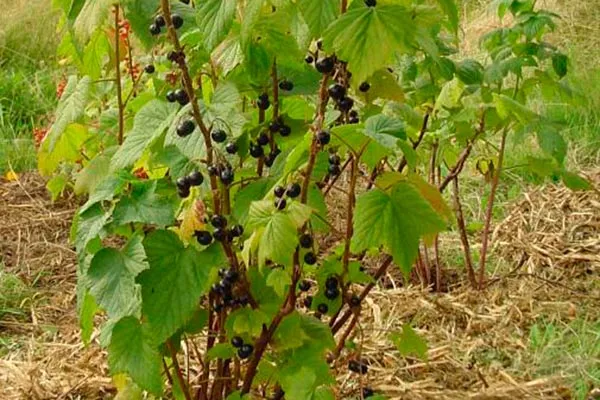
The variety does not tolerate prolonged drought, especially during the fruit ripening period, and may respond to lack of moisture by dropping ovaries. However, rainy and cool summers do not negatively impact the harvest.
- ✓ The optimal soil acidity for currant Treasure should be within the pH range of 6.0-6.5.
- ✓ To prevent ovary drop during the berry filling period, it is necessary to ensure regular watering, especially during dry periods.
Landing features
The crop thrives in sunny locations. It's best to protect the plants from strong winds and drafts.
Choosing a location
Avoid planting shrubs near tall plants, as they will create shade and draw nutrients from the soil. The Sokrovishche variety tolerates light shade well.
For optimal growth and development, plant seedlings in nutrient-rich soil with a neutral or slightly acidic pH. If the soil is too acidic, add wood ash, slaked lime, or chalk. If the soil is poor, fertilize it before planting.
Planting dates
For best survival, plant seedlings in the fall, when temperatures are 12-15°C. This will give the plants time to establish roots and withstand the winter cold well before frost sets in.
Next season, new shoots will appear on the bushes. Seedlings planted in the spring will be slightly behind in development.
Site preparation
The soil should be slightly acidic, close to neutral. If the soil is too acidic, additional amendments such as dry chalk or wood ash are required.
To reduce soil acidity, add 0.5-1 kg of dry matter per square meter. Adding crushed eggshells to the planting holes is helpful.
Selection of seedlings
When purchasing blackcurrant bushes, inspect the plant carefully. Pay attention to the condition of the shoots, branching, and root system for signs of rot, drying, or damage.
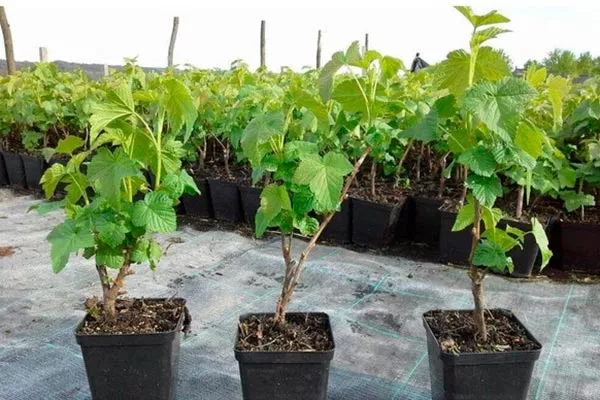
The main criterion for selecting a seedling is the root system—the roots should be at least 20 cm long. Experienced gardeners recommend choosing a two-year-old seedling, as it will quickly establish itself and begin bearing fruit.
The shoots should show healthy buds, and the bark of the branches should be undamaged. If the seedling is in a container, remove it and its root ball for inspection—it should be tightly intertwined with young roots.
How to plant correctly?
Two months before planting, prepare the soil: clear the area of weeds and dig to a depth of about 50 cm. The soil should be slightly acidic and fertile. For acidic soils, apply lime in advance.
Follow these recommendations:
- If the soil is clayey or dense, improve it with sand and peat.
- On the day of planting, place the root system of the seedling in water so that the roots are saturated with moisture and straighten.
- While the plant is in water, prepare a hole up to 50 cm deep.
- Add humus, then pour in 5 liters of water.
Step-by-step instructions:
- Place the seedling in the hole at an angle so that the growth point is 6 cm above the soil level, and cover with soil.
- After planting, trim the bush, leaving 3 buds.
- Compact the soil and water the seedling (2 liters of water).
- Mulch around the plant with sawdust or humus.
Plant currants of this variety at least 1 m apart. The optimal distance between rows is 2 m.
Basic rules of care
The Sokrovishche currant is an easy-to-grow plant, but proper care is essential for good growth. It requires standard agricultural practices.
Soil cultivation
Regularly monitor the soil. Weed as needed, and loosen the soil twice a year: in the spring (when fertilizing) and in the fall (after harvest). Loosen the soil only superficially to avoid damaging the plant's roots.
Mulch the soil in the spring, when the soil has warmed up, or in the fall to protect against freezing. Renew the mulch layer throughout the season as it decomposes or becomes compacted.
Watering
There are four main periods for watering black currants. Water the crop:
- during the formation of ovaries;
- during the period of berry ripening;
- after harvest;
- at the end of autumn, before the first frosts.
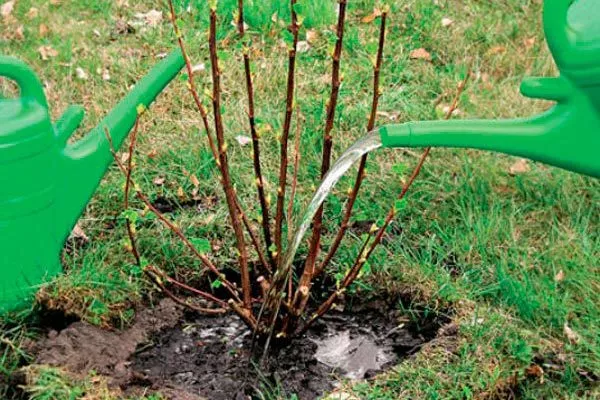
Water generously, but avoid stagnant water, especially during the fruiting period. If there is no regular rainfall, apply water directly to the roots, using 10 liters per plant.
Fertilization
Starting in the fourth year, reduce the amount of urea to 30 g per bush. In the fall, apply the following components:
- 5 kg of organic matter (bird droppings, compost, manure);
- 20 g potassium sulfate;
- 50 g Superphosphate.
Currants need liquid fertilizers 4 times per season:
- during bud break;
- after flowering;
- during the period of berry filling;
- after harvesting.
For liquid organic fertilizers, use an infusion of bird droppings (1:10), slurry, or cow dung (1:4). For mineral fertilizers, dissolve 20 g of phosphorus and 10 g each of potassium and nitrogen in 10 liters of water. Pour 10 liters of liquid fertilizer under each bush.
Trimming
Pruning is an important part of blackcurrant care, determining its yield and the longevity of the bush. Pruning should be done annually. The optimal time is late autumn, after the leaves have fallen.
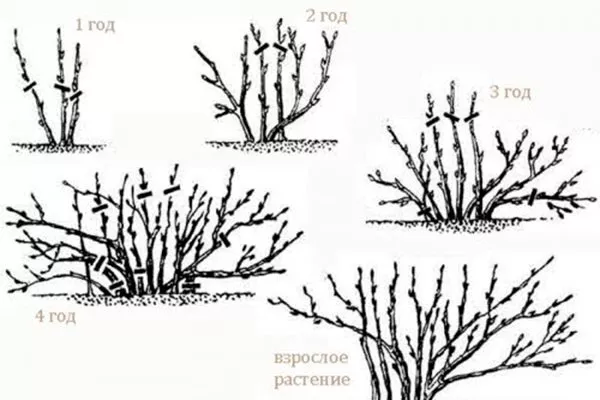
Follow these recommendations:
- 1st year: Cut off all branches, leaving no more than 4 buds.
- 2nd year: shorten the second-order shoots, leaving 4-7 buds on each.
- 3rd year: Reduce perennial branches and strong annual shoots by 1/3.
- 6-7 years: remove old shoots to the base and continue to form the bush according to the previous scheme.
Carry out additional pruning in early spring, before bud break. At this time, trim away frost-damaged tops and branches broken during winter. Remove dry and damaged shoots at any time of year. Use clean, sharp pruning shears or garden shears for this procedure.
Shelter for the winter
In northern regions, it's important to protect the crop from severe frosts. To do this, create a layer of mulch around the plant using peat, sawdust, or straw—this will help retain heat in the soil. Young seedlings should also be covered with agrofibre or spunbond.
It's important that the cover isn't too tight to avoid moisture accumulation, which can cause rot. Monitor the cover's condition to prevent damage during snowy winters.
Diseases and pests
One of the advantages of the Sokrovishche variety is its high resistance to diseases and its low susceptibility to insect attacks. However, preventative measures are still necessary.
It is important to start treatment in a timely manner:
| Disease/Pest | Symptoms | Treatment | Processing time |
| Powdery mildew | A greyish coating appears on the leaves. | Nitrafen solution (200 g per 10 l of water). | In spring, before the buds open. |
| Anthracnose | Accompanied by brown spots, then black bumps form. | Nitrafen solution (200 g per 10 l of water) – 2-3 treatments with an interval of 2 weeks. | Before the buds open. |
| Rust | The leaves and shoots are covered with red or orange "cushions". | Bordeaux mixture 1%. Copper sulfate solution (100 g per 10 l of water). | Before flowering and after harvest. |
| Spider mite | Cobweb formations cover the green mass. | Vertimek (5 ml per 10 l of water) – 1 treatment for minor damage, 2 for major damage. | Spring (at a temperature of at least 15 degrees), after the leaves have blossomed and after harvesting. |
| Glass-box | The insect damages the internal tissues of the plant, often infecting branches. | Fitoverm (40 g per 10 l of water). | After flowering. |
| Aphid | Feeds on leaf juice. | Iskra (1 tablet per 10 liters of water). Fufanon (10 g per 10 liters of water). Fitoverm (40 g per 10 liters of water). | Before bud break, after leaves open and 30 days before harvest ripening. |
| Currant sawfly | The berries become ribbed, ripen prematurely and fall off. | Treatment with chlorophos solution (20-30 g per 10 l of water). | After harvesting. |
Harvesting and storage
Blackcurrant "Treasure" begins blooming early—in early May—and the berries ripen to mid-season maturity in the second half of July. Harvest the berries when they are fully ripe, carefully removing them from the bush.
Berries stay fresh for up to 2 weeks at temperatures no higher than +10°C. Refrigerated at 0°C, the shelf life increases to 1.5 months, and at -3°C, the fruit retains its quality for up to 3 months. Currants are also well-suited for transportation.
The variety is ideal for fresh consumption and for winter preparations, while the berries retain their beneficial properties in any form.
Reproduction
You can increase the number of seedlings in your garden at home, even without much experience. There are several methods for propagating the plant, each with its own characteristics and advantages.
Propagation by cuttings
For this project, use rooted cuttings, both woody and green. Follow these recommendations:
- Select pieces about 1 cm thick and cut them into pieces 15-20 cm long.
- To retain moisture, treat the top and bottom of the cuttings with melted paraffin. Then wrap them in damp paper and then in plastic wrap.
- Bury the prepared cuttings in the snow or place them on a shelf in the refrigerator until warm weather arrives.
- When the temperature stabilizes, plant the cuttings in the soil at a 45° angle, leaving a distance of up to 20 cm between them. It is important that 1-2 buds remain above the soil surface.
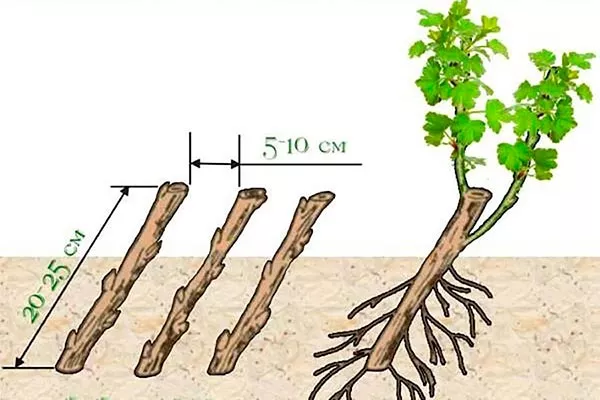
Moisten the planted cuttings, cover them with a layer of mulch, and then cover them with plastic film to create greenhouse conditions. Remove the supports as soon as the first green leaves appear. Water as needed.
Propagation by layering
Both woody and green cuttings are suitable for this procedure. Cut them into pieces about 1 cm thick and 15-20 cm long. To retain moisture, treat the top and bottom of the cuttings with melted paraffin.
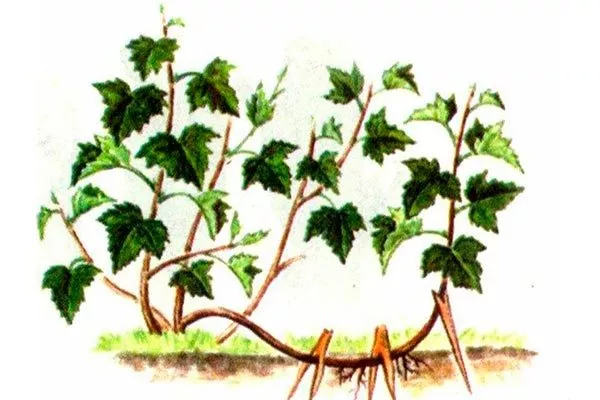
Next, follow these steps:
- Wrap the cuttings in damp paper and cover with plastic film.
- Store the preparations in the snow or in the refrigerator until warm weather arrives.
- When the temperature stabilizes, plant the cuttings in the soil at a 45° angle with a distance of up to 20 cm between them, leaving 1-2 buds above the soil surface.
After planting, moisten the seedlings, cover with mulch, and cover with plastic film to create greenhouse conditions. When the first green leaves appear, remove the covering.
Pros and cons
This variety has its advantages and disadvantages, which should be considered when planting to avoid potential problems in the future. Advantages of the Sokrovishche variety:
Among the negative qualities, some gardeners note the plant's rapid aging, requiring regular annual pruning to rejuvenate the bushes. Maintaining a high yield requires high-quality care.
Similar varieties
| Name | Disease resistance | Ripening period | Berry size |
|---|---|---|---|
| Treasure | High | Mid-season | Large |
| Vasilisa | Average | Early | Average |
| Bagheera | High | Late | Large |
| Friendly | Average | Mid-season | Average |
| Daughter of Druzhnaya | High | Early | Large |
Blackcurrant varieties such as Vasilisa, Bagheera, Druzhnaya, and Doch Druzhnoy share similar winter hardiness and disease resistance. These varieties are highly productive and produce large, tasty fruits.
Reviews
The Sokrovishche currant is one of the best options for gardeners seeking a consistent, high-quality harvest. This variety has earned its popularity thanks to its excellent characteristics: early ripening, high frost resistance, and good productivity. The crop demonstrates good disease resistance but requires careful care.