
The Yadrenaya currant got its name for a reason – it's one of the largest-fruited varieties in Russia. Its berries reach 2 cm in diameter and have a rich currant aroma. Let's learn how to plant this variety, what makes it special, and what are the specifics of its cultivation.
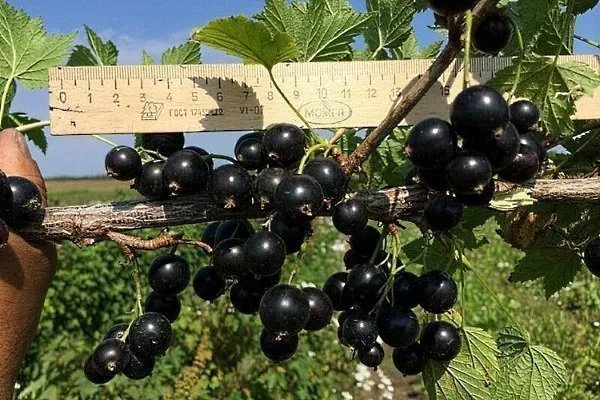
Currant variety "Yadrenaya"
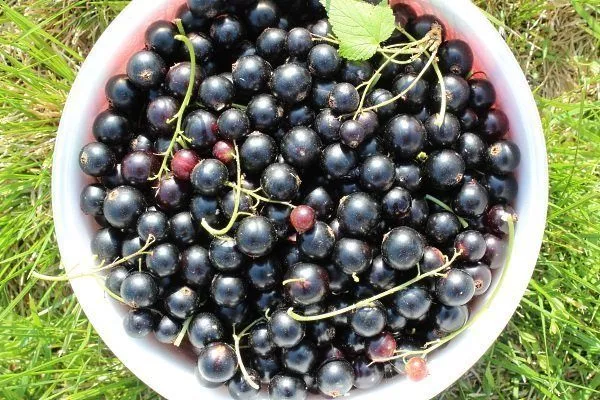
With proper care, each Yadrenaya currant bush can yield up to six kilograms of berries
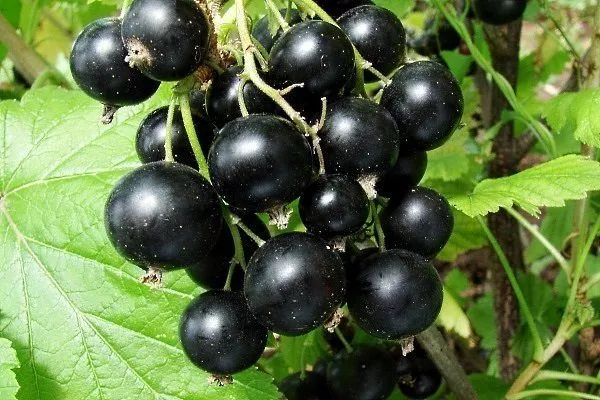
The main advantage of the Yadrenaya variety is its large fruits, which is why they are often mistaken for grapes.
History of the variety's appearance
The Yadrenaya currant was developed in the late 20th century at the Siberian Horticultural Research Institute. It immediately caused a sensation among gardeners – its berries were larger than the vast majority of varieties. To this day, Yadrenaya remains one of the largest-fruited varieties of black currant.
A hybrid with giant berries was created by cross-pollinating different currant varieties. Breeders used "Favorite of Altaya," "Dikovinka," and "Bredtorp" to develop the new variety. The variety has been listed in the State Register since 2000. It is recommended for Western Siberia and the Volga-Vyatka region.
Description of the Nuclear Currant
Brief botanical description:
- Bush. Compact, medium-spreading, sparsely foliated. Grows up to 1.5 m in height and width. The crown is not dense. The shoots are upright, medium-thick, green with a blush and sparse pubescence.
- Leaves. Dark green, five-lobed, wrinkled, and vesicular. The veins are pinkish in color, pressed into the surface of the blades. The leaf edges have sharp, slightly curved teeth with creamy spots.
- Fruit. Large, black, shiny, and perfectly spherical, the skin is thick and fleshy. They grow in clusters of 6-12. The fruit contains numerous seeds—they are large but soft.
- Flowers. Small, white-pink, with a pleasant sweet aroma, 4-10 fruits form on a stalk.
The size of the Yadernaya Smorodina berries is comparable to a five-ruble coin; due to their large size, they are often confused with grapes.
Characteristic qualities
This variety blooms in mid-spring and bears fruit in mid-summer. It's considered self-pollinating, but it's recommended to plant it near other blackcurrant varieties.
Main characteristics of the Yadernaya currant:
| Parameters/characteristics | Meaning/Description |
| Ripening period | mid-late (ripening – mid-July) |
| Productivity | 4-6 kg per bush, 6-12 t per 1 ha |
| Frost resistance | high |
| Drought resistance | high |
| Disease resistance | resistant to speckles, bud mites and powdery mildew |
| Fruit weight | 5-6 g |
| The taste of the fruit | balanced sweet and sour |
| Transportability and shelf life | unsatisfactory |
| Duration of fruiting | 6-7 years old |
| Fruiting | in the 2nd-3rd year of planting |
Other characteristics of the variety:
- The growth rate of shoots is average.
- The berries separate easily from the stem. The skin is not damaged when the fruit is pulled off.
- About 600 berries ripen on one branch.
- Ripe berries can be kept on the bush for 3-5 days – they will become sweeter.
Cross-pollination affects the flavor and fruit yield of Yadrenaya. This is likely why taste reviews range from "excellent" to "mediocre." This is reflected in the fruit tasting scores, which range from 3.8 to 5.
A review of the Yadrenaya currant variety is presented in the following video:
Suitable region and climate
The variety was bred for the Altai Mountains, which have a predominantly continental climate. Winters are harsh and summers are dry. The highest yields of Yadrenaya are observed in Altai and the adjacent regions of Siberia.
This large-fruited currant is popular throughout almost all of Russia. It grows well in the Volga region, the Central Russian region, the mid-latitudes, and the Far East. However, the further north you go, the smaller the berries become and the lower the yields.
Advantages and disadvantages
Advantages:
- Early fruiting. Large black berries appear on the bush already in the second year after planting.
- High yield. Mature bushes produce up to 6 kg of berries.
- High winter hardiness. The bushes easily survive temperatures of -30°C and even lower.
- Currant disease resistance. This variety is resistant to powdery mildew, the most common fungal disease affecting berry crops.
- Large fruit. Individual specimens reach 8-9 g. Fruit on a single bush usually grows to the same size.
Disadvantages of the variety:
- During transportation, berries quickly lose their marketable appearance.
- Requires fertilizing and pruning.
- The lifespan is shorter than that of other varieties. After 6-7 years, the bushes must be uprooted and replaced with new ones.
- Many gardeners complain about the excessive sourness of the fruit. This is due to the increased vitamin C content of Yadrenaya's fruit—it contains almost twice as much vitamin C as other varieties (95 mg per 100 g of fruit).
Planting currants
This variety is demanding when it comes to growing conditions, including soil quality and light. If you choose the wrong site or plant unhealthy seedlings, you can't expect a good harvest.
You will learn about the peculiarities of planting black currants from this article.
Selecting a seedling
Two-year-old seedlings take root best. Signs that indicate healthy planting material include:
- 2-3 strong shoots - fresh, undamaged, without signs of wilting;
- absence of spots or plaque on the leaves – these indicate the presence of fungal and other diseases;
- the color of the bark is light brown, the color of the leaves is rich green;
- The root system should have 2-3 separate roots 25-30 cm long, the color of the roots is dark brown, without defects.
- ✓ Check the root system for fungal diseases that are not visible to the naked eye.
- ✓ Make sure the seedling was grown in conditions similar to yours for best adaptation.
Seedlings are sold in pots—either with the roots covered or with the root system exposed. The former option is more convenient, as the seedling is less stressed during transplantation, as the roots are transferred into the planting hole along with the soil ball.
Selecting a place and time
How to choose a planting site for Yadrenaya:
- A well-lit area. Some partial shade is acceptable.
- It is desirable that there be protection on the north side - for example, a wall or fence.
- The maximum permissible groundwater level is 1 m.
- Lowlands where water stagnates are not suitable.
- The soils need to be light and well-drained. Podzolic, gray soils, and sandy loam soils are most suitable.
- The plant prefers slightly acidic soils.
- When planting, it's important to consider the proximity of neighboring plants—the bush will grow taller and wider over time. It's not recommended to plant currants near trees or tall bushes.
- The best predecessors are vegetable and ornamental crops. Currants and gooseberries are undesirable. If these berry crops were growing nearby, move the plantings 1 meter to the side.
Yadrenaya can be planted in the spring, after the threat of frost has passed, or in the fall, 2-3 weeks before the onset of persistent cold weather. For regions where the variety is zoned, spring planting is the first ten days of May, and fall planting is mid-September.
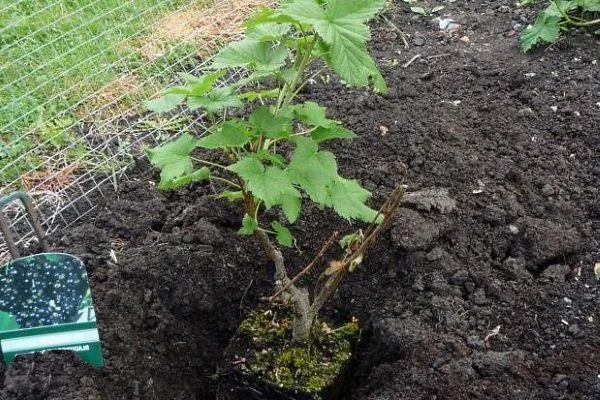
Soil preparation
Preparing the soil for planting:
- Determine the soil's acidity. If it's too acidic, add wood ash or dolomite flour to the soil at a rate of 500 mg or 250 mg per square meter, respectively.
- If the groundwater level is close to the surface, create a half-meter mound and ensure effective drainage. To do this, add river sand, small ceramic shards, and brick chips to the bottom of the planting hole. The drainage layer should be at least 5-7 cm thick.
- Weed and dig up the area where the currants will be planted, removing debris, stones and weed roots.
- Dig a hole approximately 50 cm deep and wide. You should dig and prepare the hole two weeks before planting. The hole's depth depends on the soil's fertility: the less fertile the soil, the deeper you need to dig and the more compost you'll need.
- Fill the hole with soil mix. Make it from the fertile soil layer—the top 15-20 cm of soil—and fertilizer. For each hole, add 15 liters of humus or rotted manure, 100 g of superphosphate, and 35 g of potassium nitrate. Alternatively, use a chemical fertilizer containing potassium and phosphorus, such as nitrophoska. Do not add fresh manure to the planting hole.
- Pour the resulting soil mixture into the hole to form a mound. Cover the hole with a waterproof material. After two weeks, weather permitting, you can begin planting.
If planting in the fall, avoid applying nitrogen-containing fertilizers. Also prohibited are fertilizers containing chlorine, such as potassium chloride.
Planting pattern:
- the distance between adjacent seedlings is 1.75-2 m;
- between rows – 2-2.5 m.
Planting technique
Before planting, inspect the seedlings, and trim away any dry or damaged parts if necessary. Root treatment is recommended:
- A weak solution of potassium permanganate – to disinfect and protect the seedling from diseases and pests.
- With a solution of potassium humate, Topaz or Epin – to stimulate growth.
- 2-3 hours before planting, the roots are dipped in a manure-clay slurry - its consistency should be like thick sour cream - and dried in the sun.
Planting order:
- Pour warm water into a pre-prepared hole.
- Place the seedling prepared for planting on top of the mound you dug into the hole two weeks earlier. Spread the roots out in all directions; they shouldn't be bent. Place the seedling at an angle—this will promote better growth of new shoots. If you place the seedling strictly upright, the bush will be more compact.
- After digging the hole, you should be left with some infertile soil—the fertile soil you used to create the potting mix. Cover the roots with this soil. The root collar should be 5-7 cm below the soil level.
- Trim all shoots by 2/3 of their length. Leave 3-4 leaf buds on each shoot. The length of the pruned branches will be approximately 7-8 cm.
- Water the planted seedling with warm water. 3-5 liters per hole.
- Once the water has been absorbed, sprinkle mulch around the tree trunk. Use peat, hay, or straw.
Do not mulch currants with sawdust – it increases soil acidity.
Caring for the planted variety
The size of the berries and their flavor, as well as the yield, directly depend on care. To achieve good results, large-fruited currants require timely watering, fertilizing, and pruning.
Watering and loosening
The variety tolerates drought well, but to ensure large berries and a substantial harvest, the bushes need watering. Watering tips for Yadrenaya:
- Watering frequency: every 2-3 days.
- Watering rate: 10-12 liters per bush.
- The best time for watering is morning and evening, after sunset.
- The best method of watering is sprinkling. Alternatively, pour water into a trench dug around the trunk, about half a meter away.
- The most important period for watering is the period of fruit ripening and the formation of new flower buds, from which berries will grow next year.
- If the weather is very hot, spray the leaves from the back side.
- As autumn approaches, watering is reduced. The weekly rate is 35-40 liters.
- The final watering is generous, done at the end of September—40 liters at a time. This is a moisture-recharging watering—it's necessary to prepare the plant for winter.
Loosen the soil 1-2 days after watering. Loosening is necessary to improve oxygen supply to the roots. Loosening also removes weeds and destroys many pests hiding in the soil.
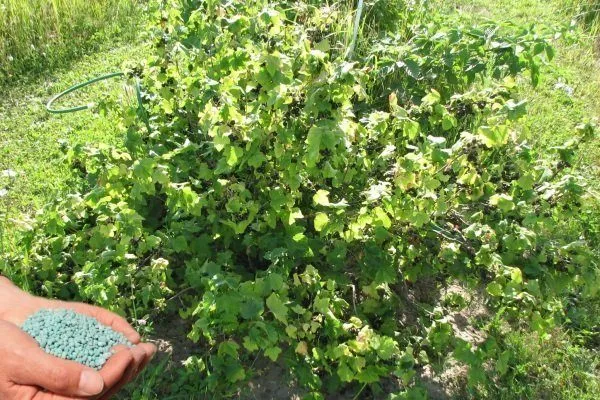
Top dressing
If the currant bush is planted correctly and all necessary fertilizers are added to the planting hole, no additional feeding is necessary the following year. Fertilizer is only needed in the second year.
The order of applying fertilizers:
| Period | What to contribute? |
| In early spring, as soon as the soil can be loosened. | Urea or ammonium sulfate – 30 g per square meter. In the 3rd or 4th year, apply half that amount. After 3-4 days, water with a manure solution – make an infusion, and then dilute 1:8 or 1:12 for manure and bird droppings, respectively. |
| When the buds bloom | Superphosphate - 60 g, and potassium sulfate - 40 g. Instead, you can add wood ash or potato peelings - washed, dried and crushed. |
| After flowering | Water or spray with complex liquid mineral fertilizers. Alternatively, prepare your own fertilizer using potassium permanganate (3-5 g), boric acid (2-3 g), and copper sulfate (25-30 g). Dissolve the ingredients in 10 liters of water. |
| In autumn, 2 months after harvesting. | Dry fertilizer is distributed over the soil: 20 liters of humus, 40 g of superphosphate, 20 g of potassium sulfate. |
- Before flowering, apply a complex mineral fertilizer to stimulate growth.
- During the formation of ovaries, use potassium-phosphorus fertilizers to improve the quality of the fruit.
- After harvesting, apply organic fertilizer to restore the soil.
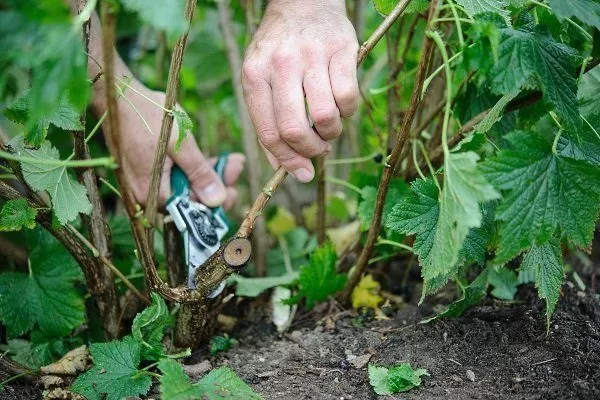
Pruning currants
Currants have a short lifespan, and even rejuvenating pruning prevents bushes from lasting more than 10 years. Yadrenaya has an even shorter lifespan, and large berries only grow on young branches, and only on young plants.
The first time a seedling is pruned is when it's planted. Pruning rules:
- Shoots develop from the buds left during the first pruning in the first year of life; these are shortened in the second year. 50% of the shoot length is pruned.
- Starting in the third year, pruning follows the same principle: each year, leave 2-3 strong basal shoots. Remove 2-3 older shoots. Cut the shoots at ground level to avoid stumps.
- Pruning diseased, dead, and broken branches can be done at any time—there's no need to wait until a specific season to clear the bush of unwanted branches. Branches are trimmed back to healthy areas.
It is better to divide pruning into two stages:
- In the spring. Branches damaged over the winter, as well as buds affected by spider mites, are removed. Spring pruning is discussed elsewhere. Here.
- In the fall, after harvesting. At this time, the fruiting of the branches and their growth are clearly visible. If there are many basal shoots, the excess is trimmed. Read on to learn how to properly prune currants in the fall. here.
A properly formed currant bush should have 10-12 branches of different ages, and it does not need support.
Preparing for winter
Winter insulation is necessary to protect the plant from early frosts and winters with little snow. In October, the tree trunks—approximately 1.5 m in diameter—are mulched with a thick layer of rotted manure, humus, or leaves. The minimum layer thickness is 5 cm.
The branches of young bushes are tied into bundles, carefully bent to the ground, and covered with burlap or another breathable material. After snow falls, snowdrifts are created around the plants.
Methods of reproduction
The Yadrenaya currant can be propagated by any of the methods used for berry crops - layering, cuttings or dividing the bush.
Layering
Features and procedure of propagation by layering:
- Only one-year-old shoots are taken.
- The breeding season is spring.
- Organic matter is added to the soil to stimulate root formation.
- A furrow is made in the soil near the mother bush.
- They select a shoot and cut the bark with a knife – this is where the roots will grow from.
- The branch is pinned to the ground with a staple and covered tightly with soil. The soil layer should be no more than 3-4 cm thick. The tip of the shoot should remain above the surface.
- The cuttings are watered and hilled.
- In autumn, the cutting is separated from the mother bush and planted in a permanent location.
Cuttings
Propagation by cuttings:
- Cuttings are harvested in the fall. Using pruning shears, cut shoots 15-18 cm long, with 3-4 buds. The cut is not straight, but at a 45-degree angle.
- Store cuttings upright in a cool, dry place. You can also bury the cuttings in the snow, placing them near the mother plant and lining them with straw or sawdust.
- Plant the cuttings in the spring, spacing them 20 cm apart. Place the cuttings at an angle, cover with soil, and water.
By dividing the bush
The easiest and fastest way to propagate currants is by dividing the bushes. Propagation procedure:
- Adult bushes are dug up and carefully removed from the ground.
- They look at the roots to see if there are any diseases. Dry roots are trimmed off.
- The root system is dipped into a solution of potassium permanganate.
- Using an axe or a sharp shovel, chop the bush into pieces. Each piece must have a good chunk of roots attached, otherwise the separated bush will not survive.
- The separated sections are placed in planting holes and the roots are covered with soil. Then, water and care as usual.
Currant bushes are propagated by dividing the bush in spring or fall. The bushes will begin to produce fruit as early as the second year after planting.
Diseases and pests
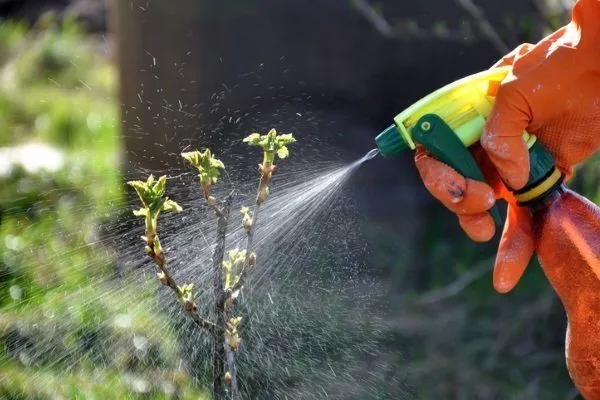
The Yadrenaya currant is quite disease-resistant. Its main enemy is aphids. It's important to combat not only aphids but also the ants that breed them. Using chemicals is dangerous—they're practically impossible to remove from the berries. The best option is to treat it with anise oil. Dissolve 3-5 drops of oil in 1 liter of water. This solution helps. get rid of aphids, and from ants.
Although the variety is pest-resistant, the bushes still need to be treated once a season as a preventative measure. In the spring, the currants are watered with a hot urea solution—0.5 kg diluted in 10 liters. Alternatively, the bushes can be sprayed with Fitoverm (2 ml per 1 liter of water). This treatment will protect the currants from infestation.
Harvesting and storage
Rules for collecting Yadrenaya currants:
- Berries are picked only in dry weather. You must wait until the morning dew has dried. If it rained the day before, berry picking is postponed.
- Place the berries in a shallow container with a soft cloth at the bottom. It's best to transfer the currants from one container to another—it's best to place them directly in the container they'll be stored or transported in.
- If the berries are to be transported, they are picked whole bunches. Harvesting occurs about 5 days before marketable ripeness. The berries are transported in shallow baskets or crates holding no more than 5 kg.
There are different ways to preserve currants:
- Preserve. Yadrenaya makes excellent compotes, jams and preserves.
- Keep fresh. The berries are placed in containers and placed in the refrigerator's crisper drawer. Here, the berries will keep for 4 days.
- Dry. Drying can be done naturally or artificially, using a microwave or oven. Store the dried fruits in canvas bags in a dry place.
- Freeze. Deep freezing preserves the taste and nutritional properties of berries.
Gardeners' reviews of the Yadrenaya variety
The Yadrenaya currant rightfully deserves the attention of gardeners. Its tart flavor is controversial, but it has many other virtues. This variety is prized for its unique large fruits, versatility, and large yields. Provided with favorable conditions, Yadrenaya will certainly reward with abundant fruiting.