
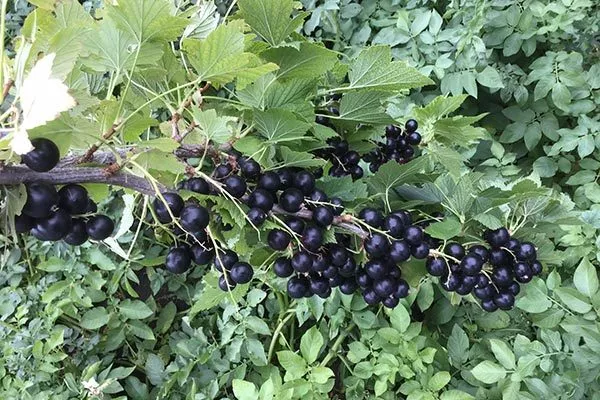
Sinegorye is a blackcurrant variety developed by Russian breeders. It has won the hearts of gardeners thanks to its high resistance to weather conditions and insects, as well as its excellent productivity. The fruits are distinguished by their large size, excellent aroma, and flavor.
Features of selection
In 2018, specialists from the Scientific and Production Association "Gardens of Russia" (located in the Chelyabinsk region) introduced a new variety of black currant, Sinegorye. The cultivar was developed from the Oriana black currant.
It, in turn, is the result of a complex hybridization process resulting from the crossing of four different varieties, including Pamyat Vavilova and Zagadka, both registered in the State Register of the Russian Federation. The name Sinegorye symbolizes the mountain range that is part of the Ural Mountains.
To obtain the new variety, Oriana seeds were used, which were subjected to exceptionally harsh conditions:
- they were planted in an area infected with powdery mildew and anthracnose;
- near bushes affected by bud mites.
These harsh conditions were specifically chosen to identify the most resilient seedlings. From these, the healthiest and most productive plants were selected.
Description of the Sinegorye black currant
Sinegorye is naturally adapted to harsh climates. This variety can produce fruit in a wide range of weather conditions, from the short, cool summers of the north to the arid climate of the south.
| Name | Disease resistance | Ripening period | Berry size |
|---|---|---|---|
| Blue Mountains | High | Mid-late | 3.5-6.5 g |
| Oriana | High | Early | 1.5-2.5 g |
| Variety | Resistance to powdery mildew | Anthracnose resistance |
|---|---|---|
| Blue Mountains | High | High |
| Oriana | Average | High |
Bush
The Sinegorye currant, descended from the Oriana variety, shares similarities not only in taste but also in appearance. This variety is medium-sized, reaching a height of 100 to 150 cm. The shoots have the following characteristics:
- straight shape;
- thickness is average;
- coloring is ash-gray;
- the leaves are medium in size, three-lobed in shape, and deep green in color;
- the edges of the leaves have sparse teeth, the front side is smooth, and on the back side there are large veins;
- The size of the flowers is medium, the color is yellowish.
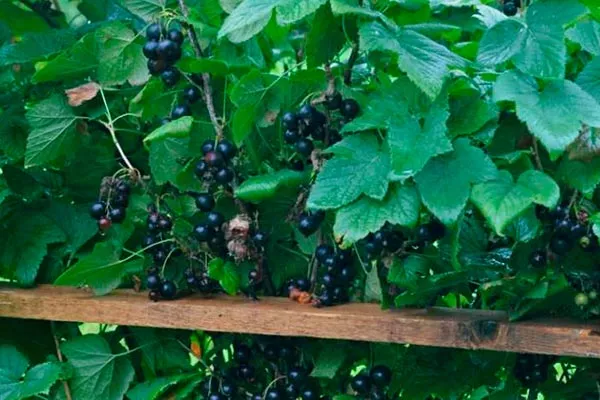
Flowering begins in mid-May, when the buds are no longer at risk from spring frosts. However, keep in mind that the branches may bend under the weight of ripe berries, so it's important to provide support in a timely manner.
Berries
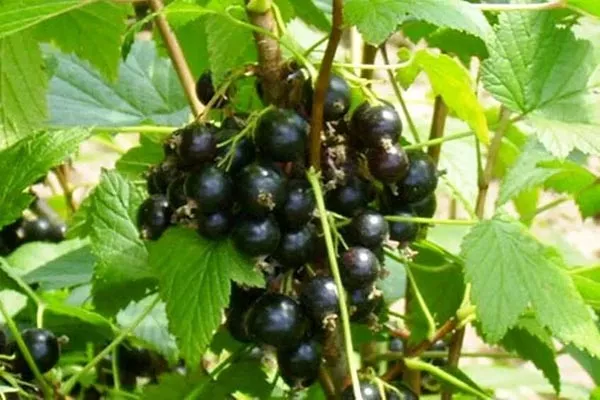
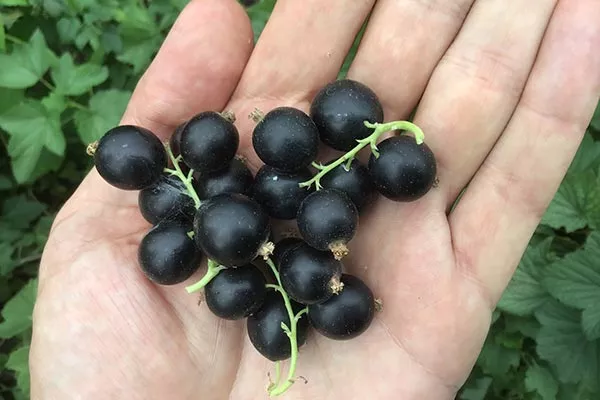
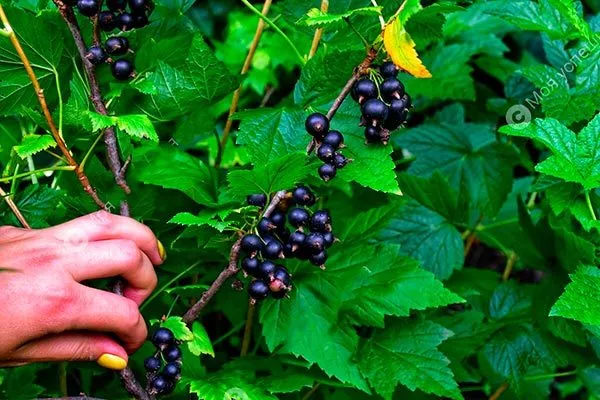
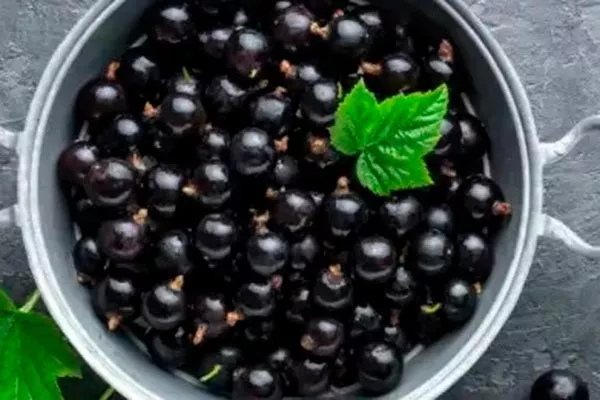
The Sinegorye variety belongs to the category of currants with large fruits: the weight of one berry reaches 3.5-6.5 g. The berries have the following characteristics:
- perfectly rounded shape;
- thin but strong skin;
- bright shine on the surface;
- rich black color;
- dry separation from the stem;
- strong aroma;
- juicy, greenish-colored pulp.
Characteristics of the variety
During the development of the new currant variety, the most resilient and high-quality seeds capable of withstanding a variety of adverse conditions were selected. This was the key factor that shaped the unique characteristics of the Sinegorye variety.
The taste and uses of currants
Sinegorye currants are characterized by a moderate balance of acidity and sweetness. They contain 8% sugar, while the acid content is three times lower, making them particularly pleasant to the taste. These berries are not only delicious but also highly nutritious: 100 g contains approximately 200 mg of vitamin C.
The unique flavor combines tartness and sweetness, making it especially popular among gardeners. These berries are most often eaten fresh, but they can also be used in desserts and preserves.
This blackcurrant is a wonderful addition to any garden plot. It has a variety of uses:
- As a natural hedge. Currant bushes planted along the edge of the plot will provide privacy and protect from unwanted views.
- To divide space. Bushes often act as a border between different areas of the garden, for example, near alpine meadows or between flower beds.
- As a central element of the composition. Surrounded by flowering perennials, the Sinegorye currant bush will provide an excellent backdrop and light shading.
Drought resistance, frost resistance
This variety was acclimatized to the Southern Urals, so it has increased winter hardiness. It can tolerate temperatures down to -40 degrees Celsius, and if winter frosts don't reach that threshold, the bushes don't require protective covering.
Sinegorye is also drought-resistant; the variety is not prone to fruit drop, although berry size may decrease in conditions of insufficient moisture.
Productivity, flowering, pollination and fruiting
Sinegorye is self-fertile and mid-late. Flowering begins in mid-May, and the harvest ripens in the first ten days of August. In warm summer weather, the berries can ripen up to 10 days earlier.
Other indicators:
- The bush begins to bear fruit in the third year of its existence and reaches maximum productivity within one or two years.
- Each bush can produce up to 6 kg of large berries.
- Fruit ripening occurs synchronously.
- The bunches of Sinegorye currants are small, elastic and hold well on the branches, which makes it easier to pick the berries without damaging them.
- The harvest of this variety is suitable for long-term transportation and storage at a temperature of +5-7 degrees for 10-14 days.
Methods of reproduction
The Sinegorye currant reproduces well without seeds, so vegetative propagation methods are used: cuttings and horizontal layering. Due to the pendulous growth habit of this species, the latter method is preferred:
- In mid-summer, a healthy young shoot is taken for propagation, and its leaves are cleared, leaving them only at the top.
- The shoot is then placed in a pre-dug trench, secured horizontally with a staple. The top of the shoot should remain above ground.
- The shoot is covered with soil to a depth of 5-7 cm.
- During the summer, the young shoot buried in the ground will require attention: it must be regularly watered and fertilized.
- In the fall, the layer is carefully removed from the soil and divided with pruning shears into separate parts, each of which should have a vertical shoot and a well-developed root system.
- The resulting seedlings are planted in a permanent location.
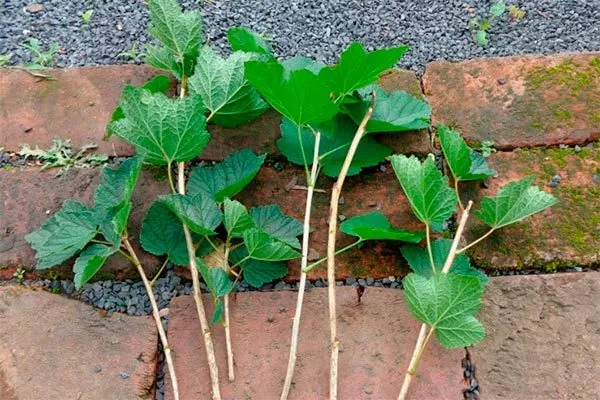
It's important to remember that a single currant bush can produce no more than 2-3 quality cuttings per season. Excessive rooting can lead to the exhaustion of the mother plant.
Landing rules
To successfully grow blackcurrants, you need to choose a location with sufficient light and warmth, neutral to slightly alkaline soil, permeable soil, and moist but not soggy soil. Ideally, the currants should be protected from cold winds by tall structures or trees.
Before work, you need to prepare the area:
- Dig up the area two weeks before planting.
- If the soil is acidic, add dolomite flour or chalk to neutralize it.
- Enrich the poor composition with organic fertilizer - compost, rotted manure, bird droppings, etc.
- ✓ The optimal soil acidity for Sinegorye currants should be within the pH range of 6.0-6.5.
- ✓ The distance between bushes when planting should be at least 1.5 meters to ensure sufficient ventilation and lighting.
The landing steps are simple and standard:
- Form a hole up to 55-60 cm deep and about 45-55 cm in diameter, and place crushed stone or crushed brick at the bottom.
- Fill the pot halfway with soil mixture. It should consist of regular soil, compost, river sand, and wood ash.
- Place the currant seedlings, pre-watered, in the center of the hole at an angle of about 45 degrees, spreading the roots out to the sides.
- Fill the voids with soil mixture, and deepen the plant collar by 5-8 cm.
- After planting, spray the currants generously with water and cut them to a height of 25 cm.
There should be at least 150 cm of space between plants. It's best to plant currants in the fall, from late September to early October, to allow the plants time to establish themselves before the cold weather sets in.
Care Features
Caring for currant bushes in Sinegorye isn't particularly difficult. It's important to pay attention to a few key aspects:
- Moisturizing. During dry periods, it is recommended to water the bushes once a week, especially when they are fruiting. 10-12 liters of water is sufficient for each plant.
- Fertilizer. In spring, to stimulate the growth of green parts, the bushes are enriched with urea or a weak solution of mullein, which promotes nitrogen accumulation. During budding and fruit ripening, it is useful to apply mineral preparations such as superphosphate and potassium sulfate, which strengthen the root system and improve metabolism.
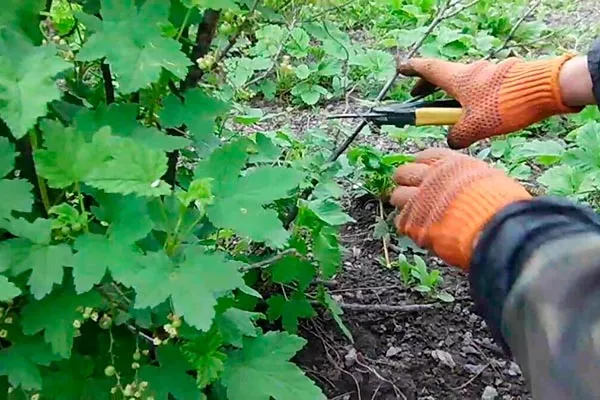
- Formation of a bush. Every year, currants undergo formative pruning, removing most of the branches that are older than 3-5 years and no longer produce fruit. 18-20 strong, healthy young shoots are selected for further development.
- Trimming. In autumn and spring, sanitary pruning is carried out, removing damaged, dried/frozen and diseased branches.
- Bush support. To prevent shoots from falling to the ground, it's recommended to install trellises near the bushes. You can also drive in a circular support to keep the branches upright.
- Pre-winter preparation. As autumn approaches, the soil around the currant bushes is dug over and cleared of plant debris. The root zone is mulched with dry leaves or humus, creating a 10-15 cm thick layer.
Pest and disease control
Blackcurrants are naturally resistant to many fungal diseases, including powdery mildew, soft rot, and bacterial spot. The Sinegorye variety is particularly resistant to bud mites, but young branches may be susceptible to aphids.
To prevent pests and diseases, it's important to regularly inspect your bush. At the first sign of disease or insect infestation, immediate action is required to eradicate them.
Pros and cons
The berries of the Sinegorye currant variety are resistant to transportation thanks to their strong skin. In moderately cool conditions (temperatures between 5 and 7 degrees Celsius), they can be stored for up to two weeks.
Similar varieties
The Sinegorye bush is an improved version of the Ukrainian currant Oriana, due to which it has a high degree of similarity to this type of bush.
Oriana's characteristics include:
- average bush height;
- medium and large berries (from 1.5 to 2.5 g) in a bunch of up to 15 pcs.;
- sweet taste, sugar content 8%;
- early ripening (July);
- the berries have a dry separation, which ensures their good transportability;
- invulnerability to diseases and pests.
There are no other similar varieties or hybrids.
Reviews
Sinegorye currant is a variety with large fruits and competitive productivity, distinguished by its resistance to various diseases, bud mites, and the ability to withstand adverse weather conditions. The berries of this variety are excellent for transportation.