
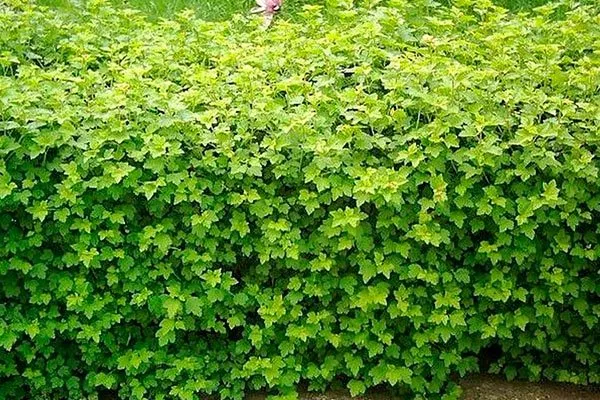
Schmidt is a red currant variety noted for its tolerance to low temperatures and its ability to self-pollinate. This variety is suitable for creating hedges, borders, and for solo and group plantings. The berries are edible, but not particularly popular.
General description of the variety
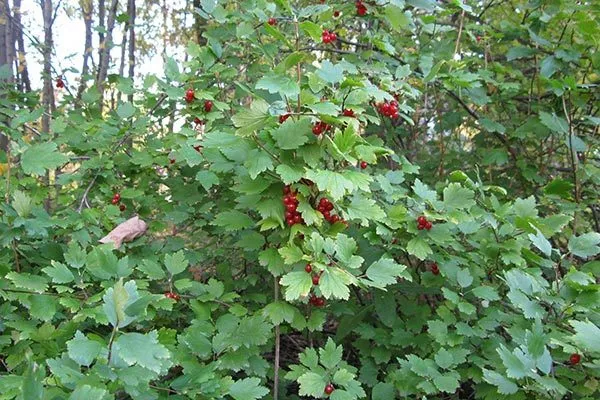
The Schmidt currant is a red variety and is a medium-sized bush with numerous smooth shoots. It stands out for its ability to tolerate not only low temperatures but also drought, making it an excellent choice for cultivation in a wide range of climates.
Classification:
- order Saxifragales, family Gooseberry, genus Currant;
- Alpine currant species;
- the lifespan of the bush is up to 40 years;
- wild habitat area – Türkiye, Africa, some parts of Russia, the Carpathians, most of Europe;
- the time for the first green shoots to appear is about two weeks after sowing;
- development rate – slow growing bush.
Other features:
- The main advantage of the Schmidt currant is its high winter hardiness down to -40 degrees, which allows it to easily survive even the harshest winters.
- The propagation process of Alpine currant is carried out through grafting of summer and woody cuttings, as well as through sowing seeds.
- When cultivating the plant, it is necessary to take into account the possibility of developing diseases such as powdery mildew, rust, anthracnose and terry, and also protect the plant from pest attacks: aphids, spider mites and scale insects.
What does the bush look like?
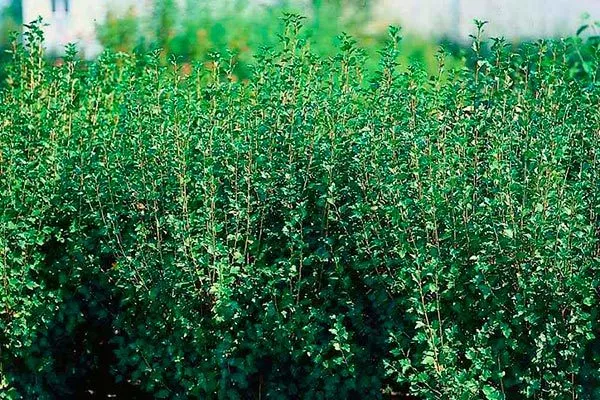
When young, the bush grows upright, but with age, its crown takes on the shape of a wide dome. The plant can reach a height of 140-150 cm. The branches are thornless, covered with fine glandular hairs or may be bare and have a brown tint.
Other varietal characteristics of the bush:
- The leaves are a rich green, reach up to 2.5-4 cm in length, and are edged with teeth. They are three- or five-lobed and have a glossy surface. In autumn, the leaves turn shades from honey-yellow to orange-yellow.
- In May, currants delight with a lush bloom that lasts for about two weeks. The flowers are small, greenish-yellow, and form small, racemose inflorescences.
- A brush with buds protrudes from the bush and can reach 3-4 cm in length.
Berries and their taste qualities
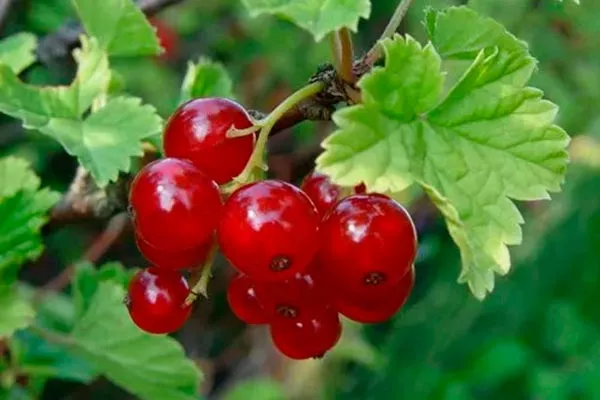
In mid-summer, small pink berries appear on the bush, which, unfortunately, do not have much flavor, so gardeners often leave them on the branches as decoration.
Other characteristics of the fruit:
- The berries are shaped like a circle or a slightly elongated figure, and are a rich reddish-pink color.
- The flavor isn't particularly pronounced, rather bland. For this reason, gardeners sometimes leave them on the branches as decoration.
Despite this, berries are very valuable for human health:
- They are rich in vitamins and minerals, antioxidant substances that protect against the negative effects of free radicals.
- High vitamin C content helps strengthen the immune system and maintain healthy skin.
- Vitamin K is important for normal blood clotting and strong bones, and vitamin E is an antioxidant and protects cells from free radical damage.
When does it ripen, what is the yield?
June is the time to harvest berries. This variety is quite productive—up to 3.5-4 kg of berries can be harvested from a single bush.
Schmidt currant is a self-pollinating variety, which eliminates the need to search for a pollinator for fruiting.
However, if you want to increase your yield, you can plant another variety nearby to act as a pollinator. For example, the Repinskaya or Lyubimaya varieties can be excellent pollinators for the Schmidt variety.
Care and cultivation
Growing Schmidt currants requires no special knowledge or experience. This variety thrives in both sunny and semi-shaded areas, but blooms more profusely in brighter conditions.
Thanks to its resilience, Schmidt can grow and bear fruit in a variety of soil types, including light loam and sandy loam. For optimal growth, the variety thrives in humus-rich, well-drained soils, or in fertile loam.
- ✓ Soil pH should be between 6.0-6.5 for optimal growth.
- ✓ The distance between bushes to ensure sufficient ventilation and prevent diseases should be at least 200 cm.
Requirements and rules:
- The ideal place for planting is partial shade, and the time for planting is autumn, 20-25 days before the onset of cold weather.
- Schmidt currant plants are planted in traditional plantings at a distance of 200-220 cm from each other, and for the formation of hedges - at a distance of 90-150 cm.
- To plant, you need to dig a hole that is 2-3 times wider than the root system of the seedling.
- When preparing the soil, fertilizers are placed in the holes: 10-16 kg of compost, 25-35 g of potassium salt and 180-200 g of simple superphosphate.
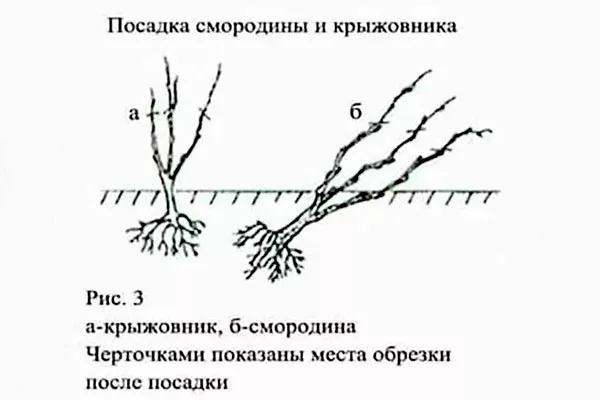
- Before planting, seedlings are checked for damage and disease, removing poor-quality and diseased branches, and shortening healthy ones by a third.
- Excessively long and bare roots are trimmed short, then dipped in clay or protected with an antiseptic. The seedlings are then buried to a depth of about 5-6 cm below the root collar.
- After work, the bushes are watered with 15 liters of water and the soil around them is carefully compacted.
- To speed up their survival, the seedling is placed at an angle of 45 degrees.
One of the key aspects of caring for this shrub is careful attention to watering. During the period of intensive berry development and ripening, Schmidt currants require adequate moisture. There are other important aspects to consider when growing them:
- Watering young bushes should be done depending on the weather, either frequently or less frequently, while mature bushes can be watered less frequently.
- During the growth of the bush, the soil around it should be cleared of weeds by performing a one-time treatment.
- Surface loosening should be done in the spring to a depth of 7-8 cm, after which this action should be repeated every 2-3 weeks.
- It is recommended to use mulching with peat, humus or rotted manure, applying them in a layer of 6 to 10 cm.
- The plant's berries do not fall off when ripe, making this variety even more attractive. Despite this, fertilizing is necessary to stimulate bush growth. Organic fertilizers include compost, manure, or ash. Mineral fertilizers should be sprayed in April and after the bushes have finished flowering.
Plant feeding is carried out as follows:- During the first two to three years, it is recommended to add urea in April;
- in the future, every one or two years in the fall, compost, superphosphate and potassium salts should be added.
Comparison of pest control methodsMethod Efficiency Period of application Fitosporin-M High Before budding Bordeaux mixture Average After flowering Herbal tinctures Low During the season - To combat diseases, treatments are carried out using Fitosporin-M, fungicides, Bordeaux mixture, and soap solution. Before budding, acaricides, insecticides, and herbal infusions, including celandine, yarrow, tansy, and wormwood, are actively used against pests.
- Overwintering plants. To ensure standard bushes survive winter frosts, they need to be protected for the first two to three years after planting by wrapping the trunks in several layers of burlap. Over time, their ability to withstand low temperatures increases.
Features of pruning
After harvesting is complete, usually in August or early September, it's time to prune the bushes. During this period, it's recommended to remove all old, damaged, or diseased branches. To maintain the health of the bushes, it's crucial to remove weak branches.
Pros and cons
The key advantage of this currant variety is its ability to self-pollinate. This means no additional pollinator is needed to achieve a harvest. Furthermore, the Schmidt variety is distinguished by its good fruit production and attractive bush appearance.
Among the disadvantages, it is worth noting that the berries do not have a particularly bright flavor, but they stand out for their resistance to transportation and the ability to remain fresh for a long time after picking.
Reviews
The Schmidt currant is an ideal choice for those looking for a highly productive and reliable bush with healthy berries. This variety is suitable even for novice gardeners, as it requires little care. However, the berries don't have a particularly sophisticated flavor, which is important to consider when choosing a currant variety.