
The Selechenskaya 2 currant is a popular domestic variety with large, sweet berries. Its fruits are rich in ascorbic acid, vitamins, and other beneficial substances. This hardy and productive variety is in no way inferior to its imported counterparts and deserves the close attention of our gardeners and summer residents.
History of the variety's creation
The development of the Selechenskaya 2 variety was preceded by the appearance of the Selechenskaya currant. Their creator was the Bryansk breeder A. I. Astakhov. Variety No. 1 was developed at the end of the last century and was added to the State Register in 1993.
The Selechenskaya currant was prized for its early fruiting and excellent berry flavor. However, it also had serious drawbacks: it was too demanding of soil and insufficiently resistant to common berry diseases. Variety No. 2 eliminated these drawbacks and was added to the State Register in 2004.
Comparison of the Selechenskaya and Selechenskaya 2 varieties
| Name | Bush height | Leaf color | Size of berries |
|---|---|---|---|
| Selechenskaya | 1.5 m | Medium, five-lobed | 2.5-5 g |
| Selechenskaya 2 | 1.9 m | Dark, three-lobed | 5.5 g |
Both varieties—Selechenskaya and Selechenskaya 2—are suitable for cultivation in almost all regions of Russia. They are very similar in appearance and fruit quality. They differ primarily in their agronomic characteristics.
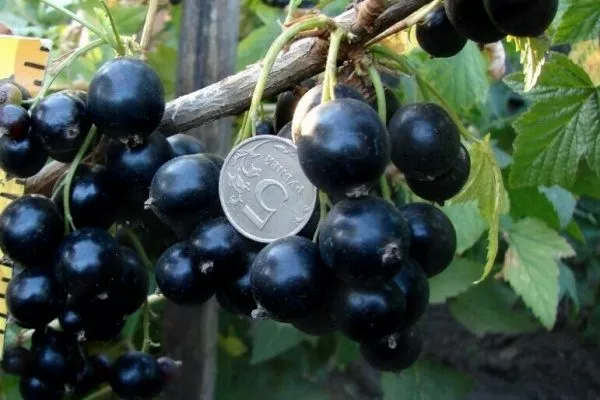
Selechenskaya Berries 2
Comparison of varieties:
- Bushes. Selechenskaya's height is 1.5 meters, it has abundant foliage, a loose spreading habit, and requires frequent pruning to prevent it from becoming too dense. Selechenskaya 2's bushes are taller—around 1.9 meters—and it has a wider crown.
- Leaves. Selechenskaya's leaves are medium-sized and five-lobed. Selechenskaya 2 has darker leaves, and the leaves themselves are three-lobed.
- Flowers. Both varieties have reddish-purple flowers, but Selechenskaya 2's are larger and more vibrant. The clusters are longer, each containing 8-14 flowers.
- Fruit. Selechenskaya 2 has larger lumps—5.5g versus 2.5-5g. They also have a slightly higher tasting score—5 versus 4.9g, but the sugar content in Selechenskaya 2 is lower—7.3% versus 7.8%.
The fruits of both varieties have thick skins and can retain their marketability and flavor for up to two weeks in the refrigerator. They cling firmly to the branches, so the entire crop can be harvested in one go.
Description of the Selechenskaya 2 variety
Selechenskaya 2 grows tall but compact bushes with dense foliage. Height is 1.8-2 m, width 1.5-1.6 m. Young shoots are green, while older shoots are brown. The leaves are leathery, slightly wrinkled, dark green, small, with serrated edges.
The berries are black, large, juicy, and sweet. They are rich in vitamins, phosphorus, magnesium, and calcium. They are recommended for various ailments, including diarrhea, sore throat, fever, and even diabetes.
Characteristics
Before planting Selechenskaya 2 seedlings, it's helpful to familiarize yourself with the variety's agronomic characteristics. This will help you properly care for the crop and achieve high yields.
Main characteristics:
- Productivity — 3.8 kg per bush. With intensive care, it increases to 7-8 kg.
- Frost resistance — up to -32°C. The variety is not sufficiently resistant to recurrent frosts.
- Drought resistance — high, but if there is no watering for a long time, the taste of the berries deteriorates.
- Heat resistance - low, with high and prolonged heat the berries begin to fall off.
- Soil requirements - below average.
- Disease resistance - almost not affected by anthracnose, rarely attacked by aphids and kidney mites, but does not have complete immunity against them.
- Purpose of berries — versatile. You can eat the berries fresh, make compotes, preserves, jellies, pie fillings, and a variety of desserts. The berries retain their flavor even after cooking. Dried, they pair well with tea.
- Fruiting — from flower buds located on one-year-old shoots.
- Precocity — the first berries appear in the first year after planting the seedlings; the bushes begin to bear fruit fully from the third year of life.
- Average yield — 3 kg.
Advantages and disadvantages of the variety
The Selechenskaya 2 currant is popular with gardeners and summer residents for good reason—the variety boasts numerous advantages that make it a leading variety, but it also has some drawbacks:
Landing features
So that the bushes black currant To ensure that the plants develop and bear fruit fully, it is important to select good seedlings and plant them correctly.
- ✓ The seedling planting depth should be such that the root collar is 5-7 cm below the soil level.
- ✓ The distance between bushes should be at least 1.8 m to ensure sufficient feeding and ventilation area.
Landing dates
Currant seedlings are planted in the fall or spring. In most regions, planting occurs between late March and early April and from September to November. In the fall, planting occurs before freezing temperatures set in, and in the spring, when temperatures are between 10°C and 12°C, when the soil has warmed to a depth of 20-25 cm.
Selection of seedlings
It is recommended to purchase planting material not from markets or unknown sellers, but from trusted suppliers—fruit and berry nurseries, specialized fairs, and agricultural stores.
How to choose quality seedlings:
- Preferred age: 1 or 2 years;
- seedling height - up to 40 cm, diameter at the base - 8-10 mm;
- the bark is smooth and clean;
- leaves - fresh, without signs of wilting;
- shoots - brown or green, with buds;
- cores - healthy, well developed, without dry roots and damage, traces of disease, growths;
The optimal root length is 15-20 cm. It is recommended to trim longer roots with sharp, disinfected pruning shears.
How to prepare a seedling for planting?
Seedlings with closed roots are sold in containers and require no preparation for planting. They are planted directly with a root ball, after being watered first—this helps extract the roots and soil from the container. Bare-rooted plants are recommended to be prepared to improve establishment.
How to prepare a seedling for planting:
- Immerse the seedling's roots in a disinfectant solution, such as 1% copper sulfate or potassium permanganate. This prevents pathogens from growing on the roots and increases the chances of survival and successful fruiting.
- It's also recommended to soak the roots in a growth stimulant solution—Epine, Kornevin, or Zircon. These will saturate the roots with nutrients and stimulate their active development.
Site selection and preparation
Bushes can be planted not only in beds, but also along fences, near blank walls, and near various buildings.
Requirements for the site for planting Selechenskaya 2:
- light neutral or slightly acidic soils;
- groundwater - no more than 1 m to the earth's surface;
- Lighting - bushes can grow both in the sun and in partial shade.
High groundwater levels are unacceptable—under such conditions, the roots of the bushes begin to rot, and the bush itself becomes susceptible to fungal diseases.
The site for spring planting is prepared in the fall. It is cleared of plant debris, rubbish, and stones, dug over, and fertilized. If planting is planned for the fall, the soil is prepared three months in advance.
How to prepare a site for planting currants:
- Dig over the soil. Add 6-7 kg of compost per square meter. Add 250 ml of superphosphate and 100 g of potassium sulfate. Add wood ash at a rate of 250-300 ml per square meter. For acidic soils, add the same amount of dolomite flour or lime.
- Water the prepared soil with a solution of copper sulfate - to prepare it, dilute 5 g in 10 liters of water.
Step by step process
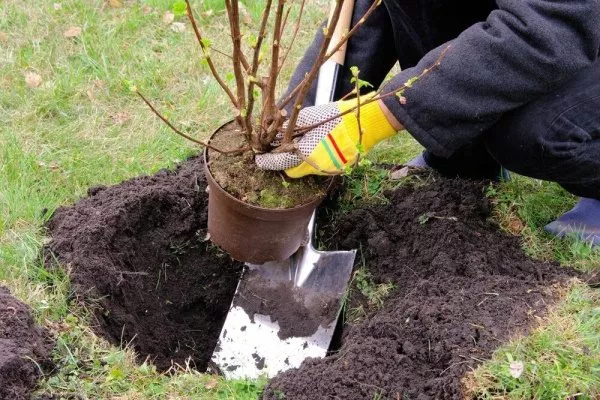
If you're planting several currant bushes, dig holes 1.8-2 meters apart. Planting should preferably be done in calm, cloudy, and dry weather.
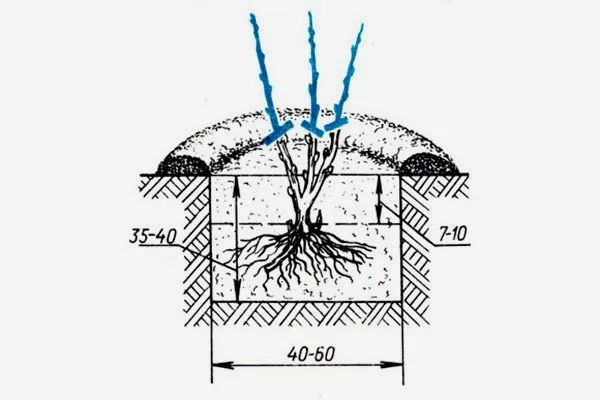
How to plant currants:
- Dig holes 50x50x40 cm.
- Pour 10 liters of water into each hole.
- When the water has been absorbed into the soil, add 5-7 kg of compost or humus to each hole.
- Place the seedlings at an angle into the holes, keeping the root collar above the surface. If the seedlings are of poor quality—weak and small—plant two per hole.
- Cover the roots with soil and form a hole 40 cm in diameter around the seedling to prevent water from leaking out.
- Trim the seedlings, leaving 3-4 buds on each.
- Water the seedlings. The recommended watering rate for each seedling is 20 liters of water.
Also watch a video about planting currants:
Further care
To ensure that currants bear fruit annually and produce consistently high yields, they require regular and competent care. This is especially important in the early stages, as young, immature bushes are less able to adequately withstand harsh environmental conditions, moisture stress, pest attacks, and so on.
Watering
Watering is the most important cultivation technique for the Selechenskaya 2 currant. The variety tolerates both water stress and overwatering equally poorly. Therefore, gardeners must carefully monitor the soil, preventing it from drying out or becoming waterlogged.
During the season, it is important to carry out three mandatory waterings:
- In the spring - after flowering, when the first berries appear.
- In summer - after harvesting.
- In the fall - moisture-recharging irrigation, carried out in the last ten days of September or the first ten days of October.
Selechenskaya 2 currants are watered according to a schedule: once every 3-4 weeks (Selechenskaya is watered more frequently – 1-2 times a week). Watering frequency depends on the weather and soil conditions. The norm is 10-40 liters of water per bush (depending on age).
Gardeners prefer drip irrigation—it provides regular and uniform watering without washing away the roots of the bushes.
Soil cultivation
After watering and heavy rains, the soil around the bushes is loosened. Weeds are removed along the way. The circles are then mulched with natural bulk material, such as humus, sawdust, peat, etc. Mulch retains moisture, prevents crust formation, and inhibits weed growth.
Top dressing
The yield and quality of currant fruits directly depend on the nutrition of the bushes. To ensure consistent fruit production and disease prevention, the bushes are fertilized several times throughout the season.
Approximate feeding schedule:
- In the spring Sprinkle the soil under the bushes with dry urea. The norm for young currants is 40 g per bush, for mature ones - 25 g. Learn more about spring feeding of currants Read our other articles.
- At the flowering stage and after it, as well as during the period of ripening and harvesting of berries, feed the bushes with a solution of chicken manure (1:10) or liquid manure (1:4).
- In the fall Apply 30-40 g of superphosphate, 15 g of potassium sulfate, and 4-6 kg of compost to the currants. If the soil is already fertile, limit yourself to mineral fertilizers and 300 g of wood ash.
Selechenskaya is fertilized more frequently than Selechenskaya 2, and it definitely requires organic matter. After flowering, it is recommended to feed it with phosphorus and potassium fertilizers.
Trimming
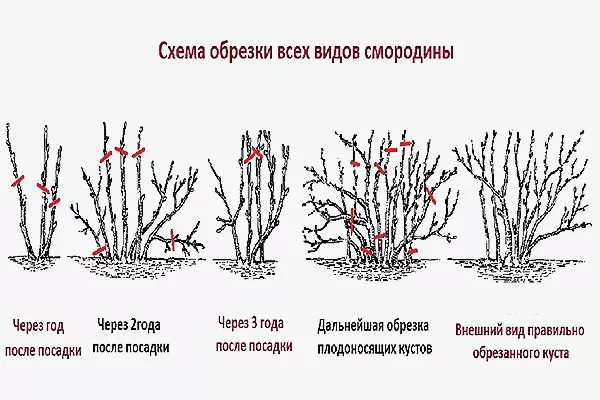
The bushes are shaped during the first three years of life. Subsequently, all that remains is to maintain the crown. Pruning is carried out twice a year - early in the spring and late in autumn.
Selechenskaya 2 is distinguished by its spreading habit, and in addition, it often develops branches that point inwards – these need to be removed.
Principles of pruning:
- First time. Currants are pruned immediately after planting - to 1 or 2 buds.
- In the second year. All shoots are pruned except for 3-5 of the strongest ones. In midsummer, the tops are pinched to stimulate branching.
- In the following years - 3, 4 and 5. The procedure is repeated to completely shape the bush. It should contain 7 to 9 branches of varying ages.
- In the 4th and 5th year. In the spring, old shoots are cut out, and new ones are thinned out if too much growth has appeared over the past year.
- In autumn, during the first 3-4 years. Shoots are pruned back to 3-4 buds. Subsequently, during this period, only sanitary pruning is performed, removing dry, diseased, or damaged branches.
Shelter for the winter
In order for currant bushes to survive the winter cold safely, they need shelterAlthough the variety is frost-resistant, it is still susceptible to frost damage in severe frosts, so Selechenskaya 2 is insulated in anticipation of winter.
Recommendations:
- In October-November, cover the bushes with agrofibre.
- Mulch the area around the tree trunks with straw, peat, or sawdust. Apply a 5-6 cm layer.
- When it snows, cover the bushes with snow.
In the spring, as soon as the snow melts, the cover is removed to prevent the bushes from rotting.
Diseases and pests
The most dangerous period for currants is spring, when they are most at risk of disease and insect attacks. Gardeners combat diseases with fungicides and pests with insecticides. They also use folk remedies, such as spraying with infusions of tobacco, garlic, and onion peels.
One of the reasons breeders began improving the Selechenskaya currant variety is its vulnerability to powdery mildew, anthracnose, and bud mite. Selechenskaya 2 can also be affected by these diseases, but it is much more resistant—one or two fungicide treatments are sufficient for prevention, instead of three or four.
Diseases and pests of Selechenskaya 2 and measures to combat them:
- Anthracnose. Spraying with Phthalan and Kuprozan is recommended before bud break and 2 weeks after harvest.
- Columnar rust. This disease can be prevented with Bordeaux mixture or Nitrafen—the bushes are treated during bud break. To prevent the disease from spreading to other bushes, fallen leaves from the affected plant are collected and burned.
- Gray rot. Currants are treated with a 3% copper sulfate solution before flowering.
- Kidney mite. In case of infestation, spraying with acaricides such as Actellic, Nissoran, or similar products is recommended. At least three treatments are required, with 10-day intervals. Phosphorus-containing products such as Dimetrin, BI-58, etc. are more effective.
- Spider mite. Spraying with colloidal sulfur helps combat the pest; this is done before flowering.
- Gall aphid. Sumicidin or Actellic are used to combat this. Bushes are sprayed before the leaves emerge.
Reproduction
The most popular method of propagating currants is by cuttings. This is done in the spring or fall, while the bush is dormant. Selechenskaya 2 currants can also be propagated by layering and division; seed propagation is rarely considered by gardeners.
Harvesting and storage
This variety ripens early, but the berries ripen slowly and gradually, so they can be picked from the bush throughout most of the summer. The first fruits appear in mid-July, but the bulk of the harvest ripens in August.
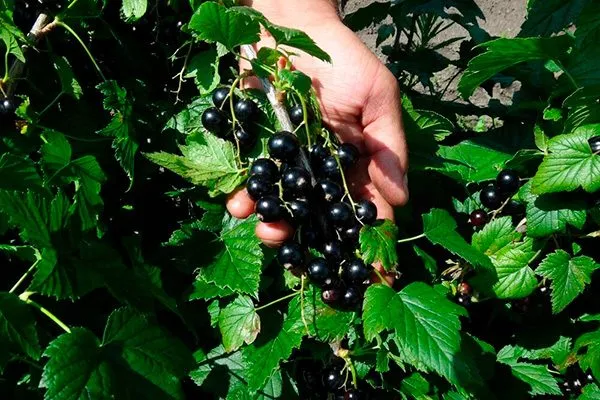
The berries adhere well to the branches and are picked dry. It's best to harvest them when there's no rain, as this will help them keep better. They can be stored in the refrigerator for up to two weeks. They can also be frozen, dried, and preserved, making jams, jellies, and compotes.
Reviews
Although Selechenskaya 2 was bred relatively recently, it has already become popular among berry lovers. This variety is successfully grown in various regions of Russia, producing generous harvests of large, tasty, and healthy fruits.