
The Rosa currant is one of the most interesting and unique varieties. Its pink berries, delicate flavor, and high disease resistance make this variety not only attractive to gardeners but also an excellent choice for creating beautiful and delicious preserves. It's important to understand the characteristics of this variety, its pros and cons, and to follow proper care.
History of the variety's creation
Developed at the All-Russian Research Institute of Fruit Crop Selection, breeders Bayanova and Golyaeva used the Chulkovskaya and Rosa Chair subspecies to create it.
Description
This crop attracts more attention than the more common red or black varieties, and its flavor is particularly delicate. To grow this bush in your garden, it's important to choose the right variety. Experienced gardeners recommend choosing low-maintenance varieties, such as the Rosa currant.
Plant
The bushes are gently spreading, medium-dense, and reach a height of about 1.5 m, classified as medium-sized. Other distinguishing characteristics:
- Escapes – straight, medium thickness, matte, green color.
- Leaves - small, five-lobed, bright green or dark green.
- Flowering – accompanied by small, saucer-shaped flowers of a pale shade.
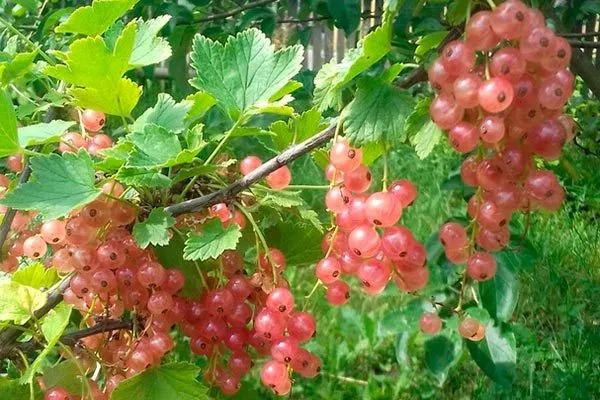
The berries are located on brushes with moderate density, and their length together with the petiole is about 8 cm.
Fruit
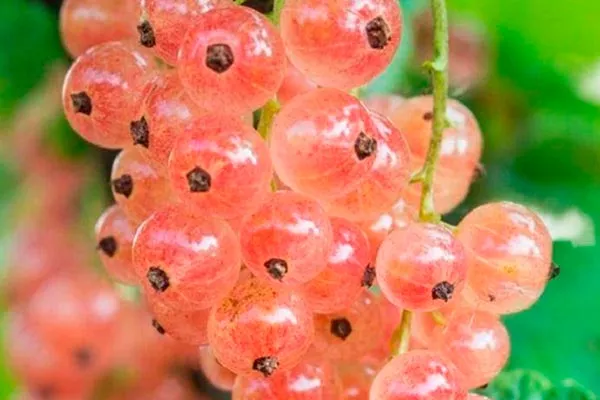
The main feature of this variety is its berries: they are round, medium-sized, and pink, weighing between 0.5 and 0.8 grams each. The taste is excellent – the fruits have a sweet, dessert-like flavor with a refreshing, natural sweetness. The flesh is tinged with pink.
Characteristics of the variety
Roses are distinguished by their high winter hardiness, making them suitable for cultivation even in cold regions. The plant has good resistance to most diseases, but can be susceptible to powdery mildew and anthracnose, although it is resistant to septoria leaf spot. It is susceptible to attack by red gall aphids.
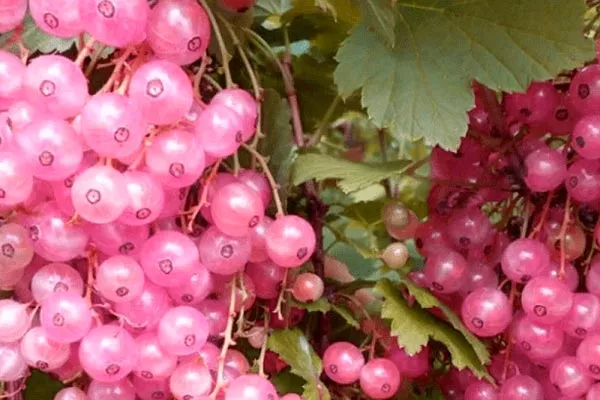
Currants boast excellent productivity: a single bush yields approximately 10-12 kg, and a hectare yields up to 99.8 centners. A plus is the stable yield when grown in both full sun and partial shade, and climate conditions have little impact on yield, making this variety suitable for cultivation in any region of Russia.
Composition and beneficial properties
This variety has many beneficial properties, due to its rich chemical composition:
- Vitamin C content strengthens the immune system, helps fight colds and increases the body's overall resistance to infections.
- The presence of P-active substances helps improve the condition of the cardiovascular system, strengthening the walls of blood vessels and reducing the risk of damage.
- Pectins help cleanse the body, removing harmful substances and improving digestion.
- The sugars contained in berries not only give them a sweet taste, but also provide easily digestible energy.
- Microelements (phosphorus, magnesium, sodium, chlorine, sulfur and aluminum) support metabolism, nervous system function and overall body function.
During heat treatment, beneficial substances are preserved, which is why currants can be used for preparations while maintaining their valuable qualities.
Pros and cons
Before planting a crop in your garden, carefully examine its pros and cons. Rose currants have many advantages:
Peculiarities of rose planting
For successful cultivation, it's important to consider a few points. Follow these recommendations:
- Selecting a location. The bushes grow well in both full sun and partial shade. For maximum yield, choose well-lit locations. Plants need space, so the site should be protected from strong winds and drafts.
Lowlands with high soil moisture and stagnant water are not suitable for this variety. - Selecting a seedling. Purchase planting material that is 1-2 years old and has well-developed roots. The root system should be strong, free from damage and signs of rot, and 15-20 cm long. Inspect the shoots: they should be free of disease, and the buds should be green.
- Preparing the soil. The plant prefers slightly acidic or neutral soil, so if it's too acidic, add lime or wood ash. Dig over the soil and clear it of weeds beforehand.
Two to three weeks before planting, prepare the planting holes to allow the soil to settle. The hole size is 40 x 40 x 40 cm. Add a mixture of compost (about 5 kg), superphosphate (100 g), and potassium salt (30 g) to the bottom. This will provide the plant with nutrients for the first few years of growth.
- ✓ The presence of at least 3 main roots with a length of 20 cm.
- ✓ No mechanical damage to the bark and roots.
- ✓ The soils are preferably loamy or sandy with a pH of 6.0-6.5.
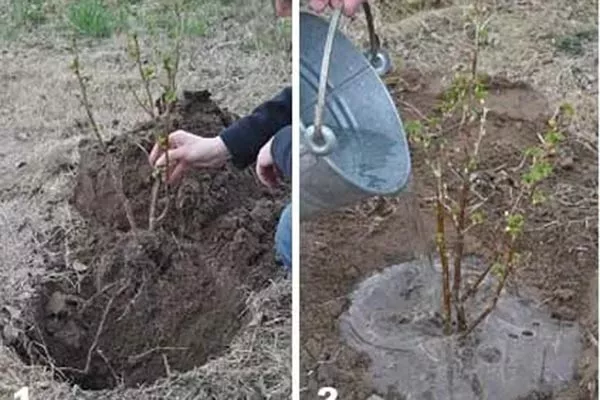
Step-by-step algorithm:
- Water the hole generously and let it soak in.
- Place the seedling's roots into the hole at a 45° angle for better rooting. Place them 5-6 cm below the root collar.
- Carefully fill with soil, compact it so that there are no air pockets around the roots.
- Moisten the plant with 5-7 liters of water.
Cover the soil with a layer of mulch (humus, peat or sawdust) to retain moisture and protect against weeds.
Care nuances
Caring for currants involves following standard agricultural practices. The plant requires moderate but regular watering. Apply water at the roots, avoiding drips on the leaves to prevent fungal diseases.
The main periods that require special attention to watering:
- After flowering – for the formation of ovaries;
- During the growth of berries – for pouring them;
- After harvesting – to restore the plant's strength.
For good growth and yield, fertilize currants several times per season:
- In the spring (April). Use nitrogen fertilizers, such as ammonium nitrate (20-30 g per bush), to stimulate the growth of shoots and leaves.
- During the flowering period. Add organic matter (for example, a solution of mullein or chicken manure in a ratio of 1:10) or complex mineral fertilizers.
- After harvesting (late July-early August). Add phosphorus and potassium fertilizers (30-40 g of superphosphate and 20-30 g of potassium salt per bush) to strengthen the plant before winter.
Pruning helps create a healthy bush, improve yield, and make maintenance easier. In the spring, perform sanitary pruning, removing all damaged, dry, and diseased shoots. In the fall, perform formative pruning: remove old branches (over 5-6 years old) and leave no more than 15-20 strong young shoots.
The plant is winter-hardy, but in particularly cold regions, protection is recommended: before winter, cover the root zone with a 5-10 cm layer of humus or peat. In harsh winters, tie the bushes with spruce branches or cover them with agrofibre to prevent frost damage to the shoots.
What diseases and pests can affect?
Despite the bushes' strong immunity, if not properly cared for, they can be susceptible to disease and pest attacks. It's important to take action promptly:
| Disease/Pest | Symptoms | Control measures |
| Powdery mildew | White coating on all parts, drying out and deformation of leaves. | Spraying with a fungicide solution (for example, Topaz or Fundazol), treating bushes with an infusion of ash or soda. |
| Anthracnose | Brown spots appear on the leaves. They gradually merge, causing them to fall off. | Removal of affected parts, use of Bordeaux mixture or copper-containing preparations. |
| Septoria | Circular white spots with a dark border on the leaves, which cause them to wilt. | Use of 1% Bordeaux mixture, timely removal of damaged areas of the plant. |
| Red gall aphid | Redness and swelling on the upper side of leaves, slow growth of shoots. | Spraying bushes with insecticides (Actellic, Confidor). A soap solution or garlic infusion is effective. |
| Spider mite | The appearance of a thin web on leaves and shoots, yellowing and falling off. | Treatment with acaricides (Fitoverm, Actellik), use of infusions of garlic or onion peel. |
| Sawfly | The larvae gnaw at the leaves, leaving only the veins. | Collection of larvae by hand, use of insecticides (for example, Intavir). |
Harvesting and storage
Rose currant berries begin to ripen in mid- to late July, depending on climate conditions. Pick them when they are a rich pink color and slightly soft to the touch. Pick by hand, carefully removing them from the bunches to avoid damage.
Helpful tips:
- The fruits may not ripen at the same time, so harvest them several times, starting with the ripest specimens.
- Store the harvest in a cool place (around 0-2°C) for 3-5 days. To do this, place the fruits in a container with ventilation holes (baskets or plastic boxes).
- For long-term storage, freeze the berries. Carefully wash them, dry them, and arrange them on a tray in a single layer to prevent them from sticking together. Once frozen, transfer them to bags or containers. Frozen fruits retain their flavor and nutritional value for up to 10-12 months.
- For winter preserves (such as jam or compotes), use currants in a variety of recipes. Thoroughly remove stems and wash the berries. Preserving them is straightforward, as they retain their texture well during heat treatment.
- Dried currants retain many of their beneficial nutrients. To do this, dry the berries in the shade or in a dehydrator at temperatures up to 50°C. Store them in airtight containers in a dry, dark place.
The optimal temperature for storing fresh berries is 0-2°C, while for frozen berries, it's down to -18°C. Humidity should not exceed 85% to prevent mold and rot.
Reviews
The Rosa currant is not only an aesthetic addition to your garden but also a source of delicious, healthy berries. Its low maintenance, disease resistance, and excellent flavor make this variety the perfect choice for any gardener. With proper care and attention, you'll enjoy a bountiful harvest and long-term storage.