
Fertilizing currants plays an important role in growing this berry bush. Fertilizers must be applied correctly and at the right time. The most favorable time is autumn, after the fruiting period has ended.
The Importance of Autumn Nutrition
In the fall, after fruiting actively, currants are very vulnerable. The plant's roots are shallow underground, so the available micronutrients quickly deplete. They need to accumulate strength for the winter to build resistance to diseases and pests in the spring and begin active growth.
- ✓ The optimal soil pH for currants should be in the range of 6.0-6.5.
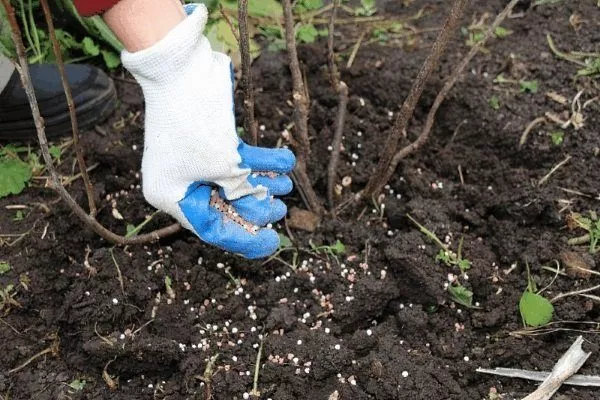
- ✓ The distance from the bush trunk for applying fertilizer should be 30-40 cm.
When fertilizing, it is important to take into account the biorhythms of the shrub and its autumn needs.
Biorhythms of berry bushes in autumn
After harvesting, the currant bush devotes all its energy and sap to the formation of new fruit buds. This ensures future fruiting. During this period, exhaustion can lead to a lack of berries the following year and even the death of the entire bush.
The more nutrients the currants accumulate by the winter period, the better they will survive it.
Autumn needs of currants
Atcaring for currants in autumn Potassium and phosphorus fertilizers are used. These minerals, when applied to the plant, make it frost-resistant and stimulate growth in the spring.
Nitrogen fertilizers are not used in the fall. They promote the formation of new shoots by activating the plant's metabolic processes, preventing the thickening of the main body of the shrub. This means the plant will die at the next frost.
Timing of autumn fertilizing
Fertilization in autumn is carried out in several stages:
- The first feeding is carried out immediately after the end of the fruiting period, in September.
- The next feeding is done a month before the arrival of winter, at the end of October - beginning of December.
- In December, during the third treatment, manure or compost is added. This is because the nitrogen has already evaporated, and the decomposition of the remaining material into micronutrients requires time and the activity of soil bacteria.
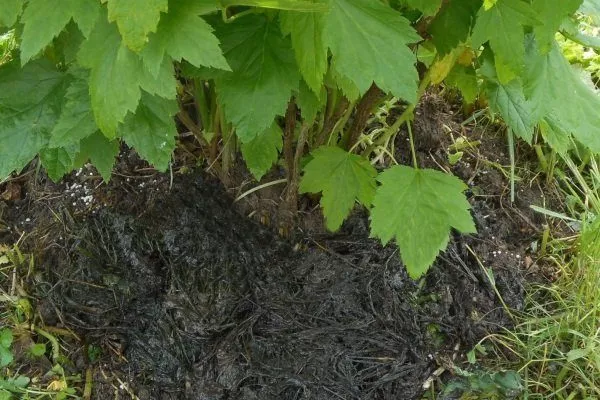
When applying autumn fertilizer, it's important to loosen the soil. This should be done shallowly to avoid damaging the shrub's roots.
During dry autumn, apply fertilizers together with watering to avoid burning the currant root system.
How to fertilize currants in autumn
To avoid harming the shrubs and preventing their death, fertilize at the optimal time and with the fertilizers they currently require. All components are diluted with water strictly according to the instructions.
Organics
| Name | Fertilizer type | Validity period | Method of application |
|---|---|---|---|
| Manure | Organic | Up to 6 years | Dilution with water |
| Bird droppings | Organic | 1 month | Dilution with water |
| Compost | Organic | 2-4 months | Mulching the soil |
| Wood ash | Organic | 2-4 years | Mixture with humus |
| Potato peelings | Organic | 3-5 days | Infusion |
| Green manure | Organic | Autumn | Digging up the garden bed |
Organic fertilizers significantly improve soil condition, making them very beneficial for currants. These include:
- Manure. Use the manure already rotted to avoid burning the plant roots. Slowly dissolving in the soil, it saturates the currants with minerals. This effect can last up to six years. Mullein retains moisture in the soil and activates photosynthesis, saturating the roots with carbon dioxide. For top dressing, dilute the manure with water in a ratio of 1:4. The optimal amount of fertilizer for one bush is 10 liters. Spread the manure under the currant roots and cover with soil to preserve the beneficial properties.
- Bird droppingsChicken manure is most often used due to its availability. When wet-dressing shrubs, it is diluted with water at a ratio of 1:12. This type of organic matter is also applied during half-spade tilling. Approximately 1 kg of manure is used per shrub, thoroughly mixed with the soil. After a month, fertilize the soil, scattering the manure not directly under the shrub, but at a distance of 25-30 cm from it. This is due to the high nitrogen concentration in the fertilizer.
- Compost. It begins to break down into nutrients 2-4 months after application, therefore mulch the soil humus in November.
- Wood ash. It's easily absorbed by the currant root system. The composition of this fertilizer's elements is determined by the type of wood from which it's derived. For example, pine ash is rich in phosphorus, deciduous trees are rich in potassium, and peat ash is a source of calcium. This organic matter is applied along with humus and peat. For root application, a mixture of manure and ash diluted with water at a ratio of 1:2 is used. This mixture is left to sit for 5-7 days, stirring daily. The ash makes the soil loose, light, and breathable. This effect lasts for 2-4 years.
- Potato peelings. They are considered the best fertilizer for currants, as they contain high concentrations of potassium and starch. This increases the chances of a bountiful future harvest. Potato peels can be used as fertilizer in a variety of ways:
- add fresh or dried peelings in the same way as humus, sprinkle or dig under each bush;
- Pour the potato peel infusion over the currants or spray the above-ground parts;
- A concentrated infusion is made from fresh or dried potato peelings. To do this, pour boiling water over them in a 1:2 ratio. Let it steep for 3-5 days. Stir the mixture occasionally to more effectively release the starch and micronutrients.
- It is advisable to feed currants with potato infusion at the beginning of autumn, pouring 5-7 liters of liquid under each bush.
- Green manure. Sow alfalfa or peas near the currant bushes. This will reduce weeds and increase the soil's nutrient content. In the fall, dig up the bed and spread grass clippings on top under the currant bushes. This will provide additional protection for the root system from frost, and after turning the soil, it will act as an excellent fertilizer rich in phosphorus, potassium, and nitrogen.
A gardener shares his experience of feeding currants with potato peelings:
Mineral fertilizers
| Name | Fertilizer type | Validity period | Method of application |
|---|---|---|---|
| Nitrogen mineral fertilizers | Mineral | Late August - early September | Dissolution in water |
| Phosphorus mineral fertilizers | Mineral | Development phase | In wet soil |
| Potash mineral fertilizers | Mineral | Autumn and spring | Digging the soil |
It's difficult to manage without mineral fertilizers, as they contain a high amount of nutrients. Depending on their composition, they can be simple or complex. By choosing the right product and strictly observing the proportions, you can effectively feed your currants.
Mineral fertilizers can harm plants if they are dissolved contrary to the instructions and applied regardless of the nutrient composition of the soil.
The chemical industry produces nitrogen, potassium, and phosphorus mineral fertilizers. So:
- Nitrogen mineral fertilizers. They come to the rescue in the spring, when currants need to actively grow and develop. Common fertilizers for this type are: saltpeter and ureaThey are used to produce ammophos, nitroammophos, calcium sulfur, sodium nitrate, etc.
Nitrogen fertilizers are considered the most dangerous. Overuse can cause plant burns and nitrate accumulation in the berries. The recommended application rate for currants is 15-20 g per square meter of soil. To apply, dissolve the required amount of fertilizer in 10 liters of water and water the bushes. In the fall, apply only in late August or early September. - Phosphorus mineral fertilizers. Phosphorus helps plant cells accumulate and retain moisture, which is important during droughts and frosty winter periods. A deficiency of this element prevents shrubs from absorbing nitrogen, but an excess of phosphorus also impedes the absorption of copper, zinc, and nitrogen.
Fertilizers contain 20% phosphorus pentoxide. Superphosphate is considered the best. When used at the recommended dose, it has virtually no effect on soil acidification. It is used for feeding shrubs during the growth phase only when the soil is moist.
Another type of phosphorus fertilizer is phosphate rock. It actively improves shrub immunity to diseases and pests. - Potassium mineral fertilizers. It's commonly used during soil tillage to allow chlorine to wash out and prevent it from accumulating in tissues. Potassium sulfate (25-30 g/m2) and potassium sulfate are often used. Potassium salt is especially beneficial for currants, which suffer from potassium deficiency. It's used both in the fall and spring at a rate of 150-200 g/m2.
The video below explains how to apply mineral fertilizers to currant bushes:
Complex fertilizers
These fertilizers contain a full range of mineral fertilizers. They are very convenient for beginning gardeners—there's no need to measure out individual components and mix them together.
Complex fertilizers are available for spring and fall use, so when purchasing, pay attention to the packaging and seasonality of use. Potassium-phosphorus fertilizers are suitable for foliar feeding of shrubs. To do this, dilute the mixture and spray it on the plants. Root feeding can also be used at the same time.
The "Autumn" complex is also suitable for feeding currants in the fall. Dilute it with water according to the instructions and water the bushes. This effective formula quickly penetrates the roots and nourishes the plants. The only drawback of complex fertilizers is their high price. However, the abundant harvest of sweet berries on a healthy currant bush makes it worth it.
Fertilizing before winter is an important and responsible task. Knowing the application schedule and the composition of the necessary fertilizers will make caring for currants a pleasant experience for the gardener. And the bushes will gratefully reward you with abundant fruit next year.