
Currants are an undemanding crop and produce a bountiful harvest of delicious berries with minimal care. However, proper preparation of currant bushes for winter frosts is essential. Failure to do so can result in severe frosts damaging the crop.
Features of pre-winter care
Autumn care includes standard procedures for all fruit bushes, including proper pruning, fertilizing, watering, and pest and disease control.
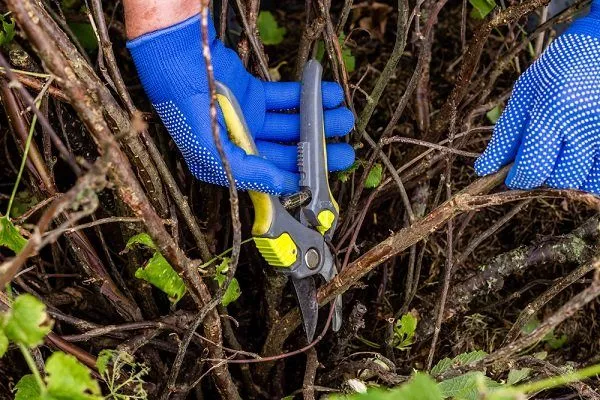
Pruning bushes
Autumn pruning of currant bushes involves clearing and removing all excess branches and shoots. At the same time, the crown is formed into a proper shape. This procedure increases the yield and prolongs the fruiting period.
The timing of pruning depends on the currant variety. For example, black currants should be pruned immediately after harvesting, while white and red currants should be pruned in the fall, when the dormant period begins.
Regardless of the variety and type of currant, pruning before winter is carried out according to the same scheme:
- Use a sharp garden tool to remove all damaged, broken branches and shoots that show signs of disease or pest damage.
- Trim off all thin and weak shoots if they have a small number of branches.
- Remove old branches as well – they are thick and have a darker shade of bark than young ones, they can even be black.
- Trim all branches that grow into the center of the bush and only thicken the crown.
- Trim as low as possible, leaving no stumps as they can become sources of infection.
- ✓ The tool must be made of high quality steel to ensure sharpness and durability.
- ✓ The tool handles should be comfortable and non-slip in your hands to prevent injury.
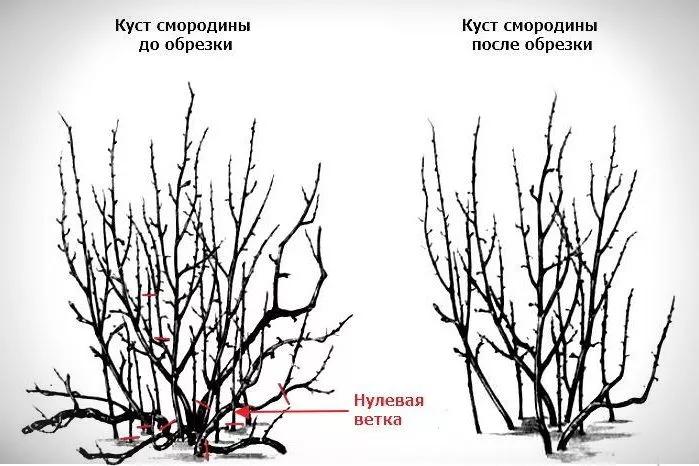
The main advantage of autumn pruning is that diseases and pests will not remain on the bush, and in the spring you will not have to re-process the crop.
Fertilization
Currant bushes that are three years old require fertilizing every fall. Before applying fertilizer, the following preparatory work should be carried out:
- Remove leaves, old branches and other plant debris from around the bushes.
- Disinfect the soil using a solution of potassium permanganate (3 g per 10 l of water).
- A solution of laundry soap (a bar per 10 liters of water) can also be used as a disinfectant.
Applying nutrients in the fall helps currant bushes prepare for the coming winter, but only if done correctly and at the right time. This also ensures a high yield for the following season.
Dry fertilizers are applied during digging. A mixture of organic fertilizers with phosphorus and potassium is recommended. The following schedule should be followed: 10-13 kg of compost, 130 g of superphosphate, and 40 g of potassium sulfate per mature bush.
Soil renewal and loosening
Renewing the tree's trunk circle involves clearing the soil beneath the bush of fallen leaves and replacing the old mulch. This procedure is essential because it helps protect the garden from pests that can overwinter in the foliage.
Collected leaves and old mulch should be removed from the area or burned, especially if the crop was sick.
After harvesting, loosen the soil slightly with a pitchfork (a hoe can also be used). Work at a sufficient distance from the bush to avoid damaging the plant's delicate roots.
- ✓ The mulch layer thickness should be at least 10 cm for effective protection against frost.
- ✓ For mulching, it is better to use organic materials such as straw, sawdust or humus, which will additionally enrich the soil.
The loosening procedure effectively protects the soil from freezing in winter. After the procedure is completed, a shallow hole is dug around the bush to facilitate fertilization and watering. A new layer of mulch—at least 10 cm—is then applied.
Pre-winter watering
Even in a rainy autumn, pre-winter or moisture-replenishing watering is essential. Currants are very demanding when it comes to moisture and do not tolerate prolonged dry periods. Therefore, before the long winter, it is necessary to provide the plant with the required amount of moisture.
At the end of September, currants begin active growth and root development. Therefore, watering is crucial during this period.
Currant bushes are watered according to the following proportions: 30 to 50 liters of water per mature bush (the amount of watering directly depends on the age of the plant). The soil should be well saturated with moisture to a depth of at least 40 cm. After watering, a layer of mulch is applied to prevent rapid evaporation.
Covering bushes for winter
To preserve the bush and prevent branches from breaking, it is necessary to carry out proper pre-winter preparation of currants: bend the branches and cover the bushes.
Currants are cold-hardy crops and can easily withstand temperatures down to -25°C. However, if the temperature drops below this, additional cover is required, otherwise the branches will begin to die off, which will negatively impact fruiting.
There are several relatively convenient and effective ways to protect currant bushes from frost:
- Gather the branches into a bundle and tie a brick or large stone to them. Bend the branches, but do not twist them, so they don't break. Perform this procedure in late October, when the branches are still flexible enough to withstand twisting.
- Drive a stick into the center of the bush and tie all the stems to it, wrap it with agrofibre (you can also use another type of insulation).
- Bend the branches toward the ground and bury them in soil, which will act as a natural and effective insulator. In this shelter, currants can easily withstand temperatures down to -50°C.
- Cover small bushes with burlap. Once snow falls, the cover can be removed completely.
In the spring, when the snow melts, the covering must be removed. If this is not done in time, the above-ground part of the bush will begin to rot. When the thaw begins, all snow must be removed from the bush, as it can turn into a heavy crust of ice and damage or break branches.
You can't use polyethylene to cover currant bushes, as the bush simply won't be able to breathe freely.
The nuances of pre-winter preparation of currants by type
The basic principles for preparing currants for winter are the same. However, there are slight differences depending on the specific variety—black, red, or white currants.
Black currant
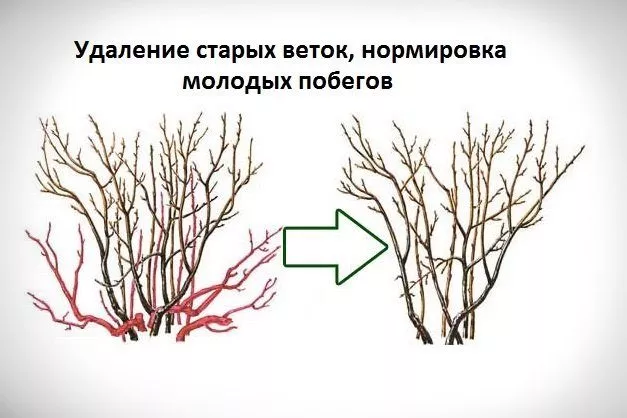
In the fall, blackcurrants require sanitary and formative pruning. During bush rejuvenation, all branches 5 years and older are removed.
To encourage branching, shorten branches by at least a third of their length. Once the shoots are trimmed, no more than 8-10 branches should remain.
Red and white currants
Formative pruning is performed in the fall. Branches 6-9 years and older are considered old.
Red currants are characterized by the formation of large numbers of fruits at the tips of their branches. It is not recommended to significantly shorten the shoots after sanitary pruning, as this will dramatically reduce the bush's yield.
After cleaning, 10-14 shoots should remain on the red and white currant bush. This is the optimal number needed to rejuvenate the bush and stimulate productivity in the new season.

Timing of pre-winter preparation of currants depending on the region
The timing of preparation and its technology directly depend on weather conditions in a particular region. Climates can vary greatly from region to region, so this factor must be taken into account.
Moscow region
In this region, winter temperatures do not drop below -15°C. At these temperatures, additional insulation is not required.
If foreign currant varieties not suited to such weather conditions are grown, the branches should be bent toward the ground and insulated. These procedures should be completed before the onset of frost.
Leningrad Oblast
Snowy and fairly mild winters prevail here, so there is no need to additionally cover currant bushes.
This region experiences high humidity, so special attention is paid to pruning the bush, as well as protecting it from diseases and pests. All work should be completed by the end of September, but no later.
Ural
This region experiences harsh and very cold winters, so currant bushes require careful preparation for the cold. If the winter is virtually snowless, pin the branches to the ground and consider insulating them.
The tree's trunk area must be mulched to prevent the roots from freezing. All preparatory work must be completed before the leaves begin to fall.
Siberia
If the winter is snowy, mulching and bending branches toward the ground is sufficient. When snowfall is light and the site is highly windy, more thorough preparation is necessary, including mulching, bending branches, and additional insulation.
Treatment against diseases and pests
To protect currant bushes, the area around the trunk is dug to a depth of no more than 15 cm and treated with special preparations. This work is carried out after removing plant debris, such as fallen leaves and pruned shoots.
If signs of disease or pest infestation are noticed on the plant, treat it with specialized products. The most popular are Bitoxibacillin, Fitoverm, Fitosporin, Aktara, Alatar, Skor, Topaz, and Fundazol. Be sure to read and follow the instructions carefully before use.
Preventative spraying with a 1% copper sulfate solution is essential – 50-100 g per 10 liters of water; approximately 1.5 liters of the solution is used per bush. Bordeaux mixture is also widely used: 100 g of copper sulfate and 100 g of quicklime per 10 liters of water. This amount is enough for approximately 10 bushes.
As a preventative measure, the area around the trunk is treated with a disinfectant solution of potassium permanganate (3 g per 10 liters of water) or laundry soap (300 g dissolved in 10 liters of warm water).
Common mistakes gardeners make
When preparing berry bushes for winter, inexperienced gardeners often make mistakes:
- Fresh manure is added under the bushes in the fall - this can only be done in winter, when plant growth stops and cold weather sets in;
- organic fertilizers are applied in large quantities under the bushes - the plant actively grows greenery and does not have time to properly prepare for the cold;
- Breaking off or cutting branches with a blunt instrument will weaken the plant, make it less susceptible to frost and more susceptible to pest attacks.
An experienced gardener will tell you about preparing currants for winter in the following video:
Proper care and preparation of currant bushes for winter will help ensure a bountiful harvest of delicious berries in the new season. In the fall, bushes need to be pruned, watered, fertilized, protected from diseases and pests, and prepared for the coming cold weather.
Lots of useful recommendations in accessible language and with clear descriptions. Thank you so much, you were very helpful – we've already prepared what you recommended.