
The Marmeladnitsa redcurrant bush is compact, reaching a height of one and a half meters. A distinctive feature of this variety is its ability to gel instantly, regardless of external conditions, making these berries an indispensable ingredient in many culinary desserts.
History of creation
This variety was developed by L. V. Bayanova, a specialist at the Oryol Research Institute for Fruit Crop Breeding, in the early 1990s. In 1996, it was submitted for registration in the State Register of Breeding Achievements of Russia, but it was only in 2017 that it was officially approved for use.
During development, the Rote Spätlese and Maarses Prominent currant varieties were used. The main goal of the Marmeladnitsa creator was to increase the pectin content in the fruit, which was achieved. Simply put, L. V. Bayanova's goal was to create a currant variety ideal for making jellies and marmalades.
Description of the variety
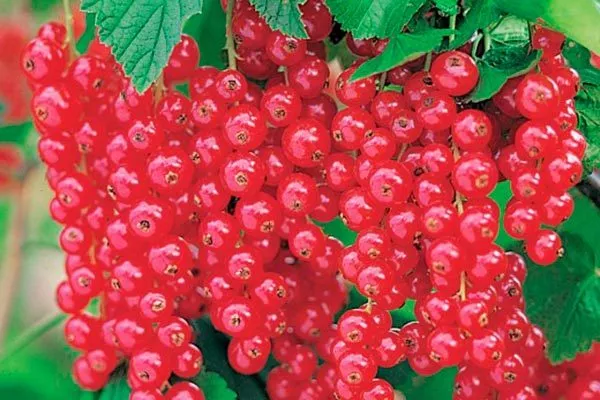
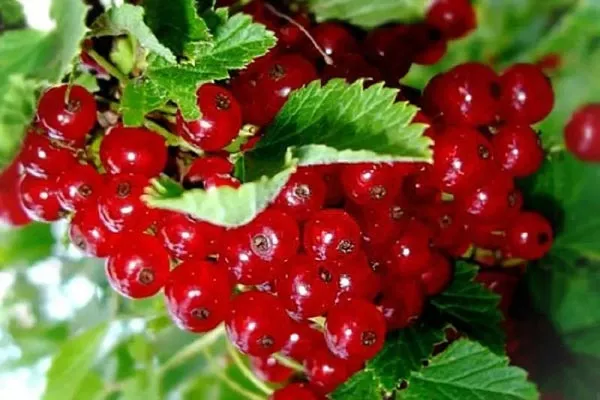
The name of the red currant, Marmeladnitsa, speaks for itself: its berries are the perfect ingredient for making jellies and marmalades. These berries are rich red, large, and captivatingly shiny, seeming to glow from within, making these bushes a stunning addition to any garden.
Appearance of the bush
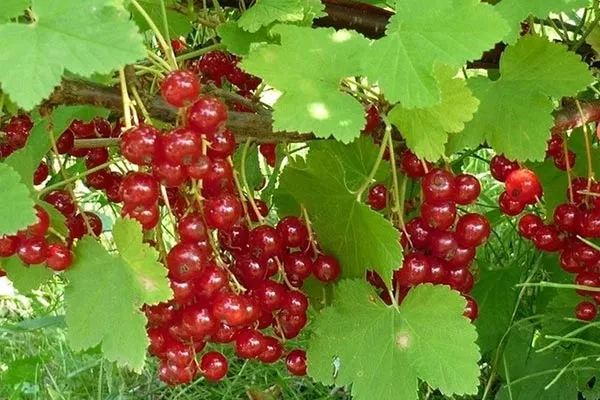
Marmalade is a medium-sized shrub, reaching a height of 150 cm. Due to the active growth of its shoots, it appears dense, but at the same time does not have an excessively spread out form, since the branches grow obliquely upward, not bending downward.
Other varietal characteristics:
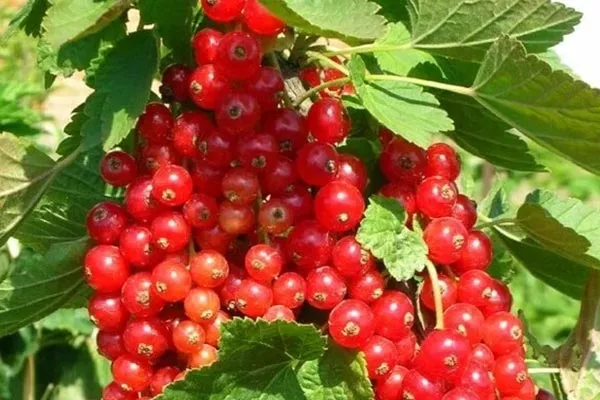
- Currant leaves have five lobes with an elegant border and small tubercles along the edges. The leaf blade is slightly indented on the front side, giving it noticeable volume.
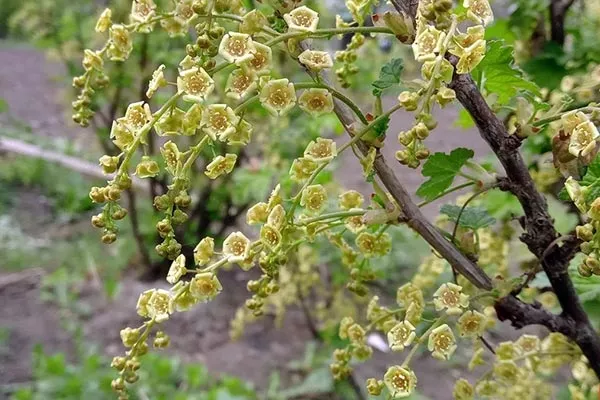
- Currant buds are round, saucer-shaped, and yellow-green in color. Five petals with rounded tips point outward. They are arranged on racemes of 15-17 flowers.
- The young shoots of this bush are covered with light pubescence, have a rich dark green color and are prone to breakage.
- The buds on these branches are large, pointed and located at an angle relative to the shoot.
- Several tassels are formed in the nodes – usually 3-5 pieces.
- The length of a currant bunch can vary depending on the quality of the pruning, but on average it is 8-10 cm.
Berries
Fruit characteristics:
- Currant berries are round in shape with flat sides;
- The variety stands out especially due to its bright orange-red color and noticeable white stripes;
- the size of the fruits is significant – the weight of one berry can vary from 0.4 to 2 g;
- When picked, the berries stay on the bushes and do not fall apart or crack.
Characteristics
The Marmeladnitsa has attracted attention both for the taste and properties of its fruits, and for its unpretentiousness and high frost resistance, which makes it a true decoration for garden plots.
Uses and taste
Marmeladnitsa fruits are distinguished by a delicate sweet-and-sour flavor, which, according to experts, has a more pronounced acidity than other well-known currant varieties. Experts rate them 4.2 out of a maximum of 5.
Directions for use:
- The berries are ideal for producing jams, compotes, syrups and juices.
- Due to their unique properties, they are most often used to make jelly. To do this, the juice is extracted from the berries and then mixed with sugar. The resulting drink can set on its own without any further processing.
- Marmeladnitsa leaves are also used – they can be used as a base for tea. This drink has a strengthening effect on the immune system, helps reduce inflammation, and is especially valuable for treating colds.
- Berries are also used in folk cosmetics: face and body masks have the ability to improve skin, reducing inflammation and other undesirable effects.
- Using fruits for hair helps restore damaged structure, giving curls softness, smoothness and shine.
- Currant juice is beneficial for nails, strengthening them and improving cuticles, which contributes to a more effective manicure.
Drought and frost resistance
The Marmeladnitsa variety is known for its ability to withstand cold climates. Even in such conditions, the bush maintains its attractive appearance for a long time and retains its fruit's flavor.
In early winter, it can withstand temperatures down to -35 degrees Celsius, and in midwinter, down to -45 degrees Celsius. However, this variety's tolerance to hot climates is average.
Flowering and ripening, pollination
Marmeladnitsa is a late-ripening variety with a long flowering period, lasting approximately two weeks. The berries of this variety begin to ripen after August 15th. This variety is self-pollinating, but to increase the number of berries, it is recommended to plant it alongside other varieties with similar budding periods.
Fruit harvesting occurs from 10-15 summer to 20-25 August, the exact period depends on the specific region.
Productivity
Young bushes (3-4 years old) yield between 1.8 and 2 kg of berries. More mature bushes yield around 6-8 kg. In commercial settings, up to 13 tons of berries can be harvested from a single hectare.
The Marmeladnitsa variety is characterized by good transportability and long-term storage. To maintain freshness, currants are recommended to be stored in a cool place for 12-15 days.
Immunity
Marmeladnitsa is highly resistant to insects. This variety has good immunity to diseases such as powdery mildew, anthracnose, and septoria leaf spot, but despite its resistance, the bushes still require regular preventative measures.
Beneficial qualities of currants
Red currants are known in traditional medicine for their blood-purifying and digestive properties, thanks to the juice extracted from this fruit. This effectiveness is due to their rich vitamin C, fruit acids, and fiber content.
There are other benefits too:
- Dried redcurrant leaves are used to make a tea that can alleviate the symptoms of gout and rheumatism. This drink also accelerates wound healing when used as a compress and as a gargle for various infections.
- The berries are rich in ascorbic acid, pectin, vitamins B, A, E, and PP, as well as minerals including calcium, magnesium, phosphorus, sodium, and potassium. All of these components are present in red currants in significant quantities.
- Currants contain 7% sugar and 2.2% acids. The nutritional value of these berries includes 7.5 g of carbohydrates, 0.6 g of protein, and 0.1 g of fat. Currants are low in calories—33.3 kcal per 100 g.
The medicinal properties of the berries of this currant variety also include the following effects:
- the ability to reduce blood viscosity, preventing its excessive clotting;
- cleansing the body of harmful substances;
- reducing the risk of heart attack and stroke;
- beneficial effect on heart function;
- preventing the development of atherosclerosis;
- strengthening the immune system, which helps fight viral and other diseases;
- improved vision;
- normalization of hormonal balance;
- regulation of the digestive system;
- stopping inflammatory processes in the body.
Landing features
To ensure fruitful currant bushes and trouble-free harvesting, it's important to follow the basic principles of planting and caring for the bushes. This will ensure a bountiful harvest of berries. When planting currant bushes, it's important to observe the correct timing and spacing between bushes. Furthermore, it's important to carefully select the seedlings, determine the location, and prepare the soil.
Choosing a location
To ensure healthy growth and fruiting of currants, carefully select the planting site. Red currants prefer light soils, such as loam and sandy loam, with a neutral or slightly alkaline pH.
Other parameters:
- Currant bushes grow best in open, sunny areas where they receive sufficient ultraviolet light. Reduced productivity and reduced sugar content are observed in low-light conditions.
- You shouldn't plant currants in the shade or too close to the walls of buildings, even if this helps hide the unattractive appearance of the building.
- A slight slope can be an ideal place for bushes, as moisture will not stagnate around the root system.
Planting dates
Red currants can be planted in either fall or spring. However, the fall method has the advantage of allowing the plant to establish itself firmly and strengthen before the next growing season.
Soil preparation
To ensure currants bear fruit and thrive, it's important to provide the soil with the necessary nutrients. To achieve this, add the following components to the soil:
- compost – 15-18 kg;
- nitroammophoska – 120-150 g;
- ash – 200-250 g.
This dosage of fertilizer is calculated for 1 square meter of area.
The site should be prepared for planting one month before the expected planting date. If this is not possible, fertilize the soil immediately before planting by digging a hole and mixing the soil with the following ingredients:
- compost – maximum 10 kg;
- Superphosphate – 160-180 g;
- potassium chloride – 50 g.
Selection of seedlings
Purchase planting material only from specialized stores or nurseries. The best choice for spring and fall are annuals and biennials with roots that can be either exposed or covered with a root ball.
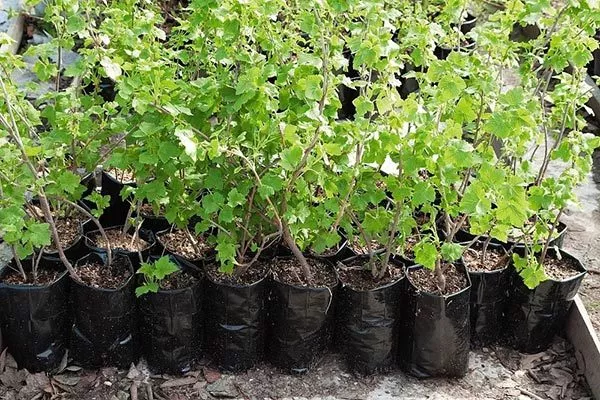
- ✓ Check the root system for rot and dryness.
- ✓ Make sure that the branches of the seedling are flexible and undamaged.
- ✓ Inspect the bark for pests and spots.
Criteria for selecting a quality seedling include:
- The presence of numerous roots without signs of dryness or rot.
- The branches must be straight and elastic, free from any damage.
- It's important to carefully inspect the bark for pests. It should be smooth and free of spots and wrinkles.
- The size of the above-ground part of the seedling should exceed 40-45 cm.
Planting instructions
To successfully grow multiple bushes, it's important to maintain a minimum distance of 150-220 cm between them. Planting too closely can restrict their development and reduce sunlight exposure, leading to smaller berries and a reduced yield.
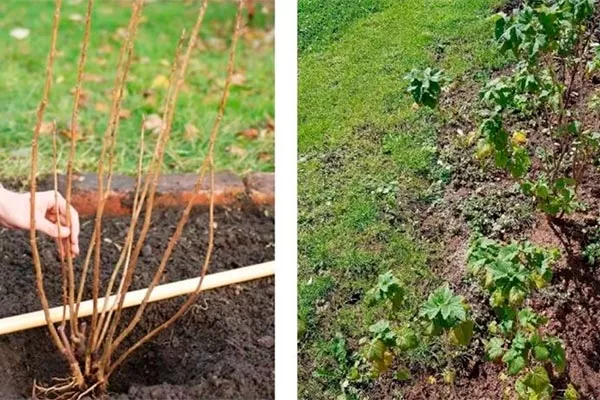
It is important to remember to keep at least 100 cm away from paths or fences when digging holes.
The process of planting currants includes the following steps:
- Combine fertile substrate with organic components.
- Place the seedling in the center of the hole, carefully spreading out the root system so that its base doesn't curl upward. The root collar should be 5 cm deep.
- Fill the empty spaces with substrate and lightly compact the top layer. Water the plant.
- Cover the area around the bush with a layer of mulch using straw, peat, humus, pine needles or sawdust.
- Trim the top of the plant, leaving no more than four buds on the seedlings.
- ✓ Check soil moisture regularly, especially during drought.
- ✓ Mulch the soil around the bush to retain moisture.
- ✓ Carry out sanitary pruning in the spring before the buds open.
Trimming
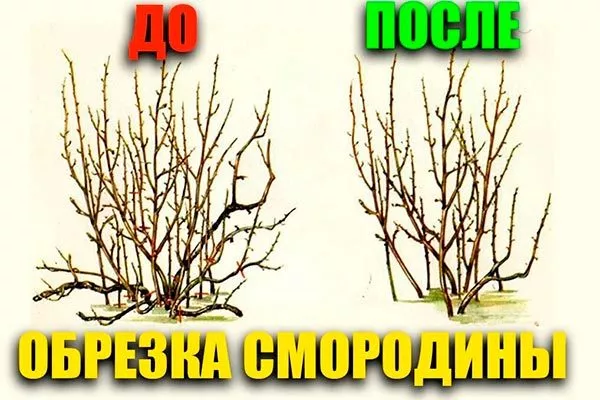
At the beginning of spring, before the buds begin to open, pruning is usually done. This is done according to the following scheme:
- In the first year after planting, leave a maximum of 7 of the strongest and healthiest shoots on the bush, while removing the rest completely.
- In the second year, the bush should have 5 two-year shoots and 4 three-year shoots.
- In the third year, the bush is formed from 4 one-year shoots, 4 two-year shoots and 4 three-year shoots.
- To ensure that currants bear fruit abundantly and produce large berries, they must be pruned.
- Sanitary and thinning pruning is necessary. Remove diseased, dead, and broken branches, as well as weak shoots at the base of the bush.
- During the summer, pinch out green stems to encourage new growth.
Watering
Cool rains are usually sufficient for the bushes to grow and develop fully. However, during periods of drought, when temperatures rise, the plants require manual watering. It's also important to maintain soil moisture during fruit ripening.
It's best to water in the evening. Each bush requires 20-28 liters of water. Alternatively, you can use a drip irrigation system. Mulching is recommended to retain moisture near the roots.
Top dressing
It's important to remember that regular fertilization ensures healthy growth and development of plants, as well as promotes a bountiful harvest. How to properly fertilize a plant:
- Beginning of March. During this period, urea should be added to the soil, with the recommended amount being 25 g. The fertilizer is dissolved in water according to the instructions on the package and used for root feeding, completely pouring the solution into the soil once.
- Budding. The best fertilizer is bird droppings. The solution is prepared at a ratio of 1 part droppings to 15 parts water and is also used for root application.
- Autumn. Manure and compost are recommended. For every square meter of soil, 5-6 kg of manure and 6-8 kg of compost are required. This fertilizer is applied every 2-3 years.
Covering bushes for winter
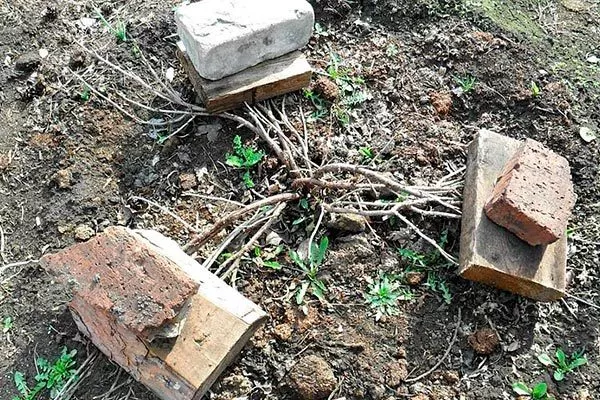
The Marmeladnitsa red currant is frost-resistant, allowing the bushes to survive cold periods without cover. However, to prevent unwanted effects during particularly low temperatures, it is recommended to provide protection. The covering procedure is as follows:
- the area around the bush is cleared and the soil is loosened;
- then the ground under the plant is lined with wood sawdust or covered with spruce branches, creating a layer of 10-15 cm;
- The branches of the plants are lifted and fixed from above using wooden boards or other suitable materials, but not metal, to keep the plant under a light cover of snow.
Diseases and pests
Marmalade plantations are highly resistant to diseases and pests, but careful care is essential. However, if cultivation practices are improper, problems can arise, including:
- Aphids. This pest is the most common. Its larvae live on the undersides of leaves, feeding on sap. Swelling, curling, and yellowing of the leaves indicate an infestation. Effective control methods include ladybugs (if present) and insecticides such as Iskra.
- Firefly. This brown butterfly feeds on fruits. To protect against it, it is recommended to use Apollo before budding and Karbofos after flowering.
- Currant glass bottle. This pest, with its lilac-colored scales, damages grape clusters, causing them to become smaller. Malathion should be applied before bud break.
- Anthracosis. This disease manifests itself as brown spots that grow in size. If the stalks are affected, the fruit will fall. Treatment is with Cuprozan.
- Drying out. This condition is characterized by cracking of the protective layer and the appearance of tubercles, leading to the death of the shoots. The only effective treatment is removal of the affected parts.
- Rust. This disease causes the appearance of corrosion streaks. Nitrafen is an effective treatment.
Harvesting and storage
The berries of this variety are distinguished by their long shelf life on the vine, without falling to the ground. Fresh red currants can be stored in the refrigerator for up to 13-15 days at 0-1°C, and in high humidity, they retain their flavor for up to a month. The Marmeladnitsa variety is distinguished by its resistance to transportation.
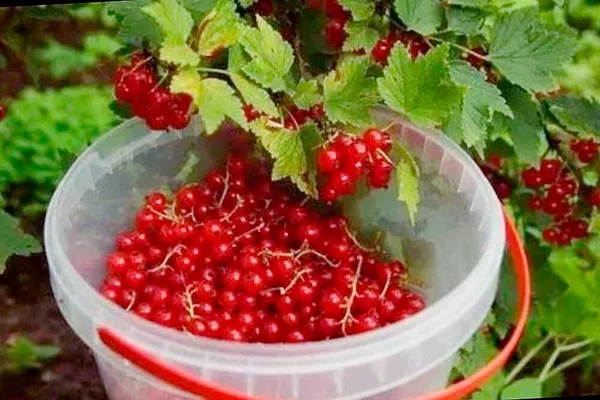
For long-term storage, red currants can be frozen, dried, or canned. Freezing preserves all the nutrients, making them ideal for making smoothies and purees. Red currants are often added to yogurts, ice cream, and fruit salads.
Dried red currants are traditionally used to make compotes, added to herbal tea blends, or used in crushed form as a seasoning.
Reproduction
Propagating currants from cuttings is an easy process. To collect cuttings, select high-quality shoots, trim them, and root them. The main care for the cuttings is regular soil moisture and good air circulation.
Once green leaves appear, it's time to remove the protective covering. By fall, the rooted cuttings can be transplanted to their permanent location.
Pros and cons
The marmalade maker has a number of advantages that deserve attention:
However, Marmalade Girl also has her weaknesses:
Reviews
Marmeladnitsa is a true all-rounder, suitable for both commercial and home growing. It has many advantages, but not all gardeners can tolerate its unpredictability and the predominantly acidic berries. If you choose this variety, be prepared for its peculiarities: it requires nutritious soil, regular watering, and careful pruning.