
Almost every gardener grows currants at their dacha. They are loved for their generous harvest of berries, rich in vitamin C, even from a small bush. Sometimes, pests and diseases can ruin the harvest. The growth of young currant shoots decreases, the berries lose their sweetness and become more sour, the yield drops, and red spots appear on the leaves.
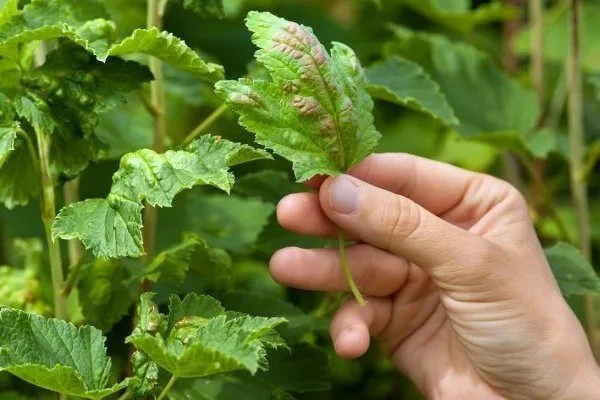
Causes of red spots on currants
Red spots on currant leaves can be caused by various diseases and insect pests. Timely treatment will help save the plant and preserve the harvest.
| Name | Disease resistance | Ripening period | Productivity |
|---|---|---|---|
| Anthracnose | Low | Average | Average |
| Rust | Low | Late | Low |
| Red gall aphid | High | Early | High |
Anthracnose: a fungal disease
The causative agent is the fungus Colletotrichum orbiculare. Spores are carried by animals and insects and spread by wind and rain. The fungus particularly favors warm and humid weather, so it begins reproducing in July, peaking in late summer. Currant bushes growing in acidic soil and deficient in potassium and phosphorus are at greatest risk of infection.
The first symptoms of anthracnose appear on the lower leaves of the plant. Individual small spots, ranging from dark red to tan, eventually merge into a single large spot. The currant leaf curls, dries up, and falls off.
If the disease is left untreated, the fungus will spread to the entire bush, including young shoots and fruit. The trunk will become dry and brittle, and the foliage will fall. Eventually, the plant dies. The fungus is frost-resistant. It overwinters on fallen leaves, and with the return of warmer weather, it begins to spread again. Currants are not immune to anthracnose.
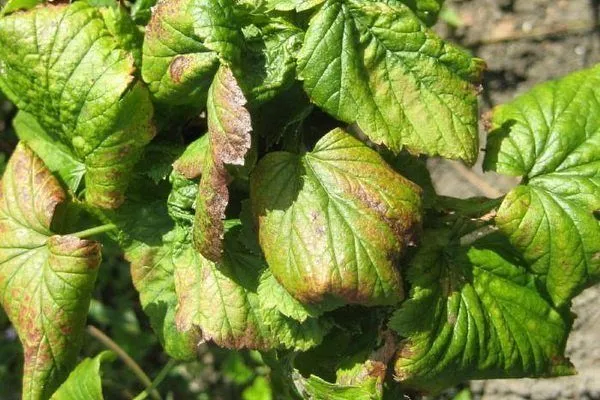
Rust
Another fungal disease affecting currants is cup rust and columnar rust. Cup rust is caused by all types of sedge, as this is the weed on which the fungus overwinters and develops, while columnar rust is caused by pines and cedars.
The spores survive the winter well; only frost and even a light layer of snow are harmful. In the spring, they are carried by the wind, infecting currant bushes within a 300-meter radius. If the spring is dry and cool, the risk of infecting bushes is minimized, as the fungus prefers humid and warm weather.
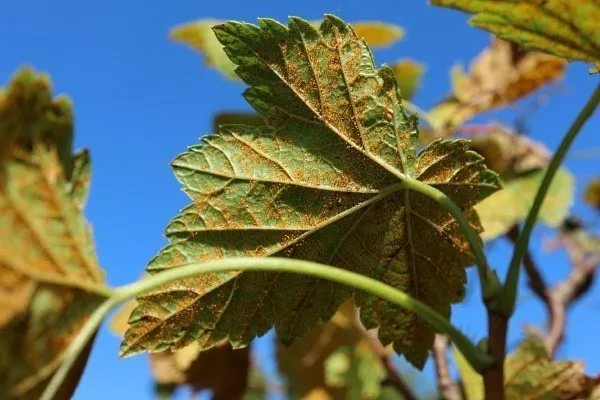
The rust incubation period is 10 days. Therefore, the first symptoms of currant infection are not seen until early June. Bright orange-red blisters appear on the upper surface of the leaves. As they grow, the leaves turn yellow and fall off. The berries suffer the same fate.
By mid-summer, the underside of the leaves becomes fluffy—thin columns containing spores have formed from yellow, cup-shaped pads. As they mature, they are carried by the wind and fall onto the sedge for wintering.
Currants are very sensitive to this disease and are unable to resist it. In advanced cases, the rust completely destroys the bush, leaving it unable to survive the winter, and the currant dies completely.
Red gall aphid
When planting currant bushes, keep in mind that these pests thrive in areas where herbs such as sage, mint, oregano, lavender, and savory grow. The red gall aphid is an insect up to 2 mm long, light yellow in color, with short hairs on its ovoid body.
Aphids reproduce quickly. From May to October, they create cracks in the bark and lay eggs. A short time later, offspring emerge. Over the course of a season, a single aphid produces about 100 similar individuals. Female aphids have wings, so they can spread throughout the bushes.
Red gall aphids pierce leaves and suck out their sap. Due to differences in leaf structure (they are softer), they prefer red, white, and other currant varieties to black and golden currants.
Unsightly bumps and swellings appear on the surface of damaged leaves. The appearance resembles a fungal disease, but the pests are visible on the underside of the leaf. The currant plant attempts to heal the punctures, causing a growth called a gall to form in their place.
As a result of aphids' activity, leaves become deformed, and the plant may die. Another problem associated with the presence of these pests on currants is viral infection. Even if the aphids are destroyed, the virus remains inside the plant, requiring treatment and processing.
In this video, the award-winning gardener demonstrates what red gall aphids look like and discusses methods for controlling this pest:
How to treat currants?
If the currant bush is only slightly affected, you can try folk remedies. If the disease has completely taken hold of the plant, chemical treatment will help. For severe cases of fungal diseases and red gall aphids, it's best to uproot and burn the plant instead of treating it.
To combat red spots on currant leaves, the entire bush is treated—leaves on both sides, stems, and shoots all the way to the roots. Fallen leaves should be collected and burned. Spraying is carried out in clear weather 3-4 times per season: in spring, when the leaves are just beginning to unfurl, when flower buds appear, and before the berries set.
Folk remedies
The most common folk remedies for combating anthracnose and rust:
- Soap solution. Dissolve 400 g of grated laundry soap in 500 ml of water. Rinse all the leaves and stems.
- Garlic tincture.Mix 1 cup of crushed garlic with 2 liters of warm water. Let it steep for 2-3 days. Strain and spray on currants.
- Soap and garlic mixture.Mix soap solution and garlic infusion in a 1:1 ratio. Add 1 tablespoon of hot pepper and a little liquid soap. Spray the bushes.
- Iodine solution. Add 10 drops of iodine to 10 liters of room temperature water. Treat the shrubs.
- ✓ Carry out treatment early in the morning or late in the evening to avoid rapid evaporation of the preparations.
- ✓ The air temperature should be between +10°C and +25°C for maximum effectiveness of the preparations.
To destroy aphids use:
- Tobacco tincture. Dissolve half a cup of tobacco dust in 1 liter of water. Simmer for 30 minutes. Dilute the mixture to a liter with water and store in a cool, dark place for 24 hours. Strain through cheesecloth. Add 1 teaspoon of liquid soap and 15 grams of shredded laundry soap.
- Onion and tomato infusion. Pour 2 liters of boiling water over 0.5 kg of onion peels. After 2 days, add 2 liters of water and a little liquid soap. In another container, pour 5 liters of boiling water over 2 kg of tomato tops and let sit for 2 hours. Reduce heat to low and simmer for 3 hours. Strain and add 1/3 of the water. Mix the infusions in a 1:1 ratio and spray on the currants.
- Mustard infusion. Add 10 g of white mustard powder to 1 liter of water. Strain after 24 hours. Spray plants, diluting 1 cup of this infusion with 1 liter of water.
- Infusion of marigolds. Pour 10 liters of boiling water over half a bucket of dried flowers. Let steep for 2 days. Add 50 g of grated laundry soap and stir well.
- Soap-ash composition. Dissolve 1/5 of a bar of laundry soap in 3 liters of water and let sit for 24 hours. Pour 300 g of ash into 2 liters of water and boil for 20 minutes. Strain. Mix the resulting solutions, adding 5-7 liters of water.
A gardener shares his folk method for combating aphids in the video below:
Instead of spraying with solutions, some gardeners sprinkle currant bushes with tobacco dust and ash. However, this method is less effective for several reasons:
- It is not possible to treat the underside of the leaves.
- Dry matter reaches the plant partially.
- The soap in the solutions adds stickiness. This allows the mixture to remain on the plant's surface for much longer, forming a film and providing a positive therapeutic effect.
- By spraying, the bush is treated from all sides, including the lower part of the leaf blades.
If folk remedies don't help, try treating the pest with biological products. They're safe to use, so protective clothing and a respirator aren't necessary. Effective products include Biotlin, Fitoverm, and others.
Chemicals
If there is no positive result after treating currants with folk remedies to combat diseases and pests, or if the bushes are severely infested, the use of chemicals is required.
If there are already berries on the bushes, treating them with chemicals is highly undesirable, because the berries absorb the chemicals and accumulate them inside themselves.
To combat anthracnose and rust use:
- Copper sulfate 1% and Bordeaux mixture 1%;
- "Agrolekar";
- PropiPlus;
- "Chistoflor";
- "Forecast";
- "Previkur";
- Topsin.
In case of aphid infestation, use:
- "Aliot";
- "Calypso";
- "Actellic";
- Confidor;
- "Wofatox".
To destroy aphid eggs laid in the bark of shrubs, the following preparations are used:
- "Decis";
- "Aktaru";
- "Insector";
- "Spark";
- Inta-Vir.
Dilution of these products and preparations for currant treatment must be strictly in accordance with the instructions for use. Spraying of currants should be carried out in calm, clear weather, and personal protective equipment must be worn.
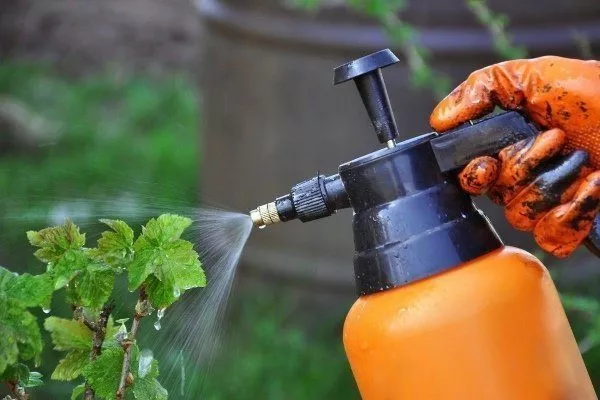
If it rains after spraying the bed, the currant treatment should be repeated.
Preventive measures
Autumn prevention
This is carried out after harvesting to prepare the plants for winter and prevent future re-infestation. The following measures are typical:
- Fallen leaves should be raked up and burned, and the soil under the bush should be treated with one of the fungicidal compounds.
- Perform sanitary and rejuvenating pruning. To do this, use pruning shears to trim away dead and old branches, leaving the young shoots that form the crown. This is necessary to ensure the shrub dries more quickly after rain and watering, and to prevent spores from maturing. Treat all cuts with garden pitch.
- Loosen the soil under the bush.
- Apply fertilizer with the required amount of potassium and phosphorus.
- After harvesting, treat the bushes with a solution of potassium salt.
- Do not plant plants close to each other.
- If the currant grows in a damp lowland or shade, it is better to transplant it to an open space.
We recommend reading our article about How to care for currant bushes in autumn.
Spring prevention
Spring preventative measures are no less important than fall ones, especially if diseases or pests were observed last season. All actions will be aimed at ensuring a healthy harvest.
In spring you should do:
- Before the buds open, treat the bushes and the soil underneath them with a solution of copper sulfate.
- Feed the currants with a solution of manganese sulfate by spraying it on the leaves.
- Tear off affected leaves and burn them.
- Get rid of the weeds.
- Clear the area where the currants grow to allow sunlight to reach them.
- Treat the bushes with pesticides against gall aphids after the leaves appear, but before the flowers form.
- Choosing the right plant varieties. Each variety has its own strengths and weaknesses in terms of resistance and susceptibility to certain diseases. Read about currant varieties. here.
- Plant plants near the currant bushes that repel aphids with a scent. These include onions, garlic, calendula, and chamomile.
- To attract insects that feed on aphids, such as ladybugs, bees, and goldilocks, sow meadow grasses near the currant bushes.
- Make sure there are no anthills near the bushes, as ants are carriers of aphids.
- Thin out currant bushes periodically.
By following disease and pest prevention recommendations, you can minimize the risk of red spots on your currants. These measures will eliminate the need for treatment and increase your chances of a bountiful and healthy harvest.