
The Sakharnaya red currant was developed by Russian breeders. Its bushes produce a bountiful harvest, with numerous clusters and large, sweet-and-tart berries. They can be eaten as is, or used to make jams, compotes, or currant casseroles with cottage cheese. The Sakharnaya variety is common in our region because it's easy to grow.
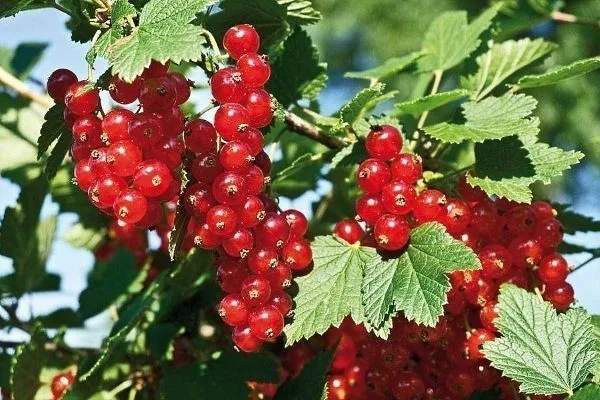
red currant variety "Sugar"
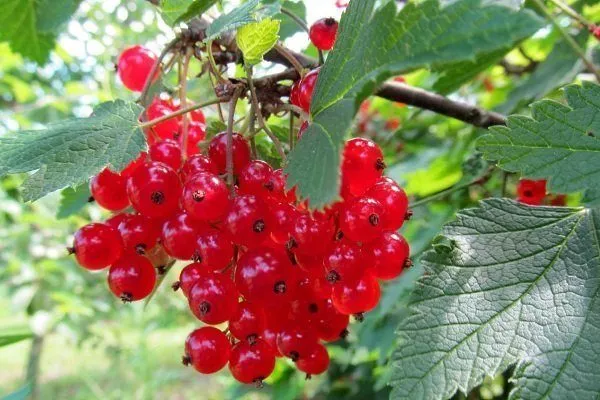
The currant variety "Sugar" has excellent taste qualities
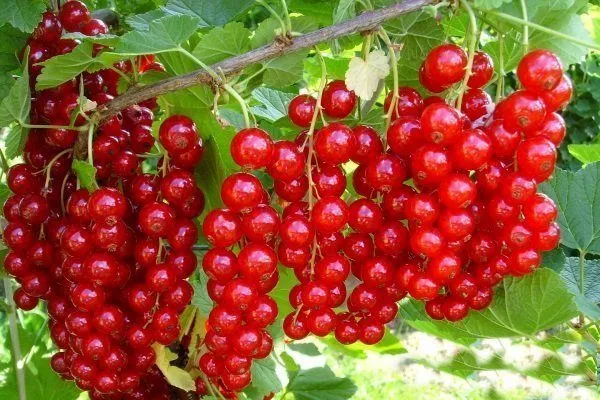
The currant bushes "Sugar" are an invariable decoration of any garden
Description of red currant Sugar
The bush is medium-sized and upright. The shoots are 1-1.5 m long. The berries are bright red, weighing 0.7-1 g on average. The skin is shiny, and the flesh is tasty and aromatic.
This variety produces a bountiful harvest; some gardeners harvest up to 4 kg of berries per year. This currant is best eaten raw, but it also makes excellent jellies, preserves, compotes, and other preserves.
Besides its pleasant taste, the Sakharnaya variety is also stunning in appearance. The flowering bush is a beautiful addition to any garden, and the large red clusters of berries are eye-catching with their vibrant color.
This bush is placed along the perimeter of the property or along paths. The main thing is to ensure it doesn't grow too large.
This variety is undemanding, cold-tolerant, and easy to care for. It is grown in various climates: Ukraine, Belarus, central and southern Russia, and the Urals.
Advantages and disadvantages of the variety
The Sakharnaya variety boasts a long list of advantages. Besides its low maintenance, it also boasts the following benefits:
- high yield;
- unusual sweetness of berries;
- cold resistance, the variety copes well with temperature changes;
- the berries ripen early and are harvested from late June to September;
- the variety is easy to care for;
- the lifespan of the bush is up to 25 years;
- well suited for any type of workpiece;
- pest resistance.
See below for a review of the red currant variety 'Sugar':
Before landing
This variety thrives in virtually any conditions. To ensure a long lifespan and a bountiful and delicious harvest, follow these basic planting guidelines.
- ✓ Soil pH should be between 6.0-6.5 for optimal growth.
- ✓ Check the soil for salts and chlorine before planting using special tests.
Select a location
Currants thrive in moderately moist, sandy loam or loamy soil. If the groundwater level is too low, the bush will quickly become weak, frail, and more susceptible to disease.
If the soil is heavy, clayey, or acidic, it is better to plant the plant on a small mound of earth.
To ensure proper plant development, a specific planting pattern is used. This variety has a compact form and doesn't take up much space; a distance of 1.2-1.4 meters between seedlings is sufficient.
Select time
The Sakharnaya variety is easy to grow and cold-resistant, so it's planted not only in temperate climates but also in the north. In temperate regions, planting occurs in September, and in the south, in October, before the onset of severe frosts.
If you plan to plant currants in the spring, do it in March, at the beginning or end of the month, depending on the climate.
If you are interested in how to properly care for currants in the spring, then this article is located here.
Select planting material
For seedlings, choose strong, healthy plants about 30-40 cm long. Pay attention to the roots; they should be flexible and resilient. If the roots break easily, they are of poor quality or have been stored improperly.
The roots must be branched and have at least 3 buds on each rootlet. If there are only 1-2, such a seedling is definitely not worth taking.
The shoots should be free of spots, rot, traces of pests or diseases, so that the infection does not spread throughout the garden.
Seedlings without leaves or with spots on them are not suitable; they could be affected by fungus.
- Add organic fertilizer (peat or manure) to the soil 2 weeks before planting.
- Allow the soil to settle for a week after applying fertilizer.
Cultivate the soil
Choose a planting site in advance. Dig holes 40 cm deep and 50 cm in diameter. Add fertilizer—peat, manure, or another organic matter—to the bottom. Then, leave the soil for a week or two to settle.
After planting, water the soil thoroughly, twice daily. The moist soil should be slightly compacted. Mulch with sawdust or pine needles.
Correct planting of red currant Sugar
Now that everything is prepared, let's talk about the planting process itself. When planting currants, follow these tips:
- The hole for the seedling shouldn't be too deep; 35-40 cm is sufficient. If you're planting several bushes at once, dig a trench for them.
- Leave the hole for a week to allow the soil to settle.
- Place fertilizer, such as compost or rotted manure, at the bottom of the hole.
- Water the hole generously and place the prepared seedling in it at a 45-degree angle. Cover the bush with soil, placing the root collar at a depth of 5 cm.
- Press down the soil and make a hole.
- Water the bush thoroughly. Use at least 3 liters of water.
- After planting, prune the shoots by about a third. Good growth will begin the following year.
This variety grows even without care. To get a good harvest, you'll need to put in a little effort and follow the basic rules for growing currants. We'll discuss them below.
Care nuances
Sugar currant is easy to care for, making it suitable for beginner gardeners.
A caring grower can harvest between 4 and 15 kg of sugar currant berries per year. So, what can you do to achieve such wonderful results?
We recommend reading the article about How to care for currant bushes in autumn.
Trim
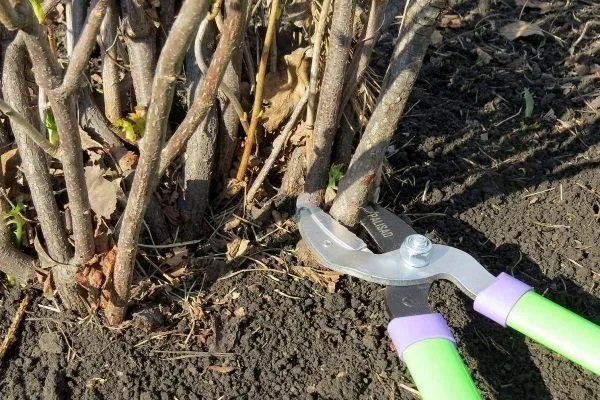
Like any plant, currants grow vigorously, so they are pruned every year to give them the correct shape (fall pruning is described in here). A mature bush consists of 15-20 large, strong branches; to achieve this, you need to leave 2-3 shoots each spring and remove the rest.
Water it
This variety loves water, so don't rely on natural rainfall. Water the bushes regularly to ensure fruit production.
When the berries are forming, watering the plant is doubly important. Pour water directly under the bush, onto the roots, without touching the currant trunk itself.
In drought, berries quickly fall off. In summer, during periods of intense heat, each currant bush should be watered at least 5 buckets of water every 10 days.
Fertilize
A young, healthy plant doesn't require constant fertilization. However, in the first few years, to accelerate growth and establish a healthy bush, a nitroammophoska solution is used.
For one bush, you'll need one box of the product per 10 liters of water. It's also a good idea to add a nitrogen fertilizer, such as urea or saltpeter, to the soil at a rate of 10 g per square meter.
How and what to fertilize currants in the autumn period you will learn from this article.
Loosen and mulch
Soil care is important for a good harvest, as the condition of the soil affects the health of the plant. Loosening and mulching They are carried out to retain moisture in the soil and saturate it with oxygen.
This should be done annually: first in early spring, then throughout the season, at least every two months. Thoroughly loosen the soil with a rake and other tools.
Cover for the winter
If you grow this variety in regions with a temperate climate, don't worry about covering the bush for the winter—Sugar currants are very resistant to frost and temperature fluctuations.
In colder regions, the plant is prepared for winter. To do this, each branch of the bush is dug in or covered with agrofibre after pruning.
When covering, you cannot use polyethylene - it does not allow air to pass through.
Methods of combating diseases and pests
Red currants are more resistant to diseases and pests than black currants. Sugar red currants are the leader in this regard, as they are virtually immune to both diseases and pests.
There is, however, something to be wary of: anthracnose. Anthracnose is a fungal disease common in humid climates. Fungal spores are easily spread from plant to plant by wind and insects. Weakened or damaged bushes are easily infected.
The sunken spots disrupt the normal flow of nutrients within the plant. As a result, branches rot and break in high humidity, and quickly wither and crack in drought.
If anthracnose is ignored, the entire bush will soon die.
At the first sign of currant damage, remove the affected parts of the bush and treat with a fungicide. For spraying, choose a product from the list:
- Oxychom;
- Yamato;
- Cuproxate;
- Copper oxychloride.
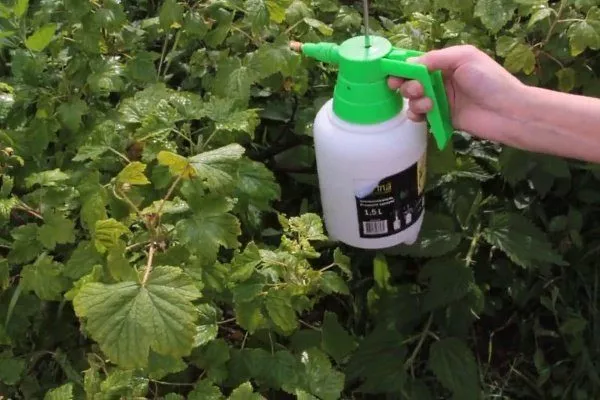
To prevent anthracnose, practice preventative measures. Here are some tips:
- Before planting a new plant, treat it with a 1% copper sulfate solution. Let the seedling soak in the solution for a few minutes. Then rinse and place it in the soil.
- Adult plants are treated before the buds appear; a solution of copper sulfate or Nitrofen is also suitable for this.
- One of the causes of anthracnose is a lack of potassium and phosphorus in the soil, so feed the plants with a phosphorus-potassium fertilizer.
- Fallen leaves under the bush can also be the cause of the disease - remove them promptly.
The Sakharnaya variety is resistant to insects and pests and doesn't require much insecticide treatment. However, to ensure pests don't attack your currant bushes, you can follow these tips:
- Spray the currant bush with an infusion of tobacco or wormwood; this will protect it from spider mites.
- A mustard solution will protect you from currant bud moth.
- Loosening the soil, as well as wood ash and ground pepper, help in the fight against currant glassworm.
Growing Sugar Currants
This currant variety is grown in the same way as other varieties, although there are some peculiarities.
Propagation by green cuttings is done in early spring; propagation by woody cuttings is less successful. The bush is also propagated by layering, both horizontal and vertical, with shoots taken exclusively from young bushes.
The most effective propagation method is considered to be propagation by combined cuttings. Cuttings should be prepared between late May and early June. Choose branches left over from the previous year with small green shoots.
The shoot must have a small piece of wood attached, 3-4 cm long. Plant the shoots, burying the woody part several centimeters into the soil.
Water twice a day. After two weeks, the plant will be well established and growing.
Productivity
The Sakharnaya variety produces at least 4 kg of berries per year, but there are ways to improve this figure.
Red currants produce a good harvest during the first 6-8 years. The maximum fruit production occurs in the 3rd-4th year.
Branches that stop producing berries should be removed to ensure new branches receive as many nutrients as possible. Fertilize the soil to ensure the bush receives sufficient potassium and phosphorus, which are essential for normal currant growth and fruiting.
In one place, a bush bears fruit for up to 20 years, after which time the soil becomes depleted, and then currants are replaced with other crops.
Pick ripe currants carefully to avoid bruising them. Choose a cool, dry, early morning time for picking.
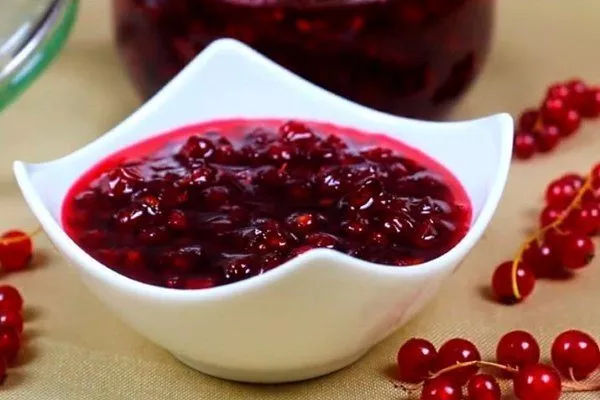
The fruits of the Sakharnaya variety are very sweet and good for eating raw. There are also many recipes for jellies, jams, compotes, and pies, all of which are especially delicious with this currant variety.
Tips for Increasing Yields
Be careful where you plant currants. They dislike even minimal amounts of chlorine, salts, or soap in the soil. For this reason, avoid planting them close to buildings, waste piles, or outdoor wash basins.
Currant bushes should be well-lit and protected from strong winds. Space them at least 1.2-1.5 m apart.
Planting too densely will result in the currant bushes becoming wilted and neglected, and the number of berries will noticeably decrease due to a lack of nutrients.
Organic fertilizers such as humus, infusions of various plants, compost, and ash are used for fertilizing. Food waste compost is not suitable as a fertilizer.
Avoid mistakes that ruin your harvest:
- wrong place for a berry bush;
- incorrect pruning;
- Loosening the soil too deeply - the roots of the bushes are located close to the surface, and if they are damaged, the bush weakens and begins to get sick.
Reviews of the variety
Responsible planting and cultivation of Sakharnaya red currants will help achieve high yields. This variety is ideal for beginning gardeners or those who spend little time in their garden. Furthermore, Sakharnaya will delight you with a delicious harvest for many years to come.