
Cascade is one of the most popular red currant varieties, beloved by gardeners for its versatile qualities. This variety is cultivated for its large, tasty berries. Cascade is known for its distinctive characteristics: a good yield, large berries, and high resistance to various diseases.
Main characteristics
Red currants aren't just a delicious and aromatic berry; they're also rich in vitamins and minerals, essential for human health. They contain vitamins B3, B5, B6, C, and E, as well as niacin, iron, and potassium. These nutrients make them a powerful source of energy and protect against colds. They're also beneficial for the cardiovascular system and help the body eliminate toxins.
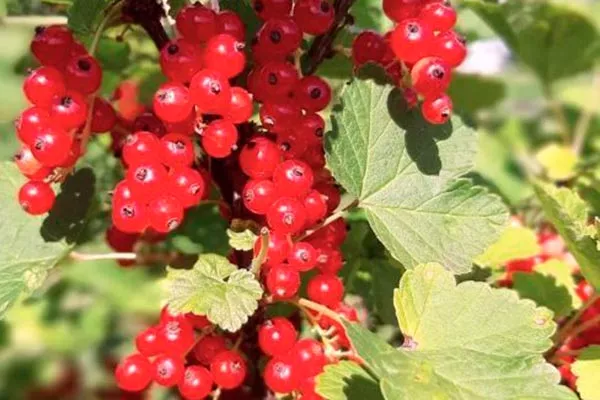
Application area:
- The berries can be eaten freshly picked, frozen or dried.
- Cascade is ideal for making compotes, preserves, and jams. The berries can be used as a garnish for baked goods, salads, and ice cream, as well as a sauce for meat and fish dishes.
- The juice has a pleasant sweet and sour taste and is rich in vitamins and antioxidants, making it indispensable for strengthening the immune system and protecting against colds.
- Currants are used to create alcoholic cocktails, including tinctures and liqueurs, as well as for the production of wines.
Cascade is a mid-early variety, reaching maturity in midsummer. Harvest time occurs in late June and early July, while the berries are still firmly attached to the branches and do not fall off quickly.
Other characteristic features of the variety:
- Cascade does not tolerate drought during the summer period, which can result in berries that become smaller in size and more sour in consistency.
- A distinctive feature of the variety is its increased productivity: up to 5 kg of berries can be harvested from one bush, and up to 12 kg with maximum agricultural technology.
- The variety is distinguished by good frost resistance, which allows it to be grown even in areas with harsh climates, where temperatures can drop to -30 degrees.
- It is resistant to diseases and pests, which makes it attractive for novice gardeners and summer residents.
This currant variety is self-pollinating, meaning it doesn't require pollinating insects to flower. When planted alongside other currant varieties, the use of pollinators can positively impact yield, increasing its volume.
Among the varieties that can act as pollinators for Cascade, Detvan, Viksne and Hautana Castle stand out.
History of selection, growing regions
In 1960, a currant variety called Cascade, a hybrid of Black Prince and Red Dutch, was introduced in the United States. This variety became available for gardening in Russia in 1979 and has since become a favorite among gardeners.
The history of the variety does not end here, as in Russia, Cascade was obtained a second time during breeding experiments, when, at the first stage, the Cherry and White Grape currants were combined, and then their offspring were crossed with the Diploma variety.
Climatic features:
- It thrives in various climate zones, including Central Russia.
- Shows good growth in sufficient light, but is also adaptable to conditions with limited sunlight.
Appearance of the plant, berries
This cultivar is characterized by vigorous growth, reaching a height of up to 200 cm, with a moderate spreading habit. Young shoots have a soft greenish hue, while mature branches acquire a brown tone with black markings.
Key varietal characteristics:
- The leaves can be three-lobed or five-lobed in shape, where the central lobe is larger than the lateral ones.
- The shoots of the plant are straight and well developed.
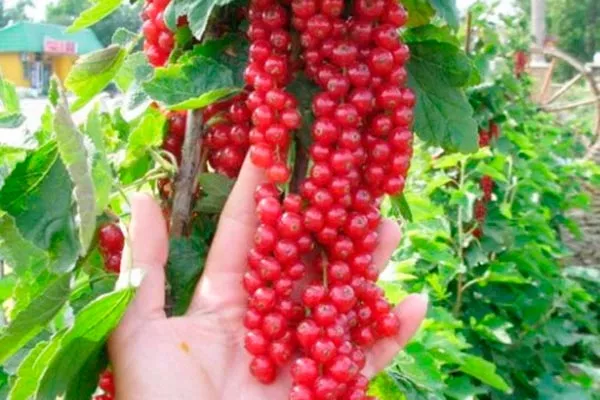
- Currant bunches are large, reaching a length of about 9-10 cm, and each of them can contain up to 15 berries.
- The fruits have a pleasant sweet and sour taste.
- When picking fruits, there are no problems with them being torn off.
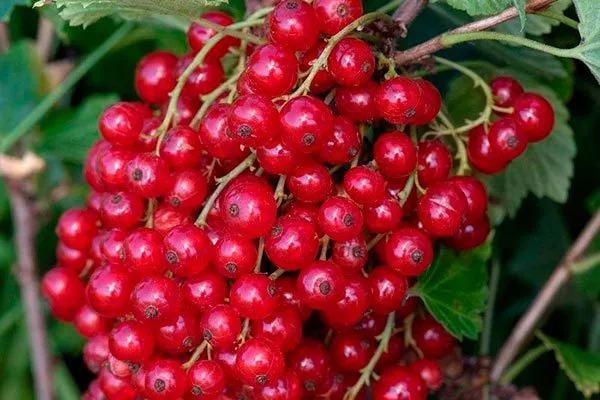
- The berries are a bright pink hue. They are small, weighing about 1.5 grams each. They are round in shape, and their skin is quite firm. The flesh is tender.
- Up to 15 berries ripen on one brush, which ensures good productivity.
The calorie content per 100 g is 56 kilocalories. Red currants are rich in nutrients:
- vitamin A (beta-carotene): 9 mcg;
- potassium: 275 mg;
- Vitamin B2 (riboflavin): 0.1 mg;
- calcium: 33 mg;
- vitamin B3 (niacin, PP): 0.1 mg;
- magnesium: 13 mg;
- vitamin B4 (choline): 7.6 mg;
- sodium: 1 mg;
- Vitamin B5 (pantothenic acid): 0.1 mg;
- phosphorus: 44 mg;
- Vitamin B6 (pyridoxine): 0.1 mg;
- iron: 1 mg;
- Vitamin B9 (folic acid): 0.1 mg;
- manganese: 0.2 mg;
- Vitamin C: 41 mg;
- copper: 0.1 mg;
- vitamin E (tocopherol): 0.1 mg;
- selenium: 0.6 mcg;
- Vitamin K (phylloquinone): 11 mcg;
- zinc: 0.2 mg;
The physical composition of Cascade berries is rich in:
- protein: 1.4 g;
- fat: 0.2 g;
- carbohydrates: 9.5 g;
- dietary fiber: 4.3 g;
- gold: 0.7 g;
- water: 83.9 g.
Gardeners find the Cascade variety ideal for creating hedges. For this purpose, it's recommended to plant the bushes somewhat densely, 40-50 cm apart. This method won't reduce yields but will add an attractive appearance to the garden.
Agricultural technology
Cascade is easy to grow. Caring for this currant variety doesn't require any special agricultural techniques and is no different from those used for other currant varieties.
Selecting a site and landing
This variety requires protection from waterlogging, so it's recommended to grow it on a slope or elevated site, avoiding low-lying and swampy areas. However, thanks to its robust root system, it can tolerate close groundwater.
Other requirements:
- Cascade prefers well-lit areas, although it can grow in partial shade – with insufficient light, high yields should not be expected.
- It is not demanding regarding the type of soil: it can grow in almost any soil, but it demonstrates the greatest productivity on slightly acidic or neutral soils, as well as on slightly acidic or loamy soils, provided that complex fertilizer is used.
- Do not plant currants in areas exposed to strong winds or drafts.
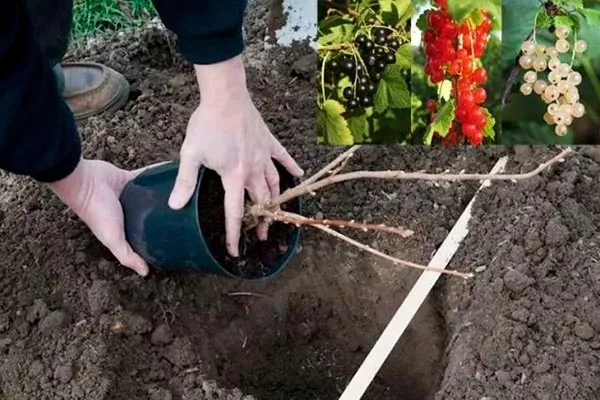
Planting takes place in spring or autumn (from September 15 to October 10) as follows:
- Before you begin, soak the selected seedlings in a bowl of cool water for two to three hours to ensure the roots are properly hydrated. Add the recommended dose of growth promoters, such as Heteroauxin or Kornevin, to the water.
- While the seedlings are accumulating moisture, begin preparing a planting hole measuring 50x50x60 cm. The distance between plants should be 120 to 150 cm.
- Place humus (15 kg), superphosphate (20 g) and wood ash (400 g) into each hole.
- Add regular soil to this nutrient mixture, mix everything thoroughly and form a mound from the resulting mixture two-thirds of the way in the center of the hole.
- Place the seedling on the mound, carefully spreading out the root system.
- Fill the hole with the remaining substrate and compact it so that the root collar is covered with soil.
- Water the seedling using 9-11 liters of water.
- Cover the root area around the plant with peat for mulching.
- Prune the shoots immediately after planting, shortening them by a third.
- ✓ Optimum soil pH level for the Cascade variety: 6.0-6.5.
- ✓ Minimum distance between bushes to ensure good ventilation: 1.5 m.
Watering and fertilizing
The plant requires adequate moisture. It's best to water in the morning or evening to avoid water splashing on the leaves. During drought conditions, currants should be watered once a week, applying 10 liters of water per bush. It's important to carefully monitor soil moisture levels, especially when the berries are setting and ripening.
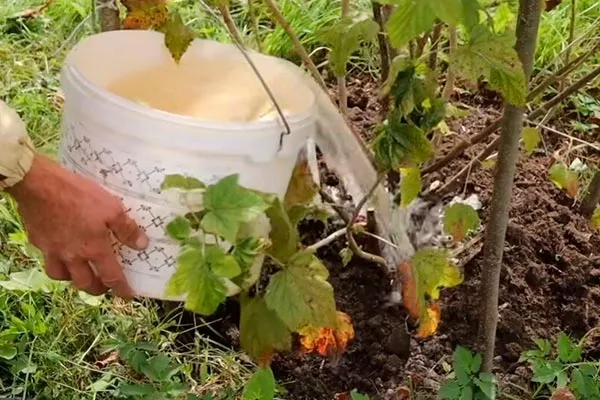
- Apply nitrogen fertilizer in early spring to stimulate growth.
- During the flowering period, add phosphorus-potassium fertilizers to improve fruiting.
- After harvesting, apply organic fertilizer to restore the soil.
During periods of intensive growth, the plant requires organic matter such as compost or humus. It is also helpful to use mineral supplements containing nitrogen, phosphorus, and potassium, which promote fruiting.
Pruning and shaping the bush
It's necessary to remove diseased, damaged, or aged branches to renew the bush. Preventative pruning is performed in spring and fall, as well as when the bush has been exposed to harmful influences such as disease or pests.
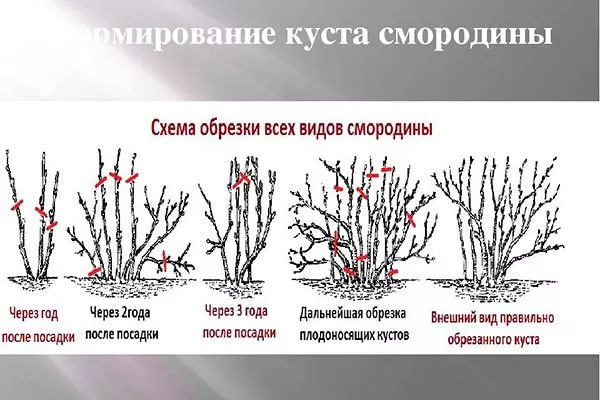
Molding features:
- In the third year of the bush's life, no more than five zero shoots should be left, and the rest should be cut out along with the base, leaving no stumps.
- The tops of the first year shoots should be shortened, preserving 2-3 buds from each branch on the second and third year shoots.
- To revive the bush, branches that are more than five years old should be removed, without leaving stumps.
Wintering
Before wintering, cover the tree trunks with a layer of peat, straw, or dry vegetation. Shrubs don't require additional cover, but if you want to be absolutely sure your plants will survive the winter without damage, you can cover them with spruce branches or non-woven fabric.
Harvesting and transportation of crops
Berries can stay fresh for up to two weeks at temperatures between 10 and 12 degrees Celsius and moderate humidity. Excessive humidity can cause the berries to spoil, while too little can cause them to dry out.
Other subtleties:
- For long-term storage and long-distance transportation, it is better to pick berries that are not yet fully ripe, as overripe ones will not retain their quality for long.
- At a refrigerator temperature of 0 degrees, berries can be stored for 40-50 days.
- Before storing, they should not be washed and should be placed in a plastic bag.
- Reducing the temperature to -2 degrees Celsius allows the berries to remain fresh for three months.
Reproduction
Extending currant plantings by cuttings is easy. To do this, take cuttings, leaving notches at the two lower nodes. Place them in water and then root them in loose soil under protective film.
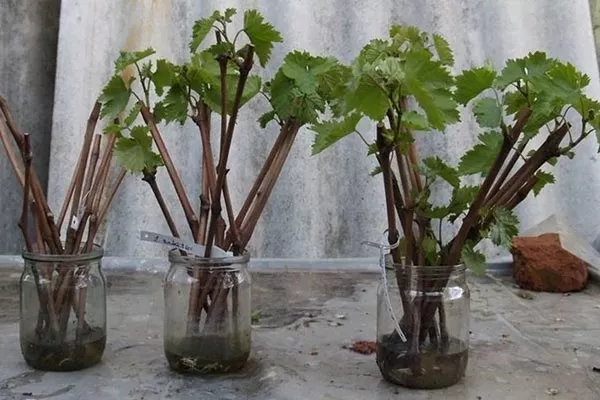
The main care for young shoots is maintaining soil moisture and regular ventilation. As soon as the first leaves appear on the cuttings, the film can be removed, and by autumn, the rooted shoots are ready for transplanting to their permanent locations.
Pros and cons
Cascade, like any variety, has its own advantages and disadvantages. Its advantages include:
Disadvantages include the risk of freezing of the ovaries during sudden cold snaps after a thaw, which can reduce yield.
Reviews
The Cascade currant variety is an ideal choice for gardening. It stands out for its productivity, resistance to diseases and insects, and the exquisite flavor and aroma of its fruits. The key is to follow standard agricultural practices and harvest the crop in a timely manner.