
Transplanting currant bushes is a procedure every gardener can encounter. It's a stressful process for the plant, so it should be carried out strictly according to the rules and only as a last resort. Neglect can lead to the death of the fruit bush.
Why transplant currants?
Redeveloping a garden is one reason for currants to "move," but not the only one. The plant itself may sometimes need a change of location. When can you transplant currants?
- The bush has grown too much. It's preventing its neighbors from fully developing.
- The trees growing nearby have large crowns, and as a result, the fruit crop does not receive the sunlight needed to form berries.
- Long-term presence in one place. The soil at the planting site is depleted and contains many toxic substances.
- The shrub needs to be renewed and rejuvenated. For example, the root system is old and diseased parts need to be removed.
- Rising groundwater levels. This causes the soil to become excessively wet, which can lead to disease or plant death.
Transplanting the resulting young shoots is another reason to move the currant to a new location.
Timing of currant transplantation
Experienced gardeners begin transplanting currant bushes in the spring or fall. The bush takes root best if the latter option is chosen. The choice primarily depends on the owner's preferences.
In the spring
In spring, relocate currants before the sap begins to flow. Buds open early. This is why it's important to begin work as soon as all snow has melted and the temperature has warmed to 10 degrees Celsius.
In the European part of Russia, such conditions are observed in early to mid-April, in the northern regions – 2 weeks later.
There are also negative aspects:
- favorable weather for the procedure does not last long, the heat sets in quickly;
- the bush spends a lot of energy to recover from the stress it has experienced and to grow leaves after winter;
- required careful care.
In the fall
Currants are less susceptible to injury when dormant. Perform the operation after all the leaves have fallen. To help the bush establish itself and take root more quickly, choose a day a month before the onset of frost.
The timing of autumn replanting depends on the cultivation region:
- European part of the Russian Federation – from early to mid-October;
- Urals and Siberia – end of September or beginning of October;
- South – October-November.
If you follow all the rules for transplanting currants, you will be able to enjoy the taste of the fruits as early as next summer, as the bush will take root well in the new location.
Preparing for transplantation
About two months before transplanting your currant bush, begin preparing for the process. Choose a location, dig a hole, and prepare the bush. By following all the steps correctly, you can partially relieve the plant's stress.
Selecting a location and preparing a hole
Currants are easy to grow, but there are some site considerations. Otherwise, fruiting will be sparse. The bush thrives in a level, draft-free area with ample sunlight.
- ✓ The site should be protected from northerly winds to reduce the risk of frostbite in winter.
- ✓ The soil must have good drainage to avoid water stagnation after rains.
Which area is not suitable:
- lowlands;
- elevations;
- swampy and saline area;
- where groundwater lies less than 1.5 m from the earth's surface.
Loam or sandy loam soil is ideal for growth. It should be loose and well-drained. The plant prefers neutral or slightly acidic soil with a pH of 5.5-6.5.
Consider the surroundings as well. Good companions for currants include:
- honeysuckle, chokeberry, yoshta, barberry;
- garlic, onions, dill, parsley, spinach;
- calendula, marigolds, nasturtium.
The berry bush cannot grow in the same area where other currants or gooseberries once grew. This is because the relatives share common pests. And growing near tall trees, sea buckthorn, or raspberries results in a lack of fruit set due to a lack of sunlight and beneficial micronutrients.
How to prepare a planting hole:
- Clear the area of weeds and debris.
- Add peat (30 kg per 1 sq. m) to heavy soil, and dolomite flour (500 g per 1 sq. m) to acidic soil.
- Spread humus over the soil surface at a rate of 8 kg per 1 sq. m. Dig to a depth of 30 cm.
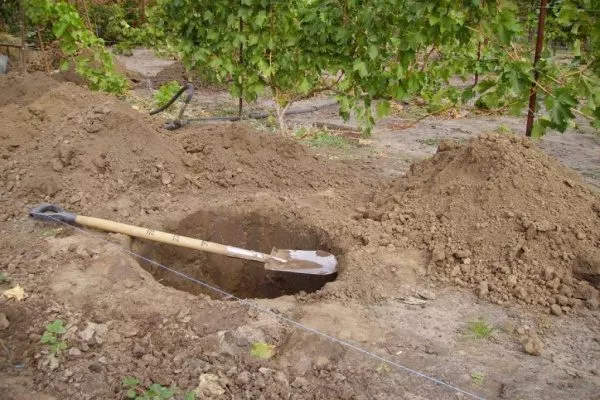
- Dig holes 50-70 cm deep and wide, depending on the size of the bush. Space the plants 1.2-1.5 m apart and 1-1.3 m from fences and outbuildings.
- Mix the top layer of soil with 10 kg of compost, 100 g of superphosphate, 500 g of wood ash.
- Place the resulting substance into the cavity, filling it 2/3 full.
- Pour in 10 liters of water.
Preparing the bush
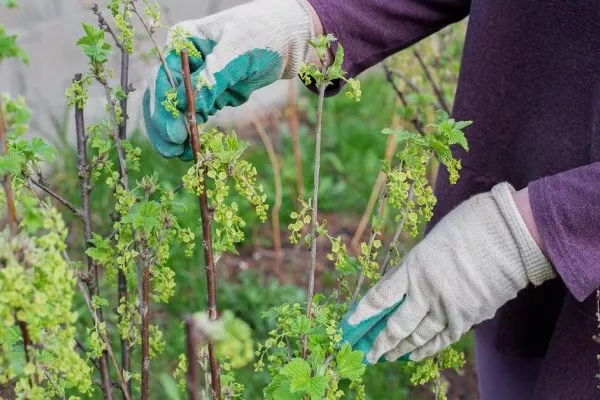
A week before replanting, prune the currant bush. Remove any diseased or weak shoots, or those over 5 years old, by cutting them off at the base. Remove any suckers, but avoid leaving stumps.
Shorten healthy branches by 1/3-1/2 their length. This procedure should not be performed immediately before relocation. Otherwise, the plant will not have enough strength to heal its wounds and establish roots.
After the bush has formed, water it generously for 2-3 days. Firm the moist soil around the main trunk to create a dense root ball.
Transplantation technology
The replanting procedure is always the same. However, there are some peculiarities. These are related to the age of the currants.
Old currant
A mature bush can be transplanted to a new location whole or by cuttings. In the former case, in addition to removing deformed branches, get rid of old and dead parts of the root system.
Cuttings are carried out according to the following rules:
- Take future seedlings only from one-year-old and mature branches.
- Use this procedure only in autumn.
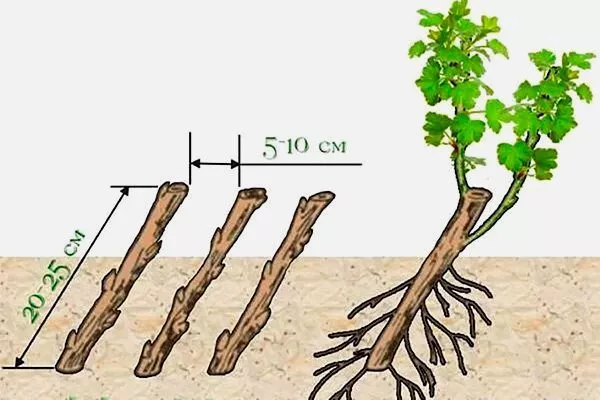
- After cutting a 15-25 cm long cutting with 3-5 buds, wrap it in a damp cloth.
- Place the planting material on a shelf in the refrigerator for storage.
Store the future plant until spring. To speed up its establishment in the ground, begin growing it in a pot with sand in late winter (plant the cuttings 5-10 cm apart). Plant it outdoors once the warm weather has settled.
Young currants
Young plants tolerate the transition better. How to transplant young currants:
- Dig up the planting together with the root ball.
- Remove the upper branches: cut young ones in half, and worn ones to the base.
- Get busy with rooting.
The main thing is not to damage the root system.
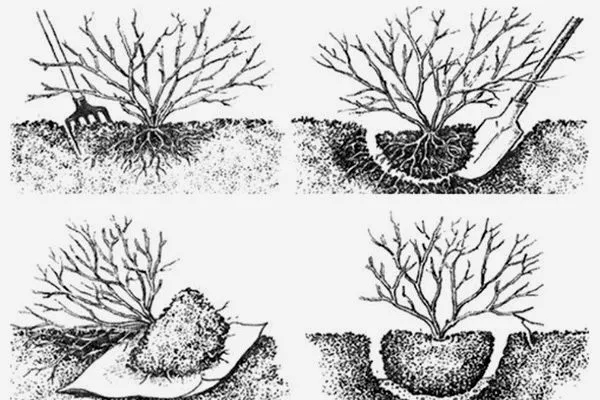
The transplant process
Experienced gardeners recommend replanting currants on a cloudy day, in the morning or evening. This allows the plant to adapt more quickly to life in the new soil.
Step-by-step algorithm:
- Tie the branches together with soft rope or twine.
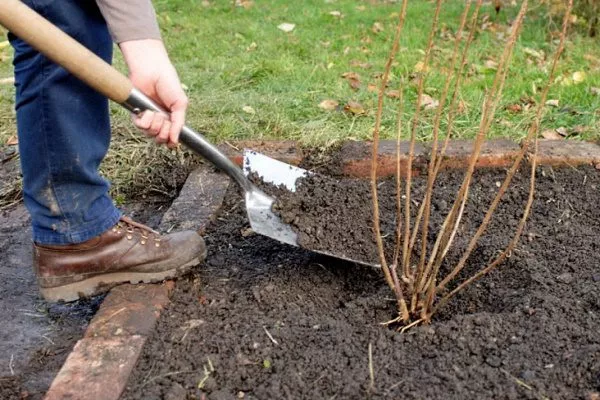
- Dig a trench 30-35 cm deep within a radius of 20-25 cm from the center of the bush. Direct the blade of the shovel toward the plant, trying to dig deeper into the roots.
- Grasp the shoots at the base and pull them out of the soil. If any roots are in the way, cut them off with a shovel.
- Inspect the roots. Remove any dark areas. If there were cuts, soak the planting in a 1% potassium permanganate solution for 15 minutes.
- In the middle of the previously formed hole, make a mound 15 cm high.
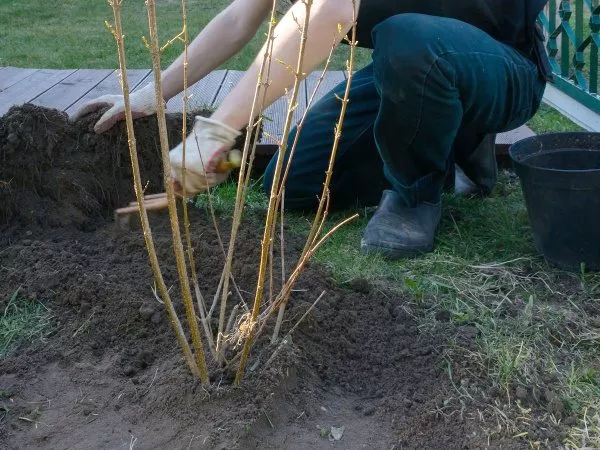
- Move the dug-up currant bushes to the new site using a piece of burlap. Place them on a mound, spreading the roots well. Orient the branches toward the sun.
- Fill the hole with soil. Work gradually, compacting each layer thoroughly. There should be no air pockets.
- Create a watering trench around the tree's trunk. Pour 10 liters of water into it. Wait until it's absorbed, then repeat.
- Drive a support next to the plant and tie it up.
- Carry out the first watering immediately after transplanting, using at least 20 liters of water per bush.
- Provide temporary shade for 3-5 days to reduce stress from direct sunlight.
- Check soil moisture daily for the first week.
Some secrets of currant transplantation are discussed in the video:
Caring for currants after planting in a new location
Currants thrive in their new location if transplanting procedures are followed and proper care is provided afterward. Water helps the plant cope with stress.
Watering
Don't allow the soil where the fruit bush is adapting to dry out. Water with settled water once a week.
After each watering, loosen the soil to a depth of 5-7 cm. This will increase oxygen permeability, which can speed up the plant's survival.
Don't skip mulching with compost. The layer should be about 5-7 cm thick. This will help maintain a constant water and temperature balance in the soil.
Top dressing
Currants don't require fertilizing for two years after transplanting. The plant receives all its nutrients at the planting stage. Excess nutrients negatively impact growth and fruiting.
Frequently Asked Questions
Even though gardeners who have been growing currants for a long time share tips on replanting the plant, many still have questions. There's an answer to every one.
Is it possible to transplant currants in summer?
During the summer, move fruit trees only in exceptional cases. This period is characterized by active growth, which ceases after digging. If relocating in the spring and fall is not possible, wait until fruiting has ceased.
Are there any differences in transplanting white, black and red currants?
Currants come in different varieties. Fruit color isn't the only difference. There are also differences in the transplanting process.
What are the distinguishing features:
| Black currant | Red currant | White currant |
| shallow root system, a small hole is needed | the hole should be at least 70 cm deep | a planting hole at least 50 cm deep is required |
| No drainage is needed, the variety bears fruit even on poor soil | drainage is needed, a 15 cm layer of broken brick | Place layers of fertilizer (50 g humus, 150 g superphosphate) at the bottom of the hole and cover with soil |
| deepen the root collar by 5-6 cm | plant the bush at the same level as it grew in its old location | Place the seedlings at a 45-degree angle, 5-7 cm deeper than they grew previously. |
| demanding of location and soil quality | can grow in any soil on the north side of the site | I need a sunny area with fertile soil. |
What to do if currants turn yellow after transplanting?
Yellowing currant leaves is a common problem after replanting. There are several causes:
- Poor watering. Follow proper agricultural practices.
- A weakened bush has been damaged by pests. Inspect the plant and seek appropriate treatment using folk remedies or specialized products.
- The repotting time was incorrect. For example, in the spring, during the rooting period, a drop in temperature was observed.
Currants are shrubs with tasty small fruits. They can grow and bear fruit for up to 30 years. However, repotting may sometimes be necessary. There are several reasons for this, some of which affect the plant's health and fruiting. This is a stressful procedure, so it is carried out according to strict guidelines.
Thank you so much for such detailed information!!! And most importantly – complete information, as they say, from A to Z.