
The Izumnaya currant has only recently appeared, but many amateur gardeners and farmers have already appreciated all its positive and negative characteristics. This variety is distinguished by its tender, juicy berries, densely packed on the branches and sometimes resembling cherries in size.
History of creation
In the last quarter of the 20th century, American powdery mildew swept blackcurrants across the United States. Sphaerotheca, a fungus that attacks plants, quickly spread across Europe and then reached Russia. In response to this threat, scientific research began. Researchers discovered that crossbreeding closely related crops increases their resistance to the disease, opening new pathways to immunity.
The breeding standard 12-173, which became the source of resistance to powdery mildew, was developed from the currant varieties Goliath and Seyanets Cherny. In combination with it, the complex hybrid 37-5 and the Seyanets Golubki variety Izumnaya were developed.
The renowned Soviet and Russian scientist Alexander Ivanovich Astakhov, who worked on the hybrid's development from 1931 to 2007, is responsible for this contribution to breeding.
Characteristics of the variety
The currant bush is a hybrid variety that is easily recognized by a number of characteristic features and qualities that a gardener should be aware of in advance to avoid unpleasant surprises in the future.
Appearance
To distinguish a hybrid currant variety, pay attention to the following varietal characteristics:
- The bush is medium-sized (up to 120-150 cm tall). It is formed from strong yet flexible shoots, which gives it exceptional stability.
- The crown of this currant variety is spreading, but at the same time compact, which means that the long branches do not fall apart in different directions, but create a single harmonious whole.
- Young shoots are covered with fine hairs, have a geniculate growth habit, and narrowly spaced internodes. Their color ranges from brownish-olive to lighter, and anthocyanin spots appear at the tips.
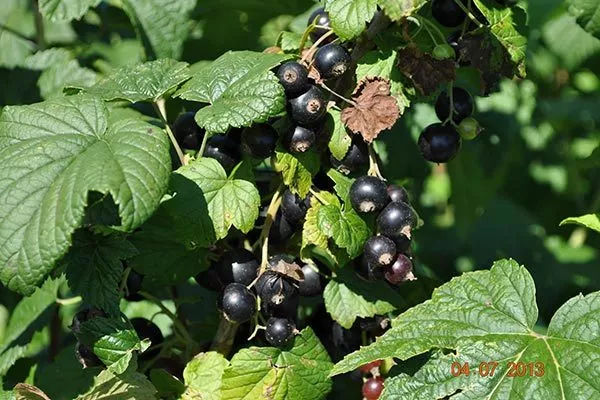
- The leaves are large, dark green, and have a convex, trilobed shape. Upon closer inspection, one can notice distinct notches at the base, and the middle segment is elongated.
- The leaf lobes are medium-pointed, and between them there are shallow notches, which gives the leaves additional decorative appeal.
- The surface of the leaves has a wrinkled and leathery texture, and the edges are decorated with teeth, which, although blunt, are not curved, which makes them even more expressive.
- It is worth noting the tart smell that emanates from the leaves of this currant variety.
- The root system has a fibrous structure, which allows it to reach a depth of 30-40 cm, providing the plant with the necessary nutrients and moisture from the depths of the earth.
Flowers and fruits
In the first third of May, when budding begins, currant bushes are adorned with pale yellow flowers, forming a fragrant floral mass. If the weather is unfavorable, the unpollinated buds may fall off. The flowers are grouped into inflorescences, each consisting of 6-12 buds, forming racemes with sinuous shapes.
Signs of berries:
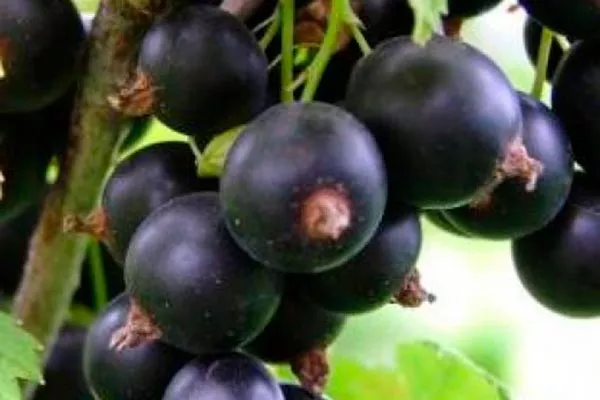
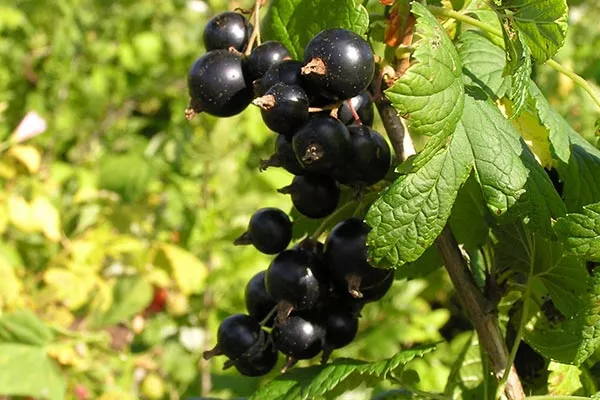
- The fruits of this currant are large, spherical, black and without shine.
- Under ideal care conditions and favorable weather, they can reach a weight of 3.3 g, and the minimum figures are 1.8-2.0 g.
- The shape is round, and the skin is medium to above average thick.
Taste and nutritional value of berries
The Izyumnaya variety's berries have a cloying, honey-like sweetness, as well as an incredible currant aroma. Leading gardeners unanimously praise the currant's dessert qualities, which give it its sweet aroma.
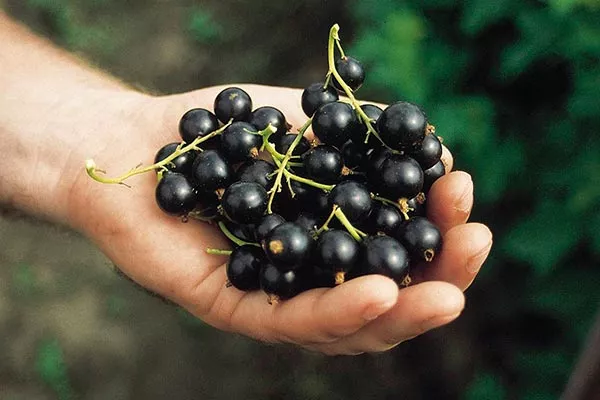
Despite their moderate acidity, not exceeding 1.8%, the sugar content in these berries reaches almost 10% of their weight. Furthermore, they contain a large amount of vitamin C – up to 193 mg per 100 g of pulp.
Productivity and fruiting
The key characteristics of the large-fruited Izumnaya currant are revealed only with strict adherence to agricultural practices during fruit formation and flowering. As the bush ages, berry size decreases, and it can vary depending on local soil and climate conditions.
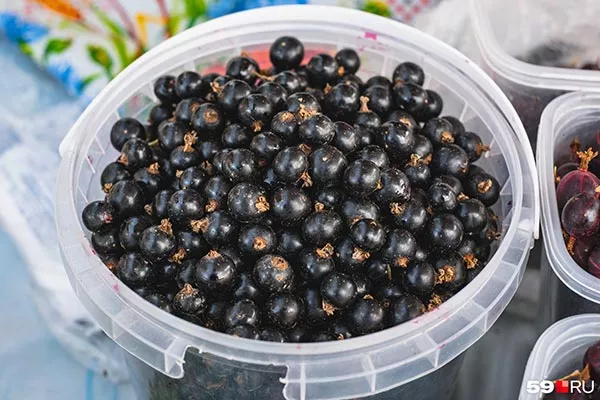
The number of berries per cluster also depends on many factors. These include:
- level of self-pollination ability;
- the presence of other currant varieties in the environment;
- weather conditions before and after flowering, when drought or high temperatures can cause the ovaries to fall off.
The Izumnaya currant produces a harvest for 15 years. In good years (usually in the sixth year), up to 2.5 kg can be harvested from a single bush. On a commercial scale, the average yield is 11.2 t/ha (1.71 kg/bush), with a maximum yield reaching 13.6 t/ha (2.0 kg/bush).
Where is Izumnaya currant used?
The berries are eaten raw as a sweet treat, immediately after picking from the bushes. At home, they are used to make fruit drinks, juices, jellies, marmalades, liqueurs, and cordials. To preserve their beneficial properties until the next season, currants can be frozen, dried, or canned.
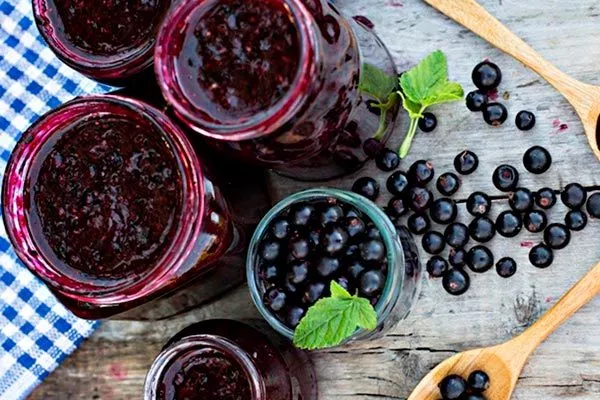
Currants help reduce fever and stimulate appetite. Blackcurrants strengthen the immune system, slow down aging, and are beneficial for heart disease, skin problems, and diabetes.
The industry uses this currant variety to produce high-quality confectionery fillings, syrups, extracts, wines, and liqueurs, as well as dry kissels. In the vitamin supplement industry, currants are used to make vitamin C concentrates and preparations.
Growing regions
This currant variety was created for cultivation in the central and northwestern regions, but its ease of maintenance allows it to be cultivated throughout the country, with the exception of the northernmost areas.
Drought and frost resistance
The Izumnaya blackcurrant is remarkably frost-resistant, reaching temperatures as low as -39°C (-39°F) and blooms perfectly at temperatures of 20-25°C (68-77°F). This variety is also drought-resistant and can be grown in areas with low moisture.
Susceptibility to diseases and pests
Currants are known for their resistance to diseases and insects. They have a strong immune system, successfully resisting powdery mildew and other pests that often affect blackcurrant varieties.
Landing features
The key to successfully growing blackcurrants is proper planting, which will ensure the bush's healthy development and longevity. Due to the compact nature of Izumnaya currant bushes, dense plantings can be used, with a spacing of more than 100 cm between plants.
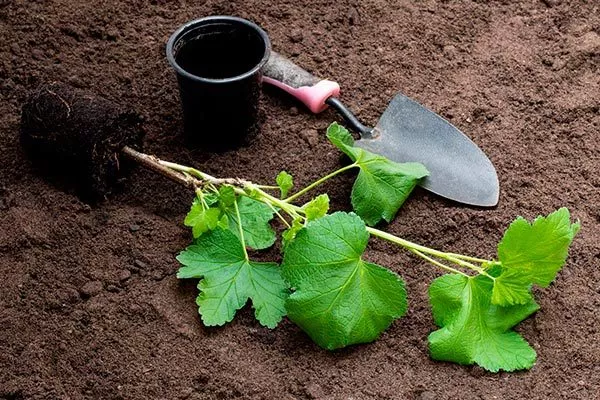
Timing of planting operations
The optimal time to plant Izyumnaya blackcurrant is autumn: in northern regions, this is the third ten days of September, and in southern regions, October-November. This period will allow the bush to establish roots before the onset of frost, allowing it to thrive in the spring.
In spring, work is carried out depending on soil conditions and before bud break. It's important that the bush has time to establish at least some roots before the growing season begins.
We determine the location
To achieve successful gardening in your own yard, you need to choose the right planting site, taking into account important factors such as humidity and light levels. When choosing a site, follow these guidelines:
- Ensuring sufficient light: Currants dislike shady areas. For healthy growth and fruiting, they require direct sunlight. Ideal locations include areas near fences or between paths.
- Soils – must be airy, light and fertile to maintain the health of the bush
- Moderate moisture: sites at a slight elevation or on slopes are preferred. The hybrid does not tolerate close groundwater or wet soil, as this can lead to root rot and the death of the plant.
- Soil acidity: currants prefer soils with a neutral pH (6.0–6.5).
- Protect from strong winds and drafts. Gardeners' experience shows that currants don't tolerate windy areas, especially if the wind blows from the north or northeast.
Preparing the beds and the plot
When growing Izumnaya currants, it's important to follow certain rules. Preparatory work is necessary to create a soil mixture for the seedlings, and by planting the currants at a distance of up to 200 cm between bushes, you can expect larger, more flavorful berries, as well as increased productivity.
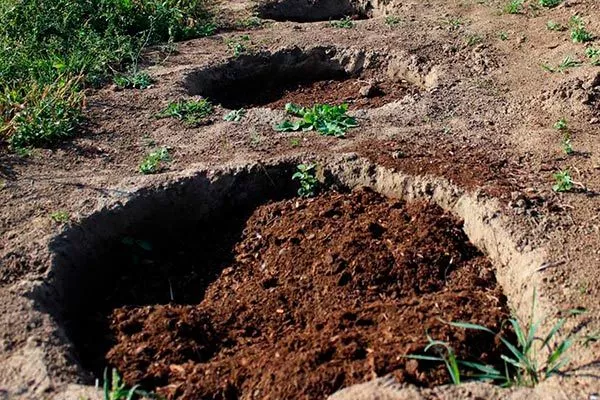
Preparatory activities:
- Remove all trash and fallen leaves from the area.
- Sprinkle superphosphate, wood ash and urea over the surface.
- Carefully dig up the area under the berry bush.
To prepare severely depleted soil, rotted manure is added to it.
Selection of seedlings
It is necessary to carefully inspect the plant not only before planting, but also when purchasing:
- there should be no damage or rot on the root system;
- the stems must be whole, healthy, elastic;
- leaves - should not have spots or other signs of disease.
Instructions for implementation
Planting operations are carried out in accordance with the following rules:
- Make holes about 50 cm deep and spaced at least 150-170 cm apart.
- Place any drainage material in a layer of up to 10 cm into the loosened soil at the base of the hole.
- Fill with soil to a depth of about 10-15 cm.
- Place the currant roots, previously soaked in water for 4 hours, into the hole at a 45-degree angle and distribute the root shoots evenly.
- Fill with soil, covering the roots and base of the seedling stem.
- Lightly tamp down the soil around the trunk, water it and fill it with more soil.
Propagation of the Izumnaya bush
There are several methods for its reproduction:
- Dividing the mother bush into several parts. This method is particularly suitable for this variety, as it simplifies the rooting process.
- Cuttings. Cuttings are shoots that have become woody this year, about 20 cm long. They take root slowly, making this method less popular.
- ✓ Use only young, non-lignified shoots for cuttings.
- ✓ Maintaining constant soil moisture without over-watering.
- ✓ Use of root formation stimulants to increase the chances of rooting.
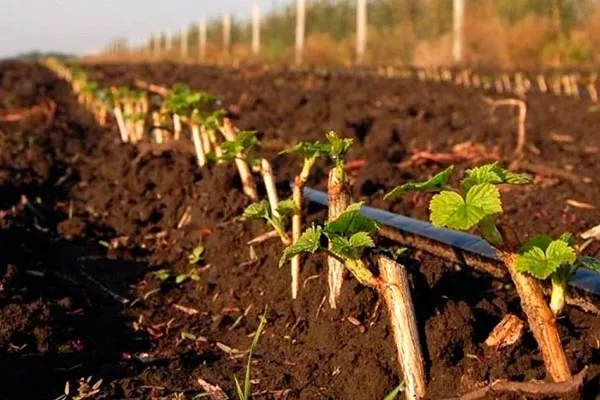
Organization of competent care
Caring for the Izumnaya currant doesn't require any special skills or complex farming techniques. This variety is well adapted to a variety of climates and can grow in both temperate and more southern regions. However, to achieve maximum yield and maintain healthy plants, it is recommended to follow basic care rules, including regular watering, fertilizing, and pruning.
Irrigation and loosening
The Izumnaya variety is resilient to short-term droughts, which doesn't degrade the berries' quality, although it may affect the bush's appearance. In hot weather, the bush maintains its greenery and doesn't dry out.
Irrigation rules:
- For watering the Izumnaya currant, it is recommended to choose the evening hours to prevent moisture evaporation during the daytime heat.
- This variety especially appreciates sprinkling, which can be done twice a week for one to two hours.
- Using mulch at the base of the bush will help retain soil moisture and prevent it from drying out and overheating.
Raisin, like other garden crops, requires loose soil, which must be maintained throughout the growing season. At the same time, avoid damaging the surface roots. If a mulch circle is created around the bush, loosening the soil can be reduced or even eliminated.
Fertilizer
No additional fertilizing is required during the first and second years after planting. In subsequent years, the bush is fed as follows:
- At the beginning of spring Currants require nitrogen; for young bushes, a 50 g urea fertilizer is recommended. After four years, bushes will require less—no more than 35-40 g—applied twice, 2-3 weeks apart.
- After flowering is complete It is recommended to fertilize with liquid fertilizer. For each bush, dissolve 10 g of nitrogen and potassium fertilizers in 10 liters of water, and add 20-25 g of superphosphate. Repeat the fertilization during berry ripening.
- After harvesting Another fertilizer application is necessary, excluding nitrogen. The recommended dose is 40-50 g of superphosphate and half that amount of potassium sulfate, which can be replaced with 200 g of ash.
Bush formation
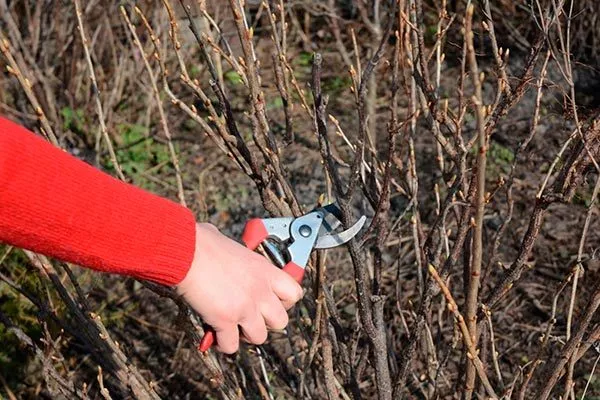
During the first 5-6 years of the bush's growth, key pruning is carried out, which is then transformed into a rejuvenation procedure, while the basic rules remain unchanged:
- When treating a newly planted bush, it is shortened to 4 buds on each branch, which will allow the plant's energy to be distributed to form new shoots that will begin to grow from the root collar deepened into the ground.
- The following spring, three of the strongest new shoots emerging from the zero growth point are selected, and the rest are removed completely. In the summer, these selected shoots are shortened by 10-15 cm to stimulate branching. In the fall, sanitary pruning is performed, removing damaged or diseased elements.
- From the third to the fifth year, the selection and pruning of new zero branches is repeated to create a bush with a harmonious structure and a variety of branch ages.
- From the sixth year onwards, the bush requires annual rejuvenation, when old branches are replaced by the same number of new zero shoots.
Shelter for the winter
Currant Izumnaya usually does not require protection from cold, except in cases where the temperature drops below -39°C, or:
- for young bushes, no older than two years;
- for plants recovering from disease or premature leaf fall;
- in anticipation of a snow-free winter.
The covering work is standard - laying mulch, moisture charging and wrapping the bush with non-woven material.
Prevention in the garden
To protect garden crops from diseases and pests, the following measures must be taken:
- pruning to prevent overloading the bush;
- burning of damaged branches;
- digging between rows at the end of autumn to destroy pests preparing for winter;
- early spring treatment of the bush with boiling water (before flowering).
It's helpful to collect onion and garlic peels during the winter and then scatter them around currant bushes in the spring to protect them from common pests. During disease and insect outbreaks, preventative spraying with fungicides and insecticides is essential.
Why doesn't the currant bear fruit?
There are several reasons for this:
- There is not enough sunlight.
- The soil has an acidic reaction.
- Not enough moisture during bud formation.
- Reversion (doubleness) is a disease that leads to the cessation of fruiting.
- Glasswing is a butterfly.
- Forest ants eat the core of the flower, leaving the shells in the form of empty sepals.
- Slight salinity of the soil.
- Excessive use of fertilizers.
- Grows in very dense growth.
Positive and negative qualities
The currant variety chosen has only a few drawbacks, while its advantages are endless. The Izumnaya currant is distinguished by:
The disadvantages of this currant variety include the difficulty of rooting already woody cuttings and possible susceptibility to septoria.
Reviews
The Izumnaya currant is more than just a berry bush; it's a true treasure for any gardener who strives to grow something special and delicious. It's the ideal choice for those who want to enjoy sweet and aromatic berries without too much effort.