
With the arrival of spring and the emergence of greenery in garden plots, insect pests awaken, attacking young leaves and shoots. Among the currant's worst enemies are aphids. They suck the juices from the tender leaves, causing significant damage to the plant. To begin combating aphids, you first need to identify them.
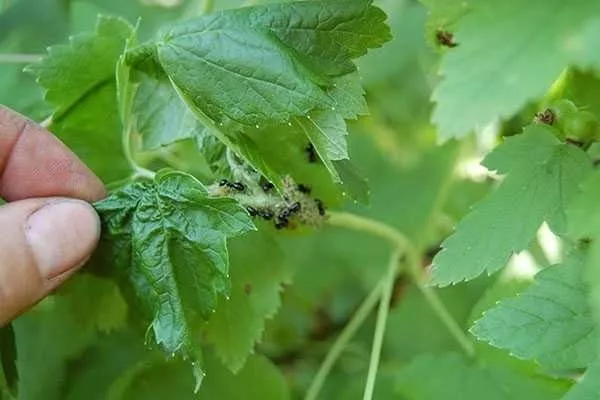
How to detect aphids on a bush?
The main signs of aphid infestation include:
- reddish swellings in the central part of the leaves;
- reddish-brown growths appeared on the branches;
- the leaves curl and then dry out;
- The bush grows slowly, the shoots are weak.
What is the danger of aphids on currants?
Aphids feed by piercing tender young leaves with their proboscis and sucking out the sap. The leaf surfaces become deformed, developing reddish-brown swellings. The leaf dries up and dies.
Another type of aphid sucks the sap from shoots, hindering their growth. Since young shoots are affected, gardeners may lose part of their harvest not only this year but also in the future.
Insects won't destroy the entire bush, but it will begin to wither and weaken, and fruiting will be limited. Furthermore, insects carry various viruses that cause disease.
You can read more about currant diseases and pests here.Here.
What kind of aphid attacks currants?
Although there are many types of pests, two are known to infest currants: the gall aphid and the gooseberry aphid. Read more about them below.
| Name | Power supply type | Body size | Body color |
|---|---|---|---|
| Gall aphid | Plant juice | 2 mm | Pale green |
| Gooseberry aphid | Plant juice | 2 mm | Greenish |
Gall aphid (leaf)
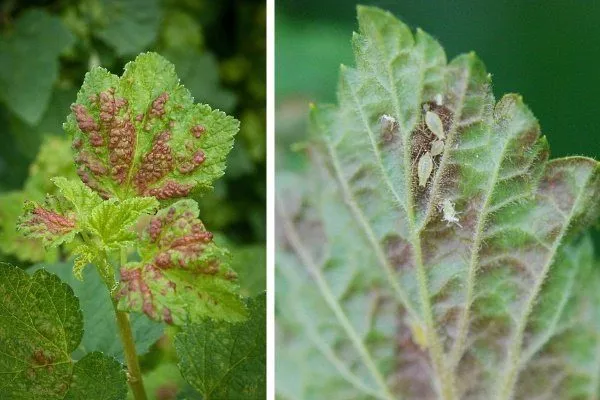
Gall aphid (leaf) Redcurrant, as its name suggests, prefers bushes with white or red berries. This is because the foliage of these species is more delicate, and the leaf surface is thinner, allowing pests to easily pierce the leaf and suck out the juices.
Brown thickenings, called galls, appear at the damaged area. This is the plant's attempt to heal itself. If you turn over such a leaf, you'll see numerous small insects underneath.
This pest species inhabits all areas where red currants grow. The gall aphid has an oval body, just over 2 mm long, with small hairs. Its color is pale green.
Most of the insects are wingless. Females are very fertile, hatching from eggs in the spring and becoming ready to reproduce on the second day of life. Being viviparous, they produce up to a hundred new aphids.
Hot and dry summers promote the active spread of the pest. Winged forms of the pests emerge when they need to colonize another location after the previous one has been destroyed.
Gooseberry aphid (shoot)
Gooseberry aphid (shoot) It lives on blackcurrants and gooseberries. This is a very numerous and prolific species. The insects are small, about 2 mm long, and greenish in color.
They feed on the sap of leaves and young branches, congregating at their tips, causing the leaves to curl up, forming spherical clumps or cocoons. The branch stops growing, and a colony of insects, actively feeding and reproducing, settles within the damaged leaves.
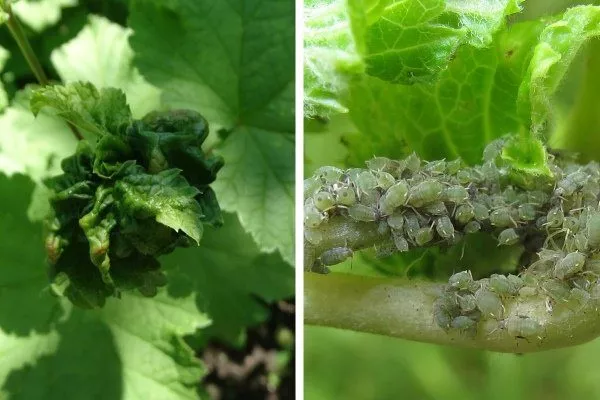
Females have wings, making pest control difficult. New generations of aphids can destroy an entire garden by flying from bush to bush, especially in dry, hot weather.
Methods of pest control
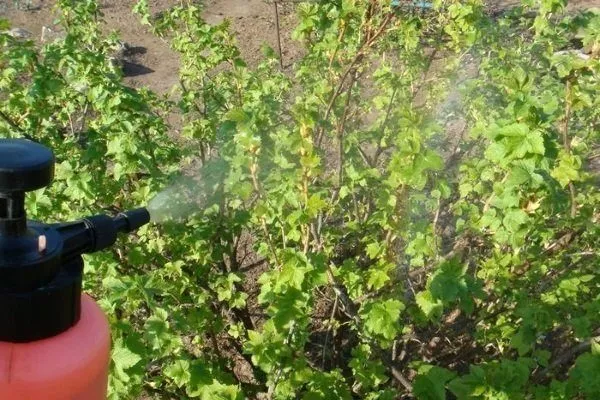
Treat currants for aphids in the morning or evening, in dry, windless weather. When working with chemicals and caustic agents, wear a respirator, gloves, and goggles.
Aphids of all types live in symbiosis with ants, which are attracted to the insects' secreted liquid, called royal jelly. Ants love to "milk" adult aphids, so they protect their colonies, transport them to new locations, and even drag them underground for the winter. If you want to completely eradicate aphids, exterminate garden ants.
Gardeners and summer residents have many methods and techniques at their disposal to combat this pesky pest. In addition to tried and tested folk remedies, there are a variety of chemicals that can destroy this enemy of berry bushes.
Chemicals
When aphids have invaded in large numbers, all folk remedies have been tried, and there's no time to make decoctions and infusions, chemicals can come to the rescue. Modern insecticides are widely available in stores.
Among them we can name:
- Actellic;
- Aktara;
- Biotlin;
- Spark double effect;
- Intavir;
- Kalash;
- Karbofos;
- Fufanon and others.
Each product has its own instructions for use, which must be strictly followed. It is especially recommended to pay attention to the application dates.
It is strictly forbidden to use chemicals during the fruiting period, and berries should not be picked for at least 20-30 days after spraying. Wear protective clothing, a respirator, and goggles when working.
Using chemicals poses a risk of poisoning beneficial insects, birds, and pets. Before using, weigh all the risks and make the best choice. Despite strict restrictions, pesticides are effective quickly – aphids die almost immediately.
Biological drugs
Fruiting begins, but the currant bushes are swarming with aphids. Modern biological products are suitable for such cases. They do not harm the plants, are safe for humans, and are based on soil organisms. The most common ones are:
- Actofit;
- Biotlin;
- Iskra bio;
- Fitoverm.
These products don't work immediately. Aphids feed on them and die slowly. Use the biological products according to the instructions provided. Rainfall washes away the biological product, so repeat the treatment after rain. Harvest berries 5 days after treatment.
- ✓ The optimal temperature for using biological products is from 18°C to 25°C.
- ✓ Air humidity must be at least 60% to ensure the activity of microorganisms.
In this video, an experienced gardener discusses the different types of aphids that infest currants and offers recommendations for controlling them using biological products:
Folk remedies
Organic farming and gardening enthusiasts use biological pesticides. Let's look at the different types and methods of controlling aphids, both gall aphids and gooseberry aphids.
Plucking off and destroying affected leaves
In the spring, when new branches begin to grow on the bushes, curling at the tops appears—the result of aphids. So, feel free to pluck off the damaged leaves. The bush will not be harmed.
New shoots will emerge from the leaf axils where they were torn off, producing a bountiful harvest. This will help shape the bush's crown and eliminate pests. Don't forget to burn the torn leaves.
Rinse with water
Simply direct a strong stream of water from a garden hose at the bush. The force will knock the insects off the leaves. The method is simple, but it requires daily inspection of the plants and repeated application.
The effectiveness is negligible, as the aphids hide in the folds of leaves, and their twisted cocoons are impenetrable by water. The presence of ants will render the method ineffective, as they will quickly return their "herd" to the area.
Boiling water
In early spring, before the buds swell and the leaves emerge, it's helpful to pour boiling water over the entire bush. Once the water boils, pour it into a shallow watering can or sprayer and water the crown of the plant.
- ✓ The temperature of the water for boiling water treatment must be at least 80°C to ensure the destruction of pest eggs.
- ✓ The concentration of ammonia in the solution should not exceed 40 ml per 10 liters of water to avoid leaf burns.
Don't worry, the hot water won't harm the branches. It will penetrate under the bark and destroy the pests' egg clutches. Don't forget to whitewash the trunks with lime afterward, which will further kill the insects.
Ammonia
Ammonia or 10% ammonia solution is a very reliable, safe and simple way to combat aphids.
Prepare a spray solution:
- Dissolve 40 g of soap (household soap, tar soap, etc.) or 2-3 tablespoons of liquid green soap, or any cleaning agent, in 10 liters of warm water. The soap helps the solution adhere to the plant better.
- Add 30-40 ml of ammonia.
- Mix the resulting solution thoroughly and spray the currants thoroughly. Wear gloves, as you'll need to turn the leaves over and unroll any curled ones.
- Spray not only the infected branches, but the entire bush to prevent insects from crawling over.
This shower provides additional nitrogen fertilizer. Ammonia solution can be sprayed on berry bushes during the fruiting period; it's harmless.
Watch a video about treating currants against aphids with ammonia:
Baking soda
Sodium bicarbonate will help control aphid colonies. To prepare the solution, use 2 tablespoons of baking soda per 1 liter of warm soapy water, prepared in advance.
Grate laundry soap (30-40 g per 10 liters of water) so it dissolves better in the water. Spray currant bushes with the resulting solution in early spring, before the buds open.
Baking soda irritates the insects' skin, corroding their outer layers. They try to escape the sprayed area, but the soapy solution prevents them. This achieves the desired therapeutic effect.
Before spraying, you can wash the leaves by hand with a soda solution.
Laundry soap
Laundry soap It has long been used to kill various plant pests. Preparing a soap solution is not at all difficult:
- For every 10 liters of water, use 1.5 bars of soap. Grate it and stir in 1-2 liters of warm water until completely dissolved.
- Then pour it into the bucket with the remaining water. The solution is ready.
- For use in sprayers, strain through cheesecloth.
- You can use liquid laundry soap. You'll need 125 g per 10 liters.
Use a simple soap solution if aphids have just appeared on your shrubs. If there are a large number of pests, soap alone won't be enough.
Infusion of potato tops and leaves
This queen of gardens and cottages belongs to the nightshade family. Its leaves and tops contain solanine, making them poisonous. Gardeners and vegetable growers know this, so they use an infusion of potato greens as a pest repellent.
To make a powerful aphid poison, take about 1 kg of potato tops and leaves, chop them, and pour 10 liters of boiling water over them. Let it steep for 2-3 days, strain, and spray the plants.
Avoid spraying in bright sunlight to avoid leaf burn. The problem is that aphids appear before the foliage has matured. Therefore, experienced gardeners collect the aphids in late summer, dry them in a dark, dry place, and store them until the following season.
Onion infusion
Prepare onion infusion as follows:
- Chop 100 g of onion.
- Add 200 g of onion peel.
- Pour 10 liters of hot water and leave for 4-5 days.
- After straining, spray the bushes.
Repeat the treatment three times, one week apart. You can use green onion leaves, but you'll need 2-3 kg per 10 liters of water. Let it sit for 4-5 days. When treating the bushes, try to spray the undersides of the leaves.
Tomato tops
The harmful effects of tomato leaves on pests are due to the presence of solanine, a toxic substance. When leaves and shoots grow on tomato plants, experienced gardeners prune them, but instead of throwing them away, they use them as a decoction to spray on fruit bushes.
Prepare a decoction according to the following recipe:
- Take 4 kg of chopped tomato tops and pour 10 liters of water over them.
- After 3-4 hours, put it on the fire and cook for 30 minutes, covered with a lid.
- When the broth has cooled, strain.
- Before treating plantings, dilute the prepared concentrate with water 1:4.
You can use dried tops; you'll need 1 kg per 10 liters of water. However, don't store dried tops for long. It's better to spread them under currant bushes and other shrubs to repel insects.
Onion peel
This option is ideal for urgent planting treatments. The infusion is quick and easy to prepare. Take 200 grams of onion peel, pour 10 liters of warm water over it, and strain after 12-15 hours.
The infusion is ready; spray it on the infected branches without diluting. Collect the onion peels in advance, throughout the winter.
Garlic infusion
Another powerful remedy against this small pest: Crush 200 g of garlic, add a liter of water, and let it steep for 3-5 days.
The infusion is so strong that you only need 50 ml per bucket of water. Spray the currant bushes completely, wetting all the leaves, especially the undersides.
Celandine
This herbaceous weed, growing along roadsides, on riverbanks, and on the slopes of ravines, is familiar to everyone. Its bright flowers are visible from afar. And the yellow sap secreted by a broken stem leaves brown marks on the hands.
Celandine is an excellent insecticide for fighting aphids:
- Prepare a decoction from 4 kg of chopped greens of this weed (the whole plant will do) and 10 liters of water.
- Let it brew for 3-4 hours.
- The liquid will turn dark brown. Strain and apply the infusion to the shrubs, watering generously until moist. Wear gloves!
The video below shows a method for controlling pests using celandine:
Soda ash
A calcium-fortified version of baking soda. The application method differs only in the proportions. You'll need 1 tablespoon of washing soda per 1 liter of soapy water.
The presence of calcium provides plants with additional nutrition and increases their resistance to disease. It is essential in the fight against powdery mildew and gray mold, and is essential for leaf restoration.
You can add iodine to the solution. For 10 liters of water, use 2 tablespoons of baking soda, 1 teaspoon of iodine, and 40 g of laundry soap or 2 tablespoons of liquid soap. Adding iodine improves the currants' resistance to disease.
Spray with a soda solution before and during flowering, but not more than once every 2 weeks.
Laundry soap and wood ash
Ash is an excellent complex alkaline fertilizer, as it contains all the nutrients plants need. A wood ash decoction can help get rid of various pests, including aphids:
- Take 300-400 g of sifted ash, pour 10 liters of water and boil for 20 minutes.
- Let cool, then strain through several layers of cheesecloth to avoid damaging your garden sprayer.
- Add 2 tablespoons of liquid green or 30-40 g of grated laundry soap. Stir.
- Treat the currant bushes without missing a single leaf.
- Repeat the procedure 2-3 more times for prevention.
Plants that repel insects
Many gardeners and summer residents successfully utilize the insecticidal properties of plants in their gardens. In addition to the already mentioned potatoes, tomatoes, and celandine, the insect-repelling properties of strongly scented flowers are well-known.
Plant lavender, marigolds, calendula, saffron, and pyrethrum around the currant bushes. Sow yarrow and wormwood, or at least scatter sprigs of these plants under the bushes.
You can use tomato tops and garlic leaves. Onions, thyme, and garlic, planted near the bushes, make excellent neighbors. When the black elderberry blooms, cut off its flowering branches and spread them directly over the currant bush. Or arrange them in bouquets and place them under the bushes.
Aphids cannot stand strong odors.
Biological enemies
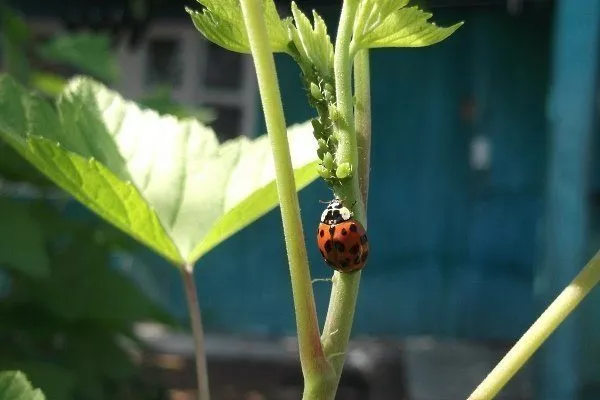
Since aphids are very weak insects, they have many predatory insect enemies. Their main enemy is ladybug beetle, whose larvae eat aphids and their larvae en masse.
These brightly colored bugs often infest gardens and summer cottages. Avoid using chemical pesticides, which kill not only pests but also beneficial insects.
Planting fragrant plants near currant bushes will attract ladybugs, which also act as aphid repellents. To keep the beetles away, add a fertilizer: mix equal parts yeast and sugar with a little water. You can also collect ladybugs from the meadow and transfer them to the currant bushes.
At night, aphids are attacked lacewings – small, elongated insects with transparent, mesh-like wings. To attract them, plant caraway and tansy near berry bushes.
Fumigation of currants
A very interesting way to combat aphids. It should be used in early spring, before the leaves have sprouted. Make a smoker out of an old tin can—simply nail the can to a long pole.
Take some pieces of rubber (old tires will do), place them in a jar, light them, and fumigate each currant branch one by one. Avoid holding the fumigator too close to the branches to avoid burning them.
Make sure only smoke reaches the branches, as this will kill all aphids and germs. Careful, unhurried fumigation is guaranteed to rid you of these pesky insects.
Hot pepper
Add crushed hot pepper pods to water in a ratio of 1:10 and boil for 30 minutes. Strain after 2 days. The infusion is very strong, so dilute it: 100 ml per 1 liter of water.
This makes a good aphid repellent. Spray it on all your currant bushes, even the uninfested ones. The pepper infusion can be prepared for future use:
- Take 1 kg of pods, cut in half.
- Simmer over low heat for an hour. Don't forget to cover with a lid.
- Let it steep for 2 days, strain, pour into bottles, close tightly and store in a dark place.
To use, dilute 500 g of the decoction in 10 liters of water and add 40 g of laundry soap. After this spray, the aphids will have no chance of survival.
Prevention
Controlling aphids is a long and tedious process. To prevent infestations of these insects on your berry bushes, follow these simple rules:
- Carry out annual pruning of bushes, removing all damaged branches and shoots.
- Weed around the bush regularly.
- Dig the soil under and around the bushes.
- Kill garden ants.
- Plant aphid-repellent plants.
- Allow ladybugs and lacewings to live in your garden.
- In spring, scald the bushes with boiling water.
- Whitewash tree trunks and branches.
You've learned how to combat a currant pest—aphids. Which one to choose is your decision. Practice and experience will help you make the right choice. Aphid control is a methodical, responsible, and ongoing effort. Simple preventative measures can make it easier.