
Ilyinka currants are an ideal choice for gardeners who value frost resistance, high productivity, and excellent flavor. The bushes are characterized by strong shoots, and the berries are large, juicy, and richly flavored. This variety thrives in regions with variable climates, but requires careful care.
History of selection
The hybrid was developed by breeder V.S. Ilyin at the South Ural Research Institute of Potato Crops and included in variety testing in 2004. It was obtained by open pollination of the Jonker van Tets currant variety and inherited the parent plant's excellent frost resistance. It is recommended for cultivation in regions with short summers.
Varieties of the Ilyinka currant variety
There are several varieties of this crop. Each variety has its own characteristics and is renowned for its beneficial properties and excellent taste.
| Name | Color of berries | Berry weight (g) | Tasting score (out of 5) |
|---|---|---|---|
| Red | Dark red | 0.8-1.6 | 5 |
| Black | Black | 4-5 | 4.4 |
Red
The berries are large – weight varies from 0.8 to 1.6 g. Distinguishing characteristics:
- The fruits have a uniform round shape and a rich dark red color.
- Each berry contains several seeds. The calyxes are closed and round, and the stalks are medium-thick, short, and green.
- The flavor is balanced between sour and sweet, making the fruit particularly enjoyable. At the tasting, the variety received the highest score—5 points.
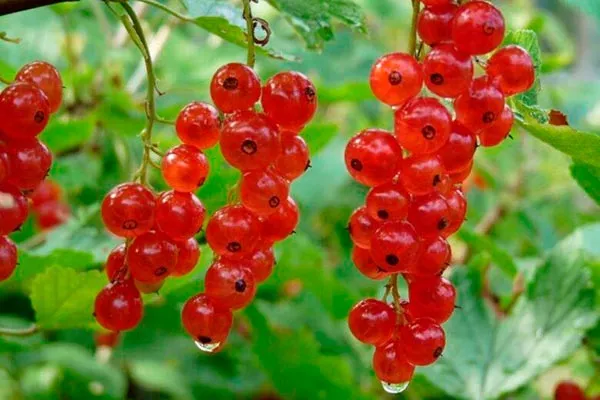
The berries are versatile in use: they are suitable for fresh consumption (they can be stored in the refrigerator for several days), and are ideal for jam, fruit drinks, preserves, and other preserves.
Black
The fruits are large, weighing 4-5 g. The skin is smooth, firm, and pure black. The flesh is aromatic and juicy, earning a tasting score of 4.4 out of 5.
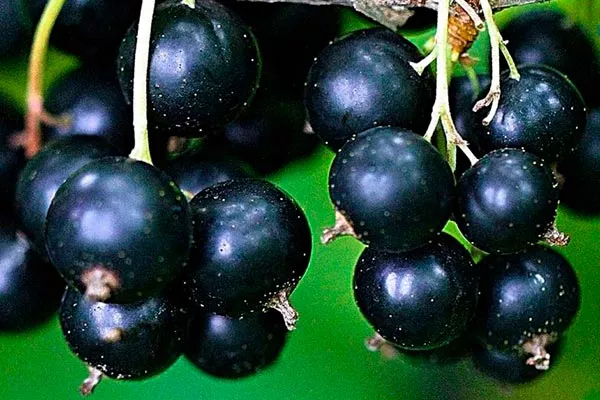
Thanks to their excellent shelf life and high transportability, currants can be transported over long distances without losing their marketability or flavor.
General characteristics
Ilyinka is a popular hybrid that has received many positive reviews for its rich aroma and unique flavor. Currants are planted even in small garden plots, as they require little care and can be grown with minimal effort.
Description of shrubs
The plant is medium-sized, reaching up to 1.5 m in height. Distinguishing qualities:
- Crown – spreading and dense pyramidal.
- Escapes – strong, thick and durable enough to eliminate the need to install supports.
- Leaves – medium density, with a lobed blade and rounded teeth. Shades vary from bright green to a duller shade.
Flowers and berries develop on fruit clusters 4-6 cm long.
Flowering and pollination, immunity to diseases and pests
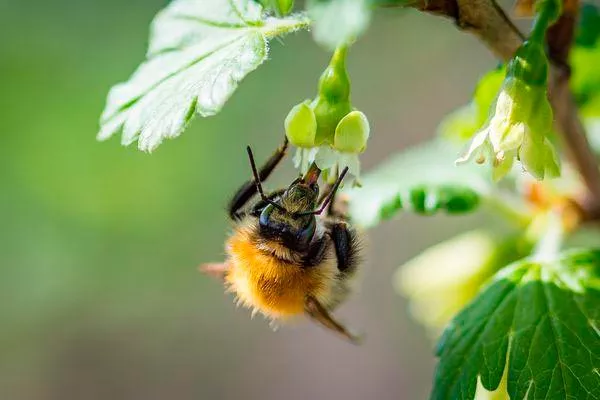
The crop blooms in mid-May to early June, depending on the regional climate. Flowering lasts for about two weeks. The self-pollinating hybrid does not require pollinators to produce fruit. However, if other currant bushes are grown nearby, this can increase the yield.
The Ilyinka variety is highly resistant to many diseases and pests. It is resistant to powdery mildew, anthracnose, and bud mite. Moderate resistance to septoria allows gardeners to rest assured that their plants are healthy.
Fruit ripening time, productivity and fruiting characteristics
The berries ripen in late June to early July. This occurs annually and is observed on all bushes. It takes approximately 2-3 years after planting for the plant to begin bearing fruit.
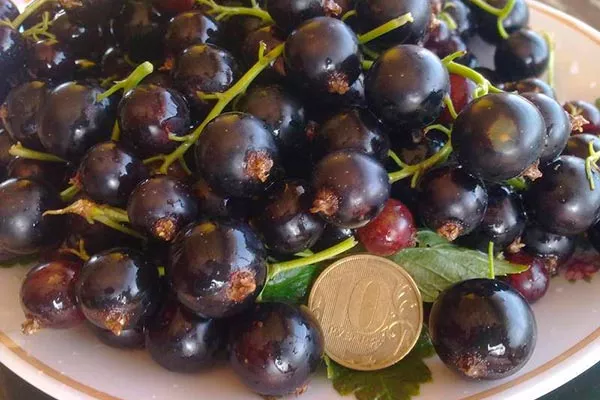
With proper currant care, you can expect a stable and abundant harvest every year. The Ilyinka variety is very productive – up to 5 kg per bush.
Scope of application of berries
The fruits are eaten fresh, added to porridge, sweet dishes, and fruit salads, and are also used to decorate cakes. The variety is suitable for freezing and drying.
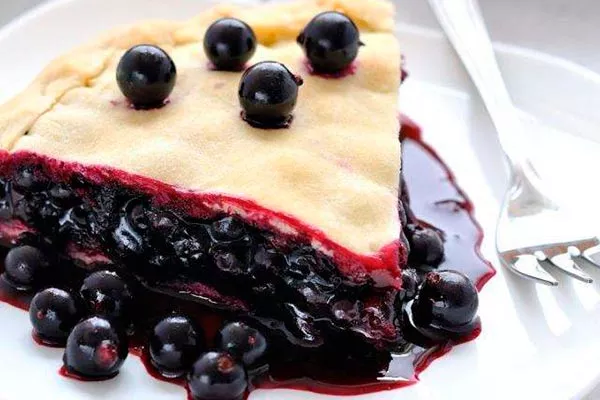
The berries are used to make aromatic compotes, jellies, and preserves. They are also used to make pastila, juices, and jams ground with sugar to preserve the beneficial properties of the vitamin-rich fruit.
Resistance to subzero temperatures and drought
For full fruiting, the bushes require sufficient moisture. Drought poses a threat to the hybrid, especially during flowering and berry formation, as a lack of water negatively impacts productivity. Therefore, regular watering is essential.
This frost-hardy variety requires no winter cover, as it's not susceptible to freezing. However, in the spring, if unexpected night frosts occur, it's best to cover the plant with non-woven fabric for protection.
Planting and propagation of seedlings
To get a good harvest, it's important to consider several subtleties during the growing process. One key factor is soil composition. Proper planting is essential for proper development.
- ✓ The soil acidity level should be within the pH range of 5.5-7, which is critical for the absorption of nutrients.
- ✓ The distance between bushes is at least 1.5 m to ensure sufficient ventilation and lighting.
Choosing a landing site
Successful cultivation of Ilyinka begins with choosing a suitable site. Following a few simple rules will help create optimal conditions for the plant's growth and development.
Pay attention to the main criteria:
- Lighting. Currants prefer bright sunlight but can also grow in partial shade. Choose well-lit locations to ensure the plant receives enough light for normal photosynthesis.
- Drainage. The plant does not tolerate standing water, so it's important to ensure the site has good drainage. The soil shouldn't be too dense or clayey to allow water to drain freely.
- Wind protection. The hybrid is sensitive to frost and drying out, so place it in areas protected from strong winds. Ideally, plant the seedlings along fences or other plants to create a natural barrier.
- Useful neighborhood. Ilyinka grows well near shrubs and trees. They can create natural shade, protecting the foliage from overheating without interfering with its growth.
When choosing a planting location, consider ease of watering, pruning, and harvesting. Ideally, the currant bush should be accessible for all necessary care. Avoid planting near tall trees that create shade or other shrubs that could impede access.
Soil preparation
The soil should be loose and well-aerated to allow the roots to grow freely and receive the necessary amount of oxygen. Thoroughly cultivate the beds before planting:
- Clear the area of weeds and other vegetation – they can compete with currants for nutrients and water.
- To increase soil fertility and create comfortable conditions for growth, spread organic fertilizers – humus or compost – over the bed.
For optimal growth, acidic soil with a pH of 5.5 to 7 is ideal. Check your soil pH and adjust as necessary to ensure ideal conditions for your plant.
Rules for planting seedlings
Begin cultivation in the fall or spring. The optimal period for fall planting is October-November, when the soil is still slightly warm but frost has not yet set in. In the spring, plan the procedure for April-May, when the soil is warm but the leaves have not yet fallen.
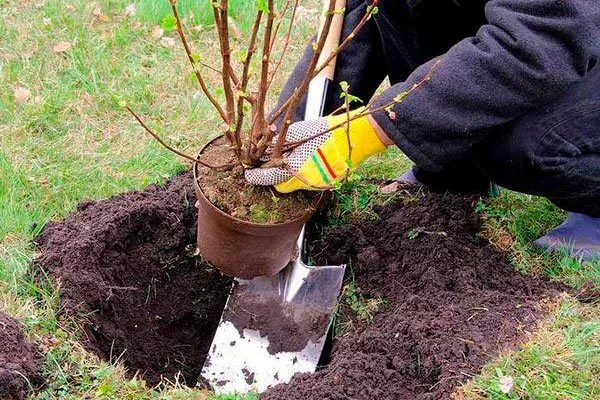
Follow these important rules:
- Thoroughly rinse the roots of the seedlings, removing any remaining soil with a brush or sponge. Place a 5-10 cm thick drainage layer at the bottom of the planting hole.
- Place the bushes in a hole 20-25 cm deep, with a spacing of 1-1.5 m between plants and 1.5-2 m between rows. Fill the hole with soil, leaving a small depression around the seedlings for water drainage.
After planting, water the bushes thoroughly and mulch the soil to retain moisture. Prune the shoots by 2/3 of their length to improve establishment and stimulate vigorous growth.
Caring for black currants Ilyinka
This variety is easy to grow and thrives even in poor soils. However, to ensure a bountiful harvest with large berries, proper care is essential.
Watering and fertilizing
The plant does not tolerate overwatering or stagnant water at the roots, so water regularly but sparingly. Follow these recommendations:
- To maintain the required soil moisture level, water the currants once every 7 days during the period of active growth before fruiting begins and twice a week during flowering and fruit formation.
- Water should be evenly absorbed into the soil and not accumulate on the surface.
- Perform the procedure in the morning or evening to avoid rapid evaporation of moisture.
- The plant requires regular fertilizing. Starting from the first year of growth, apply organic fertilizers such as compost or humus (up to 10 kg per square meter).
- During fruiting, fertilize the bushes with mineral fertilizers: nitrogen fertilizers in the spring before the growing season begins, and phosphorus-potassium fertilizers before flowering and fruit formation. Complex mineral fertilizers are effective after harvest.
After watering, weed the beds to improve soil moisture retention and prevent weed growth.
Pruning: formative, sanitary, rejuvenating
Carry out the first currant pruning in early spring, before buds appear. Remove dried, frost-damaged, and weak branches, as well as shoots growing inward, to improve ventilation and light.
Continue shaping the plant throughout the summer. The goal is to create an optimal plant structure, which will make it easier to maintain and increase yields.
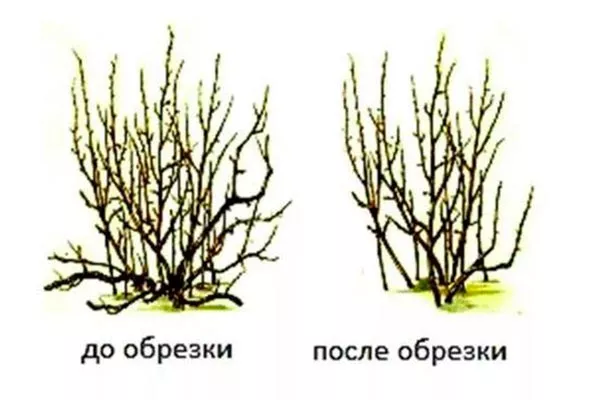
The main stages of structuring:
- Removing upper shoots that cross and interfere with fruiting.
- Shortening branches that touch the ground to prevent diseases.
- Trim side shoots by 1/3 of their length to stimulate growth and increase yield.
Carry out the procedure carefully so as not to cut off too much hair, as this can negatively affect the growth of the hybrid, and improper shaping can lead to a decrease in productivity.
Watering and hardening of bushes, soil care
In the spring, before active growth begins, treat currants with boiling water. This method strengthens the plant and helps prevent disease and control pests.
Regularly loosen the soil around the shrub to prevent waterlogging. To prevent crusting on the surface, mulch the area with sawdust.
How to prepare a plantation for winter?
To ensure your crop survives the winter well, carefully prepare it for the cold weather. Follow these recommendations:
- A few weeks before the onset of cold weather, stop watering to relieve excess moisture. Remove the old layer of mulch and clear the soil of fallen leaves.
- If you didn't prune last year, shorten the shoots to 15 cm.
- Loosen the soil and apply fertilizers high in potassium and phosphorus if you haven't fed Ilyinka immediately after harvest. Apply a new layer of sawdust or leaf mulch to the prepared area, making sure it doesn't touch the branches.
- Stop watering a few weeks before cold weather sets in.
- Remove the old layer of mulch and clear the soil of fallen leaves.
- Apply potassium-phosphorus fertilizers to strengthen the root system.
In regions with severe frosts, it is recommended to bend branches to the ground for additional protection.
How to harvest and store Ilyinka black currants?
Pick berries from the bush only in dry weather. You can pick whole bunches (for subsequent transportation) or partial bunches if the fruits ripen unevenly.
Storage periods depend on the conditions:
- in the refrigerator (0…+5°C, humidity 85-90%) – 30-35 days;
- in the cellar or basement – 20-30 days;
- in the freezer – up to six months.
Similar varieties
The Ilyinka variety has a red-fruited counterpart, which is the result of open pollination with the donor variety Jonker van Tets. This allowed breeders to create two hybrids—a red and a black variety.
Both varieties are characterized by early ripening, high yields, large fruits, and excellent taste, making them ideal for cultivation in northern regions.
Pest and disease control
The variety has good resistance to most diseases and insects. However, improper care and non-compliance with agricultural practices can lead to infection.
Healthy bushes rarely get sick, but preventative measures are essential. Treat Ilyinka currant bushes twice a year:
- Early autumn Spray the crop with copper oxychloride (40 g per 10 liters of water) or 1% Bordeaux mixture. Disinfect the soil around the bushes.
- In the spring, before the buds appear, use Karbofos, copper sulfate or Bordeaux mixture.
To combat pests and their larvae at the end of winter, treat currants with boiling water, adding a little potassium permanganate to enhance the effect. As soon as the snow melts, disinfect the soil with copper sulfate.
Pros and cons
Growing this variety can be challenging, but if you follow the planting and care guidelines, you can expect a regular harvest of delicious and healthy berries. Ilyinka is a popular hybrid with numerous advantages. It is grown for both personal consumption and commercial sale.
Reviews
Ilyinka currant is an ideal choice for experienced gardeners and beginners alike. It combines winter hardiness and self-fertility, making it popular for both home and commercial cultivation. It requires little care, thrives in a variety of climates, and produces generous harvests with proper cultivation techniques.