
The Gulliver currant variety has gained popularity due to its low maintenance, high productivity, and excellent berry flavor. It's suitable for both beginner and experienced gardeners, offering excellent results with minimal effort. It's important to carefully study the plant's characteristics and ensure proper care.
Story
Created by crossing line 32-77 (Bredtorp) and the Golubka Seedling variety, the cultivars were Russian breeders L. I. Zueva and A. I. Astakhov from the V. R. Williams Federal Scientific Center for Viticulture and In vitro fertilization. Following successful trials, it was recommended for use in 2000 and has since been actively cultivated in various regions of Russia.
Appearance of the bush
The leaves are dark green, trilobed, and deeply notched. They have a wrinkled texture, leathery, and a slight sheen. The shoots are straight, slightly curved, thick, olive-green, and pubescent.
The branches produce medium-sized, slightly twisted clusters bearing 9 to 17 berries. During flowering, the bush is covered with small, reddish-purple flowers. The sepals are brightly colored, with no pubescence at the base.
Berries and their taste qualities
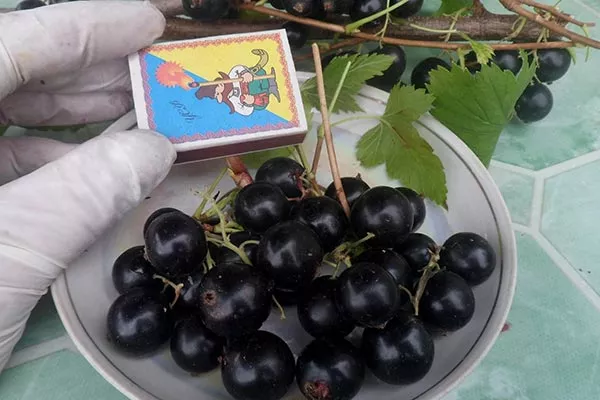
The Gulliver currant variety attracts attention with its large, round, glossy black fruits. Distinguishing features:
- Weight - varies from 1.9 to 3.2 g.
- Peel - medium density.
- Pulp – tender and juicy.
- Taste - sweet and sour with a slight aroma.
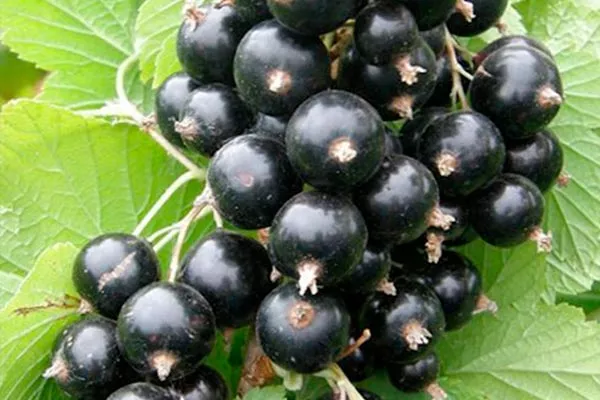
The berries do not crack during long-distance transportation. Currants contain up to 167 mg of vitamin C, up to 2.7% acid, and up to 6.7% sugar. The variety received a high tasting score of 4.4 points. They are consumed fresh, frozen, and used for preserves.
Characteristics
The Gulliver variety is popular with both experienced and novice gardeners due to its excellent berry flavor, large fruit size, and ease of growing conditions. It also has many other noteworthy features.
Drought resistance, frost resistance
The plant is highly resistant to low temperatures and can withstand temperatures down to -28°C. In colder climates, shoots may freeze in winter, so provide additional shelter for the plant.
Spring frosts don't negatively affect the variety, so yields don't decrease. The bush tolerates drought well: with a lack of moisture, the berries don't become smaller, but their number may decrease.
Productivity
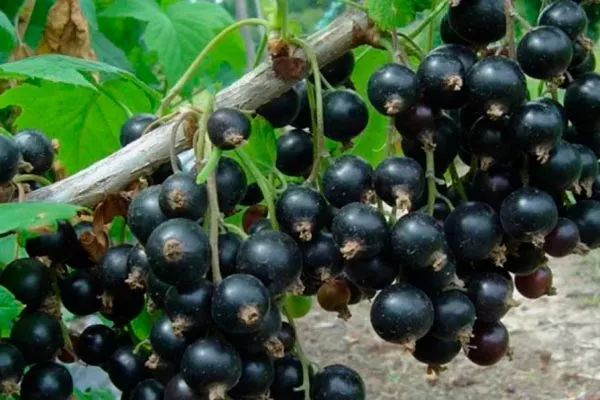
Gulliver is an early-ripening variety, with fruits beginning to ripen 55-65 days after inflorescence, allowing for harvesting as early as early July. They retain their size as they ripen and remain on the clusters for a long time.
- ✓ Resistance to direct sunlight without baking the berries.
- ✓ The ability to bear fruit on shoots from the previous year, which is rare among currant varieties.
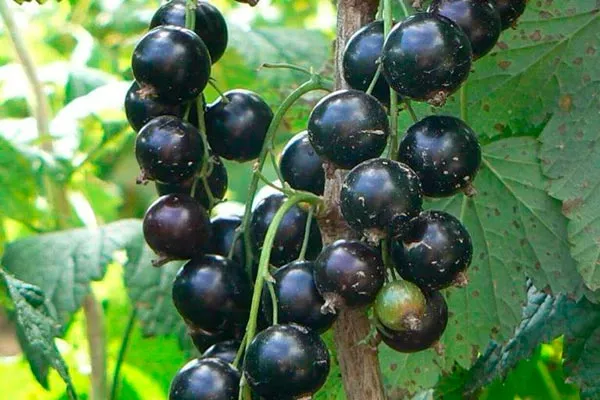
The berries are resistant to direct sunlight and do not bake. The yield is high: 2.8-3.5 kg are harvested from one bush.
Scope of application
This variety is versatile. The pleasant flavor of the fruit allows it to be eaten fresh or used to make compotes, preserves, kissels, and jellies.
The shrub's leaves are also used: they are added to preserves to add a pleasant aroma. They are ideal for making healing infusions that strengthen the immune system.
Ripening and fruiting
The Gulliver currant is an early-ripening variety. Fruiting occurs between July 15 and 30.
Growing regions
The crop is successfully cultivated in the Central, Northwestern, and Volga-Vyatka regions. It grows and thrives in other areas, with only minor yield losses.
Landing features
The fruiting and yield of the seedling depend on proper planting. It's important to follow certain recommendations when growing currants.
Choosing a location
Gulliver currants can grow in one place for 12-15 years. They prefer fertile loamy soils. If the soil is highly acidic, reduce the acidity by adding lime.
- ✓ The soil pH level should be between 6.0-6.5 for optimal currant growth.
- ✓ The groundwater depth must be at least 1.5 meters to prevent root rot.
To improve the water-retaining properties of sandy soil, add peat and humus when digging. To improve the composition of heavy clay soils, add coarse river sand.
Plant the seedling on the south or southwest side of the plot, choosing a sunny, wind-protected location. Low-lying areas where cold air and moisture accumulate are not suitable.
Planting dates
Bare-root plants can be planted in either fall or spring, but fall is preferable. In temperate climates, favorable weather conditions for planting typically arrive in early October.
If winters in your region are early and cold, begin the procedure in September; if winters are late and warm, postpone it until November. Fall planting allows the soil around young bushes to firm up by spring, which promotes vigorous growth and good establishment. There are no strict monthly restrictions for container planting.
Site preparation
Before planting the seedling, level the soil, removing deep holes and depressions. Dig the soil to a depth of 20-25 cm and remove the rhizomes of perennial weeds.
Follow these recommendations:
- Dig a planting hole 35-40 cm deep and 50-60 cm in diameter.
- Fill three-quarters with a mixture of soil and fertilizer.
- Add 10 kg of compost, 150-200 g of superphosphate, 40-60 g of potassium sulfate or 30-40 g of wood ash.
Prepare planting holes immediately before planting or in advance. Fertilizer may not be necessary, but adding it will increase yield.
Selection of seedlings
Purchase planting material from nurseries or reputable suppliers. High-quality plants should have roots 15-20 cm long, free of growths and damage. The optimal length is about 30 cm, with one to three shoots.
Planting instructions
Planting a crop is a simple process that requires following some simple rules. Follow these steps:
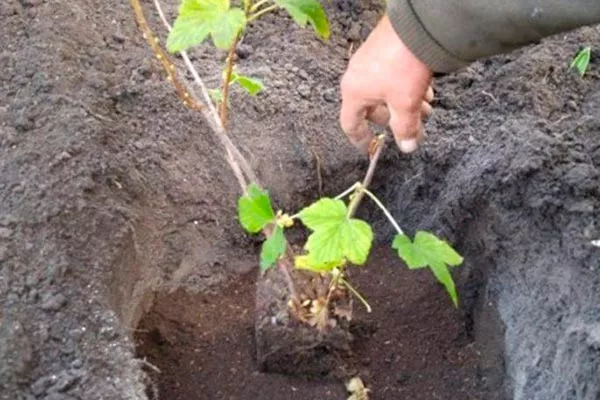
- Make a small elevation in the center of the planting hole.
- Water the hole generously and wait until the moisture is absorbed.
- Place the seedling in the center, spreading out the roots.
- Fill the voids with soil and gently compact the soil at the base of the bush.
- Water the planting again.
- Shorten the shoots to three to five buds.
Caring for a seedling
Although blackcurrants are considered an easy-to-grow plant, regular care helps ensure a bountiful harvest. This requires standard agricultural practices and preventative treatments.
Trimming
Proper pruning plays a key role in increasing productivity and improving the taste of berries. Even if you're fertilizing and watering your plants properly and your harvest isn't impressive, improper pruning may be the cause.
Carry out the procedure correctly:
- Remove all branches growing inside the bush, as they negatively affect fruiting.
- Remove weak shoots and shorten basal shoots that have stopped growing.
- For an adult bush, it is enough to leave 15 strong shoots; remove the rest, as they will not produce a harvest.
In spring, prune based on the growth results of the previous year, cutting off weak shoots only in places where there is a strong branch.
Watering
The amount of moisture affects both the number of ovaries and the quality of the crop. Excessive water can be harmful to the roots, leading to root rot. For irrigation, use settled and heated water in barrels.
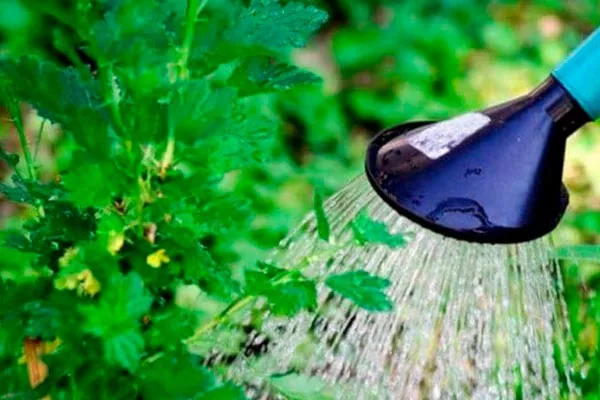
Intensive watering is necessary at the following stages of bush growth:
- during the formation of inflorescences in early June;
- during the ripening of berries in July.
25 liters of water are used per square meter of soil. To irrigate, make furrows about 10 cm deep around the seedling at a distance of 30 cm. After the water has been absorbed, loosen the soil to improve air circulation. Mulch the soil with humus or peat to reduce the frequency of watering.
Top dressing
Fertilize the plant with both mineral and organic fertilizers. If you applied them at planting, the plants will have the necessary nutrients for the first two seasons. Starting in the third year, begin feeding the bushes fully:
- Early spring. Apply nitrogen fertilizers such as urea or ammonium nitrate. For young plants, apply 40 g; for mature plants, apply 25 g. Work them into the soil to a depth of 30 cm. Nitrogen promotes the growth of new shoots and foliage. Alternatively, use slurry, pouring it under the roots.
- In summer. Stop using nitrogen fertilizers and switch to potassium and phosphorus ones. To do this, dissolve 60 g of superphosphate and 20 g of potassium salt in a 10-liter bucket of water, then water the currants. Perform this procedure after flowering and during the ripening period.
In the fall, dig up the soil around the bushes and fertilize it with humus. It's also helpful to add wood ash to restore the soil's nutrient reserves.
Shelter for the winter
After frost and snowfall, cover the bushes. Tie the branches and trunks carefully with twine, trying to place them as close together as possible. Don't tie the plant parts too tightly to avoid damaging the fragile branches.
Bend the bushes to the ground and tie them in a spiral. Then cover them with a wooden box, an old blanket, spruce branches, or a box. Snow can also serve as cover, but its availability during the winter varies by region.
Diseases and pests
Gulliver boasts good resistance to common pests and diseases. However, under unfavorable growing conditions, the shrub's immunity can weaken. Therefore, experienced gardeners advise not to ignore preventative measures.
To protect against fungal infections, spray the bushes with Fundazol or Hom, and to control pests, use Fufanon or Karbofos.
Harvesting and storage
The timing of fruit harvesting depends on planting time, growing conditions, flowering and ripening time, ripeness of the berries, and their intended use. The best way to determine ripeness is by skin color. It's important that the berries ripen at the same time, don't fall off, and have good flavor.
When harvesting, choose morning or evening, as sun and dew can reduce storage life. The fruit's thick skin allows it to store well. After harvesting, store it immediately in the refrigerator or cellar. Avoid picking berries immediately after rain.
Methods of reproduction
You can grow new Gulliver blackcurrant seedlings at home. There are several propagation methods, each with its own unique characteristics:
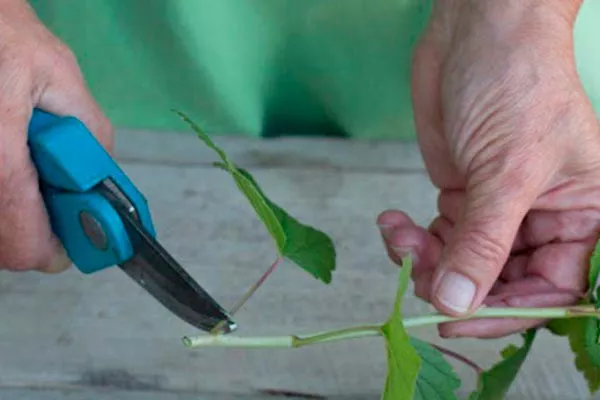
- Division. Carry out this in the fall. In the spring, hill the bush high to stimulate the growth of dormant buds. In mid-September, dig up the plant, clear away the soil, and divide it into sections using pruning shears. Each section should have 3-5 shoots and well-developed underground shoots.
Plant the divided sections in their permanent location. This procedure is suitable for plants that are at least three years old. - Layers. In spring, bend down the lower young shoots, bury them 5 cm deep, and secure them. Cover with soil, leaving the tops above the ground. Keep the soil moist throughout the season. Separate the cuttings from the mother plant after a year.
- Cuttings. Cut cuttings from young shoots up to 20 cm long and about 0.7 cm thick in early summer. Plant the cuttings in a shaded area and cover with a mini greenhouse to create optimal conditions. Regularly ventilate the cuttings and monitor soil moisture.
When the cuttings get stronger (usually after a year), transplant them to a permanent location.
Choose the most suitable method for you to ensure that more bushes grow on your plot, producing stable harvests.
Similar varieties
| Name | Disease resistance | Flowering period | Soil requirements |
|---|---|---|---|
| Currant Gulliver | High | Early | Fertile loamy soils |
| Selechenskaya | Average | Average | Moderately fertile |
| Perun | High | Late | Fertile loamy soils |
| In memory of Vavilov | Average | Early | Moderately fertile |
| Oryol Waltz | High | Average | Fertile loamy soils |
Gulliver shares characteristics with the following varieties: Selechenskaya, Perun, Pamyati Vavilova, and Orlovsky Vals. They are characterized by their low maintenance and large, juicy berries, making them ideal for those seeking high-yielding plants and delectable harvests.
Positive and negative qualities
The crop has many advantages that make it competitive among other varieties. It's important to study not only the variety's strengths but also its weaknesses.
Among the negative qualities, some gardeners note rapid growth and the need for regular pruning.
Reviews
The Gulliver currant is an ideal choice for both beginner and experienced gardeners. It is resilient to a variety of weather conditions, highly drought-resistant, and easy to care for. These characteristics make it an excellent choice for garden cultivation. With proper cultivation practices, the bush will reward you with generous harvests.