
It's no coincidence that the red currant "Garnet Bracelet" received such a vibrant and original name. When ripe, the berries look truly wonderful—like vibrant beads or pomegranate seeds. This dessert variety isn't just beautiful and delicious; it also boasts excellent characteristics and is easy to grow.
Description of the Garnet Bracelet currant
The Garnet Bracelet currant bushes are medium-sized and gently spreading, reaching a height of 130-250 cm. Young shoots are light brown, straight and shiny, covered with medium-sized, dark green leaves.
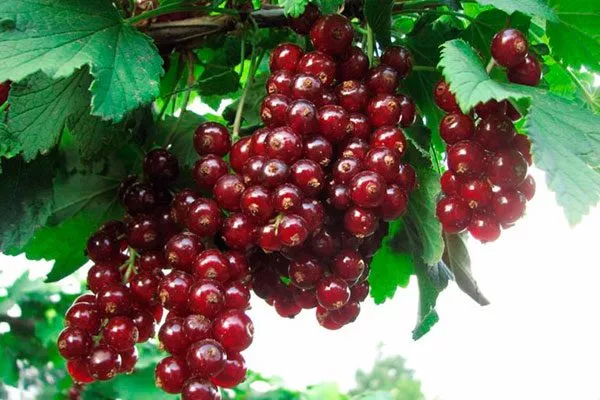
This currant's flowers are small and yellow. The clusters are loose and elongated, reaching 6-7 cm in length. Each cluster contains 10 to 12 berries.
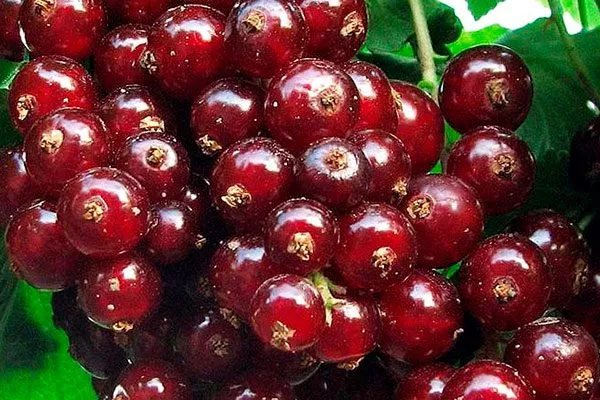
The berries of the Garnet Bracelet currant are very beautiful, with an unusual color that seems to blend dark red, scarlet, raspberry, and garnet hues. They are oval in shape. The berries reach 10 mm in diameter and 12-15 mm in length. Each berry weighs 2-4 g. The skin is moderately thick, firm, and has a matte finish. The berries are easy to pick.
History of creation
The Garnet Bracelet currant was developed by plant breeders T. Zvyagina and A. Viksne. This remarkable variety was obtained in 2018 at the "Gardens of the Urals" nursery.
The taste and purpose of berries
The berries have a pleasant dessert flavor. The flesh is juicy and tender, with a sweet aftertaste and caramel notes.
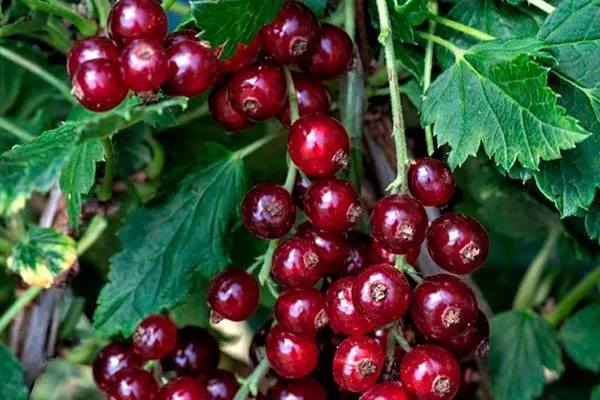
This variety has a universal purpose; its berries can be eaten fresh, used to make juices, fruit drinks, jellies, fillings for baked goods, and can also be used to make jams and compotes.
Characteristics
The Garnet Bracelet currant is a late-ripening variety. The bush begins to bear fruit 2-3 years after planting. The average yield of a mature bush is 7-10 kg, with a maximum of 12 kg. This variety is highly resistant to most diseases.
Pros and cons
Like most red currants, the Garnet Bracelet variety offers all the key benefits of this crop—it's productive, easy to grow, and delicious. But before planting this currant in your garden, it's a good idea to weigh its advantages and disadvantages to determine whether it's suitable for your specific climate, garden, and growing needs.
Landing features
To ensure currant bushes grow well and produce abundant fruit over a long period of time, they need to be planted correctly. It's important to select the right location and seedlings, and to follow the planting technique.
- ✓ Check the groundwater level: it should be no closer than 1.5 m to the surface.
- ✓ Make sure the soil pH is 5.5 using a pH meter or litmus paper.
Planting dates
Currants are planted in spring or fall; the choice of season and exact timing depend on the region's climate. In spring, planting occurs from the first ten days of April to the third ten days of May, and in fall, from the second ten days of September to the third ten days of October. In harsh climates, spring planting is preferred; otherwise, fall planting is preferred.
There are usually two types of seedlings available: bare-root and closed-root. Open-root ones are planted in spring or fall, while closed-root ones can be planted at any time, including summer.
Where to plant currants
To plant red currants, choose a well-lit, ventilated location, but avoid drafts and gusty northerly winds. Preferably, a fence, building wall, or other barrier on the north side is needed.
The best neighbors for red currants are apple trees, strawberries, honeysuckle, hops, gooseberries, tomatoes, and peppers. Onions and garlic can be planted between rows and directly under the bushes. Undesirable neighbors for currants include plums, cherries, and raspberries.
Requirements for seedlings
It's best to buy seedlings from specialized nurseries—this gives you a much better chance of acquiring high-quality planting material that matches the variety's characteristics. They may sell seedlings of various ages, but ages 1-2 years are considered optimal for planting.
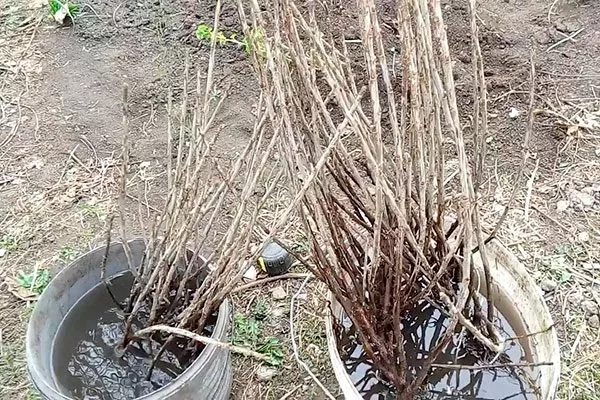
What to look for when choosing red currant seedlings:
- The root system must be well-developed. The more roots, the faster and better the seedling will take root. The roots must be moist; dry ones may not take root. There should be at least three well-developed roots.
- The branches are not dry, without defects or signs of disease.
- The height of the above-ground part is approximately 0.4 m.
Preparing the soil and planting hole
The most suitable soil for red currants is light loam. They also grow well in sandy loam. The optimal pH is 5.5. If the soil is too acidic, add lime or dolomite flour during tillage at a rate of 1 kg per square meter.
- Check and adjust soil pH 2 weeks before planting.
- One week before planting, add organic fertilizer and dig up the area.
- Moisten the soil if it is dry 3 days before planting.
Features of preparing a planting hole:
- For planting, dig a hole 40 cm deep and 60 cm in diameter. It is recommended to do this 2-3 weeks before planting to allow the soil to settle and the fertilizer to dissolve.
- A drainage layer (10-15 cm) of gravel, pebbles, broken bricks, etc. is placed at the bottom of the pit.
- The topsoil, obtained by digging, is mixed with humus or compost in a 1:1 ratio, 200 g of wood ash and 40 g of superphosphate are added, and the resulting mixture is then piled into the hole.
Planting currants
It's recommended to soak the seedling in water for 2 hours before planting. It's a good idea to add a rooting stimulant to the water.
Planting nuances:
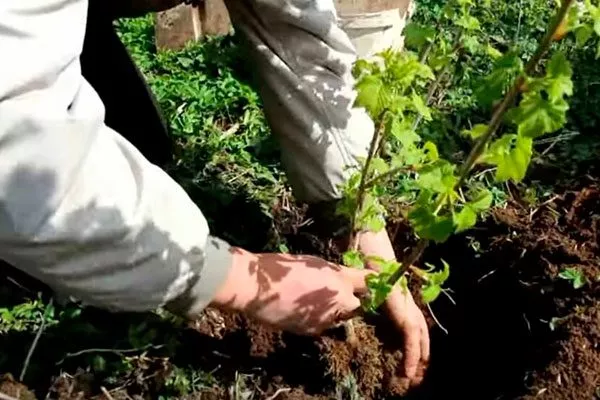
- A currant seedling is placed on a mound of earth at a slight angle, the roots are carefully straightened, and covered with soil, which is carefully compacted.
- After planting, the seedling should be in such a position that its three lower buds are underground.
- Planted currants are watered with settled water. 10-20 liters of water is sufficient. Once the water has been absorbed, the area around the trunk is mulched with peat or humus.
Care Features
The yield of the Garnet Bracelet currant, the health and development of the bush, and the quantity and quality of the berries largely depend on care. This is relatively simple and doesn't take much time for gardeners. The main factors are timely watering, fertilizing, and pruning, as well as preventative spraying.
Watering
If there's no rain, currant bushes are watered weekly. The recommended watering rate is 10 liters per plant. Watering is especially important during the fruit-setting and ripening periods. During these stages, the bushes require twice as much water.
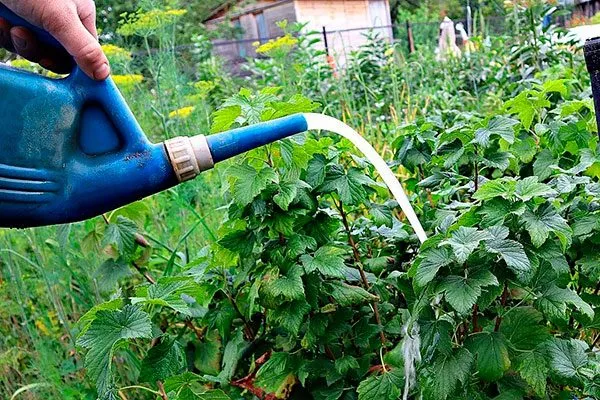
Water should soak the soil to a depth of 30-40 cm. For irrigation, use settled and sun-warmed water. Reduce watering in the fall, but be sure to perform a moisture-recharging irrigation before frost.
Loosening
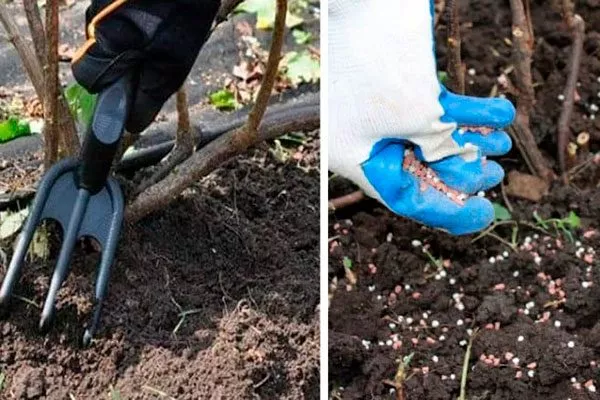
To prevent the soil from hardening and forming a hard crust that prevents oxygen from reaching the roots, the tree trunks are loosened after watering.
Top dressing
Fertilizing of the red currant Garnet Bracelet begins in the second year after planting.
Approximate fertilization schedule:
- At the beginning of summer, mineral fertilizers are applied under the roots - 20 g of urea and 40 g of nitroammophoska per bush.
- After flowering, add 150-200 g of wood ash under the bush.
- During the summer, tree trunks are mulched with humus. This not only provides additional nutrition but also prevents rapid moisture evaporation and weed growth.
- At the beginning of autumn, after harvesting, add 50 g of superphosphate and 20 g of potassium sulfate under each bush.
Trimming
It is recommended to shape the bush, leaving 5-7 main shoots. Pruning is done in the spring, before active growth begins. Remove all frozen, weak, and dry shoots, as well as any excess shoots that block light and air from reaching the center of the bush.
Features of pruning:
- Pruning is carried out with a sharp and disinfected tool.
- Affected shoots are cut back to healthy tissue - to white wood.
- Pruning is carried out on the outer bud to prevent the shoots from crossing.
- Diseased and weak branches are cut to the base at the ring and destroyed.
- The cuts must be smooth and even. Splitting of the stumps is not allowed. The cuts must be coated with garden pitch.
Diseases and pests
Preventative measures, such as collecting and destroying leaves and plant debris, and spraying with various infusions and copper-containing preparations, can help prevent many problems associated with currant infestations and insects.
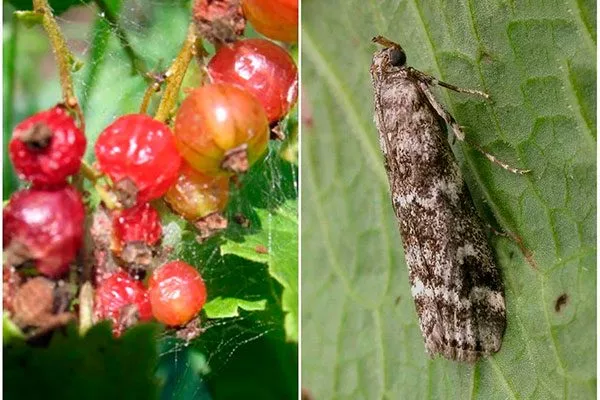
The variety has a fairly strong immunity, but if agricultural practices are not followed and growing conditions are unfavorable, there is a risk of damage from certain diseases and pests:
- Anthracnose. Before bud swelling, the soil and bushes are treated with a 1% DNOC solution. After flowering and harvest, the currants are sprayed with a 1% Bordeaux mixture or a 0.4% cuprozan suspension.
- Powdery mildew. When symptoms of damage appear, the bushes are treated with Topaz, Fundazol, Fitosporin-M or a 1% suspension of colloidal sulfur.
- Aphid. To eradicate it, spray with a 1% solution of DNOC (an insectofungicide). This is done in early spring, before bud break. Before and immediately after flowering, treat the bushes with Actellic or Karbofos.
- Kidney mite. Pests overwinter inside buds—up to several thousand in each. It's important to prune and destroy branches with damaged buds promptly. During budding and after flowering, bushes are sprayed with 1% colloidal sulfur, as well as fungicides such as Fufanon, Actellic, and Fitoverm.
Harvesting and storage
Berries should be picked in the morning or evening; avoid picking in hot or rainy weather. The berries should be dry, with no traces of dew. The bunches should be cut whole; picking individual berries will not store well.
Reviews
The Garnet Bracelet variety is a true treasure for red currant connoisseurs. Its berries, gathered in clusters, look truly luxurious; the creators clearly got the name right. However, the variety's merits go beyond its decorative appeal; it perfectly combines all the best qualities of this berry crop.