
The Hercules blackcurrant is a very popular variety, enjoyed by our gardeners and summer residents. It attracts growers with its large, tasty berries and excellent agronomic characteristics.
The history of the creation of the Hercules currant
The Hercules blackcurrant was bred at the M.A. Lisavenko Siberian Research Institute of Horticulture. The variety was created by crossing a dense-bunch currant with a seedling obtained by open pollination of a Siberian subspecies from the Ilgumen River. Author: L.N. Zabelina
The Hercules variety has been undergoing state variety testing since 2000. It is currently recommended for cultivation in the East Siberian, West Siberian, and Ural regions.
Description of the plant
Hercules currant bushes are tall, vigorous, and of medium density, with straight, thick, woody, light-brown, and slightly glossy shoots. The growing shoots are green with a pinkish sheen. The bush reaches a height of 1.8 m.
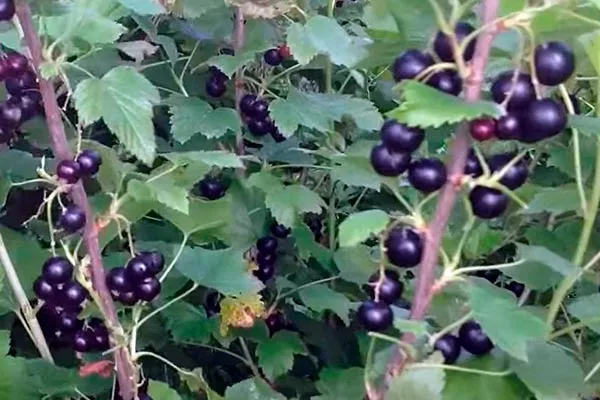
The leaves are large, three-lobed, bright green, dense and smooth, without pubescence. The petioles are thick and short. The buds are single, rounded-ovate, and concentrated in the upper parts of the shoots. The flowers are medium-sized, with cream-colored sepals and a pink margin. The petals are open and cream-colored.
Description of fruits
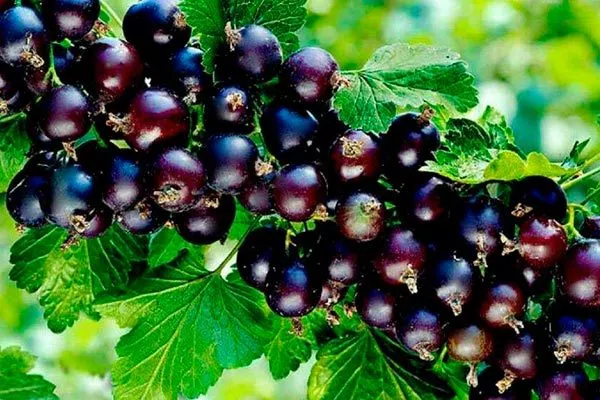
The berries are uniform in size, with a dry, dry surface and numerous small seeds inside. They are collected in long, dense clusters, each containing 8-12 berries.
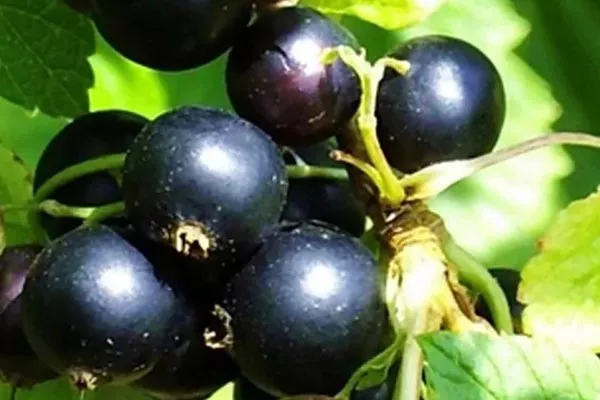
Description of berries:
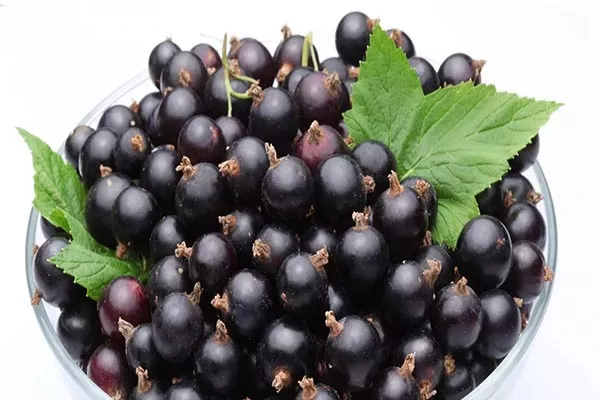
- Color: Almost black, with a slight sheen and a light waxy coating.
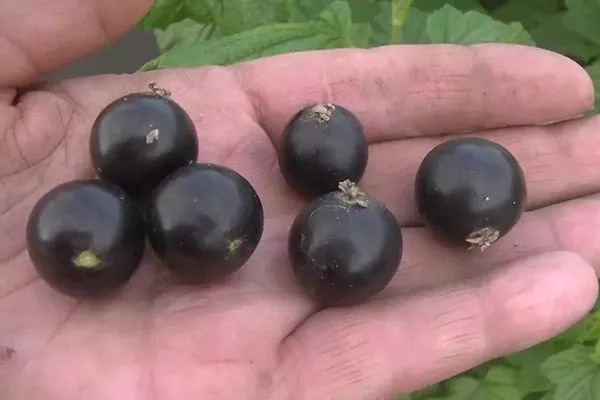
- Size: large and very large.
- The shape is round.
- The weight of one berry is 1.7-2.4 g.
- The skin is elastic, medium thick.
The taste and purpose of berries
The berry pulp is sweet with a slight tartness, delicate and pleasant. The fruit has a dessert-like flavor.
Chemical composition of berries:
- Dry matter - 18.4%.
- Sugars - 8.7%.
- Titratable acidity: 2.2%.
- Ascorbic acid - 177 mg/100 g.
Tasters rate the taste of the berries at 4.6 points on a 5-point scale.
This variety has versatile uses: the berries are eaten fresh, but they are also used to make jams, syrups, juices, compotes, pastilles, wines, liqueurs, marmalades, and preserves. Hercules currants can also be dried and frozen.
Currant leaves retain their beneficial properties after drying. The dried leaves are used to make herbal teas and in folk medicine. Currant buds are used in the food and liquor industries, and are also used to make various essences.
Characteristics
The domestic Hercules variety is ideally suited to growing in our country. This currant has excellent agronomic characteristics and easily adapts to various regional climates.
Ripening time
Blackcurrant is a late-ripening variety. The harvest is carried out from the second half of July to mid-August—the exact timing depends on the regional climate.
Yield of the variety
The Hercules variety is considered a high-yielding variety. A single bush yields an average of 3-3.3 kg of berries. When grown commercially, approximately 11 tons of berries can be harvested per hectare.
Frost and drought resistance
The Hercules blackcurrant is a moderately frost-hardy variety. It can withstand temperatures as low as -34.4°C. It tolerates drought quite poorly and requires regular watering.
Disease resistance
The variety exhibits standard disease and pest resistance. This large-fruited currant, in particular, is virtually immune to anthracnose and septoria leaf spot.
Pros and cons of Hercules currants
The Hercules variety has many advantages that our amateur gardeners have already appreciated. Before planting this variety in your garden, it's a good idea to familiarize yourself with all its pros and cons.
The disadvantage of the Hercules variety is the possibility of being affected by bud mites.
Planting currants
Successful cultivation of Hercules currants begins with planting. It's important not only to plant it correctly but also to choose the right location.
Site requirements
Hercules currants are planted in open, well-lit areas or in partial shade. The location should be well-ventilated, as the plant requires fresh air to thrive. However, drafts and strong winds are undesirable for currants.
- ✓ Maintaining soil pH in the range of 6.0-6.5.
- ✓ Provide drainage in the planting hole to prevent water stagnation.
Avoid low-lying areas and areas where water stagnates after rainfall. The variety prefers well-drained, fertile loam or sandy loam soils that are light and loose. Soils with high acidity (pH < 5.5) are undesirable.
How to choose seedlings?
Hercules seedlings should be purchased from specialized nurseries or stores of agricultural enterprises engaged in the cultivation of planting material.
- ✓ The presence of at least 3 main roots with a length of 15 cm.
- ✓ No signs of disease on the bark and leaves.
For planting, select seedlings 1-2 years old and at least 30 cm tall. The roots should be fresh, free of rot, dryness, and broken areas; the branches should be firm and free of defects; and the buds should be firm, fresh, and show no signs of wilting.
Preparing the planting hole
Planting holes are prepared in advance to allow the soil to settle and the nutrient-rich soil mixture to mature and dissolve. They can be prepared in the fall for spring planting, or two months in advance for fall planting.
Features of preparing planting holes for the Hercules variety:
- Dig a hole measuring 40x40x40 cm or a little larger - it is important that the roots of the seedling fit comfortably in it.
- Place drainage material at the bottom of the hole - crushed stone, broken brick, etc.
- Add a soil mixture to the hole. This can be made from the topsoil from digging the hole, humus, and wood ash. You can also add mineral fertilizers such as superphosphate and potassium sulfate to the mixture.
Planting seedlings
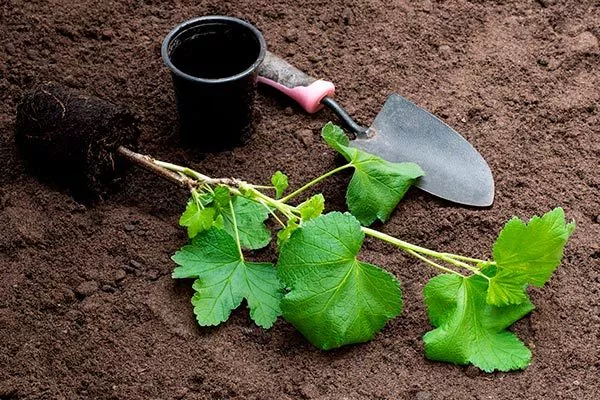
Before planting, it's recommended to soak the seedling's roots in water, or even better, in a growth stimulant solution. Immediately before planting, it's a good idea to soak the root system in a clay slurry.
- Place the seedling in the hole at a 45-degree angle. Cover the roots with soil and compact it. The root collar should be 5 cm below the soil surface.
- Water the planted currants with 5 liters of warm, settled water. Then, form a mound of soil around the perimeter of the hole and add another 5 liters of water.
- Cut the shoots by 2/3, leaving 3-5 buds on them.
- Mulch the tree trunk circle with peat, humus, straw, sawdust, etc.
Care instructions
To produce good harvests of large, tasty berries, the Hercules currant requires some care. It's not difficult, but it must be timely and regular.
Watering
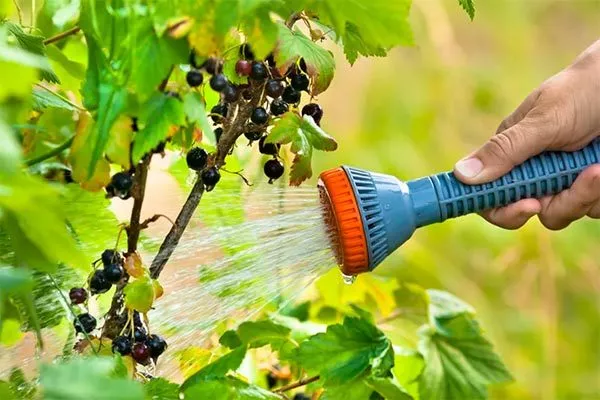
The bushes require abundant but infrequent watering. They are watered approximately three times per season: in spring, summer (during the fruiting stage), and fall (during pre-winter preparation). The remaining moisture comes from precipitation. The approximate water requirement is 20-30 liters per bush.
Top dressing
Blackcurrants require nitrogen in the spring, which can be supplied by adding organic matter—a solution of rotted manure or chicken manure—at a rate of 1 kg per 10 liters and 20 liters, respectively. After harvesting, potassium sulfate and superphosphate are added to the currants.
Trimming
A healthy mature bush should have 12 to 15 skeletal branches. In the spring, before the sap begins to flow, prune all diseased, dry, broken, and frozen shoots, as well as branches older than five years. In the summer, remove young growth, leaving four to five healthy, viable shoots.
Loosening and weeding
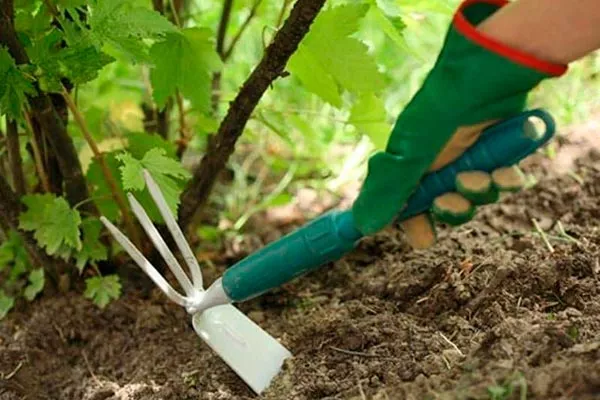
The tree trunks are regularly loosened to prevent a hard soil crust from blocking oxygen supply to the roots. Loosening is usually done after watering or rainfall, and weeds are removed at the same time, as they not only absorb nutrients intended for the currants but also attract insect pests.
Preparing for winter
The variety is considered frost-hardy, but in regions with harsh winters, it requires insulation. It is recommended to cover young seedlings with agrofibre, and sprinkle the tree trunks with a thick layer of humus or other suitable material.
Prevention of diseases and pests
Prevention begins with selecting high-quality seedlings—purchased seedlings should be free of any signs of disease. Subsequently, preventative spraying with copper sulfate, urea, potassium permanganate, and biopreparations such as Fitosporin is recommended.
How to properly harvest and store crops?
Berries can be picked at any time convenient for the gardener, but if they need to be stored for a while, dry weather is best. It's recommended to pick them after the dew has cleared. The berries are carefully picked from the bunches and placed in shallow baskets. It's best to store them in the containers they were picked in, rather than moving them around.
Fresh berries are stored in the refrigerator, where they will keep well for about two weeks. Slightly unripe berries last longer. Do not wash berries before storing. If they become wet for any reason, dry them first and only then refrigerate them. Be sure to store them in a non-airtight container so that air can circulate between the berries.
Reviews
The Hercules blackcurrant is a worthy representative of the crop, easily considered a benchmark. Its berries are so good—beautiful, delicious, and versatile. This variety is sure to be a surefire purchase for any gardener.