
Since ancient times, currants have been the most common berry crop in Russia. The Exotica currant is good, but not perfect. We'll discuss the advantages and disadvantages of this variety below.
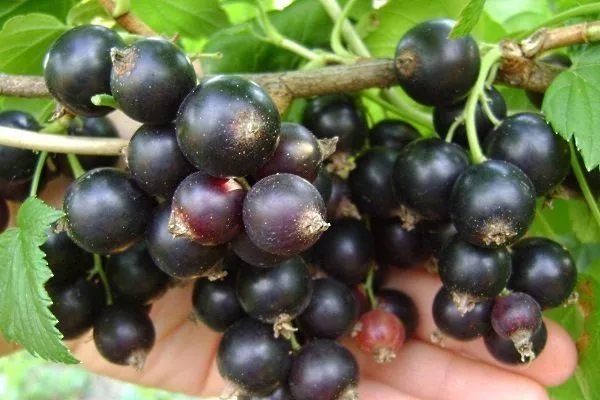
Blackcurrant "Exotica"
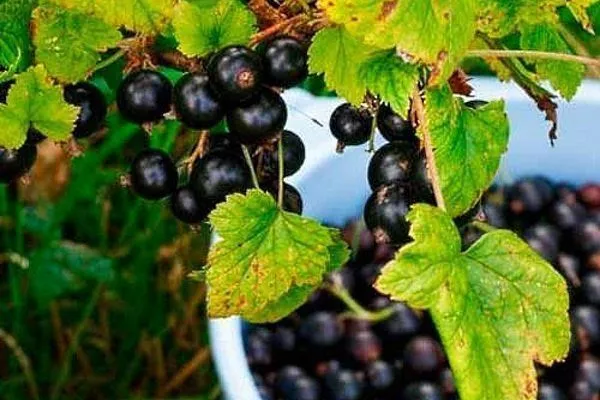
the "Exotica" variety is suitable for industrial cultivation
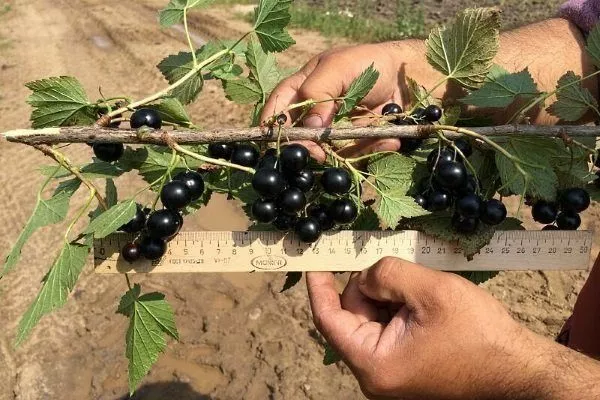
Black currant "Exotica" with good taste characteristics, universal purpose
History of the variety's development
The Exotica blackcurrant variety is an innovation in berry breeding. About 20 years ago, a group of breeders developed an early-ripening variety.
To create it, pollen from two varieties was used: one domestic and one Scandinavian. Their crossbreeding resulted in the creation of Exotica, a unique and distinctive berry.
Description of the Exotica black currant
The plant is vigorous, with straight, not overly massive shoots. Young stems are clean, light green, fairly dense, and rich in plant pigments.
Mature shoots are straight and gray. Buds are ovoid, asymmetrically arranged on a short stem slightly offset from the main stem, and are quite large and pinkish in color.
The leaves are very large, five-lobed, green, and corrugated. The flowers are pale and large, with small sepals.
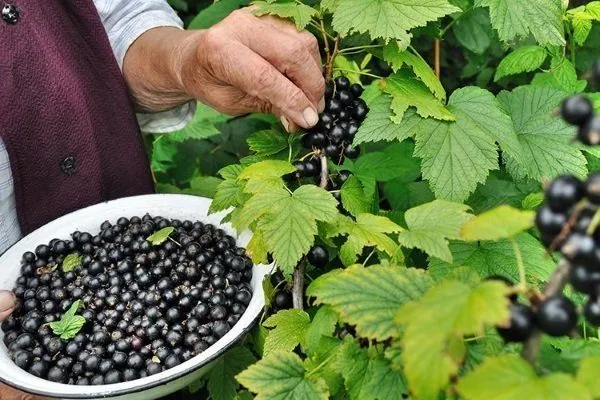
The cluster is small, somewhat reminiscent of a bunch of grapes, with large, shiny black berries, equally round and thin-skinned. Sweet and sour, aromatic.
This variety is winter-hardy, capable of bearing fruit quickly after planting, and does not require cross-pollination.
Advantages and disadvantages
The Exotica blackcurrant has many advantages that attract gardeners. However, it also has its drawbacks. Let's consider the pros and cons of this variety.
Positive aspects:
- large berries;
- high resistance to pests and diseases typical for currants;
- high resistance to severe frosts;
- early maturity and abundant yield;
- excellent transportability of berries;
- long shelf life of the harvest.
The negative aspects include:
- recurrent frosts can damage early flowering;
- intolerance to lack of moisture;
- weak resistance to some diseases.
Watch a review of the black currant variety "Exotica" in the video below:
Preparing for landing
By listening to the advice of experts, the planting process will become easy and enjoyable for you.
To purchase seedlings, contact specialized nurseries, gardening stores, or trusted gardeners. This will help you avoid purchasing low-quality products.
The best solution is to find a nursery in the same area as your garden plot, or slightly further north. Plants purchased from these nurseries are adapted to the climate of your region.
Buying seedlings
When choosing a seedling, pay special attention to the root system. The roots must be strong and healthy, with at least three main root shoots 20 cm long. Short roots are unlikely to root well.
- ✓ Check for at least 3 main root shoots at least 20 cm long.
- ✓ Make sure there are no rotten areas or damage to the root system.
Carefully inspect the seedlings for damage or rotten areas. The root system should be strong.
Choose a seedling with firm, healthy shoots that are dense and uniform in color. Buy two-year-old seedlings—these root better.
Choose container-grown seedlings. They're planted with the existing soil, allowing the plant to adapt to its new conditions more quickly and effectively.
Choosing a location
Blackcurrant Exotica, despite its northern origins, thrives in warmth and light. Plant this variety in the sunniest, most well-drained spot in your garden.
Make sure the air doesn't become stagnant. Protect the seedlings from strong, intense north winds—this is important.
The distance to the groundwater level where the bushes are planted should be 2 meters or deeper. This will allow the root system to develop successfully.
Select date
Exotica seedlings are planted in spring and fall. If you purchase a bare-root plant, plant it in mid-fall to early October.
Young roots need to adapt before severe cold sets in. The bushes acclimate to the new soil and begin growing rapidly with the arrival of spring.
It's a different story with container-grown seedlings. The root system doesn't need any adaptation to new conditions. Therefore, such seedlings can be planted in both fall and spring.
Site preparation
Before planting, gardeners select and prepare the area.
Choose an open, draft-free location. If the seedlings are planted in the shade, the bushes will stretch and the berries will be significantly smaller. Clear the area for planting currants of weeds and carefully level it, removing any unevenness.
Black currant Exotica prefers not too acidic soil.
Exotica Currant Planting Algorithm
Maintain the correct distance between seedlings or bushes and any fencing. It should be 1 m; the gap can be increased, but not too much (1.3 m). Otherwise, the Exotica currant will not yield a bountiful harvest.
The specifics of planting and caring for black currants can be found in this article.
Let's move on to the step-by-step planting process:
- On a leveled and cleared plot, dig holes with the following dimensions: diameter 40-50 cm, depth up to 30 cm.
- Fill the holes with useful substances: use a mixture of a bucket of compost, superphosphate (200 g), wood ash (300 g) and a small amount of soil.
- Place the seedling in fertilized soil at a slight angle of 8 cm to 10 cm above the root collar, at an angle of 45 degrees.
- Be sure to spread the roots along the bottom of the hole, do not allow them to be positioned upwards.
- Pay attention to the buds at the bottom of the stem, they should remain underground.
- Use pruning shears to cut off the remaining branches of the bush.
- Pour a bucket of water into the prepared hole with the seedling.
- To retain moisture, fill the hole with soil mixed with peat.
- The final step is to lightly compact the soil.
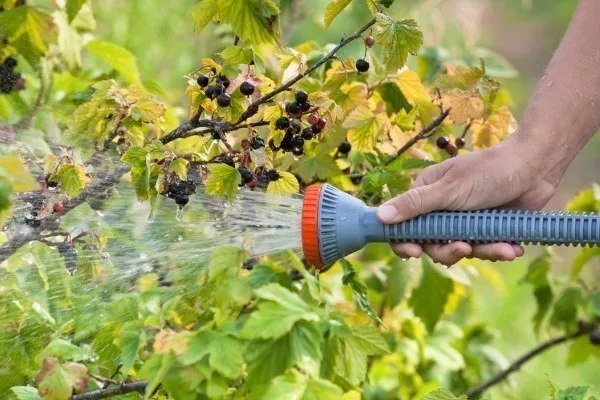
Planting is complete. Now, a high yield depends only on proper care of the plants.
Caring for currant bushes
Caring for Exotica is traditional and includes: watering, loosening the soil, mulching, pruning, weed control, fertilizing, pest control, and shrub treatment. More has been written about caring for currants in the fall. here.
By following all the care instructions, you'll achieve a bountiful, high-quality, and delicious harvest. Let's take a step-by-step look at the bush's care.
On our website you can find information about How to properly care for currants in the spring.
Watering
A key aspect of this procedure is meticulous regularity. Monitor the watering process during dry spring and early summer. Add at least 1-2 buckets of water to each bush once a week.
Be sure to keep a generous layer of mulch under the seedlings to prevent moisture evaporation. Stop watering as soon as the clusters form and the berries begin to ripen. The harvest will be juicy.
Experienced gardeners advise: sprinkler irrigation is suitable for this variety, as Exotica is resistant to powdery mildew.
Trimming
You'll achieve a high yield if you take the time to properly train the bushes. In the second year, a young bush will produce numerous shoots from the center of the plant.
In autumn, prune back the existing shoots by 1/3 and remove new growth. However, not all of them—leave 3-4 of the strongest and most viable branches. Repeat this procedure 1:1 after 3 years, again in autumn.
The correct pruning of currants in autumn is described here.
Throughout the fruiting season, keep the bush sparsely planted, leaving no more than 12 shoots. Prune annually, and completely remove branches older than 4 years.
Read our article about How to prune currants in spring.
Loosening and mulching
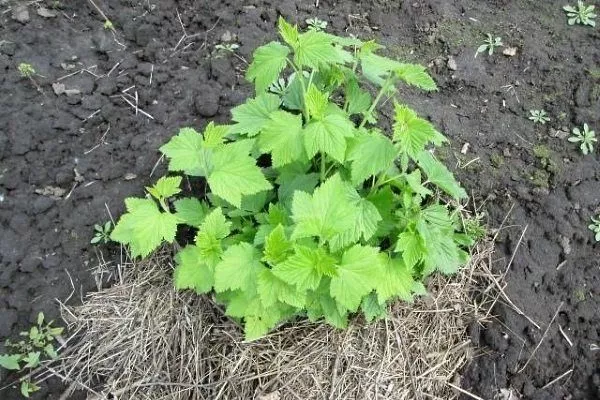
Cultivating the soil prevents it from drying out too quickly, enriches the soil with oxygen, and destroys weed seedlings. If the mulch layer under the bush consists of humus, try to loosen the soil to a depth of no more than 9 cm, but no less than 6 cm.
If the cover is made of other components, proceed as follows: move the mulch away from the bush, loosen it to a depth of 5 cm, then cover the soil under the bush again.
Repeat this procedure monthly (once is sufficient) from the moment the buds swell. If it rains frequently, loosen the soil more frequently to prevent compaction of the soil.
Fertilizer
After planting Exotica blackcurrant seedlings, care for a couple of years consists of watering, mulching, and weed control. As the plant matures, it requires fertilizing. Each fertilizing cycle requires different fertilizers and application schedules. For helpful tips on spring fertilizing, read this article.
As soon as the snow melts, sprinkle bone meal and urea (2 tablespoons per seedling) under the Exotica bushes. Then cover thoroughly with humus, up to 10 cm thick. Finally, water generously.
Also, feed your plants with an infusion of fermented grass. Add 1 liter of the mixture to a bucket of water—feed each plant with this amount. Cover the soil around the trunk with compost, and use the grass after making the infusion.
After a week, make a trench around the bush, fill it with 2 cups of wood ash, and mulch. Repeat this procedure in June, as soon as the bushes begin to produce fruit.
- In spring, scatter bone meal and urea under each bush.
- In summer, feed the plants with an infusion of fermented grass.
- In the fall, add a bucket of humus or compost under each bush.
After harvesting, fertilize the plants again with ash. In late fall, add a bucket of humus or compost under each bush.
Read about how and what to fertilize currants with in the fall. Here.
Preparing for winter
Before the onset of frost (no later than October), prepare the Exotica for winter. Be sure to inspect the bushes to identify any branches that need to be removed.
Fertilize the plants, dig the soil shallowly, and mulch the area around the tree trunks. Various materials, even snowdrifts, can serve as covering options.
Reproduction of Exotics
The simplest and most commonly used method of propagation is cuttings. Take cuttings 15 cm to 20 cm long from one-year-old shoots, using only healthy ones.
Make a solution of humic acid salt and soak the cuttings in it for 12 hours. Then plant them in prepared soil.
To speed up the formation of a new blackcurrant bush, plant two or three cuttings in one hole. It's important to plant the cuttings in a crisscross pattern, all of the same variety.
Don't forget to leave 15 cm between petioles and half a meter between rows. Tilt the base of the cut branch to the south, and the tip to the north.
The second propagation option involves bending the lower branch of the bush to the ground and then burying it (the tip of the branch should be above the soil surface). After a while, the shoot will take root.
Collection, storage and use of berries
Exotica berries ripen in early July. Don't delay harvesting, otherwise they will fall off.
Pick blackcurrants by hand (this method is gentle), but if suitable machinery is available, feel free to use it. Hand-picking preserves the berries much longer in the refrigerator.
Time your harvest for dry weather. For storage, pick whole bunches of berries in small containers. If desired, Exotica can be stored for 10 days to 1.5 months (the length of time depends on the chosen temperature).
Berries are best eaten fresh. If you want to stock up on them, make jam or compote, puree currants with sugar, make juice or puree, or freeze them. This way, you can replenish your vitamin reserves throughout the winter.
Susceptibility to diseases and parasites
Following proper care, paying close attention to the plants, and taking preventative measures are key to keeping currants disease-free. This exotic plant has a natural immunity to diseases such as columnar rust and powdery mildew.
But Exotica isn't strong enough to fight all the challenges on her own. Your help is essential. Here's how:
- Anthracnose — a disease of leaves, petioles, and young shoots. It leads to the death of the bush within 2-3 years.
As a preventative measure, avoid making the bushes too dense. In the fall, after the leaves have fallen, spray the bushes and the soil beneath them with a 7% urea solution. In the spring, treat the young leaves with a solution of Fitosporin, adding 2-3 drops of Zircon and Epin-Extra.
If the plant is diseased, spray it with the same product (read the instructions carefully). In the fall, collect fallen leaves and burn them. Treat the bushes and soil with a copper sulfate solution. In the spring, spray with a 1% Bordeaux mixture. - Terry — a viral disease. There is no cure. Infected bushes should be destroyed; never dispose of them in a compost bin. Prevention involves controlling the sucking insects that spread the disease.
- Septoria — a foliar disease. It causes loss of winter hardiness. Preventative and treatment methods are identical to those for anthracnose.
- Kidney mite — affects the buds and spreads the terry-flowering virus. If the bush is heavily infected, it dies.
Inspect your plants carefully. Swollen buds indicate a mite infestation. Remove any immediately if found. Before bud break (early spring) and in late fall, treat the bushes with boiling water. - Aphid (second name - shoot aphids) — multiplies at the tips of young shoots. Leaves become deformed and firmly stuck together. For prevention, spray Exotica bushes with Fitoverm every ten days. If there are large infestations, add green soap to this solution and rinse the infested ends of the branches. For more information on aphid control, seeHere.
- Glass-box — a butterfly caterpillar. It can completely destroy the core of a bush, causing branches to dry out. Spraying is similar to treatment for anthracnose. Avoid planting Exotica near bird cherry trees, as this is where the glasswing lives and reproduces.
- Gooseberry moth — a caterpillar. It heavily envelops fruits, eats seeds, and lays eggs in buds. The result: damaged berries and a ruined harvest.
Remove caterpillars along with the berries. Treat the plants with the same aphid control product every 10 days during bud formation and until flowering begins. Cover the soil under the bushes with a thick layer of old newspaper mulch—this will reliably prevent overwintering moths from emerging from the soil. - Currant leaf gall midge — is harmful to leaf development. The larvae feed exclusively on leaf pulp. Damaged bushes may not bear fruit.
As a preventative measure, after harvesting, remove and burn infected branches. Water and fertilize the Exotica, and apply a wide mulch to the soil.
If larvae have already damaged the leaves, spray the blackcurrants with a malathion solution. Perform this procedure before flowering, at the end of flowering, and after harvesting the berries.
Gardeners' reviews of Exotica currants
There are no perfect plants in nature; each species has numerous advantages and a certain number of disadvantages. The same can be said about the Exotica blackcurrant variety.
There's very little information about Exotica, but I found the information I needed here. Thank you for your comprehensive answers to all my questions about this variety. It was especially important for me to learn the care instructions, as the seedlings had already been planted. I usually research the information first and then buy the plants, but this "beauty" was a gift. And thanks to your article, I now know how to propagate it properly.