
The Dobrynya currant is an excellent choice for both beginner and experienced gardeners. This variety is renowned for its large, tasty berries and good frost resistance. It boasts numerous positive qualities and excellent characteristics, making it a popular choice for cultivation throughout Russia for many years. Proper care is essential for maximizing productivity.
Description of the variety
A. I. Astakhov, an employee of the V. R. Williams Federal Scientific Center for Viticulture and Crops, succeeded in creating a variety by crossing two currant species – the 42-7 hybrid and the Izyumnaya variety.
In 2004, it was added to the State Register and recommended for cultivation in gardens in the Moscow region, central Russia, and southern Russia. Today, it is also popular in Ukraine.
Leaves and bushes
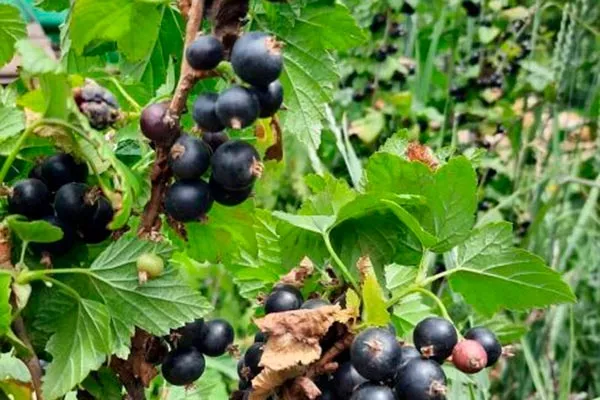
The plant is medium-sized and compact, reaching a height of up to 170 cm, although this height can vary depending on the climate of the region where it is grown. Young branches have an unusual coloration—purple-olive with a characteristic sheen.
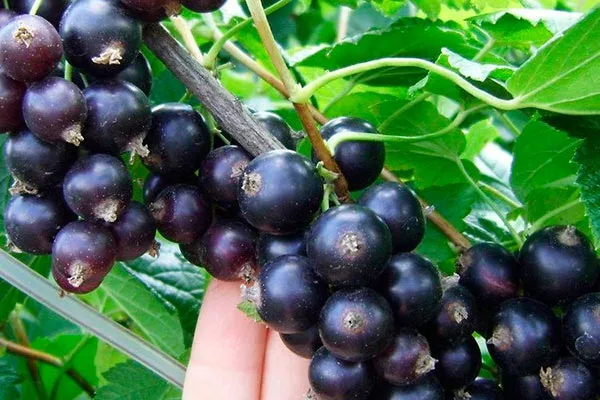
The leaves are trilobed, large or medium-sized, and green. The flowers are large and creamy. The clusters are dense, containing 6 to 10 berries. When the fruits are separated from the stalks, the separation point remains dry.
Fruit
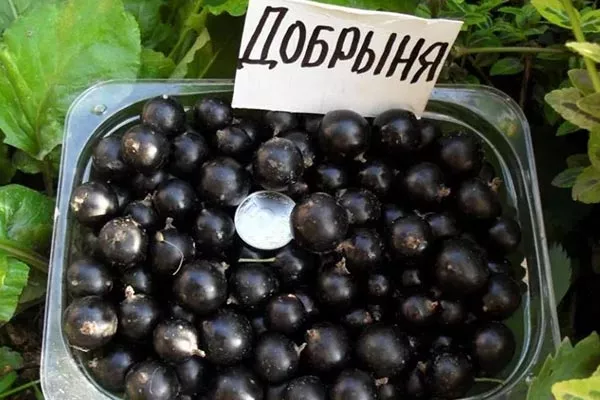
Currants produce large, round (or, less commonly, oval) berries. They are a rich black color and have a bright, glossy sheen. The fruit weighs between 2.6 and 6 grams. They have a strong, elastic skin that is resistant to cracking.
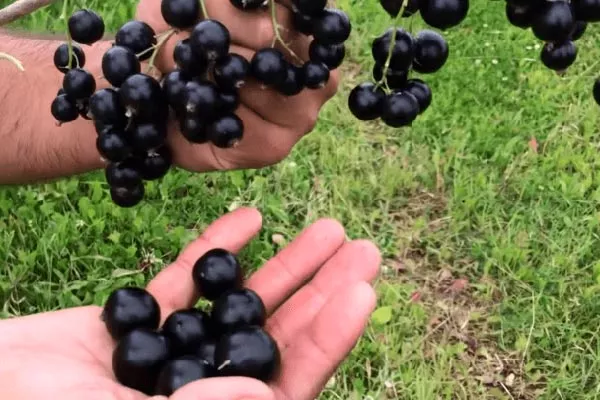
The berries are easy to pick from the bunch, without being crushed or bruised. The flesh is juicy, with small, few seeds. On a tasting scale, the fruits are awarded 4.9 points out of 5.
Characteristics of the variety
The Dobrynya currant has earned an excellent reputation. This variety can withstand temperatures down to -25°C outdoors and down to -40°C when sheltered. It tolerates summer heat well, even during long periods without rain.
Resistance to environmental conditions
Characterized by high winter hardiness, average resistance to sudden temperature changes and dry conditions.
The plant is immune to powdery mildew, but is susceptible to other fungal diseases and can be affected by bud mites.
Productivity and scope of application
The crop is renowned for its high productivity, averaging 106 centners per hectare and 1.6 kg per bush. The maximum yield reaches 16 tons per hectare and 2.4 kg per plant, but temperature fluctuations and irregular watering can affect these results.
Blackcurrants are eaten fresh and used to make compotes, preserves, jellies, jelly, marmalade, pastilles, wine, sauces, and liqueurs. Freezing and drying the berries retain their beneficial properties, and they remain fresh for up to one month in the refrigerator.
Pros and cons of Dobrynya
Before planting a crop, carefully examine its positive and negative qualities to avoid potential problems in the future. This variety has many advantages:
- Compact, upright growth: the bushes grow upwards rather than outwards, which allows you to save space on the site and plant more plants.
- Stable fruiting: already in the second year after planting, fruits appear, regardless of the vagaries of the weather.
- Large and tasty berries: they have a pleasant taste and are large in size, suitable for fresh and frozen consumption, for canning and medicinal purposes.
- Frost resistance: adult bushes can withstand frosts down to -20…-25°C, and at lower temperatures they require shelter.
- Immunity to powdery mildew: the plant is resistant to this common disease, which makes it easier to care for.
- Resistance to spring frosts and drought: temporary unfavorable conditions do not affect the ovaries and yield.
Flaws:
- Average yield: Although the variety bears fruit consistently, its productivity is inferior to modern hybrids, but this is compensated by the high quality of the fruits.
- Slow rooting: the hybrid takes a long time to form a root system, which slows down its survival.
- Susceptibility to kidney mites: the variety may be affected by this pest.
- Dependence on irrigation: if there is not enough water, the berries may become smaller, although the bush continues to bear fruit.
Dobrynya is a reliable variety for regions with moderate climates and cold winters. Its resistance to adverse conditions and versatility make it attractive to gardeners, despite some drawbacks.
Growing technology
Growing this crop is simple and doesn't require any special skills. However, it's important to follow a few basic rules when planting and caring for it.
Optimal conditions
Currants prefer sunny, wind-protected areas. The southwest side of the garden, at a slight elevation, with light, slightly acidic soil and a shallow water table, is best for planting.
Planting times and rules
Plant seedlings when the soil temperature reaches at least +5°C. Optimal times for this are April and May or September and October.
Experienced gardeners recommend autumn planting, as the bushes will have time to take root before spring and begin growing vigorously with the first warm days. In central Russia, continue this procedure until the end of September. Ensure regular watering during the first few days.
- ✓ Soil temperature should be at least +5°C for optimal rooting.
- ✓ Using a rooting stimulator, such as Kornevin, significantly increases the chances of successful rooting.
Planting technology and diagram
Choose one- or two-year-old seedlings up to 40 cm tall, free of leaves and damage, with a strong, healthy root system. If the roots are weathered or dry, soak the seedling in water with Kornevin rooting stimulant for 2-3 days.
Landing algorithm:
- Prepare the land: plow the area, remove weeds and debris.
- Dig a hole 40 cm deep and 60 cm wide.
- Place 4-5 kg of humus or compost and 150 g of wood ash at the bottom of the hole.
- Place the roots of the seedling in a clay slurry to retain moisture.
- Form a small mound at the bottom of the hole and place the plant vertically or at a 45° angle.
- Fill the hole with fertile soil, deepening the root collar by 8-10 cm.
- Prune the branches, leaving 2-3 developed buds to stimulate branching.
- Form a depression with a diameter of 40 cm around the bush and water it with 10-15 liters of water.
- Mulch the tree trunk circle with compost, peat or sawdust.
This variety does not form root hairs well, so before planting in southern climates, soak seedlings or cuttings in a growth stimulant solution to improve rooting.
Further care
Caring for your crops ensures bountiful harvests and boosted immunity. Follow standard agricultural practices:
- Watering. Insufficient water causes the berries to become tough, while excess moisture can cause them to crack and root rot. Pour water into the tree trunks, creating ridges to prevent the liquid from spreading.
Under normal conditions, water once every 2-3 weeks, applying up to 20 liters per bush. Double the amount during specific periods: during fruit set, during fruit ripening, and in the fall, after leaf fall. - Top dressing. The hybrid requires nutrients throughout the season, as fertilizer applied at planting only provides nutrition for the first year. In spring, sprinkle up to 50 g of dry urea around the trunk circle after a thorough watering to prevent root burn.
Before flower buds appear, water the plants with a mullein or bird droppings infusion. During flowering, add organic matter (mullein or grass infusion). To stimulate ovary formation, spray the shoots and trunk with a solution of 10 g of copper sulfate, 2 g of boric acid, and 5 g of potassium permanganate per 10 liters of water (2-3 liters per plant). - Trimming. For a consistent harvest, rejuvenate the plants, as shoots bear fruit for the first 5 years. Remove older branches annually, cutting them back to the ground, to maintain uniform fruiting.
Prune excess growth throughout the summer, leaving only strong replacement shoots. Spring pruning should be done before the sap begins to flow, immediately after the soil thaws.
Is winter cover required?
Despite currants' frost resistance, tie the bushes with twine and cover them for additional protection. Use spruce branches, thick burlap, or agrofibre.
Possible problems, diseases, pests
Care of the crop includes regular preventative treatments to protect against pests and diseases, despite the plant's high resistance to powdery mildew.
A month before harvest, stop spraying or use natural remedies, such as garlic infusion: take 400 g of fresh garlic, pour 3 liters of boiling water over it, and let it steep for 14 days. Dilute the strained solution in 10 liters of water. To spray one bush, use 500 ml of the solution diluted in 10 liters of water.
Plants can suffer from various problems if not properly cared for. It's important to address these issues promptly:
| Disease/pests | Signs | Medicines | Processing period |
| Kidney mite | Growths, dry buds. | 300 g Nitrafen or 100 g colloidal sulfur per 10 liters of water. | Between the melting of snow and the opening of buds. |
| Gooseberry aphid | Dry leaves, colonies of black insects. | 30 g of Karbofos per 10 l of water or 30 g of liquid potassium soap. | Before the buds open. |
| Firefly | Damaged and rotten berries. | 20 g of Chlorophos per 10 liters of water. | Before flowering. |
| Terry currant | Narrow lilac petals, distorted fruits. | 300 g Nitrafen or 100 g colloidal sulfur per 10 liters of water. | After the snow melts. |
| Anthracnose | Brown spots with small dark tubercles. | 1% solution of Bordeaux mixture. | Before flowering. |
| Septoria | Small round spots with a reddish-brown border. | 1% solution of Bordeaux mixture. | Before flowering. |
Reproduction
At home, you can increase the number of seedlings yourself. Experienced gardeners propagate the Dobrynya currant in several ways:
- By layering. Select the lower shoots, bend them to the ground, and cover them with fertile soil. Leave the tops of the shoots exposed. Water the cuttings regularly and feed them, preferably with a potassium-phosphorus fertilizer.
In the fall, separate the cuttings from the mother plant and transplant them to a new location. Cover the area around the trunk with sawdust or peat to retain moisture and protect from frost. - Cuttings. Make cuttings in June from young, woody branches 10-15 cm long. They should be cut at an angle, with the top end of the cuttings remaining straight. Dip the cuttings in a rooting stimulant solution, such as Kornevin or Epin.
Before planting, dip the seedlings in a clay slurry and plant them in the soil. In the spring, move them to their permanent location.
| Method | Time of the event | Efficiency |
|---|---|---|
| Layering | Spring-autumn | High |
| Cuttings | June | Average |
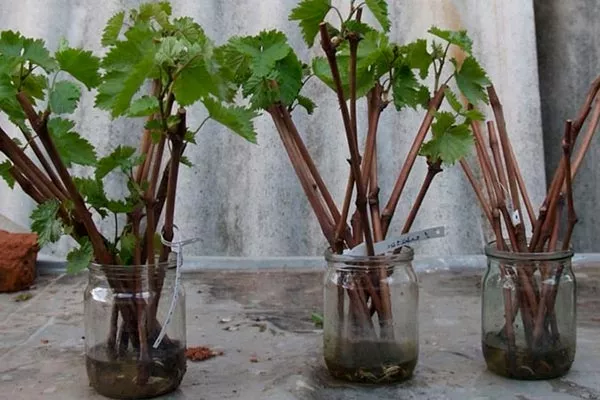
Both propagation methods are effective and provide good survival rates.
Harvesting and storage
Blackcurrants begin to ripen in the second half of June. Pick the berries either by the bunch or individually, making sure they are picked dry and undamaged. Store the harvest in plastic bags in the refrigerator or in wooden crates in the vegetable storage area.
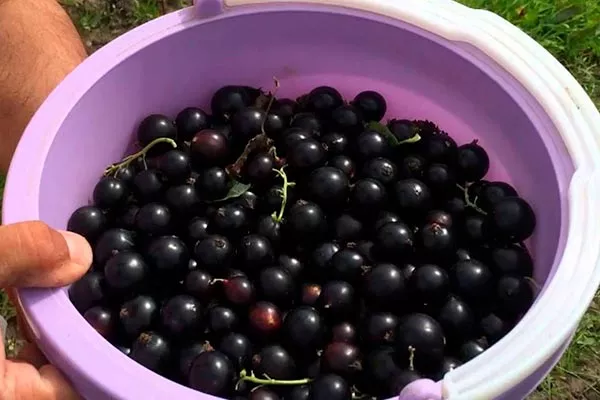
At temperatures from +1°C to 0°C, fruits can be stored for up to 40-45 days, and at -2°C the period increases to 60-90 days.
Tips from experienced gardeners on growing Dobrynya
Plant the bushes in groups of 2-3 seedlings. This will ensure good aeration and sunlight, which will promote better fruiting and reduce the risk of fungal diseases.
Other useful tips:
- Currants require ample watering, especially during drought. Don't forget to regularly loosen the soil to improve air circulation and apply fertilizer. Prune old, diseased, and dead branches to promote growth.
- For the plant, choose a sunny location with a slight slope to ensure good drainage. This will minimize the risk of waterlogging, which can lead to root rot.
- Pick the fruit on time, as overripe berries lose some of their beneficial properties and become less tasty.
- The crop grows well in partial shade from apple and pear trees, but cultivate it at least 2 m away from the trees to avoid competition for moisture and nutrients.
Reviews from summer residents and gardeners
The Dobrynya currant variety adapts well to various climates and resists diseases and pests. The berries are large, juicy, and aromatic. They contain a rich composition that benefits the body. Following important rules and proper agricultural practices allows for consistent, high-quality harvests.