
The Black Pearl currant is distinguished by its versatility and marketable berry appearance, making it one of the most premium mid-season varieties. The bushes grow in both cool climates and on the southern slopes of the Caucasus. This variety is an excellent choice not only for gardening enthusiasts but also for professional farmers engaged in commercial gardening.
Origin
In 1992, Black Pearl was officially added to the State Register of Cultivars of the Russian Federation. It was created by hybridizing the Minai Shmyrev and Bredtorp varieties by researchers at the I.V. Michurin Federal Research Center.
The registration process began back in 1985, but variety testing took a considerable amount of time.
Description
Black Pearl, with features reminiscent of gooseberries, is one of the black-fruited currant varieties. The resemblance is notable in the shape of the branches and leaves, which droop downwards. Some experienced gardeners note that the currant's berries also resemble blueberries.
Bushes
This currant variety is a medium-sized bush, reaching a height of 100-130 cm. Note other varietal characteristics:
- The bush's branches are spreading. Young shoots are intensely green and characteristically curved. Over time, they become woody, acquiring a gray color with a yellowish tint.
- The oblong buds, growing on shortened petioles, are colored in pink tones.
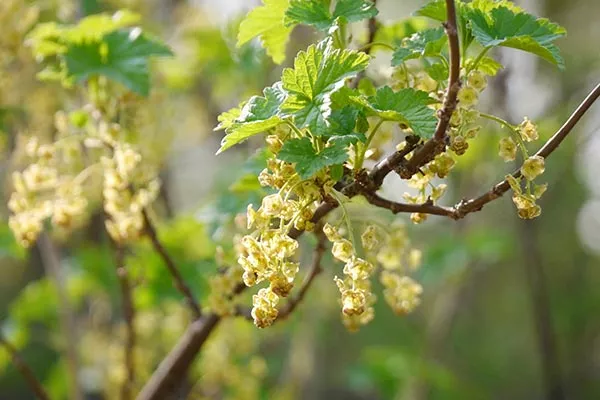
- Currant flowers are goblet-shaped and have reddish-tinted sepals. The bush is adorned with clusters of 6-8 berries, which are attached to strong petioles.
- Currant leaves are distinguished by their rich green hue and pointed, five-lobed shape. The surface is smooth and matte, and the edges are slightly curved.
- The teeth are serrated and large, with white tips. Black Pearl currant bushes don't have many leaves.
- ✓ Young shoots have an intense green color and a characteristic bend.
- ✓ The leaves are distinguished by their acute-angled shape with five lobes and serrated teeth with white tips.
Berries
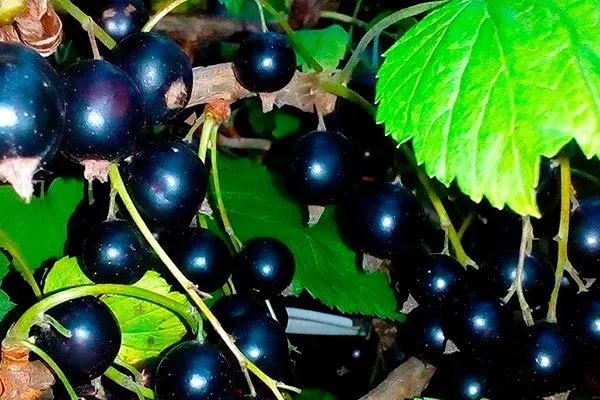
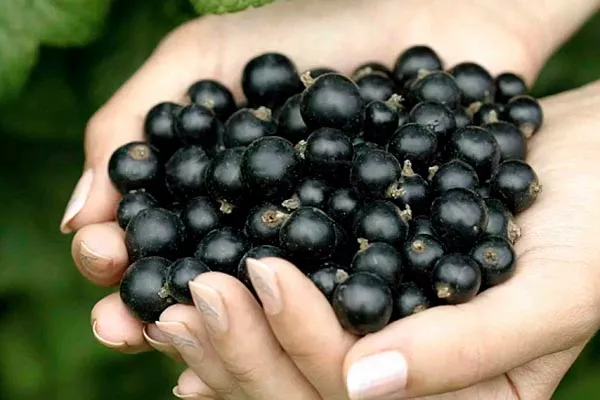
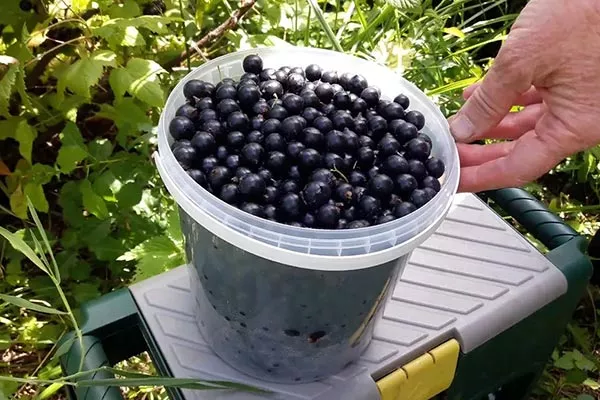
The fruits ripen in a medium amount of time. Individual berries weigh between 1.2 and 2.5 grams, with some specimens reaching 3 grams. The berries are round and approximately the same size.
Their taste is distinguished by a pleasant acidity with notes of sweetness, which contributed to a high rating of 4.2 points out of a possible five.
Other indicators:
- The fruits are a deep black colour that sparkles in the sunlight, resembling glittering pearls.
- The thick skin envelops the pulp with large seeds inside.
- The composition includes significant concentrations of vitamin C – 133.3 mg%, pectin – 1.6%, and organic acids – 3.6%. The berries are rich in various sugars – 9% and contain about 18% dry matter.
- The fruits are firmly attached to the stalk and do not lose their integrity over a long period of time, making them ideal for transportation.
- The currants are picked without moisture, which makes them easy to move.
Varietal characteristics
This blackcurrant variety has gained popularity among gardening enthusiasts due to its combination of the advantages of its parents.
Product yield
With proper cultivation practices, this blackcurrant variety can be expected to yield a stable and fairly high yield. Once Black Pearl takes root in the soil, it will produce its first fruits as early as the following year (or at most another year).
Fruiting characteristics:
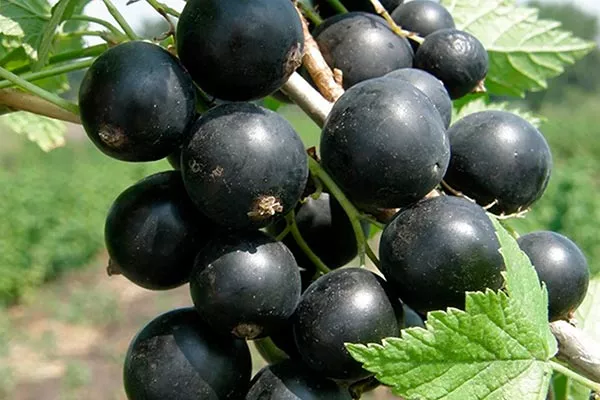
- If you plant the bush in the fall, you can harvest the first batch of berries next summer, which, although not significant, will still provide you with 1.5-2 kg of aromatic berries.
- Before the plant begins to bear fruit, it must survive the winter, strengthen its root system and accumulate enough energy.
- Flowering occurs in May, and fruit collection begins in July.
- Peak productivity occurs 5-6 years after planting, when up to 5 kg of berries can be harvested from one bush.
- The average figure is 3-4 kg, which is a very impressive figure, although there are varieties that yield even higher figures.
Flowering and ripening period
This variety begins to bloom in early May, and the harvest ripens as early as July, making it a mid-season currant variety.
Fruiting does not occur all at once, but sequentially, starting from July 10-15 and lasting until the 20-25th of the same month.
Usage
Currants are used to make a variety of desserts: jams, preserves, compotes, and also to make sauces. Cold preservation with a high sugar content preserves the maximum amount of vitamins, and even after heat treatment, the berries remain nutritious.
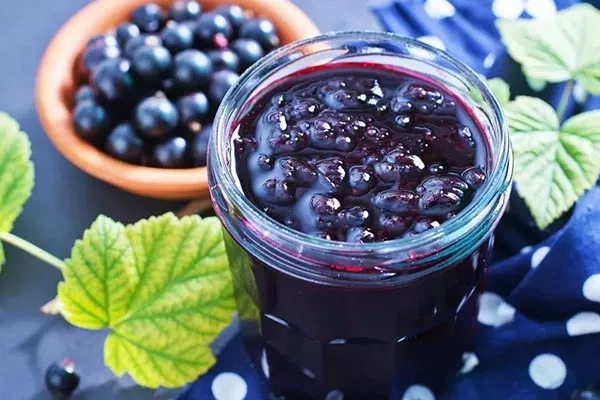
Other areas of application:
- Blackcurrant is often used to make cake toppings and fillings for both open and closed pies.
- The high pectin content of the berries allows them to be used to make jelly, marmalade and pastille.
- Currants are used to make aromatic homemade liqueurs and wines.
- Currant leaves are added to canned vegetables to give them a rich flavor and protect them from spoilage.
- A tea brewed from the leaves has antipyretic and anti-inflammatory properties and is used to treat children's diathesis in the form of compresses.
It is not recommended to consume black currants for people prone to thrombosis, as it contains Vitamin K, which stimulates blood clotting.
Resistance to environmental conditions
Currant bushes have shallow roots, making them particularly vulnerable to moisture stress and requiring frequent watering. To reduce the need for regular irrigation, it's recommended to create a protective layer of mulch around the base of the bush.
The Black Pearl variety is also resistant to low temperatures. It can easily withstand temperatures as low as -35°C without protective covering. However, sharper temperature drops can damage the shoot tips and buds.
Pollinator varieties
This variety has a high level of self-pollination, which allows you to have only one plant in the garden that will bear fruit every year.
Where can it be grown?
Adapted for cultivation in regions such as Western and Eastern Siberia, the Central Black Earth Region, the North Caucasus, the Urals and the Middle Volga.
In northern regions, its cultivation is less common due to the increased risk of infection by powdery mildew.
Landing technology
Black Pearl is a low-maintenance currant variety, but to ensure a good harvest and increased resilience to various climate conditions, it's important to follow certain agricultural guidelines.
Choosing a location
In order for the bushes to bloom and bear fruit, it is necessary to choose a suitable place:
- light, without shade, so that the shoots do not stretch out and the fruits do not decrease in size;
- It is necessary to ensure good ventilation to avoid fungal infections and to speed up the drying of the soil after the snow melts;
- the place should be spacious enough for the branches to grow freely;
- It is necessary to avoid excess moisture and drought, which can affect the taste and size of the fruit;
- Loamy soils with a pH of 5 to 5.5 are best suited.
- ✓ The soil pH level should be strictly within 5.0-5.5 for optimal nutrient absorption.
- ✓ The depth of the fertile layer is at least 45-50 cm to provide the root system with the necessary elements.
Planting dates
Planting of shrubs can be carried out throughout the growing season:
- The autumn period for this process extends until the last days of September or the first days of October. To ensure the currants have time to take root and establish themselves before the cold weather sets in, the air temperature during planting should not fall below 10°C. In this case, the first small harvest can be harvested as early as July.
- In spring, it's recommended to plant the bushes before the buds begin to open. During the first year, the bush will grow and strengthen, but the first currant berries will be available only in the second year. A single bush will yield no more than 2 kg of berries.
Site preparation
Successful gardening requires careful preparation of the area a couple of months in advance. If you plan to plant in the spring, preparatory work should be done in the fall. First, you need to:
- Clear the area of weeds, preferably removing them along with the roots.
- Then you should level the surface, eliminating all depressions and unevenness.
- Next, dig up the fertile soil layer to a depth of 45-50 cm to improve its aeration and looseness.
- If the soil on the site is not sufficiently fertile, it is recommended to add 9-12 kg of humus or compost.
Selection of seedlings
Two-year-old seedlings are best for planting, but carefully inspect the underside of the plant. The roots should be mature, brown, and 15 to 20 cm long.
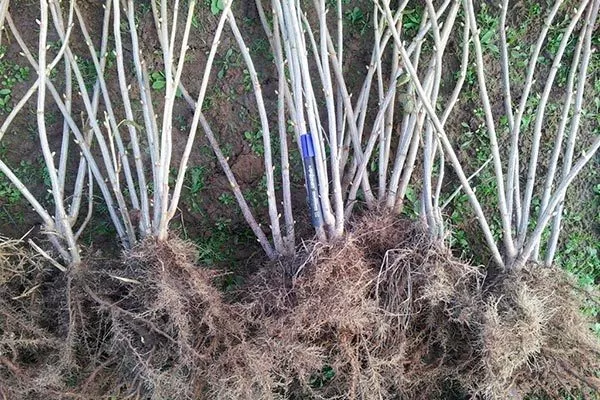
Other indicators:
- There should be three to four main shoots, their height should be about 30-35 cm.
- The seedlings should not have leaves or young branches.
- When choosing a seedling, pay special attention to its condition - the root system should be healthy and strong, and there should be at least 4 green buds from the base of the shoot.
Disembarkation instructions
A few days before planting currants, soak their roots in a water solution containing any rooting hormone. This promotes vigorous growth and increases the plant's resistance to disease.
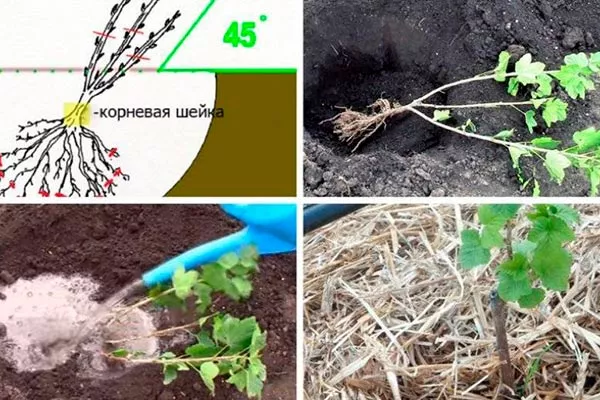
Before the planting process itself, the roots should be immersed in water for several hours, and then dipped in clay to protect them from direct contact with fertilizers.
The work process is as follows:
- To begin, dig a hole 50-55 cm by 50-55 cm and 60-65 cm deep in the prepared area.
- Place pebbles, fine-grained crushed stone and river sand into the depression to improve aeration and remove excess moisture.
- Place the seedling at a 45° angle to the ground, covering the bottom two bud nodes. At least three healthy buds should remain above the surface. Prune the shoot above the last bud using pruning shears.
- Then fill with soil and compact it lightly.
- Water the bush with 9-10 liters of warm water.
To maintain moisture around the bushes, use a mulch layer of wood chips, peat, straw, or dry grass. Space plants 150-200 cm apart.
Caring for seedlings
To maintain the health and productivity of currant bushes, it is important to pay attention to plant care periodically: remove weeds, refresh the soil around the stems, and carry out disinfection as a preventative measure.
Trimming
The pruning process begins at the fourth year of life. When planting currants, it is recommended to leave about four buds on the cutting and trim the rest of the shoot using sharp tools. At two years of age, currants begin to develop a lateral rosette, which should be removed to prevent it from robbing the main shoots of nutrients.
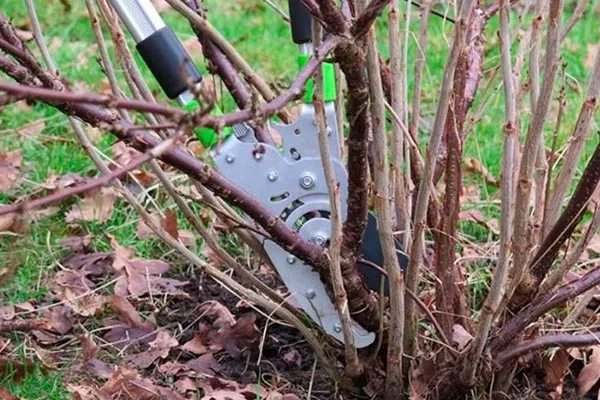
Once the tree reaches 5 years of age, rejuvenation pruning is performed, completely removing old branches as they do not produce fruit. The highest fruit production occurs on shoots 2-3 years old.
Watering
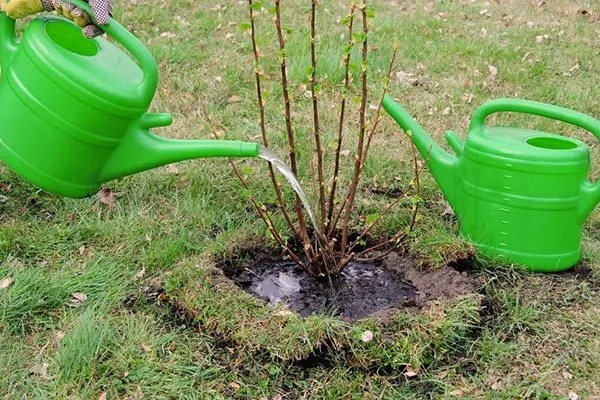
During fruit formation, ripening, and after the leaves fall in the fall, ensure the soil beneath the currant bushes is thoroughly moistened. During the first year, the bushes should be watered regularly, using 10-12 liters of water each week. The following year, the watering volume increases to 30-40 liters.
Top dressing
The bushes respond to the addition of bird droppings or cow manure. However, if the mulch layer contains organic matter, such fertilizers are no longer necessary. During the ripening period of the berries and after harvesting, it is recommended to feed the bush with potassium or phosphorus-based mineral supplements.
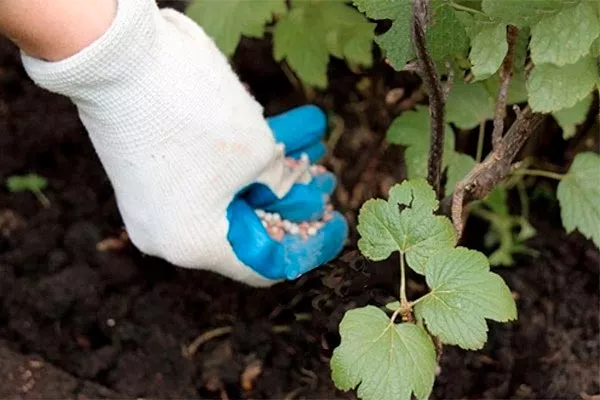
If the soil has been prepared before planting, then for the next 3 years it is sufficient to apply urea in the spring and superphosphate in the fall.
Protection from the cold
Currants are known for their good frost resistance; however, it is recommended to provide additional protection to young bushes during their first year of life, using agrofibre and carefully compacting the snow around the bush.
Harvesting and storage
After freezing, the berries can be stored until the next harvest. This variety is resistant to transportation thanks to its strong skin, and it can be stored in a refrigerator for 15-20 days. This is possible only if the berries are removed with the stems intact.
Reproduction
Vegetative propagation methods are used to reproduce the variety: cuttings, which can be taken from both green and dried branches, as well as layering. The latter method is most often used due to the growth habit of the lower branches.
The process of formation of layers occurs in several stages:
- First, the leaves are removed from the branches, leaving only the tops unchanged.
- Then, a branch is placed into a trench dug up to 12 cm deep. To keep it horizontal, it is tied to the ground with a piece of wire.
- Then the branch is covered with fertile, light soil, leaving the top 9-10 cm long on the surface.
- Throughout the summer, the cuttings should be kept constantly moist. Soon, dormant buds on the branch will awaken and produce new growth. The cuttings can be separated from the parent plant in August or in early spring the following year.
Cuttings are carried out according to the classical scheme.
Pests and diseases
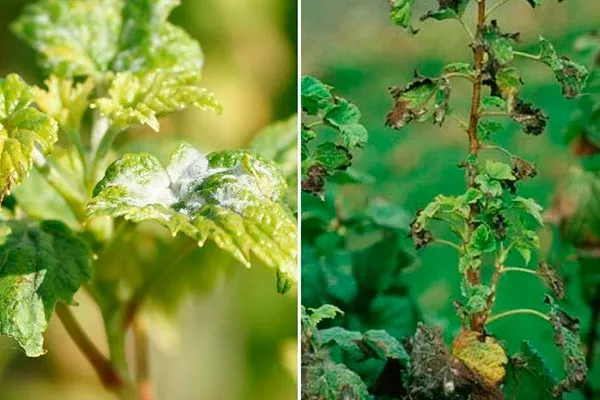
Black Pearl is susceptible to powdery mildew, a fungal infection common in young bushes. A whitish coating appears on leaves, shoots, and fruiting branches, darkening to brown over time. As a result, foliage falls off and the currant bush becomes deformed. Without timely protection, the plant may die.
Copper sulfate is used to protect against powdery mildew. Gardeners apply the treatment before flowering. The procedure is repeated after 15 days and again in mid-June.
Prevention of fungal diseases includes a number of measures:
- careful removal of damaged and diseased branches from the crown;
- removing weeds and old mulch;
- disinfection of garden tools and sealing wounds with garden pitch;
- correct feeding scheme;
- Treatment of currants in early spring with Bordeaux mixture in a 3% composition.
Currants can fall prey to aphids and glassworms. The former can be controlled with a soap solution and sprayed with Aktara or Inta-Vir.
To combat glassworm, use Entonem, Kinmiks, or Karbofos, treating currants in April. Insecticides should only be used before flowering or after harvest. During the fruiting period, only biological products and folk remedies, such as Iskra Bio, Biotlin, or Fitoverm, are permitted.
Similar varieties
Based on frost resistance, the possibility of mechanical harvesting and unpretentiousness, other varieties of currant can be used - Altai late, Svetlolistnaya, Degtyarevskaya, Maryushka.
Positive and negative qualities
Reviews
Although the Black Pearl currant variety has lost its popularity due to the emergence of new, more advanced hybrids, some gardeners continue to choose it, relying on its time-tested reliability. It impresses with its ease of cultivation, productivity, and marketable appearance of berries.