
Blackcurrants are a source of beneficial micronutrients and are grown by almost every gardener. The variety of bush cultivars allows you to choose the right variety for a specific climate and region.
Blackcurrant: description
The bush is a low-growing perennial plant. It thrives both indoors and in the wild. It grows in sandy soils. Most varieties of this plant grow in Europe and North America.
The berries of this perennial shrub were long considered a Russian fruit. Evidence suggests that the crop was first cultivated in Ancient Rus' as early as the 11th century. The bush was planted in many regions and used as a decorative element. Today, it's impossible to enter a garden without seeing this sprawling berry plant.
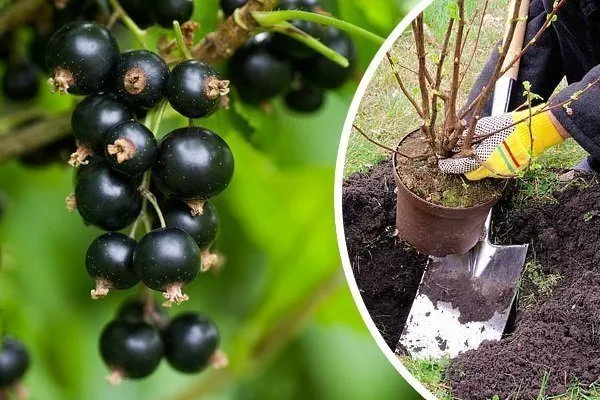
The bush's prized fruit is its delicious, aromatic black berries. A distinctive feature is that black currants are considered the ancestors of many other berry bushes. The plant requires little care and produces an excellent harvest as early as the second year after being planted in open soil.
The bush's berries are rich in vitamin C, so they're best eaten fresh. However, many gardeners freeze their harvest or preserve it. The berries make incredibly tasty and healthy jams, sweet fillings, compotes, and alcoholic beverages.
The bush's leaves are suitable for pickling. The greens are great for salads. Currant leaves reduce blood glucose levels and are used to make tea. The berries are eaten as a preventative measure against scurvy, poor blood clotting, and excessive bleeding.
Traditional medicine practitioners recommend eating fresh or preserved berries for gastritis and other stomach ailments. The dried leaves of the shrub are used as a powerful antibiotic. Infusions of the leaves are beneficial for the treatment of rheumatism, kidney stones, and cystitis.
It's worth noting that the shrub is an excellent cosmetic product. It's used to make soap, and the juice is rubbed into the nail plate.
You should not eat berries if you have thrombophlebitis.
Characteristics of the shrub:
- The roots are branched and extend to a depth of 0.2-0.4 m.
- The bush consists of numerous branches of varying ages, located at different levels. This is what allows the plant to bear fruit for over 13 years.
- The largest harvest can be obtained in the 6th year after planting.
- In spring, plant buds begin to swell at temperatures of around +5 degrees Celsius.
- Flowering begins at temperatures of 12 degrees Celsius. Because of this, the bush often suffers from spring frosts.
- Many varieties don't require pollination and are also cold-hardy. However, to improve the taste of the berries, other varieties should be planted nearby.
- The greens of the plant are aromatic and are often added to tea.
- The harvest is rich in vitamins.
Planting black currants
Planting and growing this bush is not a difficult task, but in order for the currant to grow fruitfully, it is necessary to follow some recommendations.
- ✓ Optimum soil pH for black currant: 6.0-6.5.
- ✓ The distance between bushes should be at least 1.5 m to ensure sufficient ventilation and lighting.
When and how to plant black currants can be seen in the video below:
When to plant black currants?
You can plant in either fall or spring. However, it's best to choose fall. Seedlings should be planted in late September or early October. This allows the plants time to establish themselves in the soil and the roots to fully adapt before the winter frosts. This will ensure the currant bush survives the winter frosts well and begins to grow with renewed vigor in the spring.
You can also plant in the spring—in April. However, this option is less favorable for the plant. In the spring, it's best to plant currants in areas with little to no winter snowfall, otherwise the roots will freeze. If cuttings were acquired in the fall and planting is not possible, they should be dug in and replanted in the spring (before bud break).
Before planting, it is necessary to trim the shoots.
Planting black currants in spring
This shrub is considered one of the first plants to bloom very early. Spring planting should be done as early as possible.
The plant is easier to propagate by division or cuttings. The first option is simpler: shoots with roots are separated from the main plant. The soil is prepared in advance, grass is removed, and the soil is fertilized with humus (about 5 kg per hole). If humus is not available, ammonium nitrate can be added.
The root is planted to a depth of 80 mm. The distance between berry plants is approximately 1-1.5 m. The planted seedlings are watered. When propagating the crop by cuttings in the spring, the branches are bent down and covered with soil. In the fall, they are separated and planted.
Planting black currants in autumn
The main requirement for autumn planting is that the plant should be planted 14 days before the first winter frosts.
Algorithm for planting crops in autumn:
- Pit size: 0.4 x 0.4 m. Depth: 0.3 m. Dig a hole and fill it less than half full with nutrient soil.
- For one planting hole, take 1-2 buckets of humus, compost (peat), 150 g of superphosphate, 40 g of potassium sulfate.
- Before planting, inspect the root system and remove any broken or dried out shoots. Each shoot should have two buds. Plant the seedlings at an angle so the branches form a fan. Water the hole at a rate of one bucket per plant.
- In order for the seedlings to take root, the soil around them should be mulch humus or peat. Alternatively, you can use dry sand.
- If there was no precipitation in the autumn, water the plants more generously.
- Set aside a separate plot in the garden for blackcurrant bushes. Leave 3 meters between rows of bushes. If the variety is compact, the distance can be halved.
- Most varieties of the crop are self-pollinating, but it is better to select a pair of mutually pollinating species.
Soil preparation
This berry bush prefers moist soil. A humid site is an excellent choice. It can be gently sloping or level. The area should be protected from drafts. However, when choosing a location, be careful – areas with close groundwater levels are not suitable for growing black currants.
The soil should be nutritious. The plant grows and develops well in medium and heavy loamy soils. If the soil contains a lot of carbonates, look for a different site for planting.
To prepare the site, level the area—remove all depressions, hollows, and raised areas. The area is plowed to a depth of 0.3 m. Weed rhizomes are dangerous to the crop; they should be removed, and then the soil should be dug again.
If possible, sow some vegetables in the soil a year before planting the shrub. During the final digging, add 1 kg of manure, 5 kg of superphosphate, and 3 kg of potassium fertilizer (per 100 square meters). Prepare the pits 14 days before planting the cuttings; this allows the soil to settle completely and be ready.
Caring for black currants
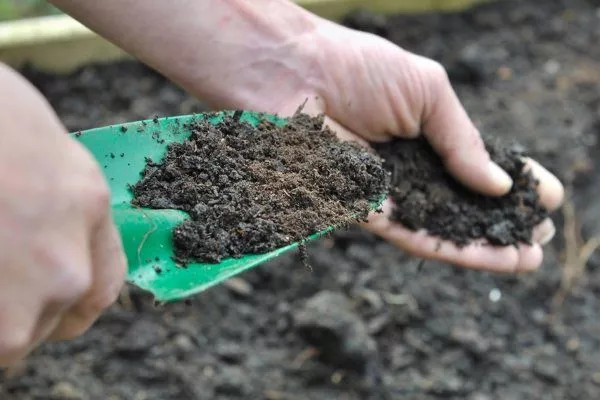
Caring for black currants depends on the time of year, age, and the specific variety of berry bush.
In the spring
Spring care is divided into three stages:
- Early period (last days of March - mid-April). By this time, the snow should have melted or partially disappeared from the bed, but the currant buds haven't had time to swell. Use nitrogen as a fertilizer, as it helps the bush quickly grow green mass.
Sprinkle the purchased shrub mix onto the soil. Place it on damp soil and cover with a light covering of soil. To prevent pests from attacking, collect and destroy all round buds. Collect any organic matter left over from the fall and add it to the humus mixture. Some gardeners pour boiling water over the plants to awaken the bush. - Middle period (last days of April - first days of May). The buds have already swollen, but spring frosts are still possible. If you haven't applied nitrogen yet, do so now. Use urea (2 tablespoons per 20 liters of water) or ammonium nitrate (4 tablespoons per 20 liters of water). After applying, cover the area around the rootstock with soil.
Add humus to the soil under the plants; you can also use compost. This period is also suitable for planting new seedlings. Treat older plants with ferrous sulfate (3-5%). You can also use other products, such as Fitoverm or Kleschevit. - Late period (all May). The shrub needs starch, so use dried potato peelings as fertilizer. Bury them in holes dug in the areas where the ends of branches are located. You can substitute corn starch for potato starch. Foliar feeding with commercial mixtures produces excellent results. We recommend reading our article about spring feeding of currantsWater blackcurrants regularly, especially during drought.
Read more about caring for currants in spring. here.
Weeds grow quickly, so loosen the soil regularly, but be careful not to damage the roots. Inspect the crop regularly. The moth is a particularly active pest; a weak solution of nicotine sulfate helps control it.
In summer
Summer care is divided into three stages:
- Before harvestApply wood ash to the roots. Water thoroughly. Increase the amount of water during dry periods, as this is when caterpillars appear. Manual collection is possible, but it won't yield significant results. Spray the plants with special products, such as "Iskra." Prune off all dead branches.
- Berry picking. Sprinkle wood ash under each plant and dig it in with the soil. Trim off shoot ends affected by powdery mildew. Plants are often attacked by moths. Harvest ripe fruit; do not allow them to become overripe.
- After harvesting. You can use superphosphate for fertilizing. In early August, 2 tablespoons of superphosphate per 20 liters of water is sufficient; after 14 days, double the dose. Treat the plants with Fitoverm, as it protects the bush from bud mites.
In the fall
In the autumn period of the year, care for black currants is as follows:
- Feed the plant with superphosphate or ready-made mixtures. Read on to learn how and what to fertilize currants with in the fall.Here.
- As soon as the bush has completely shed its leaves, be sure to dust the soil with wood ash and add compost or new nutritious soil.
- Remove any large, swollen buds.
- Cut off infected branches and collect fallen leaves.
- Plant new cuttings at the end of September, but do everything carefully so as not to damage the plant’s roots.
- At the beginning of October, transplant the cuttings into open ground.
- Do a moisture-charging watering.
More information about caring for currants in autumn has been written. here.
Once the plant has lost all its leaves, tie the bushes together with rope, place boards under some branches, and create one large wooden frame. If this isn't done, the plant will be crushed by snow in the winter, and most of its branches will be gone by spring.
Blackcurrant processing
This plant thrives on care and attention, so don't deny it. Proper and regular care will help you reap a bountiful harvest of delicious and nutritious berries.
Watering
The plant thrives on moisture; if it lacks water, the bush stops growing and the berries become smaller. Without a fall moisture boost, currants won't survive the winter. The root system isn't very deep (0.1 to 0.6 m).
Watering is necessary, but not too frequently. You can water 4-6 times per season. If the summer is particularly dry, water the plant once a week. The recommended watering rate is 50 liters per plant.
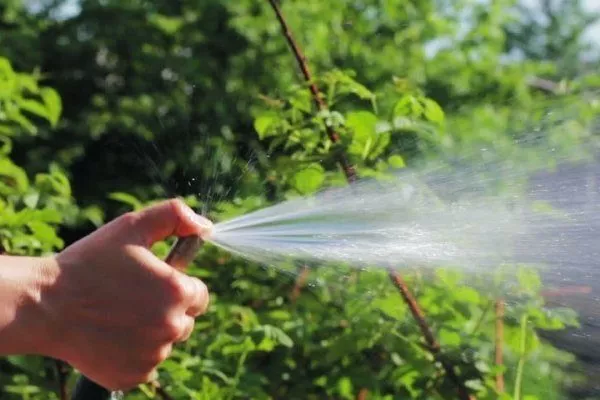
Experienced gardeners recommend digging small trenches near the bush into which water should be poured.
Top dressing
In early spring, apply nitrogen fertilizer; young bushes require 50 g of urea. Once the bush reaches its fourth year, reduce the amount of fertilizing. In the fall, apply approximately 5 kg of organic fertilizer, such as bird droppings, compost, or manure. Also, add 20 g of potassium sulfate and 50 g of superphosphate.
The frequency of fertilizing directly depends on the soil composition; the poorer the soil, the more fertilizer you need. If the soil in your area is nutritious and you fertilized it before planting the cuttings, the plant doesn't need large amounts of additional beneficial micronutrients.
Pruning in spring and autumn
Pruning in the spring season This is only done if it wasn't done in the fall. All frozen shoots are cut off, and weak branches are destroyed.
At the end of the summer season, cut off the tops of the branches, which are covered in a layer of powdery mildew, and destroy weak shoots. These will not produce a harvest, but will only thicken the plant.
At the end of August, blackcurrant branches are pinched back—this helps the tree mature and reduces the risk of powdery mildew. It's best to destroy branches lying on the ground, as they may already be harboring fungal spores or pest larvae.
Autumn pruning is not much different from spring pruning: remove all old and thickening branches, and ideally trim the tops of shoots. Always burn leaves and branches, as they can carry various diseases.
Read more about autumn pruning of currants in this article.
The following items are subject to pruning:
- broken branches;
- diseased branches;
- black shoots;
- old branches;
- tops of zero shoots;
- branches without branches.
Pruning is done with pruning shears or a knife. This procedure will help the plant shed unnecessary weight and increase its yield.
Preparing for winter
Properly preparing the bush for the coming winter is crucial. First, loosen the soil, then treat the bush and feed it. Urea is excellent for this; you can use a small matchbox of granules and dissolve them in 10 liters of water. Use a sprayer to apply the mixture. After some time, you can fertilize the soil with phosphorus and potassium fertilizers.
Loosening the soil is essential to help the plant better survive the cold. However, care must be taken to avoid damaging the plant's root system. Old newspapers, straw, or peat can be used as a mulch layer. If a particularly harsh winter is approaching, the shrub can be covered with special agrofibre or other covering material.
Propagation of black currant
Berry bushes can be propagated in a variety of ways. Each method has its pros and cons. If you approach this process responsibly, propagating the bush will be an easy task.
Cuttings
Propagation of the crop using woody cuttings begins in the autumn season:
- Prepare the area for planting: add humus or compost (5 g per 1 sq. m), superphosphate (35 g), and potassium magnesium sulfate (18 g). Dig everything up.
- Strong, healthy shoots are suitable as cuttings. When planting in the fall, divide them into sections 0.2 m long. The upper cut should be 20 mm above the bud, and the lower cut 10 mm below.
- Any part of the branch can be used as a planting branch, except for the lower one, where the buds are too small.
- Plant the cuttings so that 2 buds remain above the soil.
- After planting, compact the soil, cover the area with a layer of mulch, and water. Mulch prevents the soil from drying out, protects the plant from pests, and prevents the soil from overheating.
The cuttings can be taken in the fall or early spring. Branches cut in the fall are tied into bundles and placed in the ground, covered with 20 mm of foliage. In the spring, they are removed, cut into segments, and planted in thawed soil.
If the gardener didn't manage to prune the shoots in time, they can try propagating blackcurrants using cuttings with rosettes of leaves. This method doesn't always work, but sometimes it does, and the plant takes root successfully. Water the branches regularly, monitoring the moisture level during bud break. Once the branches reach 40 mm in length, fertilize the bushes with slurry (10 liters per square meter). Repeat this fertilizing once every 14 days.
An experienced gardener shows how to propagate currants from cuttings in his video:
Layering
Blackcurrant layering can be arched or horizontal.
- Propagation by layering. Create a 0.1 m deep hole under a strong branch. Bend the branch and secure it, bringing the end out. Raise the shoots vertically and tie them to the driven-in support. Fill the hole with nutritious soil. Throughout the summer, fertilize with slurry, water, and weed.
- Propagation by horizontal layering. Select one or two branches from the plant, one to three years old. Bendable branches are suitable. Dig a trench 0.1 m deep for each branch. Shorten it by a quarter and secure it in place. Cover with 30 mm of loose soil. Fertilize the cuttings with slurry (10 liters per square meter).
With proper care, the shoot will reach 60 cm in length by autumn, and its root system will have developed. In the second half of September, the branch is cut, divided by the number of shoots it has formed, and replanted. Strong seedlings are ready to develop independently.
Watch a video about propagating currants by layering:
By dividing the bush
This propagation method is used in rare cases, for example, during land redevelopment, when the crop is transferred to a new site.
Propagation by dividing the bush is carried out as follows:
- Dig up the plants and divide them into equal parts, each should contain 2-3 branches with a root system.
- Shorten the branches by a quarter.
- When planting, deepen the branches so that the soil layer above the roots is about 60 mm.
The best varieties of black currants
The crop boasts a rich variety. They are categorized as large, sweet, early, late, and so on. Every gardener can choose the perfect variety for their climate and region.
- ✓ Powdery mildew resistance: Check the variety for resistance marker.
- ✓ Pollination requirements: Some varieties require pollinators to produce high yields.
Large varieties
| Name | Yield (kg per bush) | Berry size (mm) | Ripening period |
|---|---|---|---|
| Nuclear | 2 | 15-17 | Early |
| Dobrynya | 1.5 | 14-16 | Average |
| Comfort | 1.8 | 13-15 | Average |
| Sanyuta | 2.2 | 16-18 | Late |
| The Beauty of Lviv | 1.7 | 14-16 | Average |
| Cherry | 2 | 15-17 | Early |
| Jubilee Kopanya | 1.9 | 14-16 | Average |
Large black currants are known for their fruit diameter, which is approximately 1.5-1.7 cm. Some berries reach even larger sizes.
The largest variety is considered to be the Yadrenaya variety, bred in Siberia. Berries reach 7-8 grams, and the first harvest can be obtained in early summer. The only drawback is that this variety is not suitable for growing in the south; the berries become smaller and acquire a sour taste. The plant requires constant propagation.
Other large varieties:
- Dobrynya.
- Comfort.
- Sanyuta.
- Beauty of Lviv.
- Cherry.
- Jubilee Kopanya.
Sweet varieties
| Name | Sugar content (%) | Berry size (mm) | Yield (kg per bush) |
|---|---|---|---|
| Bagheera | 10.8 | 12-14 | 2 |
| Green haze | 10.2-12 | 11-13 | 1.8 |
| Nina | 11 | 13-15 | 2.1 |
| Excellent student | 11.1 | 12-14 | 1.9 |
| Triton | 10.6 | 11-13 | 1.7 |
This variety of the crop is considered a sugar crop. The fruits contain a huge amount of sweetness, pectin microelements, minerals, and vitamins.
The best sweet varieties:
- Bagheera. Sugar content: 10.8%. The berries are large and suitable for various preserves. The harvest maintains its marketable appearance during transportation.
- Green haze. The sugar content is 10.2%, sometimes reaching 12%. The fruit is medium to large in size. The fruit is used to make jellies and preserves.
- Nina. Sugar content: 11%. The yield is large, and the bushes are medium-sized. The fruits are nutritious and healthy.
- Excellent student. Sugar content: 11.1%. The fruits are charcoal-colored and slightly sour. This variety doesn't boast a strong immune system and is often susceptible to diseases and insect attacks.
- Triton. Sugar content: 10.6%. The variety is intended for cultivation in northern regions.
Early varieties
| Name | Yield (kg per bush) | Berry size (mm) | Ripening period |
|---|---|---|---|
| Litvinovskaya | 2 | 12-14 | Early |
| Gift of Smolyaninova | 3 | 13-15 | Early |
| Selechenskaya 2 | 7 | 14-16 | Early |
| Summer resident | 5 | 13-15 | Early |
The most popular early varieties are:
- Litvinovskaya. A versatile plant, the plant grows tall. The fruit weighs approximately 3-4 g, but with proper care it can reach 5 g. A single plant can yield approximately 2 kg of fruit. Litvinovskaya grows well in the Moscow region. Its main drawback is its intolerance to heat.
- Gift of Smolyaninova. A single plant can yield up to 3 kg of berries. The plants are small. It has a strong immune system and doesn't require pollinators. It performs well in temperate climates. Its downsides include low yields and cold tolerance.
- Selechenskaya 2. The plant reaches 2 m in height. Fruits weigh about 4 g, reaching 5 g with proper care. A single bush can yield about 7 kg of fruit. This variety is best grown in Western Siberia, Altai, and Yakutia. A drawback is its susceptibility to aphids in summer.
- Summer resident. The bush is small. Fruits weigh about 4 grams, and a single plant can yield 5 kg. It has proven itself well in the Moscow region. Disadvantages: it is difficult to transport, is sensitive to frost, and tends to fall off.
Mid-season varieties
The best representative of this group is Dobrynya. This plant requires good agricultural practices. The bushes are medium-sized with a compact crown; during the fruiting season, they require support to prevent them from falling to the ground.
It performs well even in dense plantings. Each berry weighs approximately 6 g. A single plant can yield up to 2 kg. It is distinguished by excellent cold tolerance and excellent transportability.
It boasts strong immunity to powdery mildew and bud mites. It's best grown in Western Siberia and the Central Russian region. Its disadvantages include a long maturation period, poor propagation by cuttings, and a need for fertile soil.
Late varieties
A representative of this group is the Lentyai variety. Fruits weigh 2 grams, and a single plant yields approximately 1 kg. Self-pollination is poor, so it requires pollinators.
The plant has excellent cold tolerance and strong immunity to terry and anthracnose. It thrives in the Volga region, Moscow region, and central Russia. Its downsides include berries of varying sizes on a single plant, inconsistent yields, and susceptibility to powdery mildew.
Diseases and pests of black currant
Like any berry crop, blackcurrants can suffer from various diseases. The plant is also frequently attacked by insect pests.
| Diseases/pests | Symptoms | What to do? |
| Currant bud mite | The buds swell quickly and do not bloom later. | Treat with a suspension of colloidal sulfur 150 g per 20 l of water. |
| Large currant aphid | The leaves wrinkle and curl. | Treat with anabasine sulfate solution (0.2%). |
| Currant leaf gall midge | Formation of wrinkled, disfigured leaves. | Treat with chlorophos (40 g per 20 l of water) with the addition of malathion (60 g). |
| Common spider mite | The leaves turn brown and the plant dries out completely. | Treat with onion or sulfur infusion. |
| Currant terry disease | Currant flowers become unusual in shape and color and do not bear fruit. | Use special chemicals. |
| Anthracnose | Brown spots appear on the leaves, they fall off, and the currant does not bear fruit. | Treat the plant with Bordeaux mixture (1%). |
We recommend reading the article about What diseases does black currant suffer from and what pests damage the bush?.
Blackcurrant is one of the best berry bushes. The plant is renowned for its juicy, healthy, and delicious berries, and even a novice gardener can grow one.