
The Dachnitsa blackcurrant is a favorite choice for many gardeners. It requires little maintenance, tolerates cold, resists major diseases, and produces large berries.
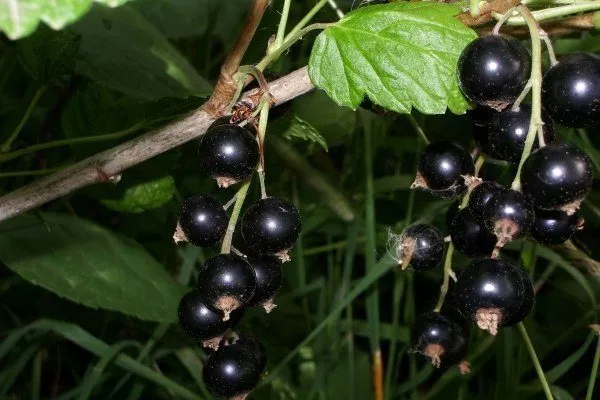
Black currant "Dachnitsa"
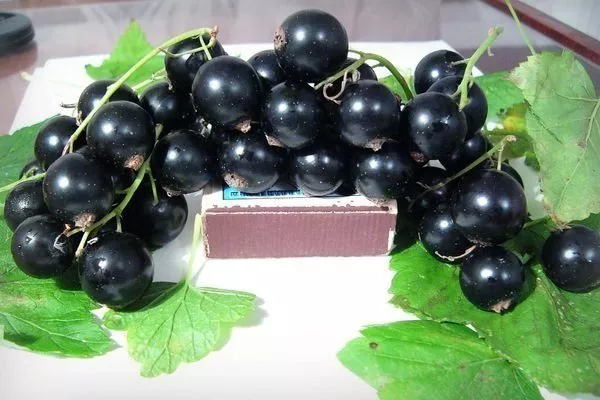
The currant "Dachnitsa" is large-fruited; the weight of one berry can reach up to 5g
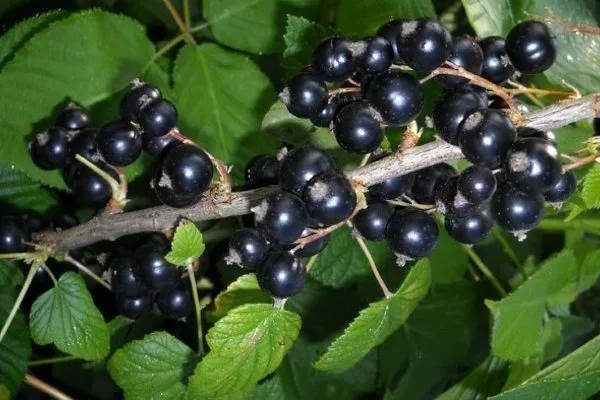
The taste of the Dachnitsa berries is incredibly sweet, without any sourness
Brief history of the variety
The Dachnitsa blackcurrant was bred at the All-Russian Research Institute of Fruit Crop Selection and the Siberian Research Institute of Horticulture by crossing varieties with similar characteristics: Golubka Seedling and Bredtorp.
Breeders - Z. Zotova, T. Ogoltsova, L. Bayanova and S. Knyazev. The new hybrid was included in the State Register in 2004.
This variety is suitable for cultivation in the temperate climates of the Northwest and Volga-Vyatka regions. It is resistant to temperatures down to -30°C. The fruits ripen early. The bush is compact, and the berries have a sweet flavor.
It is not advisable to grow the Dachnitsa black currant in southern climates due to its sensitivity to heat and poor drought tolerance.
The appearance of the Dachnitsa
Blackcurrant is a perennial plant characterized by its small size compared to other varieties.
Bush
A compact, spherical shape, low-growing. Reaches 1.2 m in height. Branches are sparsely spaced, with gaps. The primary growth direction is straight and upward.
Young stems are a rich, iridescent green. In mature plants, the main branches are stiff and woody. They darken to a gray-brown color, and the iridescence diminishes.
Roots
The root system is fibrous and robust. It grows at a depth of 35-42 cm. The central taproot extends up to 1 m into the soil. The remaining roots grow vigorously horizontally, 45-50 cm from the center of the bush.
Currant roots do not produce shoots.
Leaves
The leaves are medium-sized, borne on short petioles. The structure is five-lobed and corrugated. The leaves are soft to the touch.
Each lobe is separated by deep, longitudinal grooves of a burgundy hue. The leaves are green with a slight bronze tint.
Flowers
They are gathered in clusters of up to 12 fruits. Almost all of them produce ovaries. They are medium-sized and have a delicate light brown color.
The plant is self-pollinating, but to obtain larger fruits, it is recommended to plant other varieties of black currant nearby.
Berries
The fruits of this variety are considered large, weighing between 3 and 5 g.
Also characteristic of berries:
- the shape is spherical, slightly elongated;
- the color of the peel is dark blue;
- the skin is loose and tender;
- small seeds are present in small quantities;
- the pulp is sweet and soft;
- taste with a slight sourness;
- the aroma is pronounced;
- Sugar content is 9.5%, vitamin C is 195 ml/100 g; this amount satisfies the body’s daily requirement.
Ripe fruits remain firmly attached to the stalk for a long time and do not fall off.
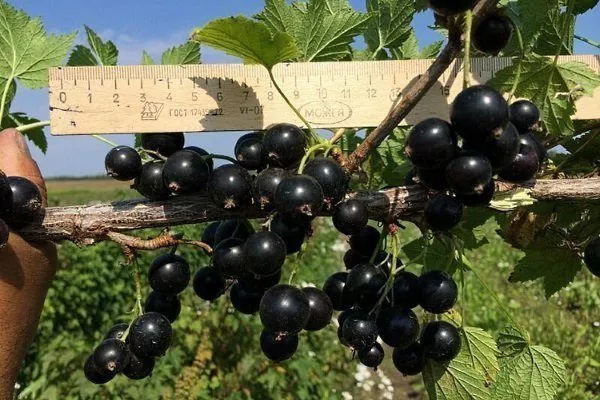
The harvested fruits are better preserved at low temperatures and do not lose their original taste and beneficial properties.
Pros and cons
The fruit ripens in the third year after planting. The bush begins bearing fruit in mid-June. During the harvest season, it produces berries regularly. One bush produces up to 1.5 kg of berries.
Farms harvest up to 8 tons of currants per season on a 1-hectare plot. The highest yields are achieved when the plants are 5 to 8 years old.
This variety grows best in the temperate climate for which it was specifically bred. Its root system is adapted to temperatures down to -30°C and requires no additional insulation.
The Dachnitsa plant does not tolerate southern climates well: growth slows, the bush shrinks, and yields little. It is sensitive to dry soil and excessive sunlight. It requires regular supplemental watering and artificial shade.
This variety is chosen because of its numerous advantages:
- large fruits and high yield;
- early ripening of berries;
- self-pollination;
- rich taste and high vitamin C content;
- resistance to pests and major diseases;
- cold tolerance;
- the berries are intended for universal use;
- currants retain their taste and nutritional properties for a long time;
- The fruits are transported well.
Currants have their disadvantages:
- fallen fruits spoil quickly;
- flowers wither from frost;
- the branches are not strong enough and bend towards the ground under the weight of ripening berries;
- pruning is needed;
- the soil near the bush should be free of weeds and fallen leaves;
- the plant does not tolerate dry periods well, especially in the first 2 years;
- grows poorly in warm climate zones.
In case of sudden frosts during the flowering period of currants, it is worth fumigating the bushes to preserve the flowers.
Preparing for landing
To plant the Dachnitsa black currant, gardeners select the right location and prepare the soil.
Planting season
The best time to plant seedlings is mid- to late September, depending on climate and weather conditions. During the fall, the plant establishes itself in the soil, preventing winter freezing of the root system.
Planting in early spring is allowed, but the currants may not have time to take root sufficiently for full growth and future fruiting.
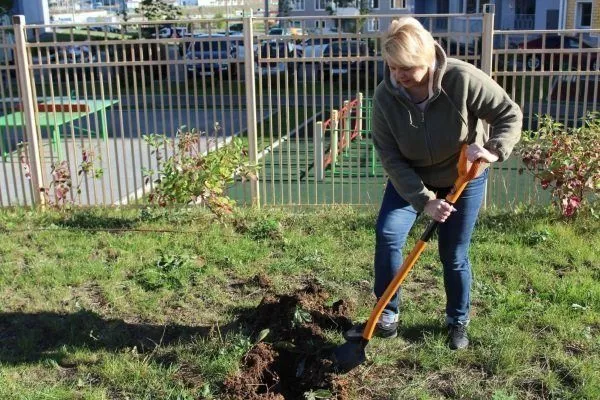
Selecting a site
Blackcurrant Dachnitsa grows and bears fruit well if the territory meets the following requirements:
- located in an open space on the southern side of the site;
- the landing area is flat and spacious;
- high humidity and close proximity to groundwater are not allowed;
- soil with natural drainage to prevent root rot;
- absence of drafts and cold winds;
- Most of the area should be well lit, some darkening is allowed.
Excess sun slows down plant growth and dries out the soil.
Before planting, pay special attention to soil composition and acidity. The plant thrives in loamy or chernozem soil with a slightly acidic pH of 6.0-6.5.
Currants are planted in loose, nutrient-rich soil. If the soil lacks nutrients, add organic fertilizer such as compost or humus beforehand. It is not recommended to use commercial fertilizers with a high mineral content.
If bushes from the gooseberry family previously grew in this area, the soil will have accumulated toxic substances and become significantly depleted. Plant growth and development will be slowed.
Planting material
You should buy young seedlings that are two years old: the plant is already established and its root system has grown. This type of bush takes root quickly and easily, and it tolerates temperature fluctuations.
- ✓ The presence of at least 3 main roots with a length of 15 cm.
- ✓ No signs of disease on the root system and shoots.
- ✓ The shoots should be flexible, without cracks or spots.
When choosing a seedling, pay attention to:
- Root system: The stem should not be broken or have dry shoots. The color is rusty brown. There are 2-4 main shoots, 15-20 cm long. Numerous small, thin roots of a lighter shade extend from them.
A dark brown root color indicates improper storage and the plant's unhealthiness: it was exposed to frost, was overdried, or was diseased. - Aboveground part: consists of 2-3 shoots 35-45 cm long. The color of the branches is even light brown, the surface is smooth with soft buds.
For planting in early spring, select seedlings with young foliage.
Immediately before planting, the currants are prepared. The roots are dipped in a nutrient-rich, growth-promoting solution.
Soaking time: a healthy and undamaged plant should be soaked for about an hour; for dried, frozen, or damaged roots, the soaking time should increase to 3-5 days.
Soil cultivation
Young black currant Dachnitsa is planted in prepared soil:
- the area is dug up to the depth of a shovel;
- weed out weeds and any remaining dry grass and branches;
- insufficiently moistened soil is watered 2-3 days before planting;
- depleted soil is saturated with organic fertilizers.
Proper planting of black currants Dachnitsa
Maintaining the distance between bushes and following a step-by-step approach when planting seedlings guarantees good rooting and rapid growth.
Sequence of actions:
- The young plant is planted in a hole half a meter deep and in diameter. If there are several bushes, the distance between the holes is 1.5-2 meters. This distance prevents shade between the mature bushes.
- Fill the hole 2/3 full with excavated soil mixed with fertilizer. For fertilizer, you'll need the following per square meter:
- compost or humus - 15 kg;
- potassium chloride - 65-75 g;
- superphosphate - 120-140 g;
- wood ash - up to 2 kg.
- The seedling is lowered into the hole in an upright position, the roots are carefully placed without shifting small shoots to one side.
- The hole containing the plant is filled with excavated soil and the soil is compacted so that it does not settle too much during watering.
- Water generously with 2-2.5 buckets of water.
- Mulch to retain moisture.
- The branches are trimmed so that a shoot up to 15 cm long and 2-3 buds on it remain.
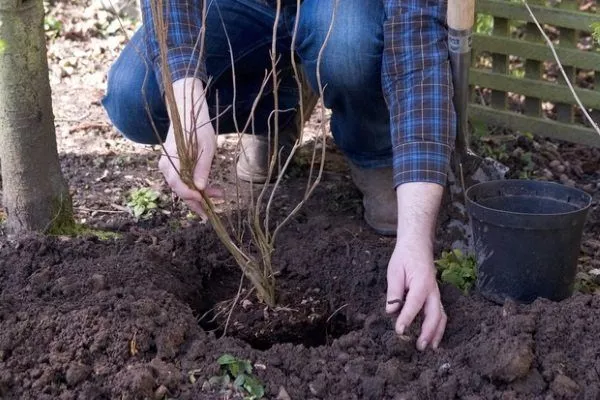
Fertilizing is beneficial for plant establishment and nutrient storage. During active growth in the spring, fertilized soil ensures the plant's full growth and development.
Caring for currants
The Dachnitsa blackcurrant requires constant care: loosening the soil, removing weeds, and watering. Due to its small size, the bush doesn't need to be secured to a support.
You will learn how to care for currant bushes in the autumn. here. And also read our other article about, How to properly care for currants in the spring.
With proper care, currants produce berries for more than 12 years.
Watering frequency
Currant bushes require moderate but consistent watering. Make a small depression 30 cm wide near the tree trunk and pour water into this area.
The roots are located at a depth of up to 40 cm, and when watering, the soil layer should be moistened to this depth. A mature plant requires two buckets of water for full irrigation, while a young plant requires one.
Watering frequency is once a week. In summer, increase watering to twice a week, and spray the leaves in the evening.
Additional moisture requirements occur during flowering and fruit setting, during harvest, and before winter.
It is important to take into account that lack of moisture leads to:
- deterioration of the taste of berries and their crushing;
- reduction in crop yields;
- poor tolerance of winter cold.
Trimming technology
The currant bush must be pruned, removing unnecessary branches.
This is required for:
- formation of the correct plant shape;
- the formation of gaps between the branches to allow access to sunlight and air - this is how the berries, under the influence of ultraviolet light, ripen to a large size;
- direction of the flow of nutrients to fruiting branches;
- stimulating the growth of new shoots;
- getting rid of old branches on which few ovaries are formed;
- removal of diseased and damaged parts of the bush.
Time of the event:
- Early spring, when the currants haven't yet awakened from hibernation and the sap hasn't begun to flow. Learn about spring pruning of currants from this article.
- Late autumn, after the nutrient movement has completed. We recommend reading the article about How to properly prune currants in the fall.
Basic rules for pruning:
- It begins in the first year, during planting. Branches are shortened, leaving 2-3 buds on each. The shoots form the main skeleton of the bush.
- In the 2nd year, these branches are cut off, leaving buds for the growth of young shoots.
- On the 3rd and 4th, 3-6 of the strongest new shoots are left, and the rest are cut off. The tops of last year's shoots are shortened.
- By the 5th or 6th year the bush shape is fully formed.
Now they only carry out preventative pruning: they get rid of old, diseased and damaged branches.
Every year, 3-5 new main shoots are left, and last year’s branches are shortened so that 3-4 buds remain on them.
Regularly pruning old branches promotes constant renewal and stable harvests. It's best to coat the pruned area with garden pitch.
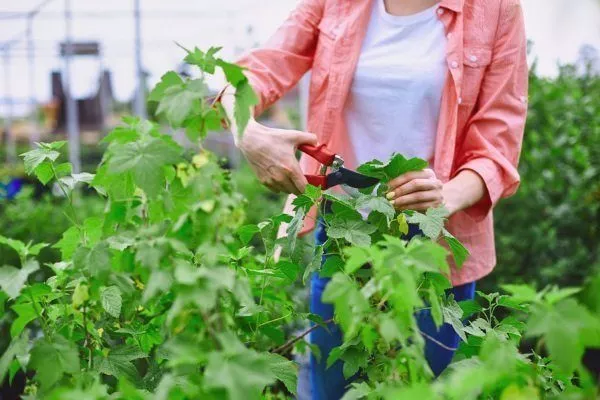
After winter, to prevent disease, cut back frozen and rotted branches. In late autumn, remove old and dried branches from the bush.
Soil care
The Dachnitsa currant is demanding of soil conditions. To ensure good growing conditions, the following is required:
- get rid of weeds, fallen leaves and branches;
- periodically loosen the soil, providing access of oxygen and moisture to the roots;
- To prevent the soil from drying out, it is mulched, especially at the beginning of summer.
Introduction of fertilizers
To accelerate the growth of the currant bush and increase the yield, fertilizer is applied several times a year:
- In the spring — organic fertilizer or ammonium nitrate: dissolve 50 g in water and pour under each bush. Plants over 5 years old require half as much fertilizer. For spring fertilizing, see here.
- In the fall — In October, use organic fertilizer: compost, bird droppings, or a bucket of ash. Read on to learn how and with what to fertilize currants in the fall. Here.
Mulching
They are conducting soil mulching Before winter, to preserve the root system, use: dry leaves, sawdust, pine needles, peat, or humus.
The thickness of the layer depends on the climatic conditions of the growing region.
Frost protection
When temperatures drop below -30°C and there are constant fluctuations in temperature, additional frost protection is provided for mature currant bushes and newly planted seedlings. In addition to mulching, the bush is lined with cardboard or wrapped in cellophane.
Harvesting
Fruiting begins in the third year after planting, and peaks after the fifth year. The harvest is collected in several stages.
Store in a refrigerator in plastic containers to prevent the berries from cracking when defrosted. Freezer storage is up to a year.
The Dacha tolerates transportation well.
Currants are used for preparing:
- jams, compotes and jellies;
- sweets and marshmallows;
- medicinal infusions.
When crushed and mixed with sugar, it retains all its beneficial properties.
Reproduction
The dacha plant is propagated using several methods.
Cuttings
A cutting is a young 20-cm-long shoot cut from the mother plant. It is separated in the fall with a diagonal cut. It is placed in the ground at an angle. There should be 2-3 buds on the surface of the trunk. The cutting takes root over the winter and is planted in the ground in the spring.
Rooting cuttings
From a large three-year-old bush with a good yield, a two-year-old branch is selected.
Procedure:
- they are moved to the side, bent down and rooted in the soil;
- the top is cut off and the stem is fixed with wooden staples;
- sprinkle with earth and water.
The shoot is connected to the mother bush, it receives nutrition and quickly takes root.
The time for layering is early spring, before the leaves emerge. By fall, the root system will have grown, and 2-3 new shoots will appear. The layering is separated from the bush and planted in its permanent location.
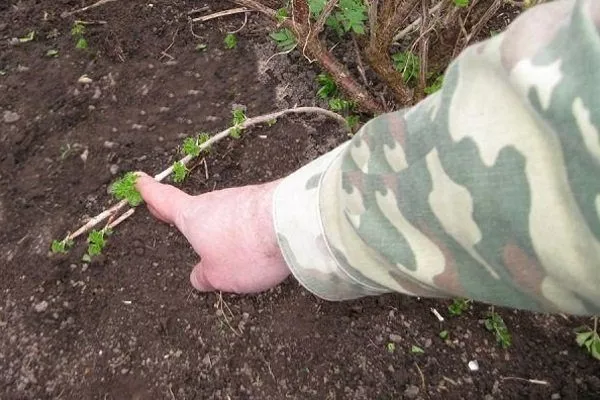
Reproduction is the most common and convenient method of propagating a currant bush.
Dividing the bush
This is done in the fall. A one-year-old plant is dug up and divided into sections. The independent section of the bush should have roots and a solid trunk. The branch is trimmed back, leaving 20-25 cm. The young bush is planted in a prepared hole and watered.
Diseases and parasites: methods of control and prevention
The Dachnitsa blackcurrant is resistant to major diseases and pests. A preventative inspection of the bush helps spot the first signs of disease early.
Main diseases and pests:
- Fire moth caterpillar. It feeds on berries. To prevent this, dig up the area in the fall.
Control method: spray the leaves with a solution of shag in the spring. - Glass-box. It lives on branches and attacks them.
Control method: cut off the affected stems and treat the plant with malathion. - Aphid. Affects leaves.
Control method: treat with special preparations or a soap solution with ash, excluding the flowering period. - Rust. The bush becomes covered with dark spots.
Control and prevention methods: prune affected parts of the bush and spray with a 1% Bordeaux mixture solution. Avoid flowering and harvesting.
Read more about currant diseases and pests Here.
Disease prevention:
- choosing a suitable landing site;
- cutting off affected areas;
- after winter, until the soil has completely thawed, water the bushes and soil with hot water;
- periodic spraying with Bordeaux mixture;
- Before the flowering period - treatment with tobacco tincture.
Gardeners about the Dachnitsa currant
The Dachnitsa blackcurrant is a hybrid specifically bred for temperate climates. With proper care, this variety produces consistent, large-fruited harvests. It is easy to propagate and pest-resistant. The berries store well at low temperatures and are easy to transport.