
Every gardener has a wealth of healthy berries growing in their garden. Currants, also known as the "berry of health," hold a special place among them. To ensure their health and vigor, they need proper care, treatment, and pest protection.
Currant diseases and methods of their treatment
Below we describe the symptoms, treatment methods and prevention of popular currant diseases.
Anthracnose (dry beetle)
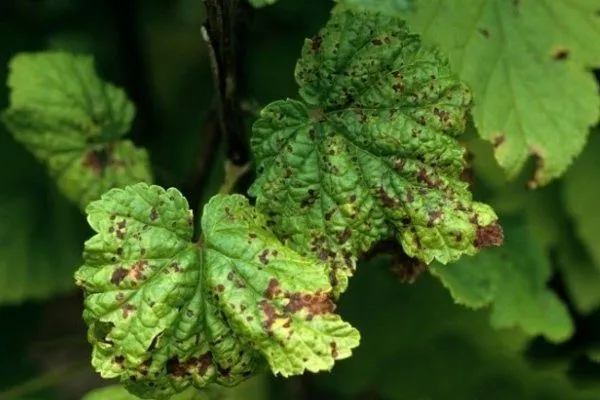
Anthracnose is caused by the fungus Colletotrichum orbiculare. This form of the disease most commonly affects red currant bushes, although other varieties are also susceptible.
The mushroom survives the winter in withered leaves, and awakens again by the summer season.
Signs:
- currant leaves begin to become covered with small red and brown spots, which then grow;
- a bush that is not treated in a timely manner loses dried leaves and dies over time;
- appears on newly planted plants in the absence of prevention.
Treatment:
A mixture of copper sulfate and slaked lime, also known as Bordeaux mixture, can help treat anthracnose. Bordeaux mixture can be purchased at any supermarket.
The first time the plant is sprayed after the disease is detected, and then the second time when the berries have ripened and been picked.
Prevention:
- Be sure to collect and burn all fallen leaves, this will prevent the fungus from spreading;
- If the currant bushes did not survive this attack, do not plant new ones in the same place.
American powdery mildew (Sphaerotheca)
This is another currant disease caused by the Erysiphales fungus. It's relatively rare but easily treatable. Its danger lies in the fact that it can spread to other plants, such as roses or even cucumbers.
Signs:
- on young currant leaves, white loose mycelium is formed;
- leaves with such a coating become deformed and dry out;
- After some time, it spreads to the berries, they dry out and lose their flavor.
Treatment:
Gardeners use regular pharmacy iodine at a ratio of 1 bottle per 10 liters of water. Currant bushes are treated with the iodine solution for 3-4 days. In severe cases, a 1% copper sulfate solution (1 teaspoon per 6-7 liters of water) is applied to the bushes. Fundazol can also be used to treat affected bushes.
The video below explains what this disease looks like and what treatment recipe gardeners use to combat powdery mildew on currants:
Prevention:
Only weakened bushes growing in overly wet soil are susceptible to the disease. To prevent powdery mildew, simply cultivate the soil properly, water it at the right time, and apply appropriate fertilizers.
Goblet rust
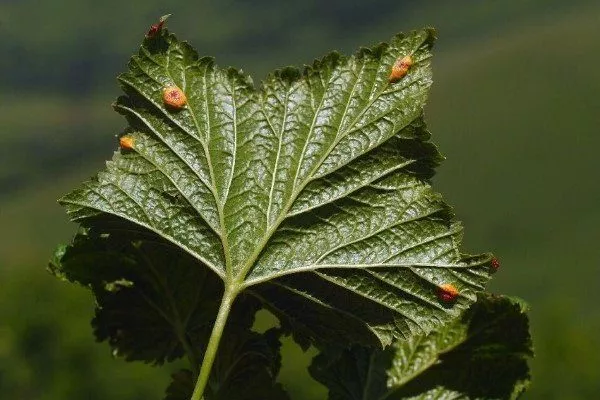
The spread of cup rust can be caused by excessive proximity to a coniferous forest, since pine is an intermediate host of the fungus. Coleosporium, the causative agent of this disease, most commonly affects black currants.
Signs:
- light orange warty growths form on the underside of the leaves;
- spread to buds and flowers;
- completely fill the space of the leaves;
- The berries on a bush infected with rust fall off over time.
Treatment does not differ much from the treatment methods for the diseases already described above.
Prevention:
- After eliminating the disease, collect all fallen leaves and burn them;
- In the future, digging up the soil will help at the beginning of the flowering season and after the last berry harvest (in spring and autumn).
Terryness (reversion)
This is a viral disease transmitted by a microscopic mite. The causative agent is Ribes virus 1. A currant bush infected with this virus mutates, changes, and eventually stops bearing fruit.
Signs:
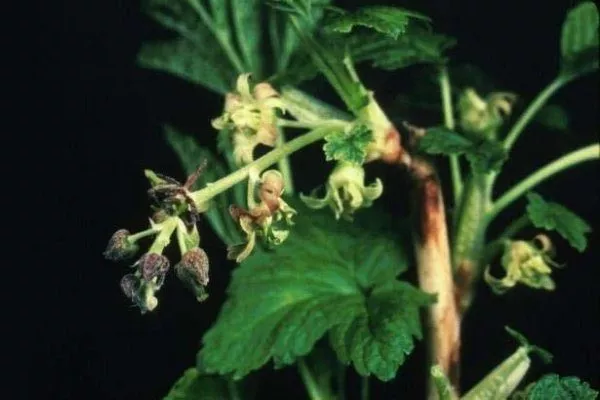
- the shape of the plant's leaves begins to change, lengthening, becoming asymmetrical, with sharp edges;
- the leaf turns purple, the flowers turn red;
- the flowers acquire an elongated shape, their petals narrow, dry out, but do not fall off for a long time;
- berries do not appear on the bush at all.
Treatment:
Treatment with various preparations and liquids will not bring results; dig up and destroy the mutated plant, as the disease is contagious.
Prevention:
- Observe young, newly planted plants for 4 years;
- First of all, destroy the carrier of the disease – the tick;
- When preparing cuttings for propagation, leave a branch on them that will bear fruit, and if the slightest signs appear, destroy the plant.
Gray mold
Gray mold is caused by the fungus Botrytis cinerea, which overwinters in leaf debris not collected in the fall. It is most active in midsummer, especially when air and soil humidity increase.
Signs:
- signs of wilting appear at the tops of young growing shoots, spreading lower;
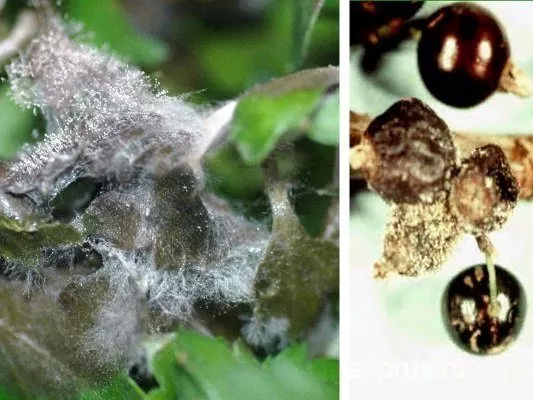
- the dried shoot becomes covered with a grey fungal coating;
- the leaves become covered with light brown, shapeless spots;
- Over time, the spots crack, and during rain, a grey coating appears on them, similar to the coating on the shoots.
Treatment:
The same copper sulfate solution works well for treating gray mold. A homemade solution of baking soda and soap (50 g each of soap and baking soda per 10 liters of water) is also effective.
Prevention:
- Carry out sanitary pruning of bushes, since densely growing ones are most susceptible to rot;
- For preventative purposes, treat currants and the soil underneath them with antifungal solutions before flowering and after harvesting;
- in the autumn, fertilize the soil with a mixture of ash and water;
- Destroy all rotten leaves by fire.
Striped (veined) mosaic
Another viral disease that is untreatable. It is spread primarily by aphids and plant-eating mites.
It can be introduced when pruning a bush with a tool that was previously used to prune a diseased bush.
Signs:
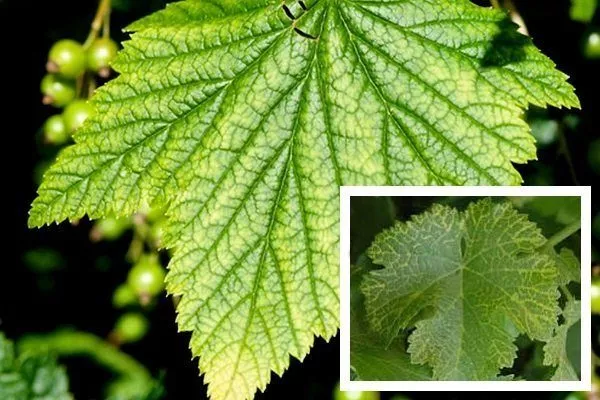
- at the end of May, beginning of June, bright yellow patterns and stripes appear on the leaf blade around the main veins;
- Over time, the leaves turn yellow, wither and fall off.
Treatment:
Uproot the diseased currant bush and burn it. The virus is virtually impossible to cure.
Prevention:
- inspect healthy plants and, if you suspect a disease, uproot the bushes;
- eliminate parasites that carry mosaic;
- Observe quarantine for 4-5 years; if a diseased bush was growing in the soil, do not plant new cuttings there.
Nectrium drying of shoots and branches of currants
This is a fungal disease caused by the ascomycete Nectria ribis. It primarily affects white and red currant varieties, with black currants being more resistant.
Signs:
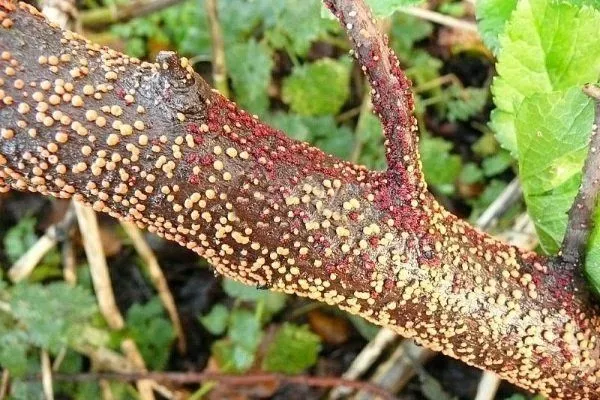
- branches and young shoots become covered with small round yellow growths that darken over time;
- when the spores mature, the growths turn black;
- If it spreads to the entire trunk, it kills the plant.
Treatment:
As soon as you notice signs of wilting, remove the affected shoots. This disease is difficult to cure, but since it's contagious, the key factor is how quickly you detect it. Treat the cut areas with Bordeaux mixture.
Prevention:
- remove weeds from the ground around the currant bush;
- collect all fallen leaves, which are the source of most fungal diseases;
- Do not allow the bushes to grow uncontrollably.
Drying of shoots and branches of currants
Excessive sunlight combined with a lack of watering can lead to the death of currant bushes, like any other plants accustomed to temperate climates. The development of the disease may indicate improper care of the bushes.
- ✓ A purple tint to the leaves may indicate a phosphorus deficiency.
- ✓ Inward curling of leaves often indicates a potassium deficiency.
Signs:
- the bark on young shoots hardens, becomes brittle and fragile;
- Over time, older branches begin to die off, and the plant dies.
Treatment:
If the plant has already dried out, unfortunately, it will not be possible to bring it back to life.
Prevention:
- timely watering of the plant;
- pruning old branches;
- thinning bushes and planting them.
An experienced gardener discusses other reasons for currant bushes drying out in the following video:
Septoria (white spot)
The disease is spread by the fungus Septoria, which, like other fungi, thrives in moisture and survives the winter in leaves. It is especially active during warm winters.
Signs:
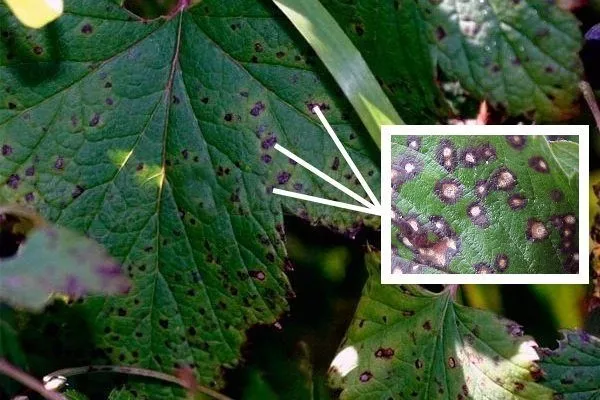
- small white-brown spots appear on the leaves, similar to blotches;
- as the spots spread and their size increases, the leaves dry out and curl up;
- Similar signs spread to other plants around.
Treatment:
First, remove all leaves affected by the fungus, then spray the plant with a copper solution 3-4 times. At the end of the season, treat the plant to prevent the fungus from persisting in the soil and leaves over the winter.
Prevention:
- In autumn, remove all fallen leaves from the garden area;
- periodically dig the soil to a depth of no more than 10 cm;
- Trim the bushes if they grow too large to keep the plant strong and healthy, and then the fungus won't be a problem.
Columnar rust
Another type of rust. The difference between them is that in this case, the disease is transmitted by sedge, which may be growing in your garden.
Signs:
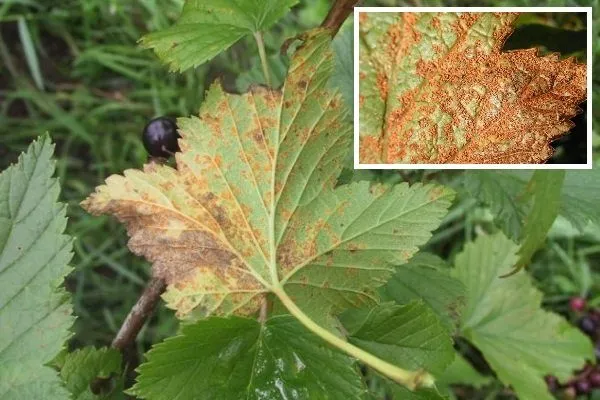
- leaves become covered with orange flat spots;
- the spots grow and destroy the bush.
Treatment:
In addition to the standard spraying procedure, remove all sedge from the area where currants grow.
Prevention:
Timely weed removal. Otherwise, prevention is no different from that for other types of fungal diseases.
Currant pests and control methods
In addition to the viral and fungal diseases listed above, various insects can interfere with the comfortable growth of currant bushes. Understanding the basics and, most importantly, pest control methods will help you avoid these unpleasant neighbors.
Gooseberry sawfly
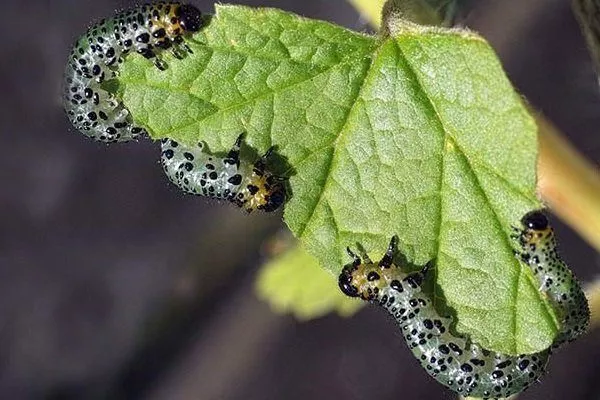
Female sawflies are bright orange. The insect's larvae are pale bluish-green caterpillars. They consume almost all leaves, leaving only the thick central vein. With the onset of autumn, the larvae burrow into the ground to a depth of about 12 cm and overwinter there.
Methods of control:
- If you notice larvae at an early stage, collect them by hand, on film or in a jar and destroy them immediately;
- use special biological preparations, for example, "Lepidocid";
- in cases where there are a lot of larvae, chemicals such as Decis will help;
- Folk remedies also work well: ash lye, infusion of potato leaves.
Prevention:
- in spring, cover the soil under the bushes with film;
- when the berry begins to bloom, start spraying it with a 10% solution of malathion;
- At the beginning of summer, pollinate young leaves with wood ash fertilizer;
- In the fall, dig up the soil again to ensure there is no trace of the pest left.
Gooseberry moth
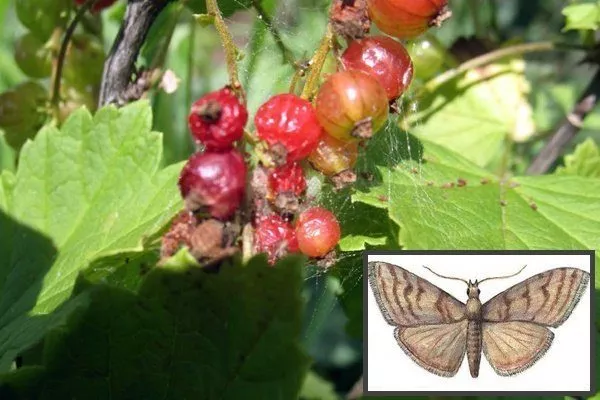
Adults are small gray butterflies. The first-stage larvae are green or brown caterpillars with black heads, about 1.5 cm in size. Over time, they become darker and larger. They overwinter in the soil; in the spring, when buds and flowers are forming, they disperse to bushes and lay eggs. They feed on berries and plant seeds.
Methods of control:
During the plant's flowering period, when the larvae are just emerging, spraying with various chemicals and folk remedies, in addition to collecting them by hand, is very effective in controlling them.
Prevention:
- in spring and autumn, dig up the soil under the bush, transferring soil from another place to the surface, so that the butterflies will not be able to dig through the layer blocking their path;
- A good preventative measure is dust; treat the soil with it approximately 10 days before flowering begins.
Gooseberry moth
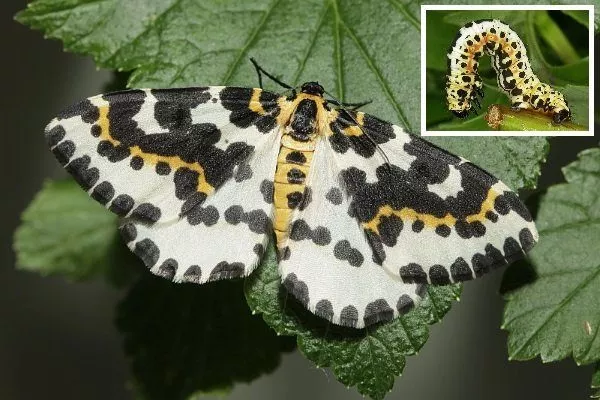
As an adult, it is a small gray butterfly with spreading wings. Its green caterpillars often stretch out like a string on a branch, mimicking part of the plant, hiding from predators. It destroys the leaves of red and white currant bushes.
The methods of control are no different from those used to control other types of caterpillars.
Prevention:
In addition to other procedures, while the plant is still dormant, tie all the branches together and treat it with hot water.
Gooseberry shoot aphid
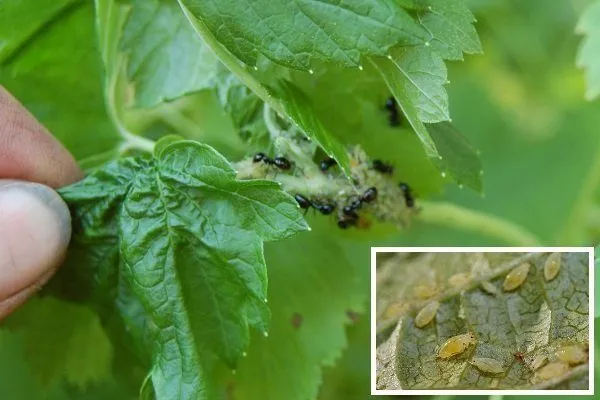
They are greenish-yellow in color. Adults are indistinguishable from larvae. Colonies of these pests can reach 1,000 individuals. They completely cover the soft tissues of the shrub.
Methods of control:
- A good remedy in this case is soapy water;
- use insecticides: decis, fufanon, actara;
- The easiest way to remove aphids is by cutting off the plant on which they are located.
Prevention:
Another preventative method, along with treating the soil with hot water, is planting plants that repel harmful insects.
Willow scale insect
These aphid-like insects are slightly larger and develop a hard shell as adults. Their color ranges from brown to red.
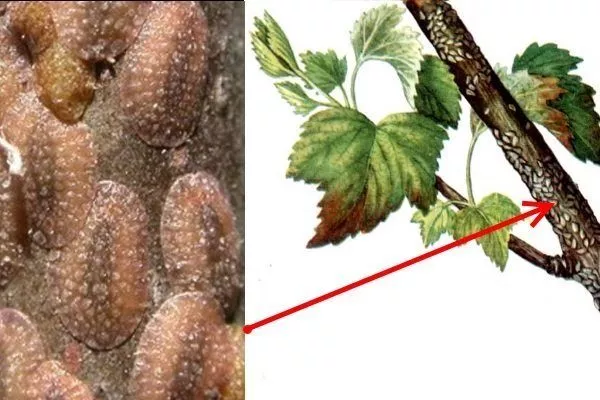
Plantations infested with scale insects are quarantined. The pest acts similarly to aphids: it finds soft parts of the plant and sucks out the juices, weakening it.
Control and prevention measures:
Soap solutions, ash, tobacco, and garlic infusions. There are also effective chemical solutions on the market.
Biennial leaf roller
It gets its name from the feeding habits of its caterpillars, which reach a size of about 2 cm in 20 days. They curl up in leaves and create a nest within them, protecting them from external attacks. The caterpillars feed on leaves.
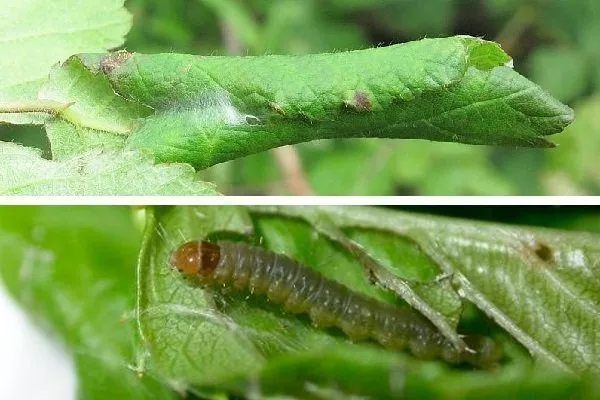
Control and prevention methods include early chemical treatment and the use of folk remedies, which were described above.
Spider mite
Small parasitic insects. They appear in large numbers on the lower parts of the bush, moving upward and covering the plant with a fine web.
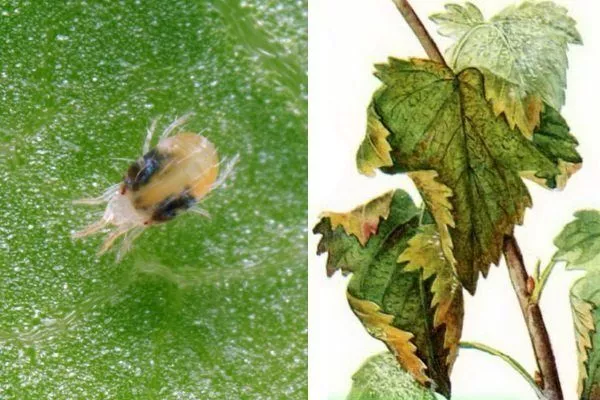
They multiply rapidly and weaken the plant. Currant leaves affected by the mite become deformed and dry. The parasites appear in hot, dry weather and can be transmitted by dust.
Methods of control and prevention:
Combating mites requires a comprehensive approach, as even a single adult female can repopulate the entire colony. Since mites don't tolerate humidity well, first water the plant, removing any dust.
Leaf gall aphid
The plant's leaves are affected, becoming swollen and reddened. At first glance, this appears to be a disease, but upon closer inspection, small, pale, yellowish aphids can be found on the foliage.
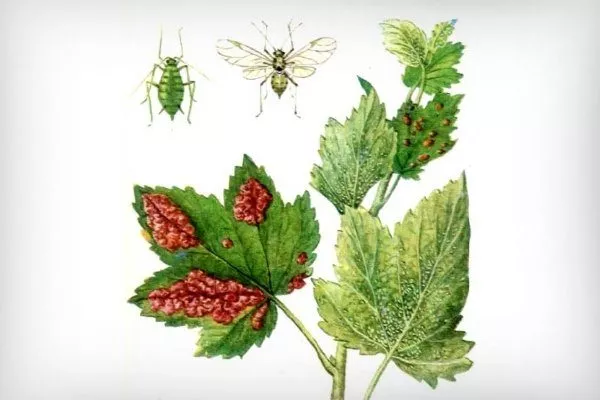
Methods of control and prevention:
- in early spring, treat the currants with a nitrofen solution;
- plant calendula, chamomile, and marigolds next to currants; they will repel insects;
- shoots with aphid colonies simply cut off and burn;
- Afterwards, spray the plant with herbal infusions with a strong scent.
Kidney moth
A brightly colored butterfly with three white spots on its wings is a bud moth. The caterpillars have a reddish hue that turns dirty yellow over time. They feed on plant buds, eating them.
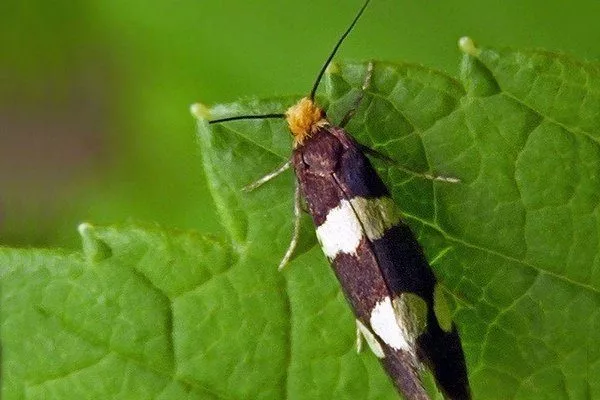
The plant with moths looks like it's frostbitten; in the curled leaves you'll find the insects themselves and their waste products.
Methods of control and prevention:
- trim damaged plant shoots;
- cultivate the soil in early spring;
- Choose plant varieties that are resistant to the parasite.
Currant bud mite
Another type of mite, very small, lives in buds. It can be detected in the early stages, in winter, as the buds on affected currant bushes enlarge. In the spring, these shoots grow slowly, and in the summer, they significantly lag behind in development. The fruits do not ripen at all.
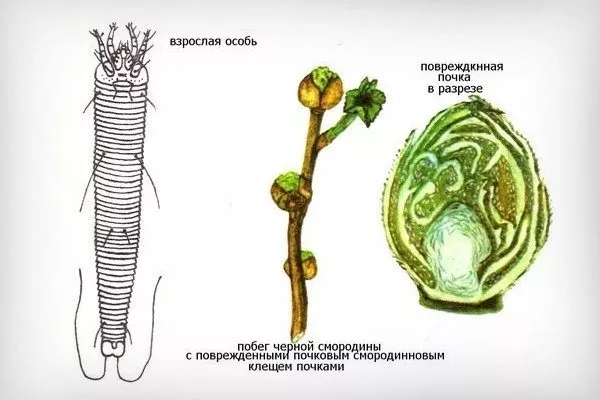
The methods of control and prevention are simple:
- choose seedlings from trusted sellers;
- Remove infected plant parts if a large area of the plant is affected.
Currant jewelweed
The zlatka is a narrow-bodied beetle with a dark, golden-copper coloration. The larva is white, legless, and has chitinous hooks at the end of its body.
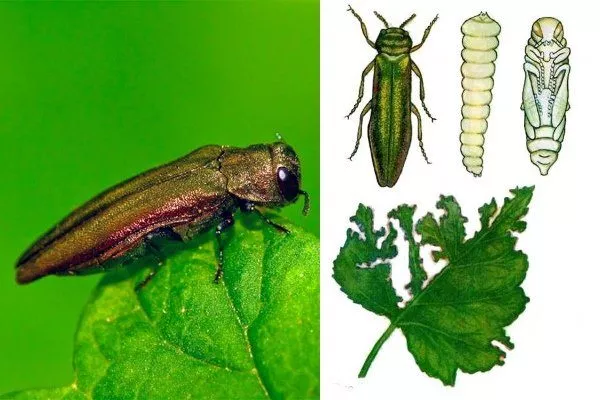
The immature insect spends the winter inside currant shoots and begins feeding on the stem in the spring. The borer matures in May and begins to consume the plant's leaves.
Methods of control and prevention:
- cut off damaged and dead shoots;
- treat the plant with actellic;
- Often the bugs die on their own, not surviving the cold winter.
Currant gall midges
Adult gall midges resemble mosquitoes. The larvae are red, resembling aphids without legs. The insect most often attacks black currants. When the plant blooms, the insects fly away.
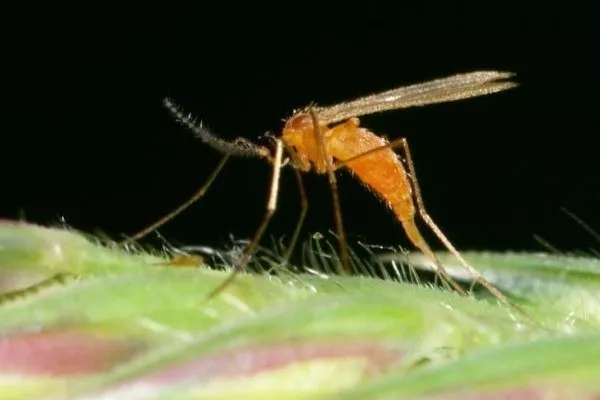
The larvae overwinter in the soil. Plants attacked by the gall midges become covered with red swellings, distorting the leaves.
Methods of control and prevention:
- dig up the soil;
- put some film or cardboard on it;
- When insects emerge from the ground, use traps by hanging them on trees;
- water the seedlings with hot water;
- Fertilize the soil under the bush with peat chips in several layers, alternating it with soil.
Currant glasshouse
The glasswing most closely resembles a wasp, but its body is dark blue and its tail has a tufted tail. The larvae live in the trunk, feeding on its contents.
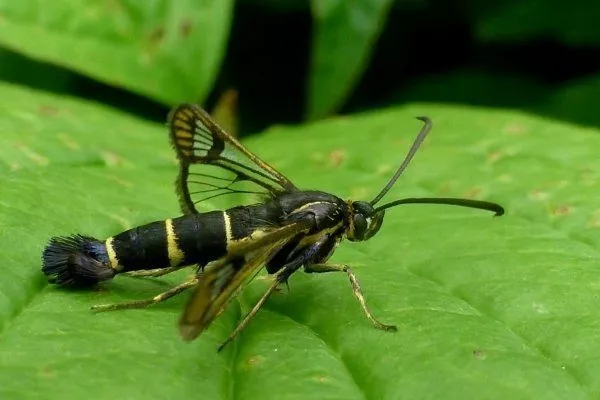
You can detect the intruder by cutting off a dried-out branch. In the center of the cut, you'll see a dark, empty spot with dust.
Methods of control and prevention:
- cut off the affected branch to the part that the caterpillar has not yet eaten;
- prune bushes in a timely manner to eliminate glasswort;
- spray the branches with chemically and biologically active preparations and solutions;
- Plant elderberry bushes in the areas; they repel most pests (other plants with a strong smell will also work);
- Before planting, carefully inspect the trunk of the seedling for any signs of disease or dark spots inside the trunk.
All these simple measures will help prevent and eliminate both diseases and insect infestations. It's important to carefully monitor the plant to spot the first signs of disease or damage early.