
Bayana is a currant with white berries rich in pectin and vitamin C. They are sweet and contain much less acid than regular red currants, are less likely to cause allergic reactions, are less susceptible to damage during harvesting, and store well.
The history of the creation of Smorodina Bayana
White currant is a variety (group of cultivars) of red currant. The white variety Bayana was developed by Russian breeders at the All-Russian Research Institute of Fruit Crop Selection in the Oryol Region. This currant was obtained by crossing the red varieties Red Lake and Rote Spätlese.
The Bayana variety was developed by L.V. Bayanova, V.E. Dzhafarova, and M.A. Makarkina. The Bayana currant was bred in 1996, but it was only included in the State Register in 2007. It is recommended for cultivation in the Central Black Earth Region.
Description of the plant
The Bayana currant bushes are vigorous, gently spreading, and dense. The maximum height is 1.5 m. The shoots are thick, straight, and have a reddish tan. The leaves are 3-5 lobed, large, light green, matte, non-leathery, slightly pubescent on the underside, and elongated.
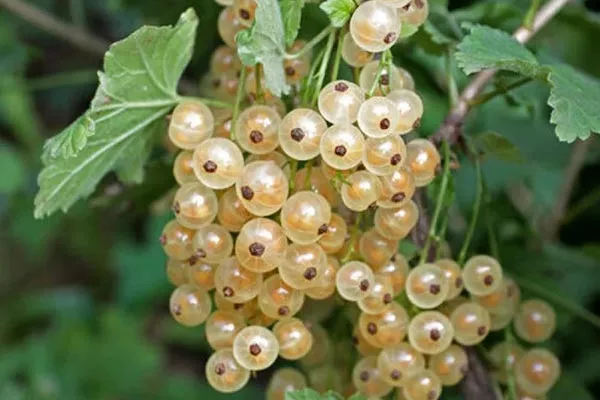
The flowers are small, deeply saucer-shaped, with pale yellow, narrow petals. The drooping racemes, long and dense, reach 12 cm in length including the petioles.
Description of berries
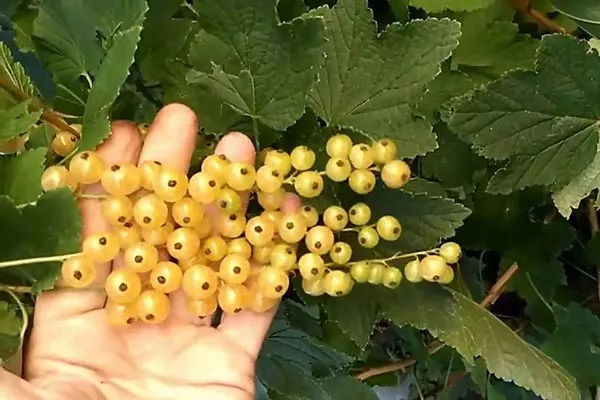
The Bayana currant berries are medium-sized and transparent. They are uniform in size, with a dry separation. The seeds inside the berries are few, but they are quite large.
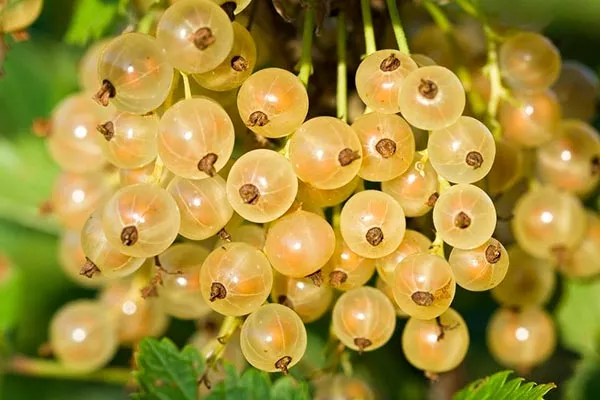
Brief description of berries:
- Color: white.
- Shape: round.
- Skin: thin.
- Weight: 0.5-0.7 g.
Taste and purpose
The berries have a pleasant, dessert-like, sweet-and-sour flavor, and a delicate, currant-like aroma. They have excellent gelling properties and are versatile in use—they're eaten fresh, used in desserts, sauces, and gravies for meat and fish dishes, and used to make jams and preserves.
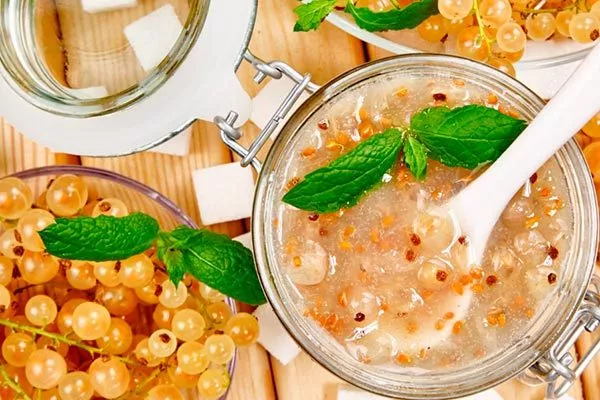
Chemical composition of berries:
- Dry matter – 10.4%.
- Sugars – 7.6%.
- Titratable acidity – 1.8%.
- Ascorbic acid – 40.3%.
- P-active substances – 350 mg/100 g.
- Pectin substances – 8.3%.
In the food industry, Bayana currant berries are used to make confectionery and various sweets. They freeze well. Bayana berries are also used in medicine and pharmacology, and various preparations are made from them. The tasting score is 4.8 points.
Characteristics
The Bayana currant has excellent agronomic characteristics, making it suitable for cultivation in a wide variety of regions across the country. It is hardy and undemanding, withstanding a wide range of adverse environmental conditions.
Productivity
The Bayana currant is a high-yielding variety. It boasts an average annual yield of 15 tons per hectare. One bush produces an average of 2.2-2.3 kg of berries.
Frost resistance
This variety is frost-hardy; the bushes can withstand temperatures down to -40°C. Very low temperatures can reduce yield, but the bushes are usually undamaged. The variety is also highly drought-resistant.
Ripening time
Bayana currants begin bearing fruit the following year after planting. This variety is late-ripening, with berries not ripening until August or September. The exact ripening time depends on the specific climate conditions in the growing region.
Pros and cons
The Bayana currant is a reliable variety with many advantages that make it attractive to gardeners and berry lovers.
Landing features
The growth and development of currant bushes largely depend on proper planting. Under unfavorable conditions, the bush will grow and bear fruit poorly and may even die.
Selecting a site
Bayana currants are planted in a warm, sunny area with good moisture, but without stagnant water. It's also important to avoid high groundwater levels; they shouldn't rise above 1 meter above the ground surface. Otherwise, the bushes will have to be planted on artificial mounds.
- ✓ Soil pH should be between 6.0-6.5 for optimal nutrient absorption.
- ✓ The organic matter content of the soil should be at least 3% to ensure good structure and water-holding capacity.
The soil in the area should be loose, fertile, and moisture-retentive, neutral or slightly acidic. Excessively acidic soils should be limed during autumn tilling, while sandy soils should be supplemented with organic matter, compost, peat, and humus. Bayana currants grow best in light loamy or sandy loam, well-aerated soils.
Selection of seedlings
To ensure a healthy, abundantly fruiting bush, you need high-quality planting material. Seedlings should be purchased from specialized nurseries or agricultural stores. When choosing currant seedlings, it's important to properly assess their external characteristics to ensure you select high-quality specimens.
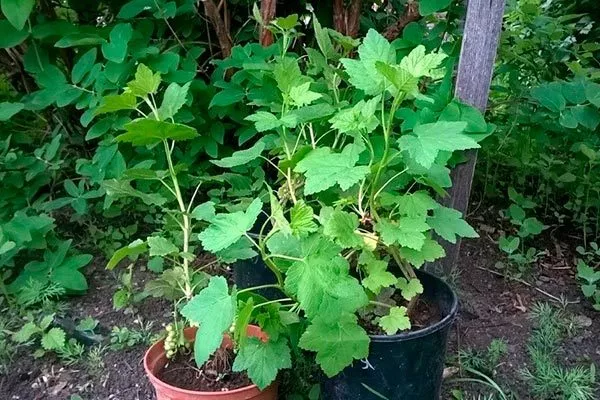
Signs of a good seedling:
- Leaves and shoots should not have any defects - spots, insect damage, etc. Cracks and growths on the bark are unacceptable.
- The roots and shoots should be elastic, bend easily, and not break.
- The root system consists of 3-5 main (skeletal) roots 15-20 cm long. The presence of mold, rot, and insects on the roots is unacceptable.
- From the base of the seedling, 2 or 3 shoots 30-40 cm long should grow.
Preparing the landing site
The area where the currants are to be planted must be tidied up, removing plant debris, stones, and perennial weed roots, and thoroughly dug over. Add 5 kg of well-rotted manure per square meter, 300 g of wood ash, and 1 tablespoon of nitroammophoska to the soil.
- 1-1.5 months before planting, analyze the soil for pH and organic matter content.
- Add corrective amendments (lime to increase pH, peat or compost to increase organic content) according to the analysis results.
- Prepare a planting hole taking into account the recommendations for size and composition of the soil mixture.
It's recommended to prepare planting holes 1-1.5 months before planting, or at least 2-3 weeks before. It's important to allow the soil to settle and any fertilizer added to the hole to dissolve. If you dig the hole on the day of planting, the seedling will settle along with the contents, and the root collar will be buried too deeply.
Features of preparing a planting hole:
- The diameter of the planting hole is 50 cm, the depth is 40 cm. The top fertile soil layer (15–20 cm) is set aside to be used later to fill the hole.
- The soil mixture is prepared from 3-4 kg of organic matter - manure or humus, 30-40 g of potassium fertilizers, 200 g of superphosphate and 250 g of wood ash (the composition of the mixture may vary).
- Fill the hole one-third full with the nutrient mixture, then top it with the fertile soil obtained during digging. The hole should be three-quarters full.
Planting seedlings
Seedlings are planted primarily in the fall. In temperate latitudes, planting occurs in September, and in the south, in October.
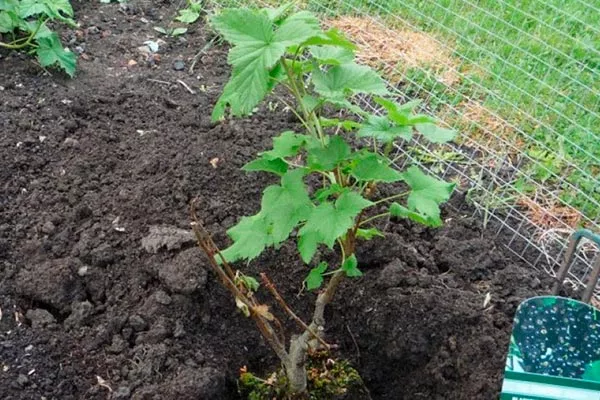
Landing features:
- The seedling is placed in the hole at a 45-degree angle. Its roots are placed on top of the mound of soil (created by adding potting mix and soil into the hole).
- The seedling's roots are carefully spread out so they lie flat on the slopes of the hill, without bending. They are covered with the remaining fertile soil and compacted.
- Before planting, it is recommended to pour 5 liters of water into the hole, and pour the same amount under the root of the planted seedling.
- The root collar should be buried 5-7 cm below the ground surface.
- The planted seedling is pruned, leaving 5 buds on each stem.
Care
The health and development of a bush, its appearance, and the quality of its fruiting largely depend on proper and consistent care. The Bayana variety requires regular watering and loosening, as well as fertilizing, pruning, and preventative spraying throughout the season.
Watering
Bayan currants require moderate watering. Avoid allowing the soil to dry out, as a lack of moisture will cause the berries to become dry and less juicy. In temperate climates, natural rainfall is often sufficient for the bushes, but in the south, watering is essential.
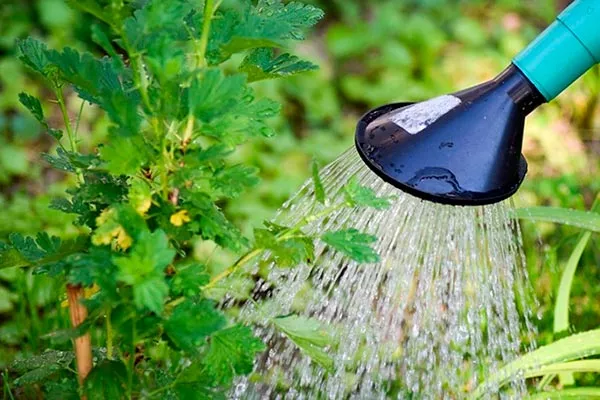
Currant bushes especially need watering during the flowering stage—they should be watered weekly. The recommended watering rate for currant bushes is 30 liters per square meter. Young seedlings require 10–15 liters.
Top dressing
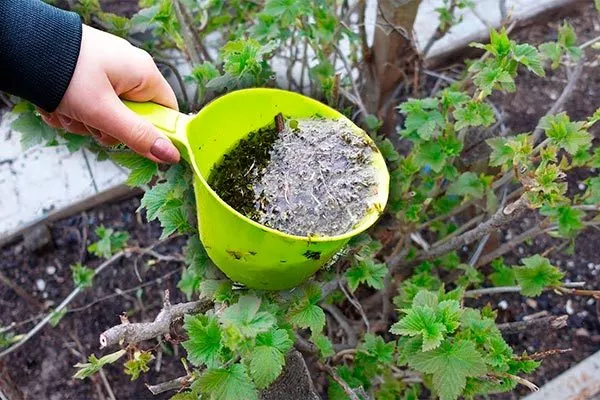
Fertilizing begins 2-3 years after planting. Nitrogen-containing fertilizers are applied early in the spring to stimulate foliage growth. For example, urea can be applied at a rate of 15-20 g per square meter. In the summer, organic fertilizers are used, and the bushes are watered with a 1:10 dilution of cow manure. In the fall, currants are fertilized with compost at a rate of 10 kg per square meter.
Loosening
Loosen the soil around the tree trunks after each watering or rain. Otherwise, a hard crust will form, preventing oxygen from reaching the roots. Loosening should be done to a depth of no more than 6-7 cm. Weeds should be removed simultaneously with loosening.
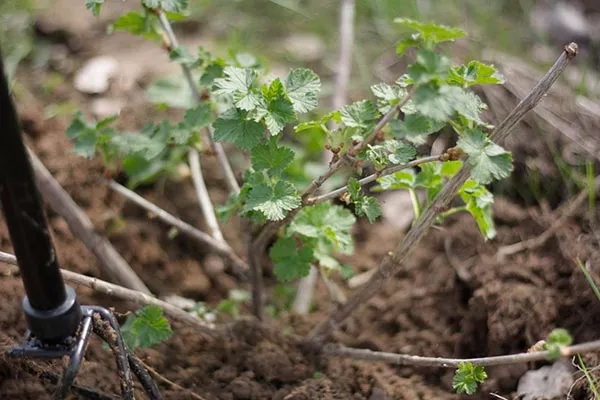
To slow the growth of weeds and prevent soil drying out, tree trunks are covered with a thin layer of straw, sawdust, peat, mown grass, etc. Mulching also reduces the need for loosening and watering.
Trimming
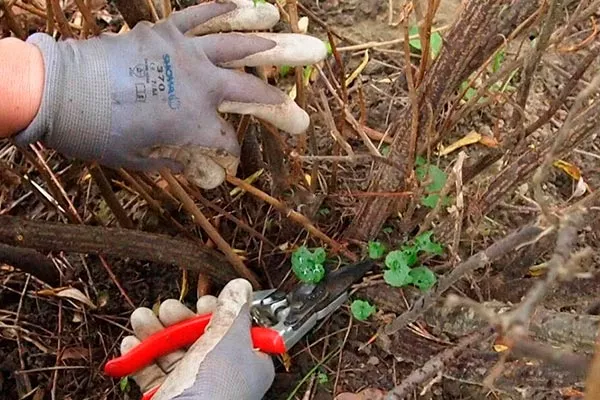
Bayana currants tend to become dense, so they require regular pruning and thinning. In spring and fall, sanitary pruning is essential, removing all damaged, dry, and broken shoots. During the first few years, crown shaping is also done, removing all weak and excess shoots.
Preparing for winter
In temperate climates, Bayana currants generally don't require insulation, as they are very frost-resistant. A layer of peat, humus, or other mulch around the trunk is sufficient. Covering the above-ground portion may be necessary in areas where frosts reach critical temperatures—below -35°C.
Diseases and pests
Bayana currants are highly resistant to diseases and pests. They are virtually immune to powdery mildew and anthracnose. Under unfavorable conditions, bushes can be affected by leaf spot. To combat this disease, you can use 1% Bordeaux mixture, Topaz, Skor, Fundozol, Fitosporin, and other fungicides.
The greatest danger to Bayana currants is posed by red-galled aphids, glasswings, and fireflies, which are controlled using insecticidal preparations such as Karbofos, Fufanon, Iskra, Trichlormetaphos, etc.
How to harvest?
For fresh eating, berries are picked when they've ripened (turned white) a week before harvest. These bunches can be refrigerated for two weeks, and berries sprinkled with sugar can last even longer. For compotes, pick unripe or slightly ripe berries; overripe berries should not be used, as they will cause the compotes to go sour.
Reviews
The Bayana variety is a worthy representative of white currant, reliable and undemanding. It is productive, easy to maintain, and quite tasty, suitable for growing in private gardens and on an industrial scale.