
The Augusta currant is one of the most sought-after and prized varieties of this berry. The bushes produce bright, deliciously sweet fruits. The Augusta variety earned its name due to its early ripening—its berries reach full ripeness and begin to swell in August.
Originators
In 2006, through hybridization of the Druzhnaya and Altayskaya Dessertnaya varieties, a new, versatile blackcurrant variety was created, named Augusta. This variety, distinguished by its excellent flavor, was developed in collaboration with renowned breeders, including:
- V. N. Sorokopudova;
- E. A. Melkumov;
- A. E. Solovieva;
- A. M. Belykh;
- A. A. Potapenko;
- as well as other employees of the Novosibirsk Zonal Fruit and Vegetable Research Station.
Appearance of the bush
Blackcurrants, which bear fruit in August, are characterized by moderate growth and a dense crown. The main varietal characteristics are as follows:
- The plant's leaves are large, rich green, medium thick, and decorated with thin gray scales, which gives the shrub a particularly decorative effect.
- The Augusta variety is a medium-sized bush, the height of which is usually 70-90 cm, but there are specimens that are much taller.
- The branches of the plant are of medium elongation, without pubescence, more mature shoots in the lower part have a striped color, mainly dark gray, they are slightly curved.
- During flowering, the bush is covered with small light pink buds.
- The bunches of this currant are distinguished by the central arrangement of the berries.
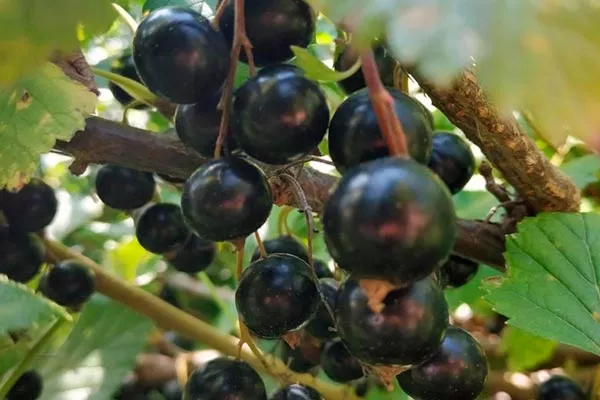
Berry indicators
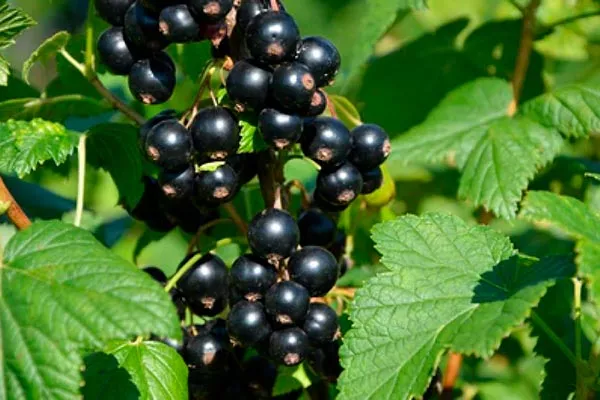
Round currant berries are distinguished by their shiny, deep black hue. Individual currants weigh between 1.6 and 3.2 g. Their medium-thick skin conceals a soft, delicate interior.
Characteristic features
To fully appreciate the potential of a variety, it is important to carefully examine all the characteristics that influence various factors, from fruit taste to productivity.
Taste qualities
Augusta currants boast a flavor that harmoniously balances tartness and sweetness, with a soft, delicate texture. They contain up to 18.8% soluble solids, up to 163.7 mg ascorbic acid per 100 g, and an acidity measured in titratable acids of up to 1.5%, with a sugar content of up to 14.0%.
Pectin substances are present in quantities of up to 1.9%. This currant variety received a tasting score of 4.4 points, indicating its excellent quality.
Properties and composition of August currant
Augusta currants aren't just a delicacy; they're also a source of nutrients for our health. These berries contain vitamins C and P, provitamin A, and folic acid, which strengthen the immune system, boost the body's defenses, and promote cell regeneration.
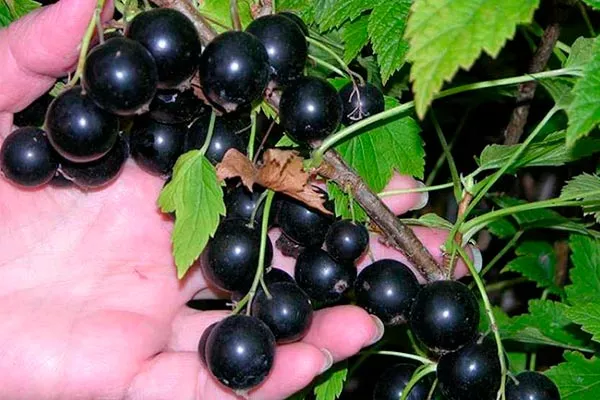
The berry is rich in important microelements, including potassium, iron, magnesium and manganese, which have a beneficial effect on the cardiovascular system, neutralize reactive oxygen species and promote the formation of new red blood cells.
Doctors highlight the following positive properties:
- Regular inclusion of August currant in the diet helps to strengthen health and maintain optimal performance of the body.
- Provides the body with the necessary vitamins and microelements for its proper functioning
- It is a powerful antioxidant that strengthens the immune system and slows down the aging process.
- The variety is beneficial for the cardiovascular system and reduces the likelihood of developing related diseases.
- Improves digestion and has a mild diuretic effect.
- Berries are rich in fiber, which promotes proper bowel function and prevents constipation.
Scope of application
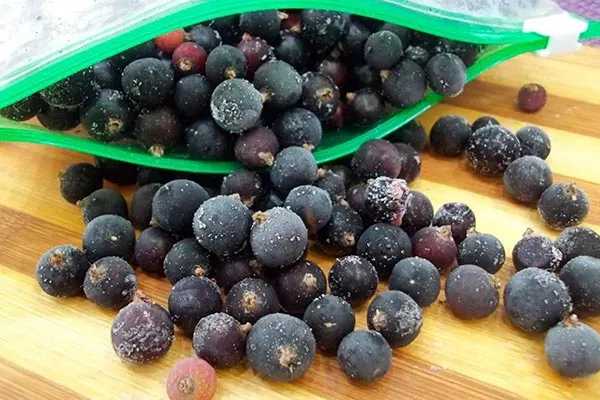
This variety is considered versatile—the berries are eaten freshly picked, mashed with sugar, made into jam, or added to compotes and baked goods. The fruits are excellent for both drying and freezing.
Ripening and fruiting
Blackcurrant "Augusta" is a versatile variety that is characterized by increased productivity in favorable summer weather conditions. Flowering and foliage appear on the bush almost simultaneously.
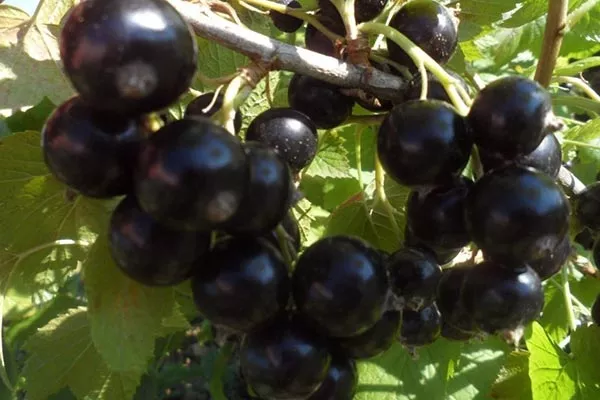
Fruiting branches are located in the upper part of the bush, and to stimulate the growth of new shoots, it is necessary to periodically remove dried elements.
Peculiarities:
- The first flower buds may appear on a one-year-old shoot, but the degree of their formation largely depends on weather conditions, local factors and agricultural practices.
- Black currants can produce fruit in one place for 12-15 years, with the maximum yield occurring in the fifth year after planting.
- If a young currant bush does not produce the expected harvest, you should consider moving it to a more suitable location.
- If currants stop producing fruit, it may be a sign of old age. This process is reflected in abnormal bud development, and the bark takes on a grayish tint.
Productivity
This shrub variety yields around 49.2 centners per hectare. However, under favorable weather conditions and with proper care, the yield can significantly exceed this figure, reaching 105 centners per hectare. On average, each bush produces approximately 1.9-3 kg of berries throughout the season.
Pollination
Augusta is considered self-fertile, but to increase yield, it is recommended to plant several bushes close to each other, which will ensure cross-pollination and have a positive effect on overall results.
Winter hardiness
The Augusta black currant is distinguished by its good winter hardiness. It easily withstands frosts and requires no additional protection.
However, to achieve maximum productivity, it is advisable to protect shrubs during the winter months. This is especially important in regions with frosty winters.
Landing
Planting procedures are virtually identical to those used for other blackcurrant varieties. However, there are some unique nuances that are important to be aware of.
- ✓ Soil pH should be between 5.5-7.0 for optimal growth.
- ✓ The depth of groundwater is at least 70 cm from the surface.
Selecting a location
For successful growth, blackcurrants prefer moist, nutritious soils mixed with organic matter. The plant does not tolerate groundwater levels less than 70-90 cm above the surface.
Other features for choosing a territory:
- Soils with a pH below 5.5 require the addition of lime or dolomite flour for optimal plant growth, otherwise the plant becomes vulnerable to fungal infections and leaf drop.
- Blackcurrants require direct sunlight. In the shade, their growth slows, and a lack of light leads to excessive leaf drop, stunted plant growth, reduced yield, and the formation of small, sour berries. This explains why the inner and lower parts of the bush branches are often bare.
- In the south, blackcurrants are often planted in lowlands where humidity levels are higher. However, waterlogging should be avoided here, as the plant, although it thrives on moisture, can die from excess water in the root zone.
- If possible, designate a separate space for growing crops. If space is limited, follow these guidelines:
- You can't plant black currants next to red ones;
- Onions and garlic are beneficial neighbors due to their smell, which is repulsive to kidney mites;
- gooseberries and raspberries are absolutely not suitable for this species;
- as neighbors you can choose herbs, jostaberry and apple tree;
- birch, walnut and smoke tree suppress the growth of neighboring currant bushes;
- Cherry reduces the yield of berries.
- The distance between incompatible crops should be at least 600-700 cm.
Preparing the berry patch
In anticipation of spring planting of the berry patch, soil preparation should begin in the fall, and if necessary, no later than two weeks before the expected planting.
Please take into account the following subtleties:
- The root system of most plants extends into the upper layers of the soil, no deeper than 40 cm; only a few powerful roots can reach a depth of two meters.
The roots spread 50-60 cm from the center of the bush; a wider spread is observed only in light soils. These characteristics are important when planning a berry patch. - Before planting, thoroughly loosen the soil in the area where the berry patch will be, leveling it if necessary. A slight slope is acceptable.
- Weed rhizomes are removed from the soil and crushed into small pieces. Organic fertilizer (compost) is then added at a rate of 10-12 kg per square meter.
- If the soil is dense, lowland or transitional peat is added, as well as sand, to reduce the soil's acidity. Lime or dolomite flour can be used for this purpose.
- The spacing between blackcurrant plants is set as follows:
- between the plants themselves – 150 cm,
- between rows – 200-300 cm.
- For planting, dig holes 30-45 cm deep and 50-65 cm wide. Add the following to each hole:
- 8-10 kg of humus;
- granulated superphosphate according to the instructions;
- potassium sulfate.
Landing plan
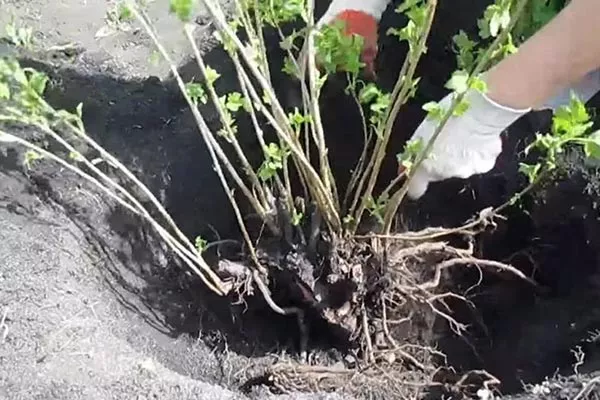
The planting instructions include the following steps:
- Remove some of the soil from the dug and prepared hole.
- Place the seedling in the center of the hole at an angle of no more than 45 degrees, which promotes the development of more lateral roots, improves the nutrition of the bush and promotes the formation of strong lateral stems.
- Distribute the roots evenly.
- Level the planting mixture, gently compacting the substrate to avoid the formation of air pockets.
- After filling the hole, gently compact the soil with your foot. Add more potting soil.
- Form an earthen rampart around the bush.
- Water the seedlings generously, using 8-12 liters of water.
- After the moisture has been absorbed, cover the surface with dry compost.
- Loosen the soil between the rows to a depth of 20 cm.
Nuances
The details of planting work depend on the period and the type of seedling purchased (closed root system or open root system):
- Planting in autumn. To plant currants in the fall, complete the process three weeks before the first frost. Otherwise, the bush won't have time to establish its roots and will die. After fall planting, currant shoots don't need to be pruned; they'll remain in their natural state.
Only in spring is the bush trained, removing all shoots except one, the healthiest one located on the outer side of the bush. This shoot is shortened by three buds to stimulate growth. Diseased and underdeveloped shoots are removed completely. - Planting in spring. Planting currants with seedlings in spring isn't significantly different from planting in autumn. However, while you can prepare a hole 20 days before planting at the end of the season, this is more difficult in early spring, as the currants need to be planted before the buds open. By this time, the soil hasn't yet warmed up, making the process of breaking up the soil and improving fertility more labor-intensive.
- Planting in summer. During the summer, it's recommended to plant cuttings only in exceptional cases and only in areas with a mild climate. Planting bushes with protected root systems is only permissible if the forecast for the next two weeks calls for cloudy, rainy weather.
Summer is not a good time for currants, but it is an excellent period for rooting cuttings and propagating plants by layering. - With a closed root system. Containerized plants can be placed in the garden throughout the season, except in southern regions, where this should not be done during hot weather. Carefully remove the seedling from the container, being careful not to damage the root ball.
Place it in the center of the hole so that the root collar is at the desired depth. Then, proceed as described above. However, these plants require watering several times to ensure the roots are well saturated.
Features of care procedures
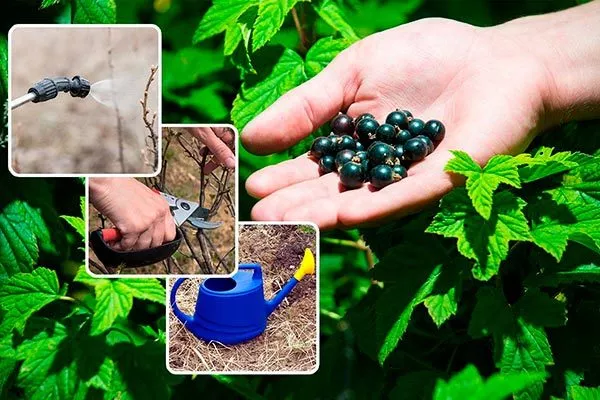
To achieve maximum yield from the Augusta currant variety, it is necessary to provide it with careful care throughout the entire period of active vegetation:
- During dry summers with no precipitation, supplemental irrigation is necessary to ensure the plants don't suffer from moisture stress. The best source of water for this is sprinkler irrigation. During this period, water the currants every 7-8 days.
- Particular attention should be paid to the condition of the soil during berry ripening to avoid it drying out.
- In spring, the first watering should be done at the end of March, after the snow has completely melted. For this, use warm water (60-70 degrees Celsius), which not only warms the soil and promotes thawing but also kills fungal spores and pest larvae.
- The second irrigation should be done towards the end of spring, and the final and most abundant one should be done before wintering.
- In order for the August bush to bear fruit abundantly, it needs regular feeding:
- During the spring period, when the bush is actively developing, it needs nitrogen fertilizers.
- When the time for budding comes, it is advisable to use complex compositions.
- In autumn, after pruning the bush, it is recommended to use nitrogen-phosphorus fertilizers in concentrated form.
- In August, it's critical to remove dead and diseased branches. Young shoots should be cut back by 5 cm. Towards the end of August, loosen the soil around the tree trunk to improve oxygenation.
Storage
For storing currants that you plan to use soon, you can choose room temperature. The berries will retain their firmness and freshness for two to three days. If the room temperature is higher, it's preferable to transfer the currants to a refrigerated unit and place them in the lower section.
Diseases and pests of currants
The Augusta variety is distinguished by its resistance to various diseases and insects, including powdery mildew and anthracnose. It is also resistant to septoria leaf spot and bud mite.
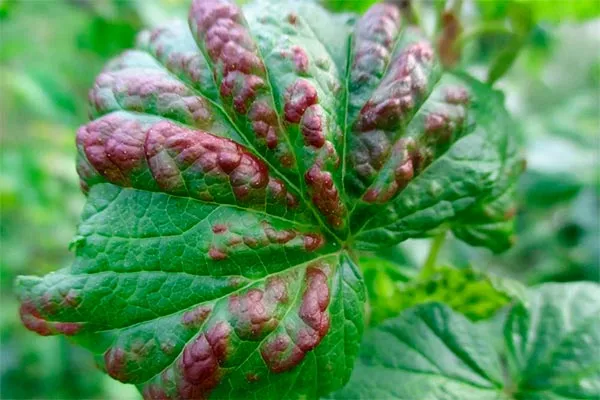
Regular inspections and adequate preventative measures will help prevent other problems with this plant.
Positive and negative qualities
The currant variety Augusta is loved for a number of advantages:
This currant has no obvious disadvantages, but without proper care it can become prey to pests.
Reviews
Augusta is a blackcurrant with very large, round berries that have a sweet-tart flavor but an impeccably strong aroma. The bushes are small, making harvesting fairly easy; the key is to pick the bunches carefully to avoid breaking off the berries.