
Ariana blackcurrant is a popular domestic variety with large, glossy berries. It's easy to grow, productive, and suitable for a wide variety of purposes. This variety is ideal for both small gardens and commercial cultivation.
Description of the variety
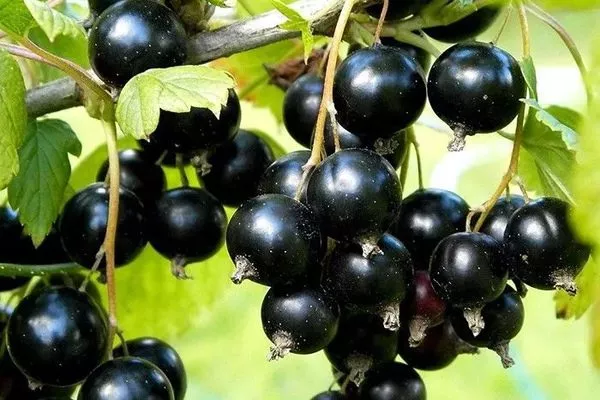
The Ariana currant bush is medium-sized and gently spreading, reaching a height of 1.5 m. The leaves are large and bright green.
Brief description of fruits:
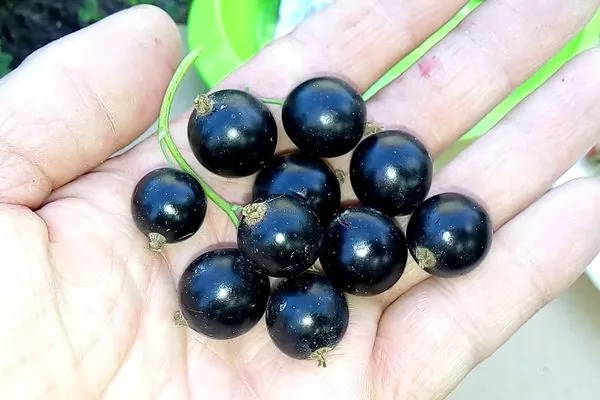
- Coloring: dark purple.
- Form: rounded, ribbed.
- Weight: 2.2-2.5 g.
- Pulp: jelly-like, with small seeds.
- Skin: thick.
The history of the Ariana variety
Black currant Ariana was developed at the South Ural Research Institute of Fruit, Vegetable, and Potato Growing (Chelyabinsk). The variety was created by crossing two currant varieties: "Altai Dessert" and "Stakhanovka."
Taste and purpose
The berries have a sweet and sour taste, with characteristic blackcurrant notes. The tasting score on a 5-point scale is 5.
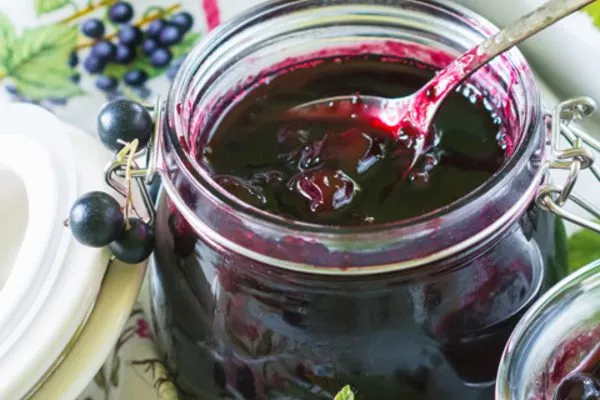
The berries have a universal purpose; they can be used to make jam, preserves, jellies, desserts, and various preserves.
Characteristics
The Ariana blackcurrant has excellent agronomic characteristics, allowing it to be grown in almost all regions of the country.
Specifications:
- Ripening time: mid-early.
- Fruiting period: from the end of June to the beginning of July.
- Average yield: 2.5-2.9 kg from one bush.
- Early fruiting: The first harvest is collected 2-3 years after planting.
- Frost resistance: up to -35°C.
- Disease resistance: very high resistance to powdery mildew, fairly high resistance to anthracnose and leaf spot.
- Pest Resistance: quite high to spider mites.
Pros and cons
The Ariana blackcurrant has both advantages and disadvantages. Before planting this variety in your garden, it's a good idea to learn about all its pros and cons.
Landing
To ensure that currants grow well and bear fruit, they need to be planted correctly—choose a good location, select high-quality seedlings, and plant them according to accepted technology.
Selecting a site
The growth and development of a bush, its yield, and its health largely depend on growing conditions. It's important to select a good planting site.
Site requirements:
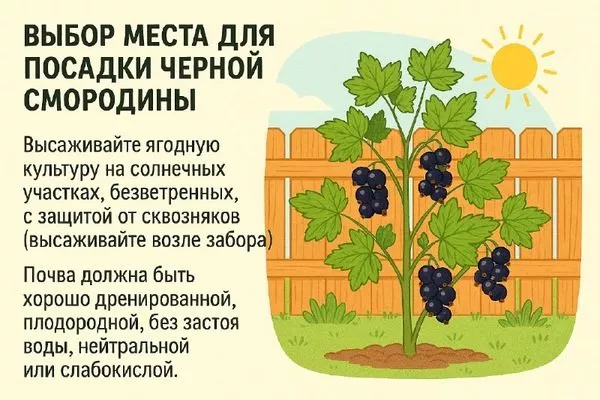
- Good lighting. The Ariana currant produces best in sunny locations, but can also grow in light partial shade. The more shade, the lower the yield.
- Absence of gusty winds. Currant bushes don't tolerate cold northern and eastern winds well; an obstacle on this side is preferable. A good solution is planting near a fence or buildings.
- Low groundwater levels. They should not be closer to the surface than 1.5-2 m, otherwise the roots of the bushes will be affected by rot.
If planting on a sloping site, it's recommended to plant shrubs across the slope to prevent soil erosion. If the slope is steep, retaining walls or terraces should be created.
Site preparation
The planting area is prepared in the fall by digging the soil to the depth of a spade. Fertilizers and other components that improve the soil composition and adjust its acidity are added during the digging process, if necessary.
How to improve soil quality:
- Sand and organic matter are added to heavy clay soils.
- In light sandy soils - clay and peat.
- In acidified ones - slaked lime, dolomite flour or wood ash.
- In slightly acidic soils - high-moor peat.
Selecting a seedling
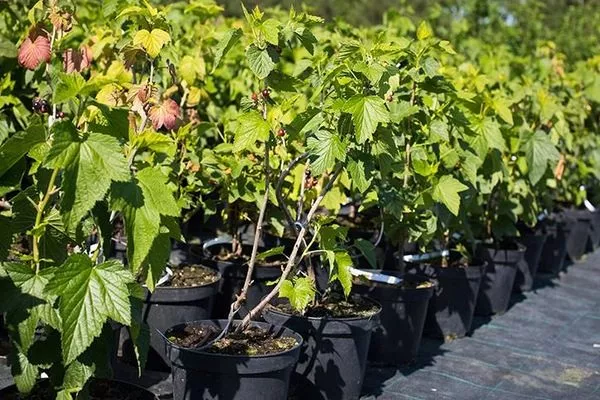
It's best to purchase currant seedlings from specialized nurseries or reputable suppliers. Buying from random sellers is risky—the seedlings may not be the correct variety, and several years of harvesting will be wasted.
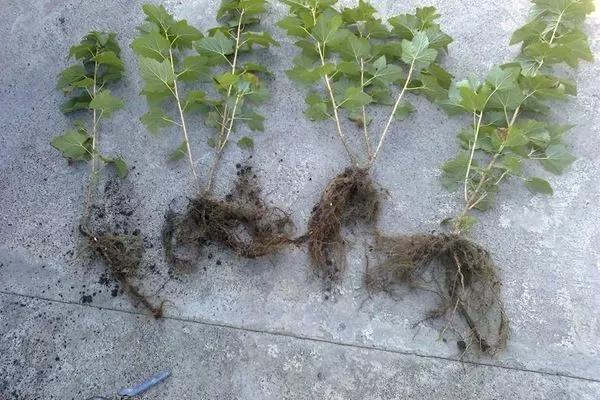
Signs of a good bare-root seedling:
- Height — 1.5 cm.
- Age — 1-2 years. Older seedlings take root less well.
- Roots — well-developed, with at least 3 main shoots 15-20 cm long. The roots should be free of defects, rotten or dry areas, growths, or signs of disease.
- Escapes — 2-3 pieces with a diameter of 5–8 mm.
- Bark – smooth, without cracks or damage. No liquid should leak when pressed on the stem.
- Vaccination site(if the seedling is grafted) - well-grown, without signs of decay.
Container-rooted seedlings have their roots in the soil—in a pot or container—so their quality cannot be assessed. However, you can ask the seller to remove the seedling to inspect the underground part. The root ball should be densely intertwined with roots, indicating that the plant will quickly and well establish itself.
Preparing the seedling
The procedure for preparing seedlings depends on whether they have open or closed roots. In the former case, the root system must be examined and treated with particular care.
Preparing currant seedlings with open roots:
- The root system is washed to remove old soil from below.
- The roots are carefully examined to identify dry, rotten and damaged shoots - they are cut back to healthy tissue.
- About 2 hours before planting, the roots are immersed in water or a solution of a root formation stimulator, for example, Kornevin, Zircon, etc.
- The seedling is shortened to a height of 60-70 cm to make it easier for the roots to take root in a new location.
It's best to plant bare-root seedlings immediately after purchase. Otherwise, you'll need to ensure they're stored properly.
How to store seedlings:
- The roots are wrapped in a wet cloth and covered with plastic wrap. The cloth is periodically moistened to prevent the roots from drying out.
- The optimal temperature is up to +4 °C.
- A cool place such as a basement, covered balcony, or insulated veranda is suitable for storing seedlings.
When storing, it is important to avoid:
- overdrying of the roots - after this they lose the ability to absorb moisture, and survival rate deteriorates.
- overwatering - it provokes the appearance of mold on the roots, rotting, and fungal infections;
- overheating - causes swelling of the buds, premature development and weakening of the plant.
Preparation of currant seedlings with closed roots is minimal. Currants in containers, pots, or peat cups are watered to soften the soil, which allows for easy removal of the seedlings from their planting containers.
Preparing the planting hole
When preparing a hole for planting black currants, take into account the size of the root system - it should fit freely into the hole.
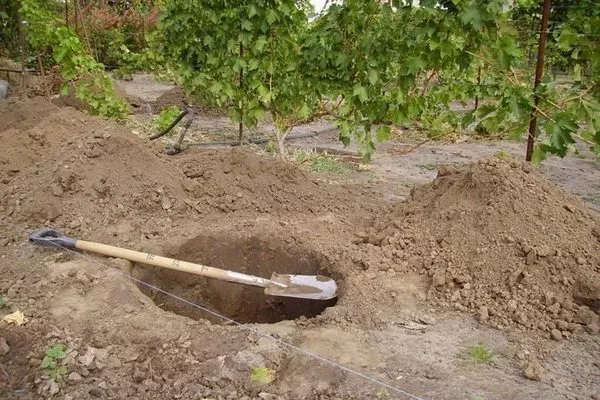
Features of preparing a planting hole:
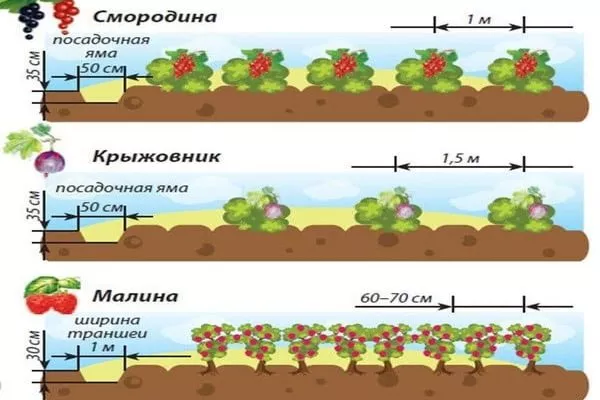
- The average hole size is 50 x 50 x 50 cm. Its depth varies depending on the soil type. If the soil is sandy, the hole is made deeper—60-70 cm; if it's clayey, 40-50 cm.
- It is recommended to loosen the bottom of the hole to a depth of 10–15 cm so that the roots take root better.
- A mixture of organic matter (8-10 kg of humus or compost), mineral fertilizers (200 g of superphosphate and 50 g of potassium sulfate) is added to the hole.
- Drainage material, such as fine crushed stone, should be placed at the bottom of the hole, especially in clay soil. The layer thickness should be 5-7 cm. In sandy soil, drainage is not required; instead, moisture should be retained by adding a small amount of clay to the bottom.
Pour 10-15 liters of water into the planting hole and leave it to “simmer” for 2-3 weeks so that the fertilizers dissolve and the soil settles a little.
Planting dates
Ariana blackcurrant is planted in the spring—in April—or in the fall—in late September to mid-October. However, seedlings with closed roots can also be planted in the summer.
Optimal planting time for different regions:
- Moscow regionThe ideal time for planting is early September.
- Leningrad OblastPlanting is best done in late August or early September. In spring, plant in May to avoid the risk of recurrent frosts.
- Krasnodar KraiThe optimal time for planting is October or early November. In spring, planting occurs in late March or early April.
- UralCurrants are planted in late August or early fall. It's important that the air temperature doesn't drop below 5 degrees Celsius.
- SiberiaPlanting takes place at the end of August or the beginning of September.
Planting in the ground
It is recommended to plant when there is no sun to prevent young plants from getting burned.
Landing features:
- The soil mixture previously poured into the hole is raked to form a small earthen mound.
- The seedling is not placed vertically, but at a 45° angle—this encourages the formation of additional roots and shoots. Its roots are carefully straightened to prevent them from bending upward or sideways.
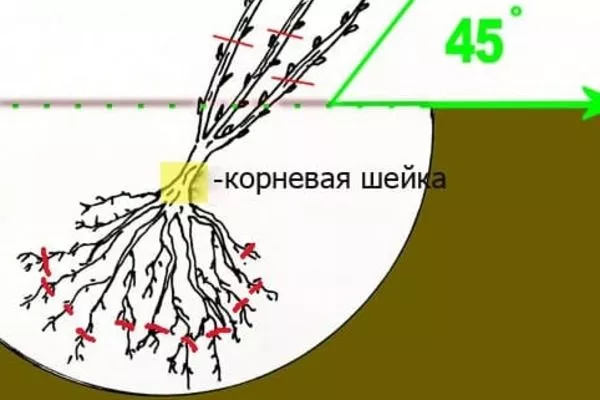
- Fill the empty space in the hole with fertile soil, compacting it periodically. After planting, the root collar should be buried 5-6 cm deep. Form a root circle around the seedling.
- The seedling is watered with warm, settled water, and when it is absorbed, the soil is mulched with humus, peat, sawdust, etc.
If you need to transplant an already mature currant bush, familiarize yourself with the rules and nuances of this procedure. Here.
Care
To ensure the Ariana currant grows well and produces fruit, it requires proper care. The bushes need to be watered, fertilized, pruned, insulated, and sprayed if necessary.
Watering
Blackcurrant Ariana requires moderate watering, it does not tolerate stagnant water and is very sensitive to drought.
Features of watering Ariana currants:
- The watering requirement depends on the plant's age. Young plants will need 10-15 liters of water, while mature plants will need 20-30 liters.
- The amount of watering depends on the soil type. Sandy soils drain too quickly, so watering should be frequent but not heavy. Clay soils can be watered less frequently, as they tend to retain water.
- When watering, pour water under the roots, trying not to get it on the leaves, as dampness promotes the development of fungal diseases.
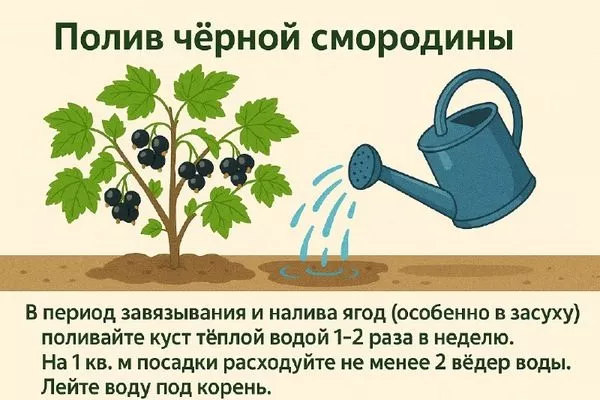
- The frequency of watering depends on the growing season. During the active growth period, currants are watered on average 1-2 times a week, during flowering and ripening, 2-3 times a week, and in early autumn, once every two weeks. During rainy weather, the amount and frequency of watering are reduced.
- It is recommended to water currants in cloudy weather, during the day or in the evening, since in the heat of the day the water evaporates too quickly.
Loosening
The soil around the tree trunk is loosened as needed, usually after watering or heavy rainfall. This procedure ensures oxygen access to the roots, prevents the formation of a hard soil crust, and removes weeds that absorb nutrients and moisture intended for the currants.
Features of currant loosening:
- The optimal loosening depth is 6-8 cm near the branches and 10-12 cm between rows. Avoid loosening near the trunk to avoid damaging the roots.
- If the soil is compacted due to heavy watering or rain, you must first remove the mulch - humus, compost or peat - by incorporating it into the soil when loosening.
- In a diameter of 40-50 cm, the soil is loosened shallowly using hoes or light hoes, and near the shoots, it is carefully loosened with a rake so as not to damage the roots.
Fertilizing
Ariana blackcurrants are fed alternately with mineral and organic fertilizers. The soil is watered beforehand to prevent root burn.
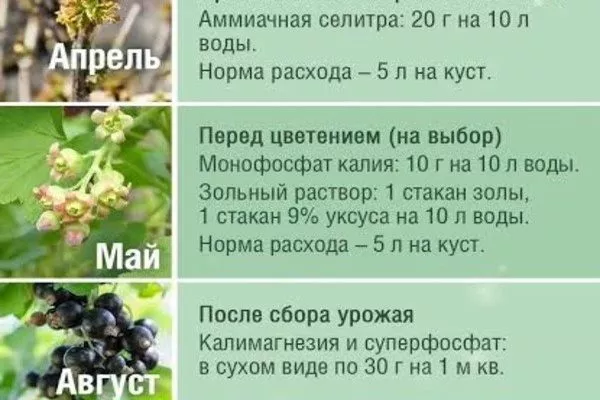
Approximate feeding regime:
- In early spring, nitrogen-containing compounds, such as urea, are applied at a rate of 40 g per plant. You can find more details on spring crop feeding here. Here.
- At the fruit setting stage, complex mineral fertilizers are applied, for example nitrophoska - 70 g per 1 sq. m.
- After harvesting the berries, the bushes are fed with phosphorus-potassium compounds, for example, you can add superphosphate - 50 g, and potassium sulfate - 30 g per bush.
- In autumn, add humus or compost – 10 kg under each bush to restore soil fertility.
- You can also feed currants with a weed infusion—it contains a complex of macro- and microelements in an easily accessible form. It's best to prepare the infusion using nettles. The nettles are soaked in water and left to ferment for a week. The resulting infusion is diluted with water at a ratio of 1:10 and the bushes are watered with the solution.
Trimming
Currant pruning is done in the spring (March-April) and in the fall (October-November) to prevent diseases, increase yield, and, if necessary, rejuvenate the bush. For pruning thin branches, use pruning shears with sharp blades, and for thicker branches, use loppers.
Spring pruning is carried out before bud break. Frost-damaged and weak shoots are trimmed, and the current year's fruiting branches are shortened by 5-7 cm. Young shoots whose growth has not yet become woody are shortened by the same length as the growth.
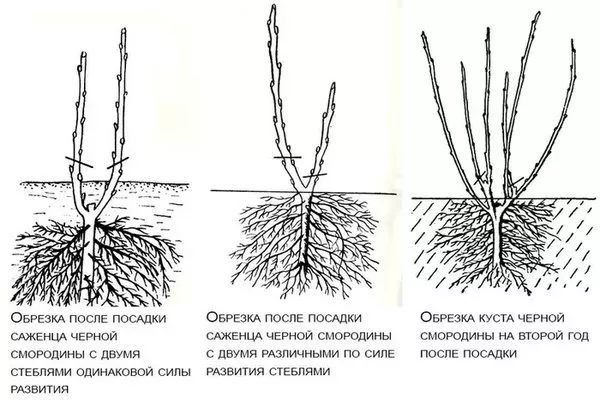
Autumn pruning is carried out after the leaves have fallen but before frost sets in. It's essential to thin out the center of the bush to ensure adequate sunlight and air circulation between the branches. Also, prune all basal branches that thicken the bush but don't bear fruit. You can read about other autumn bush care tips. Here.
Pest and disease control
The Ariana blackcurrant has a strong immunity, but under unfavorable conditions it can be affected by septoria (white spot), anthracnose, powdery mildew, and other diseases of fruit and berry crops. To combat these, various systemic preparations are used, such as "Skor," "Rayok," and "Topaz." For prevention, the bushes are sprayed with a 1% Bordeaux mixture.
The most common pests affecting Ariana currants are bud mites, spider mites, and currant gall mites. To combat mites, insecticides and acaricides, such as Fufanon-Nova, colloidal sulfur, and other insecticides are used. Read on to learn how to get rid of aphids on your bushes. HereSystemic insecticides are used against other insects: Actellic, Kinmiks, and others.
Harvesting and storage
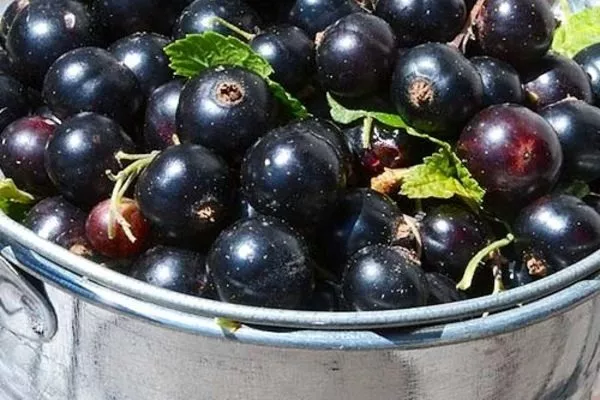
Berry picking begins in late June and early July. Harvesting takes place in dry weather, as wet berries spoil quickly. Berries are stored in shallow containers to prevent them from crushing each other.
Harvesting is done in 2-3 stages, as the fruit ripens unevenly. The harvested berries are placed in containers and stored in a cool place—a cellar or refrigerator. The fruit can also be frozen. Ripe berries retain their marketable appearance in the refrigerator for no more than 5 days.
Reviews
The Ariana blackcurrant is an excellent choice for those planning to grow this crop in their own garden. This large-fruited, productive, and easy-to-grow variety is ideal for both garden plots and small farms.