
The Agata blackcurrant is a large-fruited variety bred in Russia. Although it was bred only recently, it has already impressed amateur gardeners. This currant combines excellent flavor with excellent characteristics, making it suitable for growing in regions with harsh climates.
The history of the creation of the Agatha currant
The Agata currant was developed by breeders from the M.A. Lisavenko Siberian Research Institute of Horticulture. It was obtained by crossing the Lepaan Musta and Seyanets Golubki varieties. Authors: I.P. Kalinina, Z.S. Zotova, N.I. Nazaryuk, I.L. Teslya, and M.A. Pershina. The Agata currant has been undergoing state variety testing since 2003. The variety was added to the State Register in 2017.
What does the bush look like?
The bushes are compact but well-developed, with straight, medium-thick shoots. Young shoots are green, while mature shoots are dark brown with a glossy sheen. Medium-sized buds with pointed tips are solitary and brown.
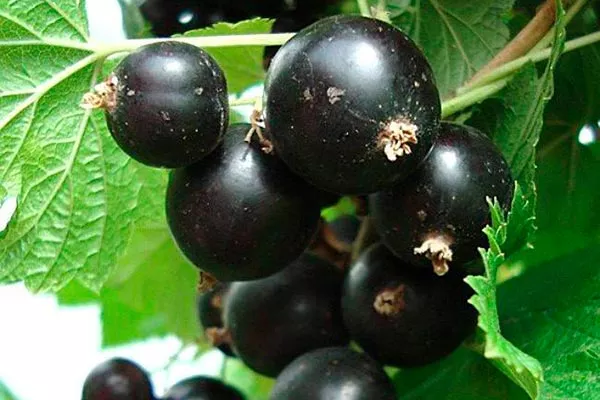
The leaves are large to medium-sized, bright green, three- or five-lobed, convex, with a wrinkled surface and well-defined venation. The flowers are large, cup-shaped, and pale pink.
Description of fruits, their taste and purpose
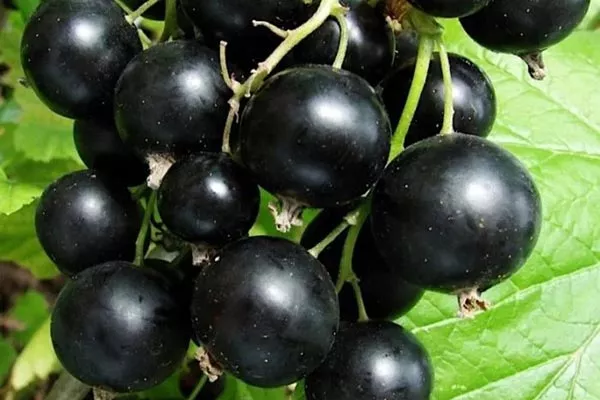
One of the main characteristics of the Agata variety is its very large berries. They ripen simultaneously, have a medium seed count, and have a dry separation.
Description of berries:
- Color - black.
- The shape is round.
- Weight: 1.7-3.8 g.
Chemical composition:
- soluble solids - 11.3-15.1%;
- sugars - 6.3-8.5%;
- titratable acidity - 2.5-3.2%;
- ascorbic acid (vitamin C) - 86.5-125.4 mg/100 g;
- pectin substances - 0.9-2.2%.
Berries are suitable for all purposes. They can be frozen, canned, dried, or used to make juices.
Main characteristics
The large-fruited currant Agata attracts gardeners not only with the taste and size of its berries, but also with its excellent agricultural characteristics.
Productivity
The Agata variety is considered a high-yielding variety. Average yields in commercial cultivation range from 10-13 tons per hectare. Approximately 3-4 kg of berries are harvested from a single bush. This variety bears fruit reliably every year, without interruption.
Ripening time
The Agata currant is an early-ripening variety. This self-fertile variety ripens its berries very uniformly. The exact ripening time depends on the region's climate; in the south, Agata currants can be harvested as early as June.
Frost and drought resistance
The Agatha currant is highly frost-resistant; the bushes can withstand temperatures as low as -43°C. Severe frosts can negatively impact yield, but rarely cause plant death, especially in the presence of snow cover. The variety is also highly drought-resistant.
Disease resistance
The Agata variety is characterized by high resistance to most fungal diseases. This currant, in particular, is highly resistant to powdery mildew and spotted spot.
Pros and cons
The Agata currant has many advantages that appeal to amateur gardeners. Before planting this variety in your garden, it's a good idea to familiarize yourself with all its advantages and disadvantages.
Landing features
To ensure that the fast-growing Agatha currant takes root as quickly as possible, it must be planted correctly—choosing the right location and high-quality planting material.
How to choose seedlings?
Agata currants are available in specialized nurseries and stores. When choosing planting material, it's important to pay attention to the characteristics that will help you determine the quality of a particular seedling.
What do healthy currant seedlings of Agatha look like?
- Bare-rooted. Optimal age: 2 years. Stems free from defects and signs of disease. The seedling should have 2 or 3 strong shoots about 25 cm long. They should be alive, but without unfurled leaves. Roots should be well-developed, woody, and 25 cm long. There should be no leaves on the shoots.
- Container-grown seedlings (in containers). These seedlings, on the other hand, should have well-developed leaves and shoots 40-50 cm long.
Selecting a site
This variety prefers well-lit areas but can also grow in partial shade. In heavily shaded areas, bush growth slows, and fruiting ceases altogether. Lowlands and waterlogged areas should be avoided. High groundwater levels should also be avoided; the water table should not be closer than 1 meter to the ground surface.
Currant bushes grow best in light, moisture- and air-permeable soils. They do not thrive in highly saline soils, so currants should be planted away from compost pits.
Soil preparation
The soil is dug over in the fall, adding humus, rotted manure, or other organic matter. Sand is added to heavy clay soils, and wood ash, slaked lime, or dolomite flour to acidic soils. The optimal pH level is neutral; currants do not grow well in acidic soils.
Preparing the planting hole and planting the seedling
Currant planting holes are dug approximately one to six weeks before planting, at least two to three weeks in advance. This allows the soil and potting mix to settle.
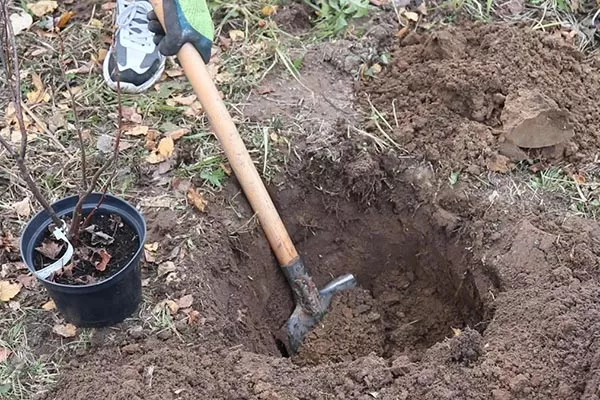
Landing features:
- For planting, dig holes 40-45 cm deep and 50 cm in diameter. A trench can also be dug if planting multiple shrubs. The topsoil obtained during the digging process is set aside for use in preparing a nutritious potting mix.
- Fertile soil is mixed with 3-4 kg of organic matter, 200 g of complex mineral supplements or 150 g of superphosphate are added, and 200 g of wood ash or 30 g of potassium sulfate are also added to the mixture.
- I fill the hole one-third full with potting soil, which is then sprinkled with fertile soil on top—this will prevent the young roots from being burned by contact with fertilizer.
- The seedling is planted so that its root collar is 3-5 cm below the soil surface. The soil is compacted to eliminate all voids between the roots. If necessary, add more soil or remove excess soil.
- A 5-cm-deep watering trench is dug around the bush, matching the diameter of the planting hole. The planted seedling is then watered. 10 liters of water is sufficient. After watering, the tree trunks are mulched with manure or compost—this provides additional nutrition and helps retain moisture in the soil.
Currants are planted from late September to late October. The optimal daytime temperature is 10 to 15°C. The first frost should be at least 2–3 weeks away. Currants can also be planted in the spring, before bud break.
Good and bad neighbors
Blackcurrants can be planted near strawberries, blueberries, onions, garlic, herbs, gooseberries, jostaberries, and honeysuckle. Apple and pear trees are considered good neighbors for currants. Junipers and raspberries are considered unfavorable neighbors.
Care instructions
The Agatha currant requires standard care; it's simple, but it must be done regularly. It's important to water the bushes regularly, maintain a consistent fertilizing schedule, and don't forget preventative spraying.
Watering
The Agatha currant requires moderate watering; it does not tolerate overwatering. The bushes' increased water requirements occur during flowering and berry formation. When the soil dries out, gently loosen it to ensure oxygen reaches the roots.
- Water your plants early in the morning or late in the evening to minimize water evaporation.
- Increase the frequency of watering during the flowering and berry formation period to 2 times a week, provided there is no rain.
- Reduce watering after harvest to once every 2 weeks to prepare the plant for winter.
Top dressing
Currants are fertilized twice a year: in the spring before active growth begins and in the fall after fruiting. Organic and mineral fertilizers are added.
Trimming
Blackcurrant bushes are pruned regularly to maintain a compact shape and attractive appearance. Pruning also promotes fruiting.
Preparing for winter
Before wintering, the bushes are pruned and the trunks are covered with a thick layer of humus, sawdust, or other mulch. The layer thickness is about 10 cm.
Diseases and pests
The Agatha blackcurrant has a fairly strong resistance to fungal diseases and is virtually immune to powdery mildew. However, under unfavorable conditions, the bushes can be affected by certain fruit and berry diseases.
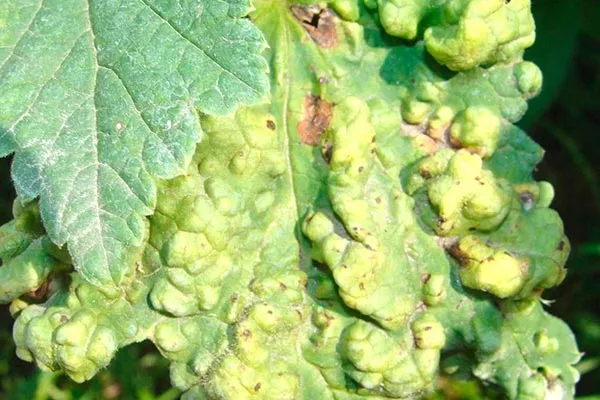
If symptoms of septoria, anthracnose, gray mold, and other diseases are detected, the bushes should be immediately treated with fungicides, such as Fufanon, Alatar, Biotlin, etc. It is important to regularly inspect the bushes to detect signs of disease early and take appropriate measures.
The most dangerous pest for the Agata variety is the bud mite. Chemicals such as Envidor and Nissoran are used to control it. Biological products such as Fitoverm, Akarin, Bitoxybacillin, or their equivalents can also be used.
Harvesting and storage
Berries begin to be picked when they turn a deep black. Ripe berries are easily separated from the stems. Typically, not all the berries are picked at once. The harvest begins when as many as possible have ripened. But you can't wait too long—overripe berries burst in the rain and fall to the ground.
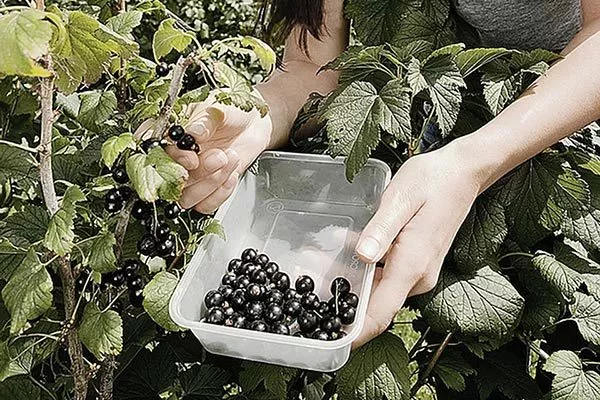
It's not recommended to pick berries from the bunch; it's better to separate them individually, carefully removing them from the stems. For storage, the berries are sorted and washed. They are then dried or frozen. Currants also keep well in the refrigerator, but for no more than 5 days.
Reviews
Blackcurrant Agatha is a promising new variety that is sure to appeal to blackcurrant enthusiasts. Planting this large-fruited variety will produce blackcurrant bushes with consistently high yields and delicious berries.