
The Sunberry blueberry is an old American variety used primarily for culinary purposes. Its berries are practically tasteless, yet very nutritious. This interesting plant can not only bear fruit but also serve as a decorative feature in your garden.
Who and when developed the Sunberry variety?
The Sunberry blueberry was bred in the United States by Luther Burbank in 1905. The American breeder crossed two species of nightshade—African nightshade and European nightshade.
Description of Sunberry blueberry
Sunberry is a herbaceous perennial. In temperate climates, it is often grown as an annual.
Bushes
Sunberry blueberry bushes grow tall and spreading. They have a rather decorative appearance and can be used in landscape design.
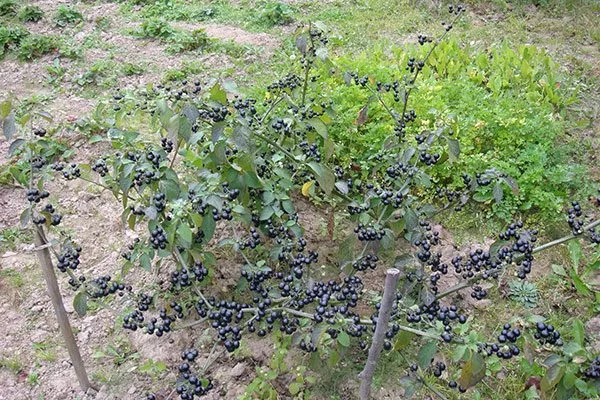
Bush characteristics:
- Height — 1-2 m.
- Diameter — 1.5 m.
- Branches - thick and strong, tetrahedral.
- Leaves - oval, pointed at the ends.
- Flowers — white, star-shaped, small, collected in inflorescences.
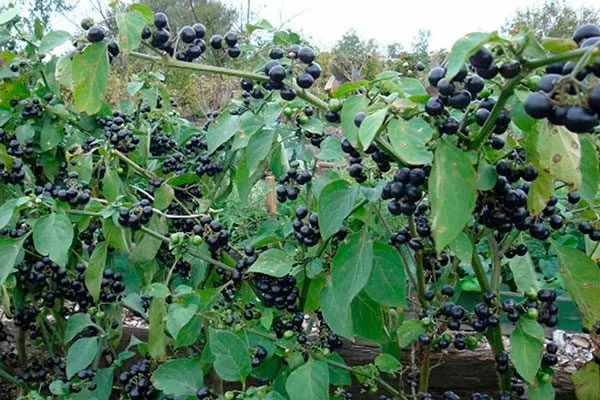
The flowers of the Sunberry blueberry look like potato flowers.
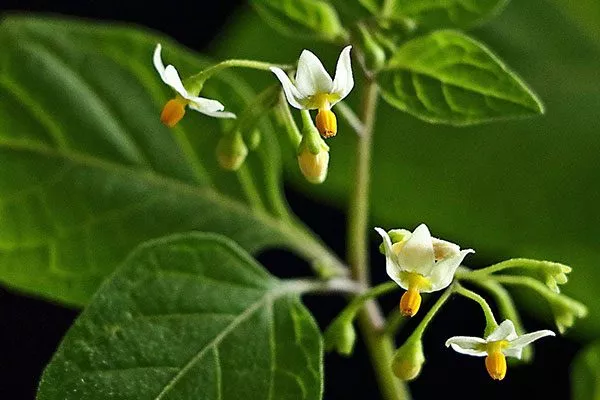
The plant blooms almost continuously from late June until autumn. Each cluster contains 10-15 flowers.
Fruit
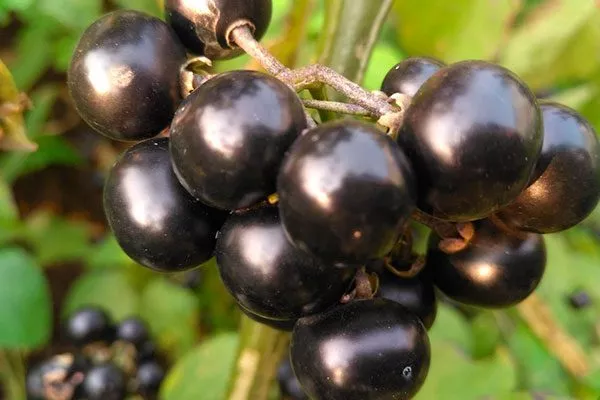
Sunberry blueberries produce relatively large, glossy fruits with excellent marketability.
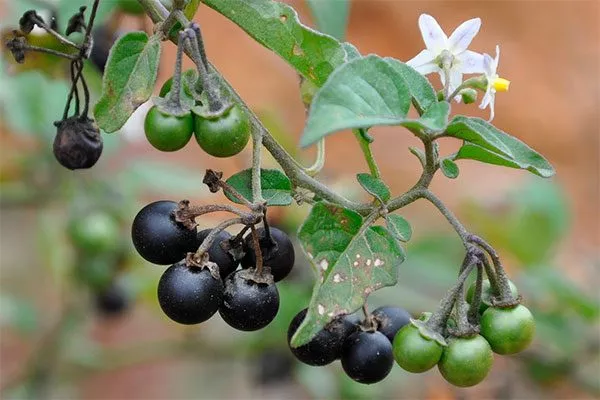
Brief description of fruits:
- Color - black with a slight inky tint.
- Weight of one berry - 2 years.
- Form - rounded.
Characteristics
Sunberry blueberries are a late-ripening variety. The berries ripen in early autumn. This variety is known for its high yield, with gardeners harvesting approximately 10 kg of berries from a single bush.
Beneficial properties and harm
Canadian blueberries are rich in vitamins A, C, and B vitamins, as well as various trace elements such as calcium, magnesium, copper, potassium, manganese, iron, silver, zinc, selenium, and others. They are very beneficial for the immune system.
With regular consumption of Sunberry blueberries:
- blood pressure is normalized;
- skin elasticity increases;
- vision improves;
- wounds, burns, and abrasions heal faster.
Sunberries are recommended for gastritis, constipation, and gastrointestinal spasms. However, Canadian blueberries are very high in calories—220 kcal per 100 g—so they are not recommended for people who are obese.
Potential harm of Sunberry blueberries:
- risk of allergic reactions;
- If you eat more than 200 g of berries per day, diarrhea may occur;
- It is dangerous to eat unripe fruits - they contain solanine (a toxic substance).
Uses and applications of berries
Canadian blueberries aren't particularly tasty when eaten raw. They lack acidity and sweetness, but have distinct nightshade notes. They also lack aroma. They're not eaten raw. Cooking them does impart a distinct flavor, but it's still lacking in richness.
Sour fruits, such as quince or the fruits of semi-cultivated trees, as well as flavorings, lemon and orange zest, help to correct the situation.
Sunberry blueberry is used:
- In cooking, berries are used to make jam, smoothies, kissels, and compotes. They can also be frozen and used in baked goods.
- The ripe, inky black berries can be used to color Easter eggs.
- The plant can be used as an ornamental plant for garden decoration. The bushes bear flowers, green, and black berries, creating a beautiful appearance.
- As a medicinal remedy, the juice is used to gargle and make poultices for wounds and skin conditions. Dried leaves are used to make a sedative and decoctions for treating bronchial asthma.

Before consuming Sunberry fruits, leaves, or stems for medicinal purposes, it is essential to consult a physician.
Pros and cons of growing the variety
Blueberry forte isn't particularly popular in Russia; it's a fairly rare plant here. It has both advantages and disadvantages, and it's helpful to familiarize yourself with them before planting this berry in your garden.
Landing
The success of growing blueberries depends largely on proper planting. It's important to choose the right planting location and plant according to the recommended planting techniques.
Selecting a site
Canadian blueberries thrive in sunny, warm locations protected from strong winds. The plants should receive light throughout the day. Shade is not recommended.
The best predecessors for this crop are legumes, cucumbers, and greens. It is not recommended to plant blueberries forte after cabbage and nightshade crops (potatoes, tomatoes, eggplant).
Site preparation
Blueberry Forte grows well in light, loose, nutritious soils with a neutral pH. If the soil is heavy, it should be loosened with sand; if sandy, add clay.
Prepare the planting area in the fall by digging it to the depth of a spade. Add organic matter, such as humus or compost, at a rate of 6-8 kg per square meter. In poor soils, it is also recommended to add 30 g of urea, 40 g of potassium sulfate, and 60 g of superphosphate. If the soil is fertile, no additional fertilizer is required.
Planting dates
Sunberry blueberries are a nightshade crop, so their cultivation techniques are similar to those of tomatoes. Seeds for seedlings are sown in mid-March, although timing may vary depending on the region's climate. In the south, sowing occurs much earlier—in late February or early March.
Transplanting into open ground occurs after the threat of frost has passed. In temperate climates, this period occurs in late May or early June. Blueberries can also be grown by direct seeding, which is done around the same time as planting the seedlings.
Seed preparation
Blueberry Forte seeds have poor germination rates, so it's important to properly prepare them for sowing before planting.
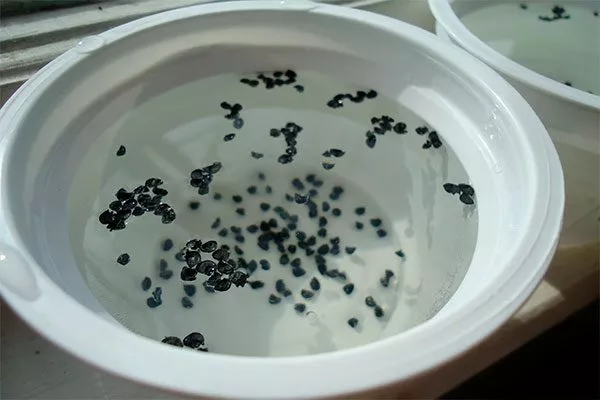
Seed preparation is carried out in the following order:
- Prepare a pink solution of potassium permanganate and soak the seeds in it for 20 minutes. This treatment should protect the seedlings and future plants from fungal infections.
- Rinse the seeds under running water.
- Place the seeds in a container filled with sand. Shake the container—this process is called scarification. This breaks the seed coat, which helps them germinate.
- Place the seeds on a cheesecloth soaked in water to allow them to swell. Periodically moisten the cheesecloth to prevent it from drying out. In about 5 days, the seeds will be ready for planting.
Preparing planting containers and substrate
Sunberry blueberry seedlings are grown in a heated greenhouse or simply indoors. For this purpose, containers or boxes filled with nutrient-rich substrate are needed. A drainage layer of expanded clay is placed on the bottom beforehand. Containers must have drainage holes to allow excess moisture to escape.
To grow Canadian blueberry seedlings, you can use ready-made substrates, for example:
- "Blueberry, Bilberry, and Cranberry Soil" from Torfyanaya Polyana. Volume: 50 liters.
- Robin Green Pressed Soil for Blueberries, Lingonberries, and Cranberries. Volume: 25 liters.
You can also prepare the soil for growing seedlings yourself, for example, by mixing the following components:
- garden, turf and forest soil - 1 part each;
- sand or semi-rotted sawdust - 0.5 parts;
- add 1 liter of wood ash for every 10 liters of mixture.
In addition, it is recommended to add 5-6 granules of superphosphate to each hole when sowing.
The nutrient substrate should be light, with a neutral acidity, so there is no need to add peat to it - blueberry forte does not tolerate acidic soils.
Growing seedlings
Once the containers are ready, you can begin sowing blueberries for seedlings. To do this, you'll need warm, settled water and a tool for creating rows and/or depressions.
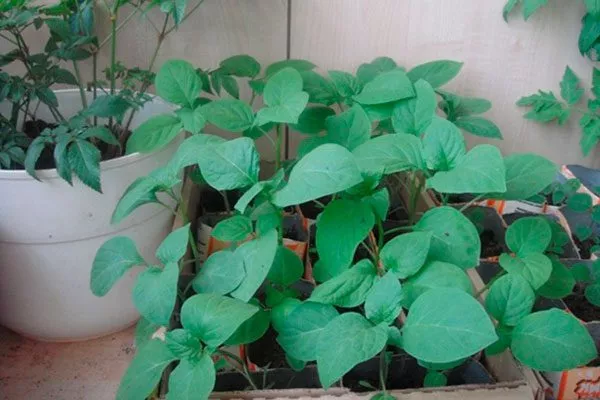
Features of sowing blueberry forte seedlings:
- Seeds are sown into trays filled with substrate at intervals of 4 cm. The seeding depth is 0.5 cm. The soil is leveled and moistened with a spray bottle. The seedlings are covered with glass or plastic film to create an optimal microclimate for growing seedlings.
- The containers with the seeds are transferred to a warm room. The optimal temperature is +25°C. The light should be diffused. The cover is periodically removed to ventilate the mini-greenhouses and moisten the soil.
It takes a long time, sometimes a whole month, for seedlings to emerge. Once they appear, the covering is removed immediately, otherwise the sprouts emerging from the soil may overheat and die.
Caring for seedlings
The seedlings are cared for like tomatoes. They are maintained at a certain temperature and humidity, watered, fertilized, and undergo all other cultivation procedures required for nightshade crops.
Features of seedling care:
- Canadian blueberry seedlings require moderate watering. Water the seedlings only after the top layer of soil has dried out. Overwatering is extremely dangerous for Sunberry blueberries, as it can cause root rot.
- Optimum daytime temperatures: +20…+22 °C. Nighttime temperatures: +16…+18 °C.
- Blueberries require 12-14 hours of daylight. If natural light is insufficient, grow lights are used. They should be placed 20-30 cm away from the plants.
- The first seedling feeding is carried out 10-12 days after transplanting. For this, use a complex fertilizer for nightshade crops.
- Blueberry seedlings are pricked out after 2-3 true leaves appear. The seedlings are transplanted from the boxes into individual 250-300 ml cups.
- The room or greenhouse is ventilated daily—this helps prevent the development of fungal diseases.
- Glasses with seedlings placed on windowsills are periodically turned around their own axis so that the light falls evenly on the plants.
- One to one and a half weeks before planting, harden off the seedlings by placing them outside. The time spent outdoors is gradually increased from 1-2 hours to 12-14 hours.
Transplanting
Blueberry forte seedlings are planted in a greenhouse, under a film cover, or in open ground when the weather becomes consistently warm; in temperate climates, this occurs in late May or early June.
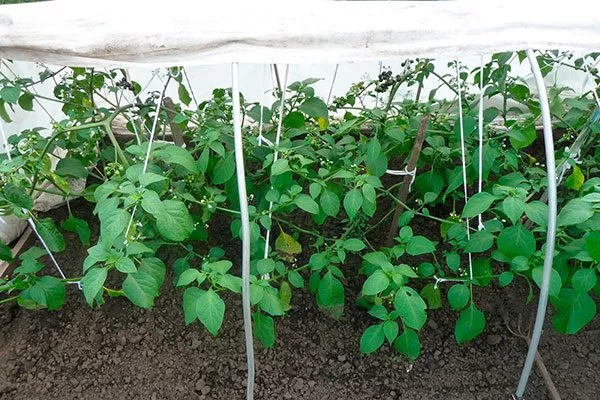
Features of planting Sunberry blueberries:
- Before transplanting, seedlings are watered to make it easier to remove them from the planting containers.
- Holes are prepared for the seedlings. They are dug large enough to accommodate the root system of the plants, which is removed from the cups along with the root ball.
- The optimal distance between adjacent plants is 70 cm. If the seedlings are weak, it's best to plant several in one hole so you can select the strongest and healthiest specimen.
- The empty space is filled with soil, lightly compacted, and watered with warm, settled water. The area around the trunk is mulched, for example, with rotted manure.
Care
Sunberry blueberries are an extremely low-maintenance plant that requires little care. They tolerate extreme drought well and require minimal cultivation.
Watering
In open ground, the crop is watered only during periods of prolonged drought; in greenhouses, it is watered as the soil dries out.
For watering, it is recommended to use non-cold water; you can heat it in containers in the sun.
Top dressing
If the area where the Forte blueberry is growing has sufficiently fertile soil, a couple of feedings will be sufficient. The first application is made two weeks after planting, and the second after flowering has finished.
As a top dressing, you can use an infusion of chicken manure or mullein (in the form of a 1:20 and 1:10 solution, respectively).
Loosening
After watering, it's advisable to loosen the soil, removing weeds at the same time. Weeding and loosening are recommended at least once every two weeks.
Is pruning necessary?
Forte blueberries don't require any side shoots, other than pinching the tops of the bushes. This is done in August to allow the plant to focus its energy on ripening the berries. Closer to September, it's recommended to remove all flowers and ovaries to ensure larger berries.
Garter
There's no particular need to tie up Canadian blueberry bushes; they're quite strong and stable. However, if the shoots begin to droop heavily under the weight of ripening fruit, you can place supports under the branches.
Can Sunberry be propagated?
Sunberry blueberries can be propagated by seeds or seedlings. The latter option is considered preferable, as the plant has a relatively long growing season. Furthermore, the perennial plant can self-seed.
Pest and disease control
Sunberry blueberries are rarely susceptible to common nightshade diseases. However, under unfavorable weather conditions, the risk of fungal and other infections increases significantly.
Canadian blueberry can be affected by:
- Bacterial cancer. It is accompanied by the appearance of cracks and ulcers on leaves and branches. It is incurable, so affected bushes are removed and burned.
- White spot. The above-ground parts of plants become covered with dirty white spots. The condition occurs when humidity is high and temperatures are high. Treatment and prevention include using Bordeaux mixture, and reducing watering.
- Blossom end rot. It attacks unripe berries, causing them to turn brown and fall off. The cause is poor watering practices and prolonged droughts. Chemical fungicides, such as Topaz, or biological fungicides, such as Alirin-B and Fitosporin, are used to treat the bushes (rotted fruit is beyond saving).
Sunberry blueberries are not immune to insect infestations. Failure to spray preventatively in the garden can result in pest infestations. The most common pests affecting Sunberry blueberries are spider mites, flea beetles, Colorado potato beetles, and aphids.
When controlling insects attacking blueberries, it's best not to use insecticides, as they will accumulate in the plant and its fruits. It's preferable to use biological products or folk remedies. For example, you can treat the bushes with infusions of onion, celandine, or garlic. A soap solution or hot pepper infusion will also work.
To prevent diseases, it's recommended to spray Canadian blueberry bushes with biological products once or twice during the season. It's also important to promptly remove old leaves, control weeds, and fertilize.
Harvesting
Blueberries are harvested when they turn black and shiny. However, don't rush the harvest. Even when the berries darken, that doesn't mean they're fully ripe.
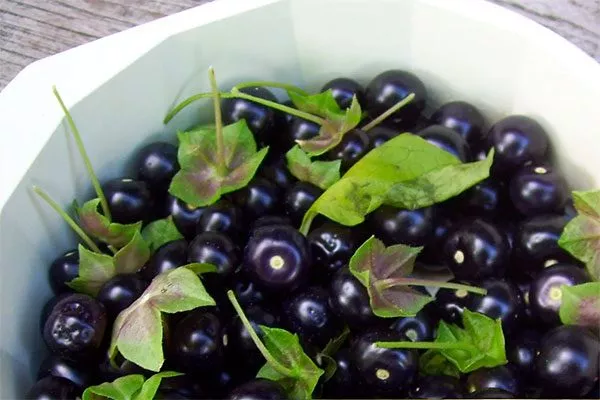
It's important for the berries to be soft and for the skin to split when pressed. You don't have to worry about delays in harvesting—Canadian blueberries don't fall off and are frost-resistant.
If berries are harvested for consumption, they are left until they are fully ripe. Even less-ripe berries can be used for canning and other processing.
This crop ripens gradually, so they are not harvested all at once, but as they ripen.
Seed harvesting
It is not necessary to buy Sunberry seeds every time for planting - you can prepare them yourself.
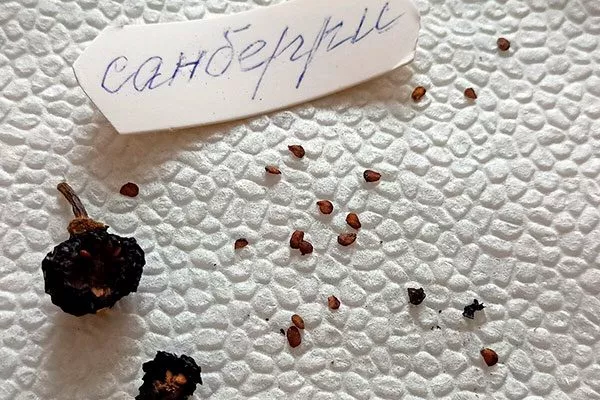
How to harvest Canadian blueberry seeds:
- Select the largest berries, especially those that ripen first. This will ensure an early harvest with large berries.
- Mash the fruits to remove the seeds. Rinse them under running water and then dry.
- Place the seeds in paper or cloth bags and store them in a dark, dry place. The optimal temperature is 12 to 16°C. Under these conditions, the seeds can remain viable for up to 2 years.
Reviews
Our gardeners have mixed feelings about Canadian blueberries. Given the culture of picking wild berries and growing garden equivalents, many aren't thrilled with the Sunberry. However, this crop has its merits and can be used for a wide variety of purposes.