
Sea buckthorn Essel is a female variety with excellent flavor. This domestic variety is a worthy representative of a valuable and useful crop, producing a bountiful harvest and easy to grow, even for beginners.
Who bred the Essel sea buckthorn?
The Essel sea buckthorn was developed in Siberia, its native habitat. It was bred at the M.A. Lisavenko Research Institute. Its authors—E.I. Panteleeva, K.D. Gamova, Yu.A. Zubarev, E.V. Oderova, A.V. Gunin, and V.V. Kurdyukova—previously bred such popular sea buckthorn varieties as Azhurnaya and many others.
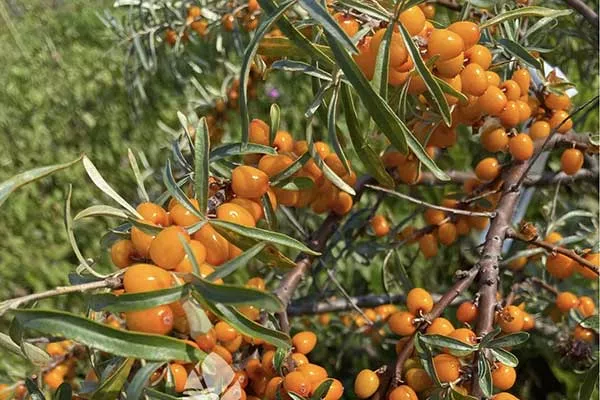
The Essel sea buckthorn was developed in 1986. Open pollination was used to create the new variety, using large-fruited elite varieties. Ultimately, the creators succeeded in creating a sea buckthorn that combined large fruits with good frost resistance. The variety is recommended for cultivation in Western and Eastern Siberia.
Description of the plant
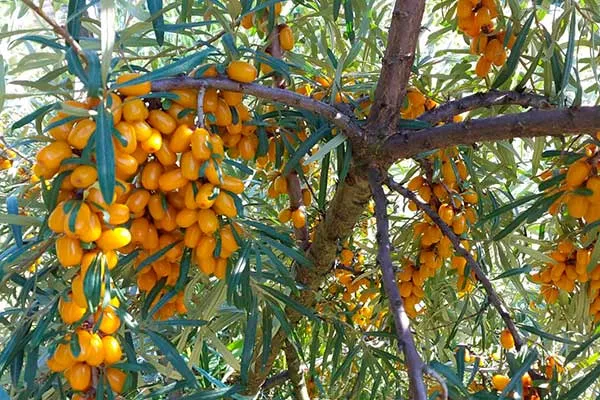
The plant is a compact, medium-sized, tree-like shrub. It has an oval, loose crown of medium density. The height of the bush is 4-5 m. The shoots are straight, brown, and moderately thick. The leaves are medium-sized, strongly elongated, lanceolate, dark green, and concave.
- ✓ The fruits have a high oil content, which makes them especially valuable for medicinal use.
- ✓ The bush requires minimal pruning, as it naturally forms a compact crown.
Description of fruits
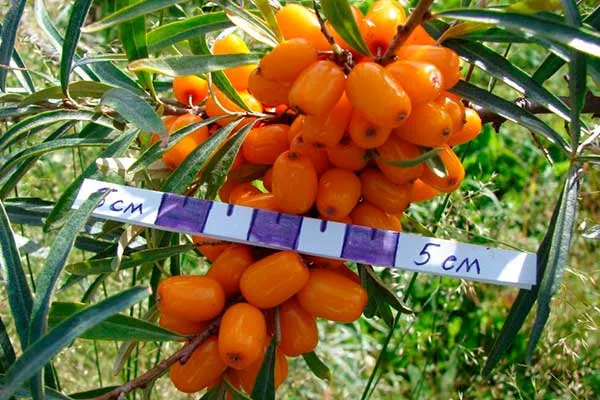
The Essel variety produces fairly large berries. They are ovoid and orange or yellow-orange, the traditional color of sea buckthorn. One hundred berries weigh 90-120 g. The berries are medium-firm, with long stalks, approximately 6-7 mm. They are easy to pick, requiring moderate force.
Taste and application
Essel sea buckthorn berries have a sweet, dessert-like flavor. They have juicy flesh and a pleasant aroma. The berries have excellent flavor characteristics. They have a tasting score of 4.7.
Composition of Essel sea buckthorn berries:
- sugar - 9.7%;
- acid - 1.2%;
- vitamin C - 53.6%;
- carotene - 14.8%;
- oil - 6%.
Sea buckthorn berries are rich in vitamins, folate, organic acids, tannins, and fatty oils. These berries can be eaten fresh or used to make juices, preserves, and can also be pureed with sugar.
Ripening time and yield
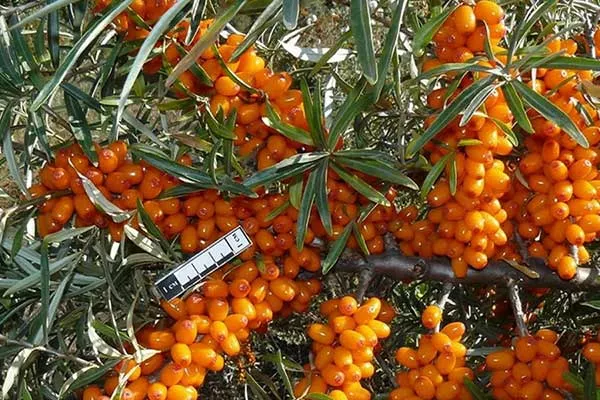
The Essel sea buckthorn begins bearing fruit in the fourth year after planting. It is self-sterile and belongs to the early-to-mid-season group of varieties. Fruit begins to ripen in August. The average yield of this variety in commercial cultivation is 81.8 c/ha.
Resistance to frost and drought
This variety is frost-hardy and can withstand temperatures down to -34°C without adverse effects. Its frost tolerance (zone 4) is sufficient for growth and fruiting in the East and West Siberian regions. However, its drought and heat tolerance are average.
Pros and cons
Sea buckthorn Essel has many advantages that make it attractive to gardeners. Before planting this variety in your garden, it's recommended to evaluate all its pros and cons.
Landing features
To ensure sea buckthorn grows and bears fruit for 15-20 years, as intended by its characteristics, it's important to plant it correctly. It's essential to select a suitable location, good seedlings, and, most importantly, to plant according to the recommended technology.
- ✓ Soil pH level should be strictly between 6.0-7.0 for optimal growth.
- ✓ The depth of groundwater is at least 1.5 m from the surface.
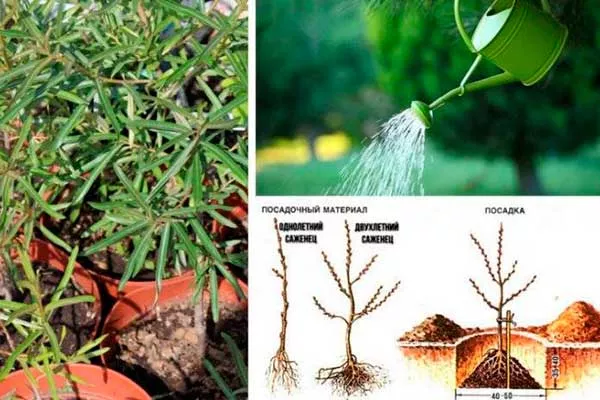
Features of planting sea buckthorn Essel:
- The best time for planting is spring. There are no exact dates—they vary by region, depending on climate and weather conditions. Sea buckthorn is planted fairly early, while the plants are still in their winter dormancy.
Autumn planting is not recommended in certain regions, as young seedlings may not survive the harsh winter without time to strengthen. - It's best to buy seedlings from specialized nurseries rather than from private sellers. It's best to choose local producers who grow planting stock for specific climate zones.
- For planting, it is recommended to use cuttings; they take root better than other varieties and establish roots quickly. This variety is self-sterile, so it is necessary to plant both sexes of sea buckthorn in the garden.
- Choose a warm, sunny site for planting, not shaded by buildings or large trees. The trees should not be exposed to cold winds, so they should be planted near a natural or artificial barrier—a house wall, fence, or shed.
- Essel sea buckthorn grows best in well-drained, sandy loam soils with neutral pH. Clay soils are unsuitable for this crop. It also doesn't thrive in waterlogged soils or lowlands where meltwater and rainwater collect.
- Sand must be added to clay soils before planting. It's best to add it during autumn tilling—10 liters per square meter.
- Planting holes are prepared in the fall for spring planting. If planting occurs in the fall, the holes are dug several weeks before planting.
- The recommended hole dimensions are 40 x 40 cm. The topsoil removed during digging is used to prepare a potting mix, which is then used to fill the hole. A 5-7 cm layer of crushed stone, gravel, broken brick, etc. is added to the bottom to form a drainage layer. A long support is placed in the center of the hole.
- You can prepare a soil mixture from topsoil and organic matter (compost or humus), mixed in a 2:1 ratio. Add 150 g of superphosphate to the mixture. Cover the finished hole with roofing felt.
- Before planting, the seedling roots are soaked in water for about an hour. They are then soaked in an insecticidal solution for another minute for disinfection and prevention.
- The seedling is planted in the hole using standard techniques: the roots are set on a mound of earth, spread out, and covered with soil. The root collar should be level with the ground after planting. The planted seedling is tied to the support with soft twine, watered with settled water, and mulched with sawdust, grass clippings, straw, peat, etc.
Care
Sea buckthorn Essel is easy to care for, but it does require certain cultivation techniques. It's especially important to take care of the plant during the first summer after planting.
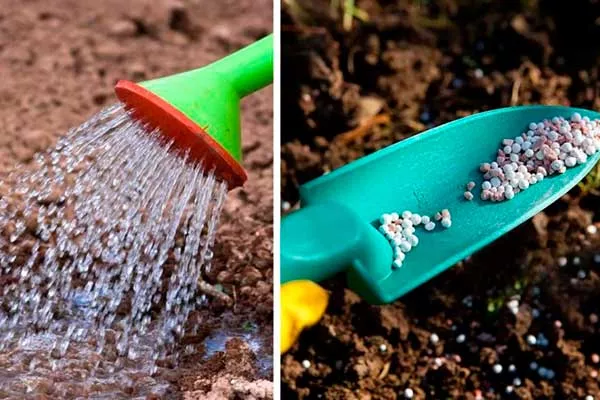
Care features:
- The tree is watered only 3-4 times during the season. This is recommended before and after flowering, during the berry ripening stage (if there is a drought), and during the pre-winter period. The recommended watering rate is 30-40 liters. Young seedlings are watered once a week to speed up establishment.
- The soil around the tree trunks is regularly loosened and weeded. After watering, it is also recommended to mulch the soil with humus, peat, straw, etc.
- It is recommended to prune branches in the spring. Sea buckthorn requires the following types of pruning:
- formative - this is carried out during the first 2-3 years, removing incorrectly growing branches and root shoots;
- sanitary - it is carried out annually, removing dry, frozen and damaged ones;
- rejuvenating - it is carried out approximately 7 years after planting the seedling.
- Fertilizer added to the planting hole provides sufficient nutrients for at least the first year of sea buckthorn's life. Subsequently, nitrogen is added to the plant before and after flowering, which is necessary for the growth of green mass. After harvesting, superphosphate is added. Every three years, organic fertilizer (humus or compost) is added to the sea buckthorn.
- Sea buckthorn Essel is frost-resistant, so preparing it for winter in temperate climates is limited to mulching the area around the tree trunk. However, in regions with harsher winters, the plant must be covered to prevent frost damage. Young seedlings also need to be covered during their first winter.
Agrofibre or regular burlap are suitable for insulating sea buckthorn. Also, regularly remove snow from the branches during the winter, otherwise the weight will cause them to break off.
Diseases and pests
The Essel sea buckthorn has a very strong immune system. With proper care, it's virtually disease-free. The main preventative measures are removing weeds from the tree's trunk, loosening the soil, and maintaining a regular watering schedule.
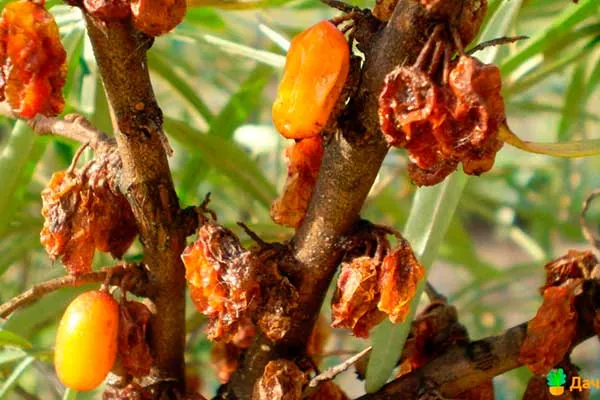
Sea buckthorn's biggest enemy and the bane of its harvest is the sea buckthorn fly. A gardener can lose 90% of all berries because of it. To prevent attacks by this pest, plants that attract wasps are planted near the sea buckthorn—this insect is the fly's natural enemy. Suitable herbs include dill, caraway, coriander, and some others. If the fly does attack the sea buckthorn, it should be sprayed with insecticides.
Collection and storage
Sea buckthorn is quite difficult and time-consuming to harvest without special tools. The berries are small, making it extremely difficult to pick them one by one, and there's also a risk of damaging your skin on the thorns.
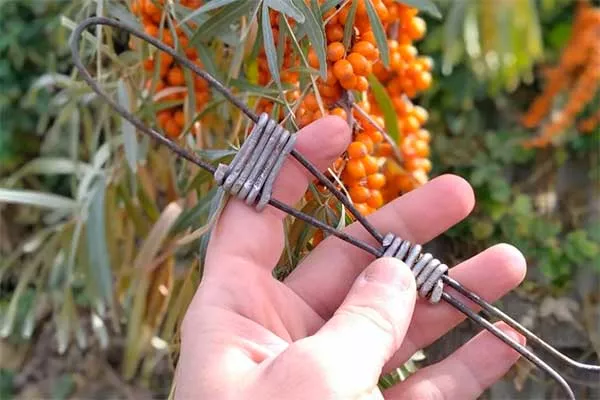
The Essel variety is not suitable for the popular method of shaking off the berries after frost. The berries of this sea buckthorn are harvested using special "scrapers." The berries can be stored at -18°C or below for up to 9 months. Store the berries in freezers away from meat, fish, and mushrooms.
Reviews
The Essel sea buckthorn is a reliable and robust variety, producing a bountiful harvest of vitamin-rich berries every year in the harshest Siberian conditions. This variety, of course, like any garden crop, requires some care, but it's not difficult; even the most inexperienced gardener can handle all the steps.