
Sea buckthorn is considered a plant with strong immunity; however, it is sometimes affected by various diseases and insect pests. This article will teach you how to identify a diseased plant and what control methods can be used.
Sea buckthorn diseases: symptoms and treatment
Sea buckthorn is susceptible to infections related to fungal diseases. The symptoms of these diseases are not subtle and are easily detected by visual inspection. We will discuss the most common infections below.
| Name | Type of disease | Symptoms | Methods of control |
|---|---|---|---|
| Endomycosis | Fungal | Dull white color of fruits, decreased turgor | Spraying with Bordeaux mixture |
| Scab | Fungal | Bumpy growths on leaves, black spots | Spraying with Nitrafen |
| Brown spot | Fungal | Brown and tan spots on leaves | Spraying with Bordeaux mixture |
| Stem rot | Fungal | Stratification of the trunk into thin annual plates | Treatment with copper sulfate |
| Ulcerative necrosis of the cortex | Fungal | Convex growths on branches | Disinfection with copper sulfate solution |
| Alternaria leaf spot of sea buckthorn | Fungal | Velvety black coating on the bark | Treatment with Bordeaux mixture |
| Nectrium necrosis | Fungal | Brick-red cushions on shoots | Spraying with Bordeaux mixture |
| Septoria leaf spot | Fungal | Dark brown spots on leaves | Treatment as for brown spot |
| Fusarium wilt | Infectious | Yellowing and falling leaves | It is practically untreatable |
| Blackleg | Fungal | Blackening of the stem | Disinfection with a solution of potassium permanganate |
| Heterosporium | Fungal | Spots with a light purple border on the leaves | Cleaning of infected leaves |
| Verticillium wilt | Fungal | Yellowing and falling leaves, root rot | Cutting off dried branches |
| Black crayfish | Fungal | Black spots on the bark | Treatment with a mixture of mullein, clay and copper sulfate |
| Fruit rot | Fungal | White cushions on fruits | Cleaning off blackened berries |
Endomycosis
A fungal disease of sea buckthorn fruit. Fruits with mechanical damage are susceptible to infection. It is spread by sea buckthorn aphids and leafhoppers. Spores of the disease are unable to penetrate intact fruit.
Signs of fruit deterioration include a dull white color and decreased turgor, which causes juice to leak from the sea buckthorn berries during picking. The fruit's weight decreases, and the contents become slimy.
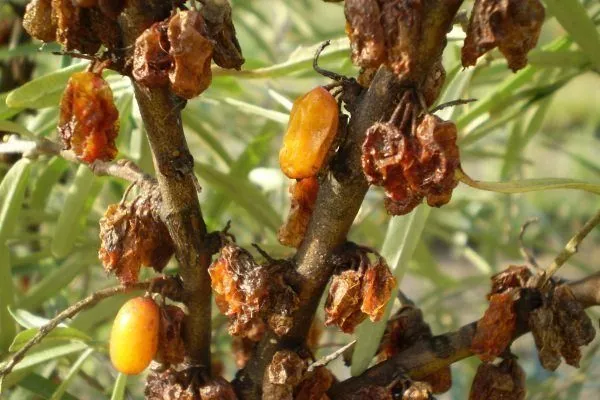
In spring, spraying with 4% Bordeaux mixture or 3% Pitrafen solution helps reduce fungal infections by half. After fruit sets, treat them with 0.4% Cuprozan. In summer and fall, treatments aimed at combating endomycosis are ineffective.
Scab
The disease is caused by a fungus that attacks young shoots and sea buckthorn fruits. Leaf scab spreads rapidly and is characterized by the following symptoms:
- bumpy formations on leaves;
- shiny black spots;
- yellowing of leaves;
- mummified fruits.
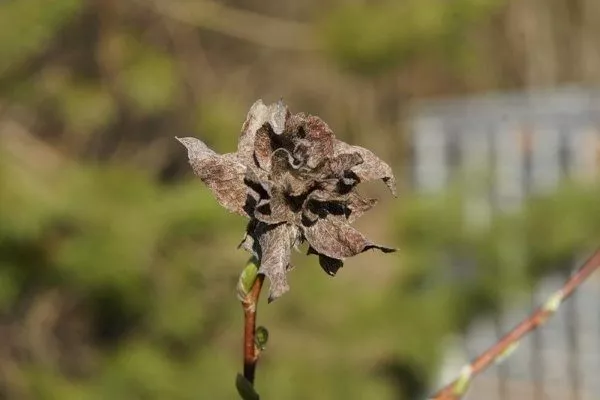
During the first season, scab can destroy up to 50% of the harvest. If no measures are taken, infected sea buckthorn bushes may dry out after winter. To prevent this, spray the plant with 3% Nitrafen before bud break. When preparing the plant for winter, first prune branches affected by scab, then burn the fallen leaves.
Brown spot
Another type of fungal disease that initially affects the leaves, then the bark and berries of sea buckthorn. Signs of the fungus include brown and tan spots that grow and merge.
Subsequently, the upper part of the tissue dies, and pycnidia form on it. The fungi appear as black, clearly visible spots. These are fruiting bodies that can be solitary, scattered across the surface, or gathered in groups.
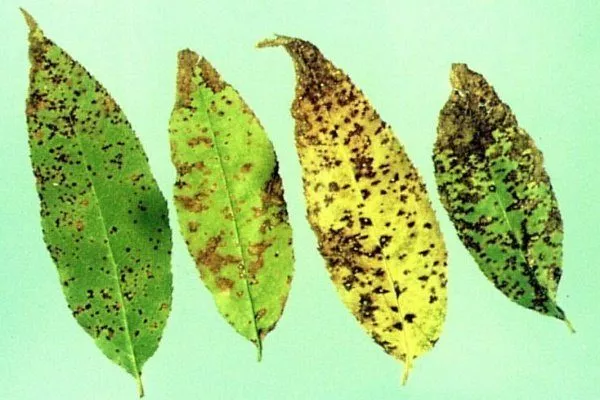
In spring and fall, the plant is sprayed with 1% Bordeaux mixture. Parts of the sea buckthorn affected by fungus are cut off and burned.
Stem rot
The causative agent of stem rot is a polypore fungus that inhabits tree bark. The presence of the fungus causes the sea buckthorn trunk to split into thin annual plates. Therefore, stem rot is also known as white ring rot.
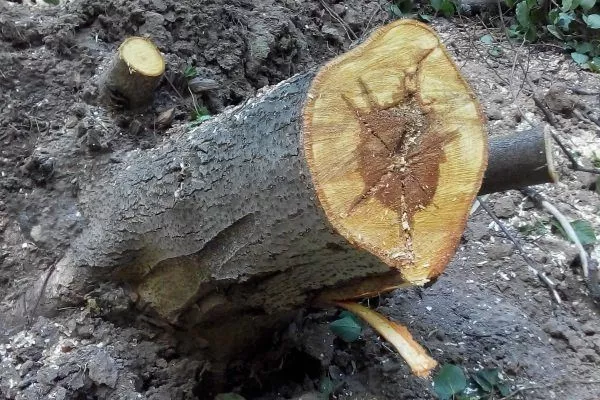
Stem rot occurs on sea buckthorn bushes when there is mechanical damage, cracks, or other damage to the bark. During winter, the fungus remains within the bark, so the affected parts of the plant must be cut off. Bordeaux mixture and HOM are effective in combating the fungus if sprayed on the sea buckthorn before bud break.
If you notice damage on the sea buckthorn bark, treat it with copper sulfate and paint over it with oil paint.
Ulcerative necrosis of the cortex
This disease is caused by fungal spores that colonize the bark of sea buckthorn trees and shrubs. Symptoms of canker necrosis include raised growths on sea buckthorn branches. After the bark dies, the necrosis cracks, revealing a black, raised portion of the wood.
Fungal spores invade new areas of bark, which gradually dries out, branches die, and the sea buckthorn dies. More deep ulcers form on young shoots affected by necrosis.
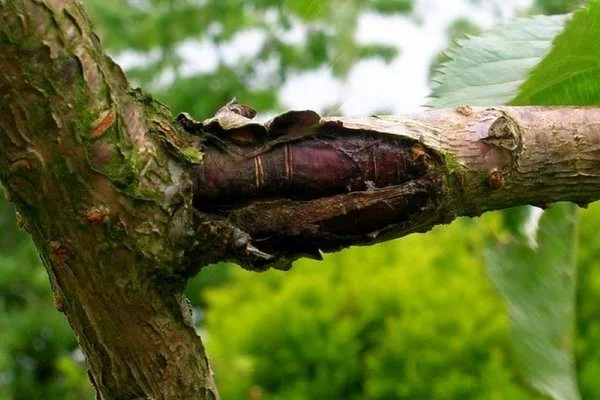
The same treatment is used to combat ulcerative necrosis as for stem rot. Disinfection of necrotic lesions on the sea buckthorn bark with a weak solution of copper sulfate is also acceptable.
Alternaria leaf spot of sea buckthorn
In damp, humid conditions and dense plantings, a velvety black coating appears on sea buckthorn. This is a sign of Alternaria bark blight, a rapidly developing fungus that causes leaves to dry out and fall off, and branches to die.
To prevent alternaria, plantings are thinned out, treated with Bordeaux mixture, and infected branches are cut off and burned.
Nectrium necrosis
A fungal disease that primarily affects young sea buckthorn shoots. Nectria necrosis can be recognized by the brick-red pads that appear. These pads carry spores and are located longitudinally.
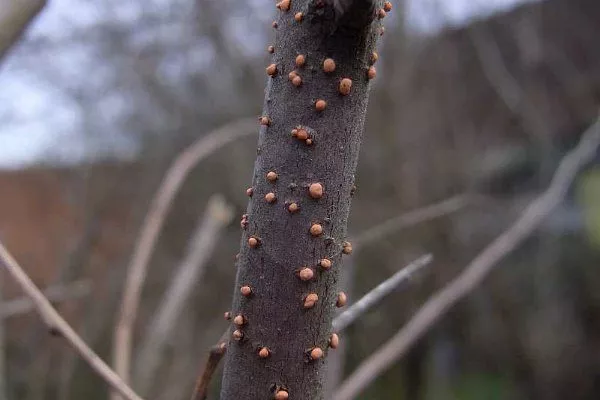
Drying of the bark leads to branch death and the death of the sea buckthorn. Therefore, the growths must be cut off. Spraying with 1% Bordeaux mixture is effective in combating necrosis.
Septoria leaf spot
This is characterized by the appearance of spots on the upper surface of leaves. The spots are round and dark brown in color. After some time, the leaf tissue affected by the spots cracks and falls out. This can lead to the following consequences:
- decreased frost resistance;
- lack of growth of young shoots;
- leaves falling before the due date.
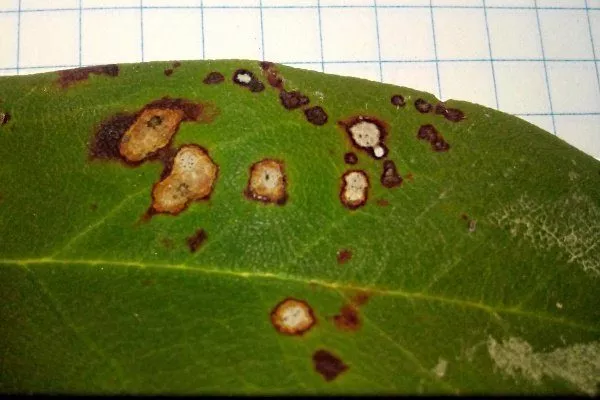
Septoria spot is treated in the same way as brown spot.
Fusarium wilt
The disease is infectious. Symptoms appear in midsummer, when some sea buckthorn leaves begin to turn yellow and suddenly fall off. Sea buckthorn berries prematurely turn orange and wither. After winter, the trees fail to recover and die.
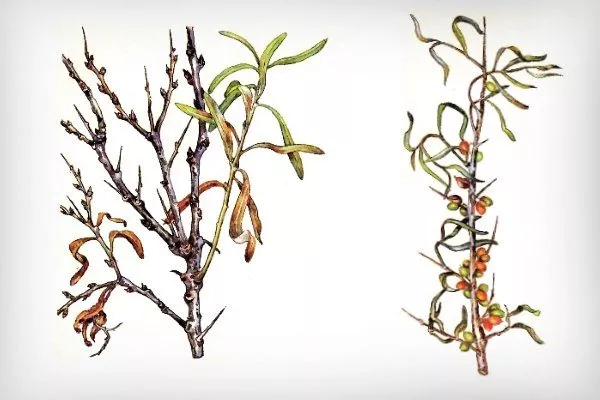
At the base of the sea buckthorn, blackened wood and swollen bark can be found. Fruit that survive the winter develops a pinkish bloom.
Fusarium wilt is virtually untreatable and causes the death of 10-20% of plantings.
Blackleg
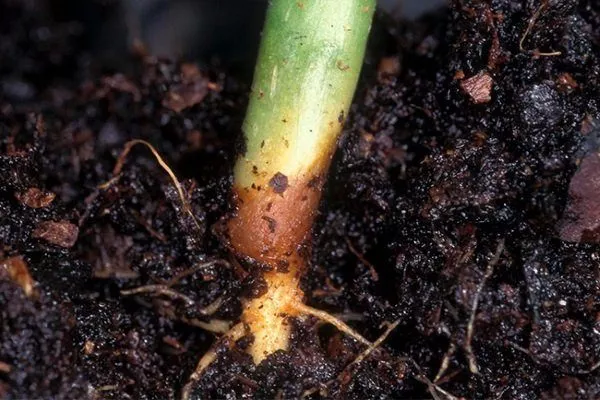
Soil fungi often attack seedlings, causing the sea buckthorn stem to turn black and die. To prevent this disease, prepare a substrate consisting of equal parts turf and sand. After planting, disinfect the seedlings with a weak solution of potassium permanganate.
Heterosporium
A fungal disease that most often affects sea buckthorn leaves. It manifests itself as spots with a light purple border, found on the underside of the leaf. The spots eventually merge, leading to leaf death. Spots on sea buckthorn bark are a vector for Heterosporium leaf spot.
The disease doesn't cause significant damage to the crop. To get rid of it, the plant should be cleared of infected leaves.
Verticillium wilt
The fungus attacks mature trees over 5 years old, depriving them of nutrients and moisture. Symptoms of vertigo wilt include:
- sudden yellowing and leaf drop;
- wrinkling and loss of turgor of berries;
- slow growth;
- root rot;
- drying of branches.
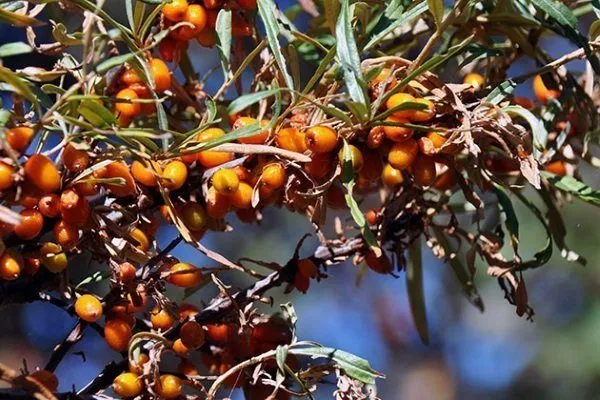
If the fungus is detected early, sea buckthorn can be saved by cutting off the dead branches. Otherwise, the disease is untreatable, and infected bushes are dug up and burned.
Black crayfish
Another fungal disease, the symptoms of which include the appearance of black spots on the bark of sea buckthorn trees. After some time, the bark peels off, revealing black wood underneath. Ulcers form where the spots merge, and the sea buckthorn tree stops growing.
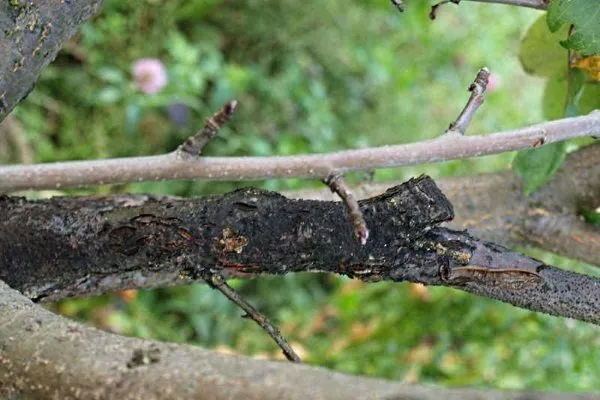
Black canker can be controlled by cleaning the affected area. The cleaned trunk should then be treated with a mixture of mullein, clay, and copper sulfate.
Fruit rot
Sea buckthorn berries are affected by a fungus, which has a devastating effect on the harvest. The lightened berries lose their firmness, and spore-bearing white cushions appear on their surface. Subsequently, the berries turn black and mummify.
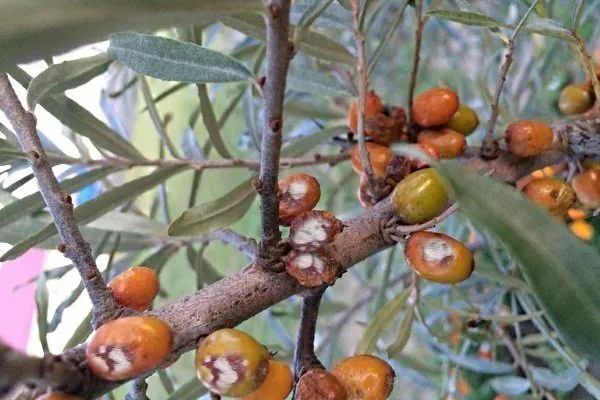
Remaining mummified sea buckthorn berries can become carriers of infection. Therefore, it is necessary to thoroughly remove blackened berries from the affected tree and spray it with a 1% Bordeaux mixture.
Sea buckthorn pests and their control
Sea buckthorn is susceptible to attacks by a variety of pests. Some can destroy the plant, others are dangerous only when they multiply in large numbers, and still others are critically endangered and listed in the Red Book. More than 70 pest species have been identified, including insects, mammals, mites, and birds.
- ✓ The concentration of the solution should be strictly 1% for spring and autumn treatment to avoid leaf burns.
- ✓ Spraying should be carried out in calm weather, in the morning or evening, to avoid rapid evaporation of the solution.
Sorrel bug
The insect, known as the "margined edger," reaches 2 cm in length and is brown in color, making it difficult to spot on the ground. The larvae differ from the adult insect only in size.
In winter, the bugs live under leaves; the rest of the year, they feed on sap from buds, leaves, and young shoots. Sea buckthorn leaves develop eaten-out patches or empty spots. Damaged leaves change color, ovaries curl, and the plant itself loses frost resistance.
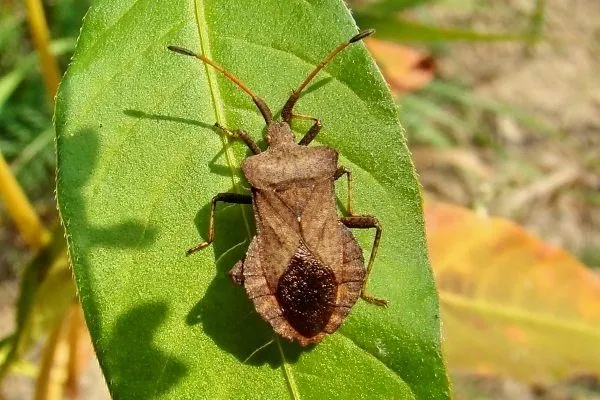
If you notice a sorrel bug, take immediate action, as the insect reproduces rapidly and poses a danger in large numbers. Insecticides such as Grom, Fufanon, and Karbofos can be used to control the pest.
Sea buckthorn moth
In August, the gray-green butterflies lay eggs, which hatch into caterpillars in late spring. The young caterpillars feed on buds, while the adults create nests in the upper leaves. To do this, they bind several leaves together with webbing and consume them. In the fall, the caterpillars create cocoons, wrapped in webbing, in the upper soil layers and at the base of the plant.
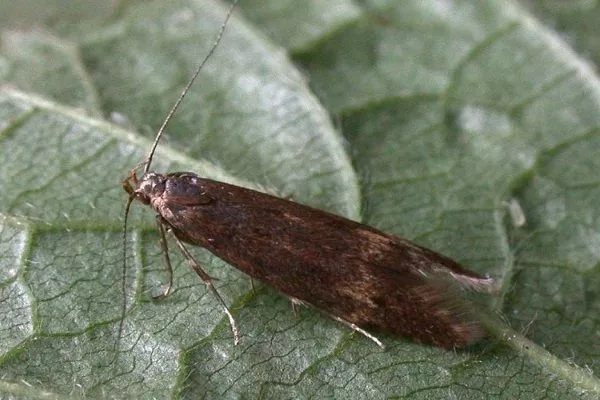
Destroying the shoot's growth point slows sea buckthorn growth and causes it to dry out. The plant becomes weak, and the yield and quality of the fruit decline.
A popular and effective method for controlling sea buckthorn moth is spraying with a 0.6% Chlorophos solution. Sea buckthorn is also treated during bud break with a 0.3% Metaphos solution and a 1% Entobacterin suspension.
Sea buckthorn leafhopper
A jumping insect, light green or light brown in color, 3 mm long. Leafhopper larvae settle in buds and later attach to the underside of leaves. The pests feed on leaf sap until late summer, after which they lay eggs.
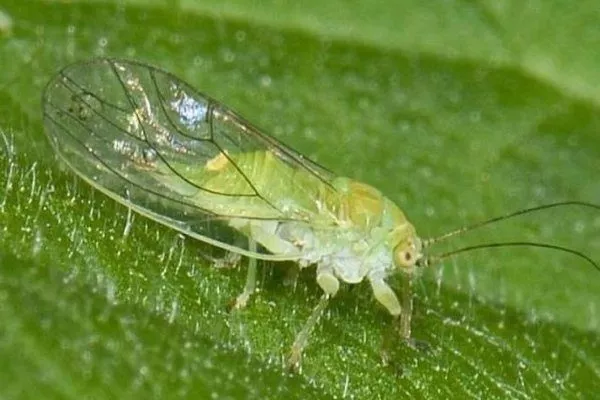
You can detect signs of the insect by examining the sea buckthorn leaves. They curl into a tube and turn yellow. The leafhopper is a tenacious insect that can damage sea buckthorn bushes year-round. Therefore, it is important to spray the plant in spring and summer with products such as Actellic, Fufanon, and Kinmix.
Sea buckthorn aphid
Aphids are small, green, red-eyed insects that lay eggs in bark crevices. During bud break, the eggs hatch into larvae, which continue to live in the buds and feed on sap and young leaves. Later, the larvae develop wings and metamorphose into females, capable of flying from bush to bush.
The insects are easy to spot; they cover the entire inner surface of sea buckthorn leaves, clinging tightly to the trunks and branches of young shoots. Deprived of nutrition, the leaves turn yellow, curl toward the midrib, and gradually dry out. Plant growth slows.
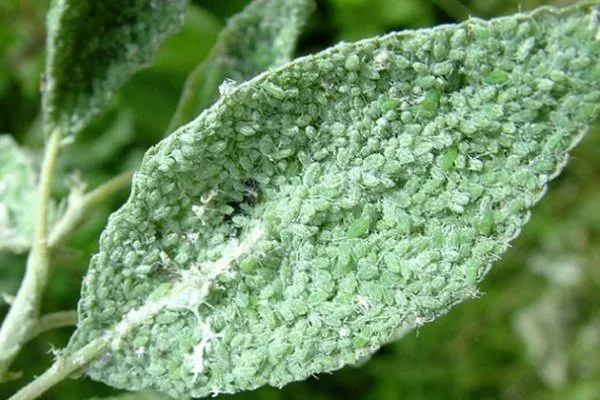
If left untreated, sea buckthorn develops a sticky discharge, leading to the development of sooty mold, and the bush itself turns black. Aphids can be controlled with folk remedies, such as tobacco leaf decoction, garlic infusion, and soap suds. Insecticides such as Iskra DE, Komandor, and Aktara are also used.
Geometrid moth
A large brown caterpillar, reaching 6 cm in length, with yellow warts on its body. This pest emerges during leaf budding and feeds on the leaves until autumn. Up to 60-80 individuals can inhabit a single bush.
Geometrid moths are difficult to spot; their brown color makes them easily mistaken for a twig. To spot them, periodically inspect the foliage. Damaged leaves and bare crowns are signs of the presence of a pest—gemetrid moth—in your garden. In advanced cases, sea buckthorn yields and frost resistance are reduced.
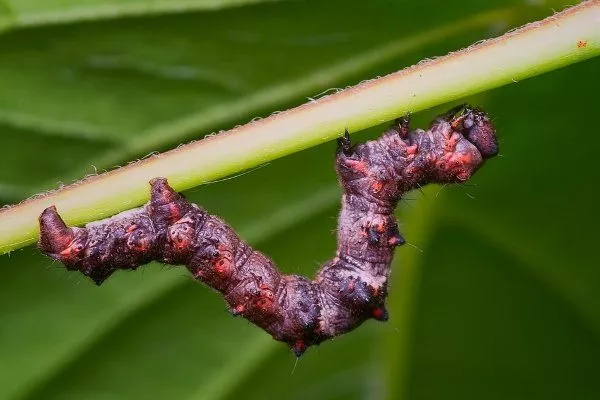
To get rid of brown moths, plants are sprayed with insecticides, including Akarin, Bitoksibacillin, Fitoverm, and Kinmiks. For those who prefer chemicals, decoctions of tomato tops, hot peppers, or wormwood are suitable.
- ✓ Use decoctions and infusions in warm, but not hot weather for better adhesion to the leaves.
- ✓ Repeat treatment every 7-10 days to maintain the protective effect.
The effectiveness of folk remedies is 30-40% lower than chemical ones and one treatment will not be enough.
Gall mite
This is a small, milky-colored insect, measuring 0.25 mm. Adults spend the winter in bud axils. Beginning in May, the mites settle in the buds, then move to the leaves. By feeding on buds and leaves, gall mites reproduce throughout the summer.
Signs of this pest are swellings on the leaves, under which the mites hide. These swellings are called "galls." If left untreated, the sea buckthorn leaves fall prematurely, and the tree dies.
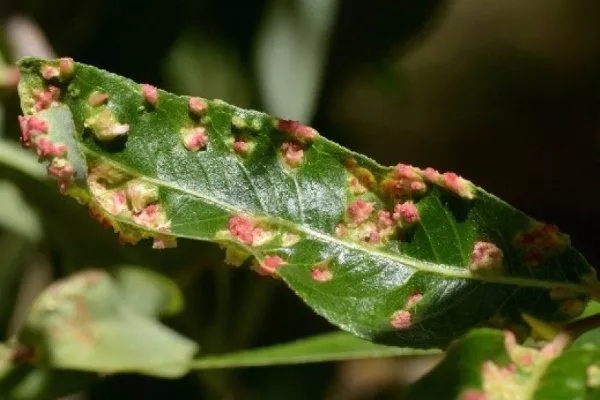
Bushes are treated 4-5 weeks before berry ripening. For this purpose, use Fitoverm, which is 100% effective, while solutions of Karbofos or Nitrofen kill up to 80% of pests.
Spider mite
A polyphagous insect, very small in size, almost impossible to spot with the naked eye. It comes in a variety of colors, from milky to brown. Initially, the mites settle on the underside of sea buckthorn leaves, then migrate to other parts of the plant.
The spider mite burrows inside the leaf blade and feeds on leaf sap. Small light-colored spots on the leaves can help you recognize this pest. As the insect population increases, web-like clusters can be seen on the leaves.
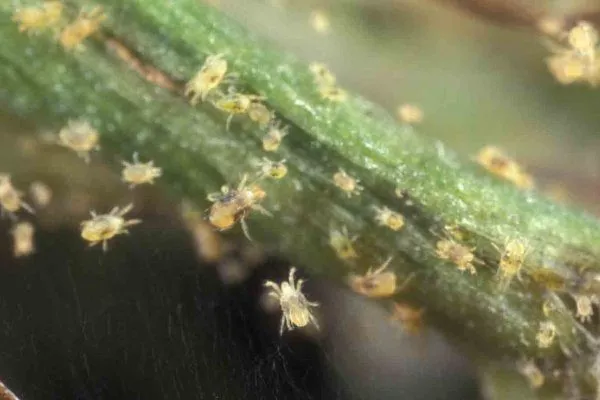
Acaricides are considered the most effective for getting rid of spider mites. In the spring, the plant is sprayed with Metaphos, Methyl parathion, and Malathion. If mites continue to appear and the spider mites wither and die, repeat the spraying process after two weeks. To kill the larvae, spray three times.
To make treatment more effective, alternate medications, otherwise spider mites develop resistance to them. After flowering, sea buckthorn can be treated with Chlorophos.
Sea buckthorn fly
Almost all summer, during the fruit-setting period, flies fly, managing to lay eggs under the berry skin. The hatched larvae feed on the sap and pulp of the fruit, leaving only the film. Three weeks after hatching, they descend to the root zone, where they pupate and overwinter.
The sea buckthorn fly lives for a long time, up to 50 days, and, like the larva, feeds on the juice of sea buckthorn berries. The larvae of this insect can destroy up to 90% of the harvest, causing it to shrivel, darken, and dry out.
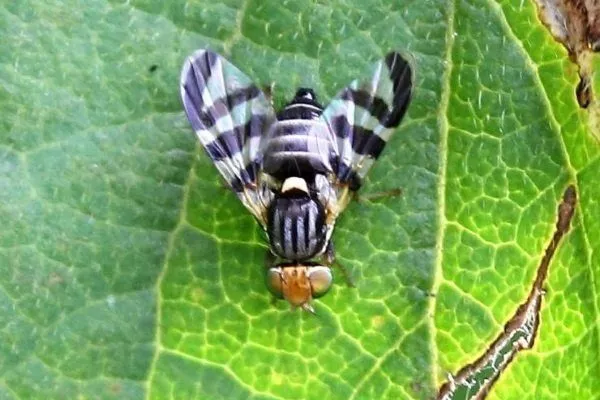
Various factors help in the fight against this pest:
- Chemical pesticides, namely 0.3% solutions of Karbofos, Metaphos, and solutions of Methylnitrophos, Chlorophos at 0.2% concentration.
- The parasitoid wasps that feed on sea buckthorn flies are capable of destroying half of the cocoons of this pest species.
- Cold and rainy weather conditions cause fly pupae to overwinter for a second year.
The omnivorous leaf roller
These are green caterpillars with a brown head, reaching 1.5 cm in length. The pests feed on sea buckthorn leaves, twisting several into tubes using their webbing. Older caterpillars feed on the tips of shoots, preferring young sea buckthorn bushes.
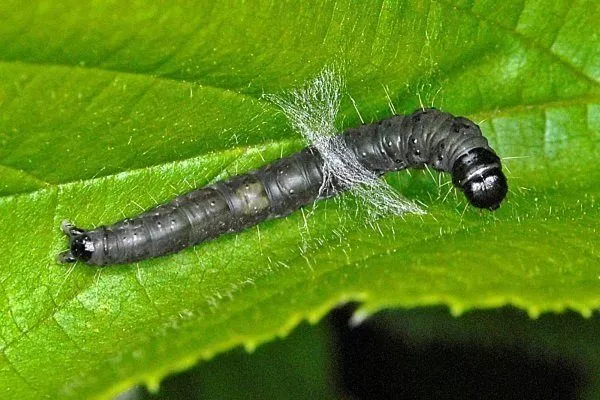
Damage caused by a small number of pests is less than 1%, while with a large population, yield losses can reach 30%. Three generations may sometimes develop. To control pests, crops are sprayed with insecticides. Popular products include Fufanon, Actellic, and Kinmiks.
Sea buckthorn pest control measures
To protect sea buckthorn from pests, it is necessary to follow agricultural practices for growing this crop, thin out dense plantings, remove fallen leaves, and carry out preventative spraying twice a year.
Remember that sea buckthorn is a sun-loving plant. Remove dead branches and leaves to prevent excess moisture from accumulating near the roots. It is recommended to strengthen the soil with sand or peat.
Older sea buckthorn varieties are primarily susceptible to diseases. Therefore, choose newly bred shrubs for planting, as they are less susceptible to infection. Regularly monitor your plants for pests; this will allow you to identify pests early, and proper treatment will save your garden.