
Sea buckthorn harvests begin in late August and continue through the second half of September. After this, the bush requires proper care to ensure it survives the winter and recovers for the next season. Autumn care includes pruning, proper watering, and fertilization. Read on for more information on these and other plant care procedures.
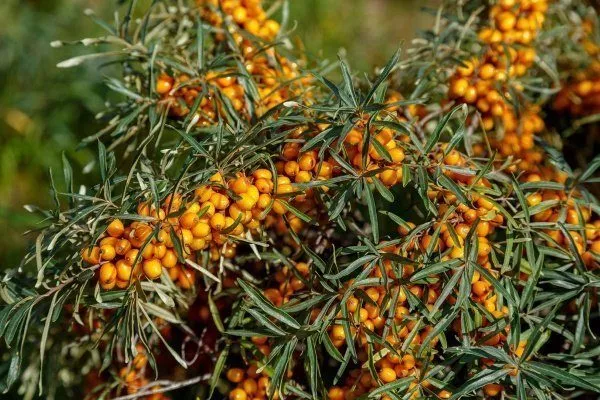
When and how to harvest in autumn?
The harvest takes place from the second half of August until the end of September. The exact timing depends not only on sea buckthorn varieties, but also how the berries will be used in the future:
- fresh or frozen - pick berries at the beginning of ripening, when they have thick skin and contain the maximum amount of vitamin C;
- to make sea buckthorn jam, juice or marmalade, collect the berries in the second half of September, when they become soft;
- To prepare sea buckthorn oil, collect the berries a week after they have acquired a soft consistency, but they should not be overripe, since in this case they will burst when you try to tear them from the stalk.
- ✓ The sugar level in berries should be at least 8% for optimal flavor.
- ✓ The density of the berries should be such that they do not crush when pressed lightly.
To ensure the bushes remain healthy and produce abundant fruit next year, the first step is to harvest the fruit properly. This is a rather labor-intensive process and can be accomplished in several ways:
- Harvest the berries manually, cutting them from the branches with small scissors or tweezers. You can cut off the entire branch first and then sort the berries at home, but this can damage the plant and it's unlikely you'll be able to cut all the fruit from the branches at once. This method is time-consuming, but it will allow you to harvest the sea buckthorn to its full potential.
- Cut branches with berries from the bush and freeze them. This way, the berries are relatively easy to remove from the branches. This method is primarily used when the fruit is to be frozen.
- Pick the berries off the stems with your hands, but be careful not to tear off the soft skin of the fruit and to prevent the juice from leaking out onto your hands.
- Place a juice container under a bush branch and slowly run your hand along the branch from base to tip, actively crushing the berries. This method is used to extract sea buckthorn juice directly from the bush. In an hour, you can squeeze up to 4 liters of juice.
- With the first frost, place a tarp under the bushes and shake the plants. This method is used when harvesting ripe berries very late for making sea buckthorn oil.
Prolonged contact of the skin of the hands with sea buckthorn juice can cause severe irritation, so be sure to wear rubber gloves when harvesting.
If sea buckthorn is collected in large quantities in the fall, it is more practical to use special equipment for this purpose:
- CobraA popular folk tool made from a piece of wood and steel wire. The wood forms a handle, and the wire forms a loop, shaped like a candle wick. Using an awl, attach the loop to the handle, creating a snake-like structure. This tool makes it quick and easy to harvest berries by cutting off their stems. It can reach even the most inaccessible areas of the bush.
- ScraperIt's made from aluminum-coated steel wire, approximately 50 cm long. Make a single coil in the middle of the wire, like a spring. To do this, wrap the wire once around the neck of a glass bottle. Align the ends of the wire and bend them to one side at a 90-degree angle. Using this tool, you can easily press down on the twig and scrape the berries off it by simply moving the scraper downward.
- tubeTo make it, use a tin can. Cut a blank out of it and roll it into a tube. The optimal length and diameter are 100 mm, so that it's approximately 4 mm larger than the sea buckthorn berries. Wrap the resulting tube with electrical tape, leaving a little space around the edges, and attach a plastic bag to the bottom. Place the finished device upside down on the stem and press gently. The cut berry will roll down the tube into the bag, intact.
- SlingshotYou need to make a slingshot with a string from fishing line. Hold the branch with one hand and cut the berries from it with the other, using the homemade slingshot.
Using such devices, you can collect up to 10-15 kg of sea buckthorn berries.
Pruning sea buckthorn in autumn
Sea buckthorn is a tall deciduous shrub that, like other fruit plants, requires careful pruning. The plant is quite sensitive to such gardening manipulations, so it's crucial to approach every detail carefully—from timing the work to post-pruning care.
Choosing the type of fall pruning
Shrub pruning can be done at any time of year except winter, but it's best to do thorough pruning in early spring before warmer weather, during the dormant period, to allow the plant to recover from winter. The following types of pruning are performed in spring:
- formative – the required shape is given to the crown of the plant;
- regulating – maintains the given crown shape;
- restorative – a neglected or damaged crown is put in order;
- rejuvenating – restores fruiting of an old plant, increases yield.
Thanks to such regular pruning of shoots, the branches actively grow, which in the future contributes to the formation of many flower buds on shortened shoots.
In the fall, sea buckthorn is primarily pruned for sanitary reasons, which prepares the shrub for winter and prevents diseases and pests. In any case, young seedlings should not be pruned for two years after planting, allowing them to establish proper roots and begin growing freely.
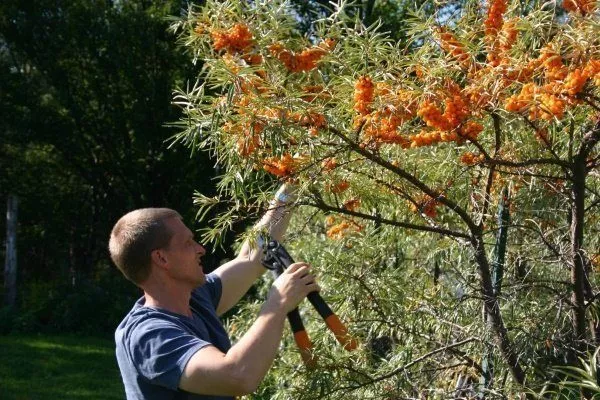
How to trim?
In late autumn, when the sea buckthorn enters a dormant period, it is necessary to carry out sanitary pruning of the bush, which involves removing the following branches:
- broken;
- sick;
- dried;
- growing incorrectly;
- too old (have a darker color than young ones);
- growing inward.
- ✓ The presence of dark spots on the bark indicates a possible disease.
- ✓ Branches with sparse or no foliage may be dried out and require removal.
It's crucial to use sharp, sterile tools when pruning branches to avoid soaking or damaging the bark. After this type of pruning, the shrub will be able to grow vigorously, as it won't waste its energy and vitality on unsuitable shoots.
After removing unnecessary branches, treat the cuts to prevent disease and pest infestation. Garden varnish or putty can be used for this. For example, the cuts can be sprayed with a copper sulfate solution and allowed to dry slightly.
Trimming errors
When pruning in autumn, inexperienced gardeners can make a number of mistakes:
- Leave shoots growing inward. Such branches significantly thicken the crown, which negatively impacts light and humidity levels. As a result, sea buckthorn yields decrease and the risk of fungal infections increases.
- Prune side shoots too severely. This can dramatically reduce the bush's yield. To avoid this mistake, keep in mind that sea buckthorn's generative buds appear at the top of the shoots. Therefore, when pruning, be careful not to overdo it with shortening them.
- Leaving numerous wounds after deep pruning. Sea buckthorn plants are quite slow to form calluses—cells that form on the wound surface of the plant, like corky tissue. Because of this, cuts on the plant heal poorly, and if there are many or large cuts, the bush may die altogether. To prevent this, it is also recommended to avoid harvesting berries by cutting off branches with fruit.
- Damaging the root. If the sea buckthorn dries out after removing the basal shoots, it's likely that the root was damaged during pruning. To prevent this, when removing the basal shoots, keep in mind that the bush develops numerous long lateral roots running horizontally. It's best to use pruning shears rather than pulling or ripping off the branches.
How to prune sea buckthorn so that it does not stretch upwards?
Low-growing sea buckthorn varieties don't require crown pruning, but tall, tree-like varieties are more demanding. Their growth should be monitored starting at age five. To do this, in the fall after harvesting, prune the shoots back to three-year-old wood, removing growth from the last two years. A small side branch should be left in the whorl.
Some gardeners resort to another method for creating a low, compact crown: bending the top of a young shrub to the ground and tying it to a stake. This technique will not prevent dormant buds from awakening along the entire length of the tree, from which shoots will emerge and form a spreading crown.
The following video clearly demonstrates how to harvest sea buckthorn and prune the tree:
Watering and loosening the soil
Particular attention should be paid to the plant's watering schedule if the shrub was pruned during the summer. As autumn approaches, water consumption should be increased:
- for young plants – up to 4-5 buckets;
- for mature plants – up to 8-10 buckets.
Water should be added to the tree's trunk circle as the soil dries out. In autumn, the watering rate can be reduced to 2-3 buckets, depending on the plant's age and root system.
Sea buckthorn requires moisture-recharging watering during the winter, as it helps to increase the plant's winter hardiness.
After each watering or rainfall, the soil in the area must be loosened. This loosening causes the sea buckthorn roots to form nodules, which harbor bacteria that perform an important function:
- They absorb nitrogen from the air.
- They enrich the root layer of the soil with nitrogen compounds that are vital for the plant.
So, the soil in the area should always be loose, but care must be taken, as the plant's root system is vertical and easily damaged. Some gardeners recommend mulching the tree trunks using one of two types of organic matter:
- humus;
- compost from potato tops or birch or apple tree leaves.
Thanks to such a layer of mulch, you can reduce the frequency of soil loosening.
Sea buckthorn feeding
To promote active growth and abundant fruiting, sea buckthorn requires regular feeding, starting at age three. The plant's root system is self-sufficient in nitrogen, so only potassium and phosphorus fertilizers should be applied to mature plants for up to five years, while the root system develops.
So, a proper plant feeding scheme looks like this:
- In the spring, scatter ammonium nitrate around the tree trunks at a rate of 20 g per 1 square meter of area. Cover the fertilizer with a layer of soil.
- Immediately after the leaves of an adult plant entering the fruiting period bloom, spray the bush with a solution of liquid potassium humate or Effekton at a rate of 1 teaspoon per 10 liters of water. Repeat the treatment three weeks after the initial spraying.
- During the ovary growth period, when sea buckthorn is preparing to bear fruit, feed the plant with a solution of granular superphosphate (2 tablespoons), Universal-Micro nutrient mixture (2 tablespoons), and potassium sulfate (1 tablespoon). The dosage is indicated for 10 liters of water.
- When digging the plot in the fall, add 30 g of superphosphate, 100 g of wood ash, and 25 g of potassium salt per square meter. If the soil is acidic, replace the superphosphate with phosphate rock at a rate of 50 g per square meter. If the soil is heavy, add 1/2 bucket of sand or sawdust under each plant.
Male plants do not become depleted after harvesting, so they do not require as much feeding as female plants.
Treatment against diseases and pests
As we know, prevention is better than cure. To protect sea buckthorn from diseases and dangerous pests, it's essential to carry out preventative treatments in late autumn:
- remove all fallen leaves from the area;
- remove the remains of flowers and fruits from the bushes;
- clean the wounds on the trunks and branches, treat them with a 3% solution of copper sulfate or a special garden putty;
- whitewash tree trunks and skeletal branches with lime to protect the bark from pests.
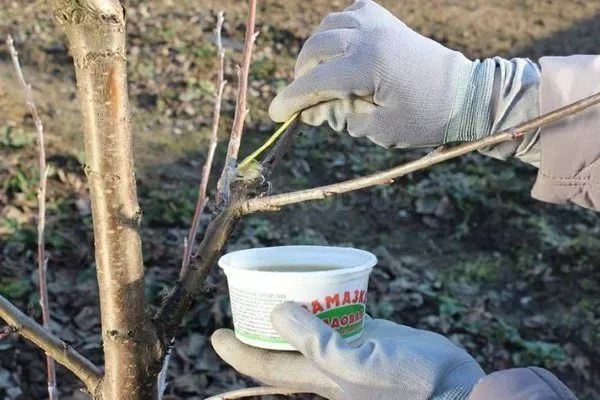
In late autumn, sea buckthorn should also be treated with a 7% urea solution or a 1% Bordeaux mixture solution. This will protect the plant from fungal diseases and pests. This treatment should also be carried out in early spring.
During the season, if pests appear on the sea buckthorn, the bushes should be treated with a solution of wood ash once a week.
Harvesting cuttings in autumn
To root lignified sea buckthorn cuttings in the spring, you need to properly prepare the cuttings from late November to early December. To do this, select two-year-old shoots that are at least 6 cm thick. These should be cut with a sharp tool into 15-20 cm long pieces.
Cuttings cut in autumn should be prepared as follows:
- Tie into a bun.
- Wrap in cloth and place in a plastic bag.
- Bury the bag in a hole.
- Cover the hole with snow. If it hasn't fallen yet, you can fill it with spruce branches or dry leaves.
Cuttings preserved in this way should be soaked in water for three days before planting, changing the water several times. It's a good idea to add a rooting stimulant. After soaking, the cuttings can be planted in the soil at an angle, leaving at least two to three buds above the surface. By autumn, the cuttings will have grown to a height of 60 cm, and will begin to bear fruit in the third year.
How to store autumn harvest?
Sea buckthorn berries collected in autumn can be prepared in several ways:
- Keeping freshPlace cut sea buckthorn branches in a cool room where the temperature does not rise above 0 degrees Celsius. It is crucial that the room be dry, as excess moisture causes rotting. You can store the branches and berries in this manner until spring. This method does not require heat treatment of the berries, so they retain the maximum amount of nutrients.
- Quick freezingThe berries, cut from their stems, should be placed in plastic bags and placed in the freezer.
- Sea buckthorn covered with sugarThe berries should be sorted, washed, and laid out on a towel to dry. Then, in a large container, mix with the same amount of sugar. Place the mixture in sterilized jars and store in the refrigerator until spring. This sea buckthorn is perfect for making compote or fruit drink.
- Mashed sea buckthornIf ripe, juicy sea buckthorn was harvested in the fall, this method is recommended. The sea buckthorn should be sorted, washed, and dried on a towel, then mixed with an equal amount of sugar. The mixture can be ground to a paste using a meat grinder or blender. Then, it should be poured into jars, sealed with regular nylon lids. Store in the refrigerator or cellar.
- Storage in waterPour cold boiling water over fresh berries and place in the refrigerator.
- Sea buckthorn juiceThe sorted and washed berries should be put through a juicer and poured into jars, which must be sterilized. The sealed juice can be stored in the refrigerator or cellar. The calorie content of the finished juice is 52 kcal per 100 ml. You can add sugar, honey, or other berries or fruits if desired.
Sea buckthorn can be heat-treated to make compote, jam, marmalade, or oil. While high temperatures will certainly remove some of the berries' micronutrients, they will still remain tasty and nutritious.
Video: How to care for sea buckthorn?
In the following video, the nursery manager will explain how to properly prune sea buckthorn, feed it, and treat it for pests:
After harvesting in late summer and early fall, sea buckthorn requires proper care, including pruning, watering and loosening the soil, and fertilizing with organic and phosphorus fertilizers. Special attention should also be paid to treating the plant for potential pests and diseases. If all care is taken, you can reap a bountiful harvest of healthy and delicious fruit next year.