
Sea buckthorn is easily recognized by its abundance of yellow, orange, or red fruits, tightly clinging to the branches of its tree-like shrubs. Despite their superficial similarities, there are dozens of varieties, differing in yield, ripening time, flavor, color, fruit size, yield, frost resistance, and other characteristics.
The sweetest varieties
Sea buckthorn is traditionally tart. But today, thanks to painstaking breeding, there are several varieties distinguished by their increased sweetness. These varieties are called dessert varieties—their berries have a pleasant aroma and contain a high sugar content.
| Name | Yield (kg per bush) | Fruit weight (g) | Ripening period |
|---|---|---|---|
| Darling | 7.3 | 0.65 | September |
| Ruet | 14 | 0.6 | Early ripening |
| Tenga | 14 | 0.8 | Mid-season |
| Muscovite | 10 | 0.7 | September |
| Nizhny Novgorod sweet | 10 | 0.9 | End of August |
| Moscow pineapple | 16 | 0.6 | Mid-August |
| Claudia | 10 | 0.8 | September |
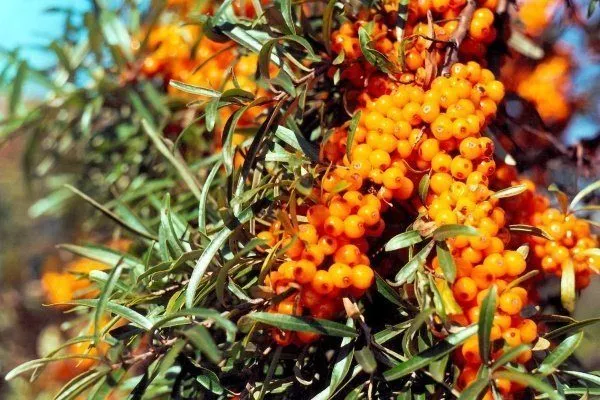
Darling
Medium-sized shrubs with a spreading crown. Thorns are very few, scattered along the entire length of the branches. The shoots have a whitish bloom. The leaves are silvery on the underside. One bush produces 7.3 kg of berries.
The large, bright orange berries ripen towards September. The fruits are a classic oval shape, characterized by their loose texture, and are used for winter preserves and for pressing sea buckthorn oil. Each berry weighs 0.65 g. They easily withstand harsh winters and are resistant to the common sea buckthorn diseases.
Ruet
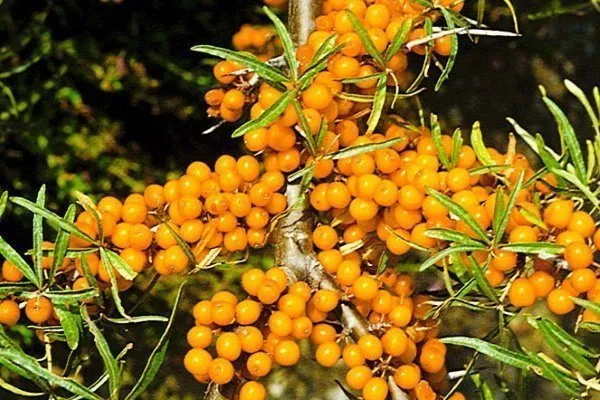
The plant is medium-tall, with a compressed crown. The thorns are short and concentrated at the top of the branches. A single plant produces up to 14 kg of fruit. It thrives in full sun and requires organic fertilizer. It tolerates moisture deficits. Annual preventative pruning is required.
This early-ripening and winter-hardy variety grows and ripens easily in Siberia. The berries are large, weighing about 0.6 g. The sweet and sour orange berries have a rich flavor and a fresh aroma.
Tenga
The plant is medium in all respects—height, canopy density, and thorn count. One plant produces up to 14 kg of fruit.
An early-ripening, mid-season variety. The berries are large, weighing approximately 0.8 g. The orange berries have a bright, rich flavor and a fresh aroma. Ripe fruits develop a blush. Resistant to sea buckthorn flies and mites.
Muscovite
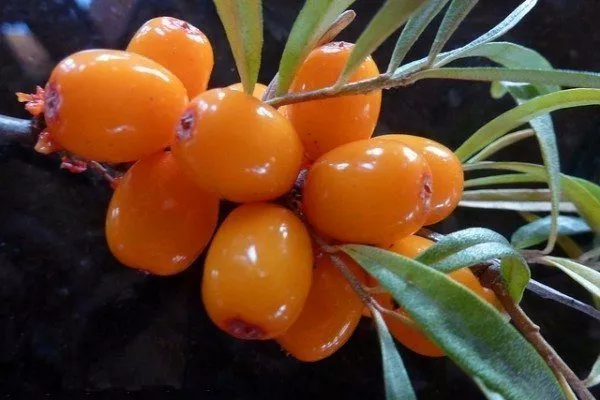
Plant height: 2.2-2.5 m. Compact, pyramidal crown. Yield: up to 10 kg. General-purpose. Fruit is aromatic and dessert-grade. Thorns.
The berries are bright orange, thin-skinned, and have reddish spots on the surface. This mid-season variety is harvested in early September. The fruits are firm, keep well, and transport easily. It is disease- and frost-resistant.
Everyone knows about the benefits of sea buckthorn, but this miracle berry also has contraindications – it should not be consumed by people with urolithiasis, gastritis, or gallstones.
Nizhny Novgorod sweet
The plant grows quickly, is medium-height, and has a spreading crown. The leaves are large and dark green. It prefers a sunny position. The bush begins bearing fruit in the second or third year. A single bush yields 10 kg of berries.
This variety is mid-season—the berries are ready for harvesting in late August. The cylindrical fruits are orange-yellow, slightly tart, and large, weighing 0.9 g. They peel easily. This sweet sea buckthorn is suitable for all purposes, not only for medicinal purposes but also for making various delicacies—jams, compotes, jellies, kissels, sweets, and wines.
Moscow pineapple
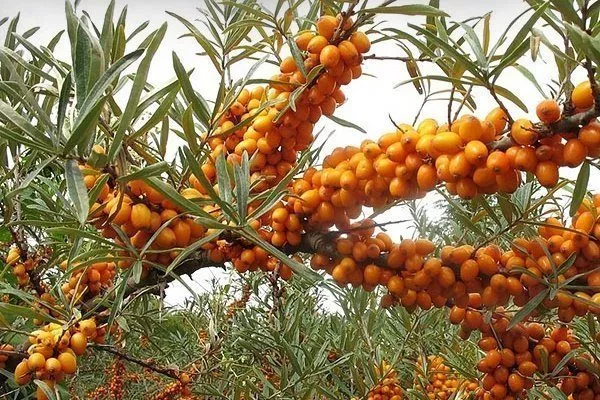
The bushes are medium-height, with a compact crown. One plant yields up to 16 kg of sea buckthorn. Thorns are minimal. The berries have a distinctive aroma, reminiscent of pineapple.
This mid-season variety ripens by mid-August. They are pear-shaped, medium-sized, and weigh no more than 0.6 g. They are dark orange in color with a red spot at the top. They tolerate frost without damage and are resistant to common diseases. The fruit is versatile and transported without causing spoilage.
Claudia
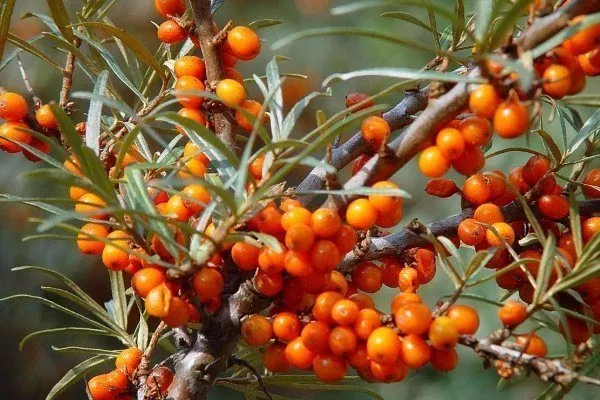
A self-sterile variety—not capable of self-pollination. The bushes are medium-height, woody, with a flat, rounded, spreading crown and medium density. One bush produces up to 10 kg of sea buckthorn. Thorns are weak. Fruiting begins in the fourth year after planting.
The berries are cylindrical, bright orange, and large—0.8 g each. They are easy to pick. They have a dessert-like flavor. They are suitable for any type of processing. This variety is resistant to cold and viruses, and is not damaged during transportation. They are suitable for freezing and are highly resistant to sea buckthorn flies.
Thornless varieties
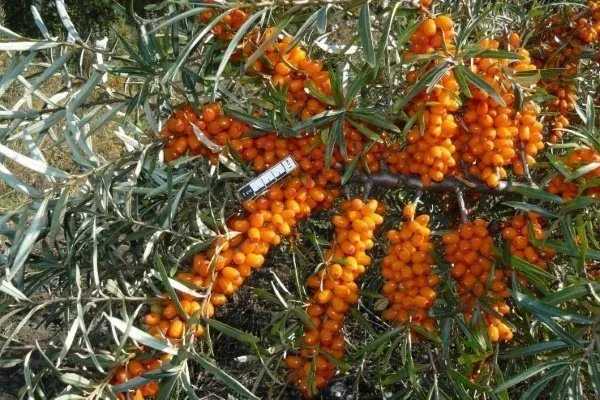
Thorns are the main problem when harvesting sea buckthorn. However, thanks to targeted breeding efforts, there are now many varieties with few or no thorns.
| Name | Yield (kg per bush) | Fruit weight (g) | Ripening period |
|---|---|---|---|
| Solar | 9-10 | 0.7 | Mid-season |
| Socratic | 9-10 | 0.6-0.8 | End of August |
| Zhivko | 14-20 | 0.5-0.6 | Late-ripening |
| Giant | 8-10 | 0.8-0.9 | Mid-September |
| Girlfriend | 8 | 0.8-1 | Mid-season |
| Altai | 15 | 0.8 | End of August |
| Chechek | 16-25 | 0.9 | September |
| Excellent | 9 | 0.7 | Beginning of September |
Solar
A tall, woody shrub with a spreading crown. Height: 2.5-2.8 m. Thornless, making harvesting very easy. Yield: 9-10 kg per bush. Fruiting begins in the third year after planting.
A mid-season variety. Berries are amber-colored, medium-sized, weighing 0.7 g. They have a pleasant sweet and sour flavor. Excellent winter hardiness and resistance to pests and diseases.
Socratic
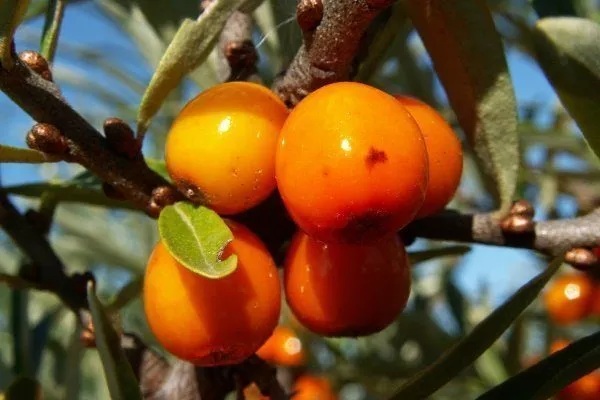
Completely thornless. A vigorous, woody shrub, up to 3.5 m tall, with a spreading crown. A single plant yields 9-10 kg of berries.
The fruits ripen in late August, weighing 0.6-0.8 g. The red-orange fruits have an excellent flavor. This versatile variety is resistant to fusarium wilt and gall mite.
Zhivko
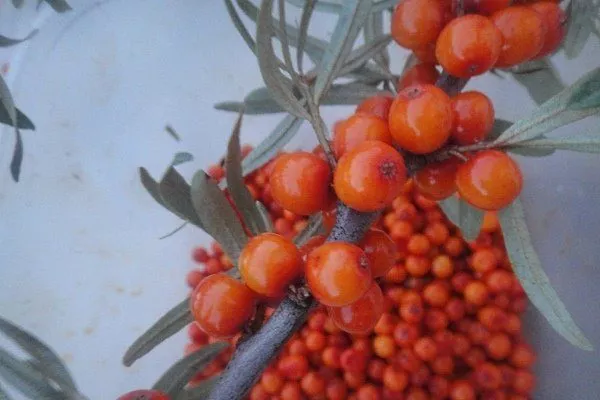
The bushes are medium-height, with a broadly oval crown. The shoots are thornless. One plant produces 14-20 kg of fruit.
A late-ripening variety with oval, orange-red fruits. The berries have a dry separation. Berry weight is 0.5-0.6 g. The flavor is average. For industrial purposes.
Giant
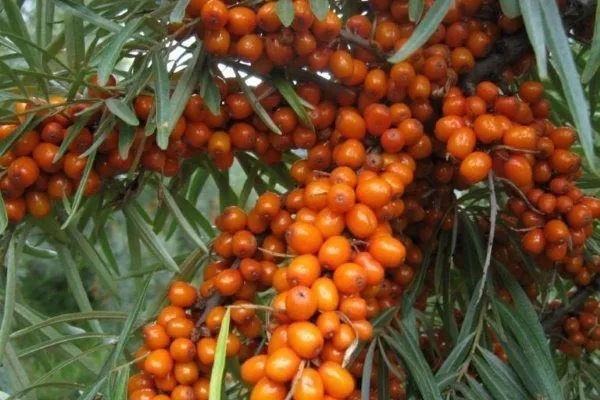
A low-growing tree, suitable for both private gardens and commercial cultivation. A single plant yields 8-10 kg. The branches are completely thornless. Fruit appears 3-4 years after planting. The plant reaches its peak yield in its 6-7th year.
The berries ripen by mid-September. The berries are cylindrical, orange, and weigh 0.8-0.9 g. Larger berries, weighing up to 1.3 g, also occur. They are easy and dry to pick. Suitable for all purposes. In areas with short summers, the berries, due to their late ripening, do not have time to accumulate sugars and ripen properly.
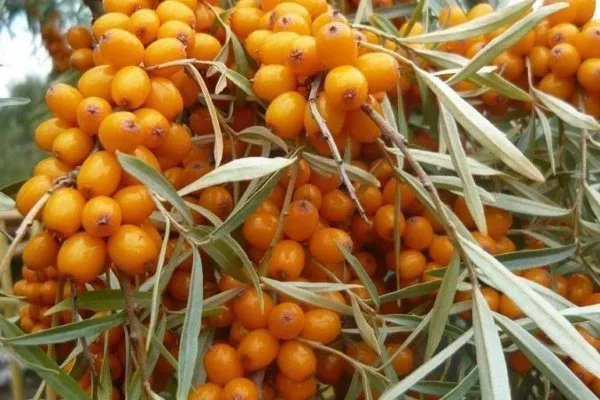
Sea buckthorn becomes sweet only after frost; if you pick the berries earlier, they will be bitter-sour.
Girlfriend
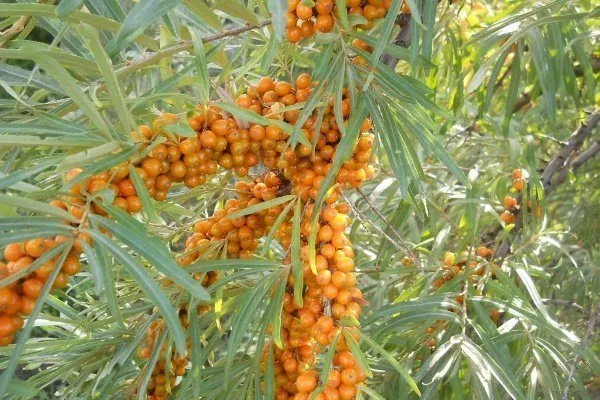
A medium-sized tree with a loosely spreading crown. The berry yield is 8 kg. It is thornless. Sea buckthorn is frost-hardy, growing and bearing fruit in the harshest climates. It can withstand temperatures as low as -40°C (-40°F).
Berry weight: 0.8-1 g. The fruits are large, oval-round, and orange in color. The pulp has a refreshing flavor. This is a mid-season variety. Resistant to endomycosis. Slightly affected by sea buckthorn fly.
Altai
A compact, woody shrub with a dense crown that can be easily shaped into any desired form. A single plant produces up to 15 kg of fruit. It is completely thornless.
Ripens in late August. The berries are orange in color and smell like pineapple. They weigh 0.8 g and are easy to pick. The tree is strong, resilient, and disease-resistant. They have a wonderful sweet flavor. They can withstand temperatures down to -45°C.
Chechek
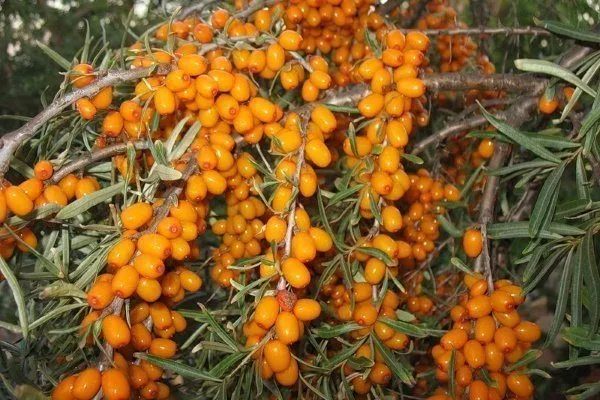
A wonderful variety – sweet, large-fruited, and virtually thornless. Prolific yields reach up to 16 kg, with a maximum yield of 25 kg. The bushes are medium-sized, with a spreading but sparse crown. The plant begins to bear fruit only in its fifth year.
Bright orange berries with a reddish blush cling tightly to the branches. They weigh 0.9 g. The fruits are sweet and sour, with firm skin and a dry peel. This Siberian variety withstands the harshest winters with ease.
Excellent
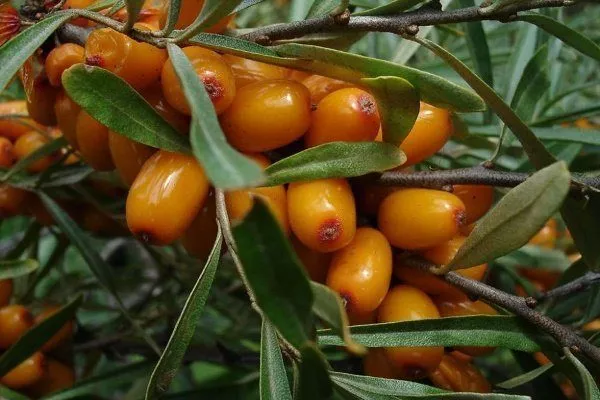
An old, time-tested variety, developed in the 1970s. The plant is medium-sized, with a spreading, rounded crown. Thorns are absent. A single bush yields approximately 9 kg. It bears fruit abundantly for 10-12 years.
This variety is mid-season. The berries ripen by early September. The oval, orange berries cling tightly to the branches. Each berry weighs 0.7 g and is easy to remove. The sweet and sour fruits are suitable for all purposes. They have high immunity and winter hardiness. A drawback is that the foliage is susceptible to spider mites and sea buckthorn flies.
Large-fruited varieties
Each sea buckthorn bears thousands of tiny berries. Many gardeners prefer large-fruited plants. Large-fruited varieties are considered large-fruited, weighing over 0.8 g.
- ✓ Resistance to specific sea buckthorn diseases, such as fusarium and endomycosis.
- ✓ Soil composition and acidity requirements for optimal growth.
Elizabeth
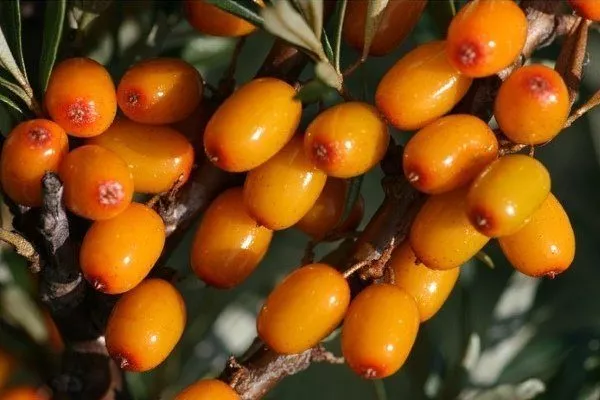
Compact, thornless plants. The yield per plant ranges from 5 to 14 kg. Breeders, when developing this variety, sought to eliminate the main shortcomings of sea buckthorn, and they succeeded: 'Elizaveta' produces large fruits and is virtually thornless.
A late-ripening variety. Cylindrical orange fruits weigh 0.8-0.9 g. The aroma is pleasant. The variety is hardy in every respect – it is frost-resistant and has a strong immune system.
| Variety | Lighting requirements |
|---|---|
| Darling | Full sun |
| Ruet | Full sun |
| Tenga | Penumbra |
Naran
The plants are short, with a moderately spreading crown. The yield is 12-13 kg per bush. The thorns are only present on the upper parts of the shoots; the spines are thin and short.
The fruits are pale orange, thin-skinned, and elongated-cylindrical. They weigh an average of 0.9 g. They are resistant to frost, pests, and diseases. The excellent flavor means the variety has been awarded the highest tasting score.
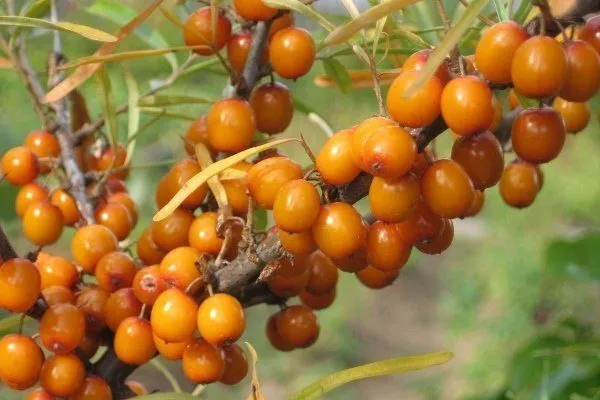
Leycor
This buckthorn plant has multiple trunks. The woody stems give the bush a tree-like appearance. The bush is spherical and elliptical in shape. It reaches 2-3 meters in height, growing 0.5 meters annually. It grows vigorously after pruning. The shoots are thorned. A single bush produces 10-15 kg of berries.
The berries are light orange, glossy, and oblong. They are very large, weighing 1.1-1.2 g. This is a late-ripening variety, ripening in early autumn. It is undemanding of soil conditions and winter-hardy.
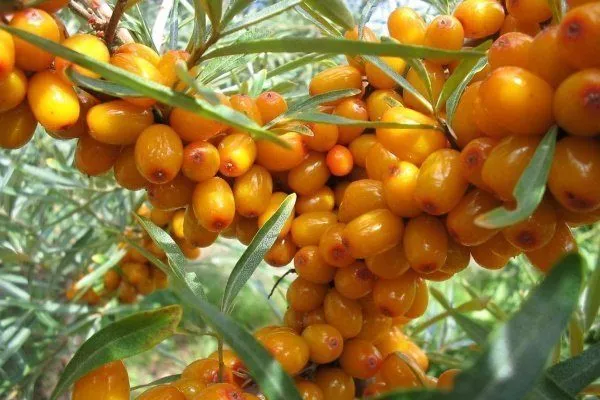
Essel
An elite, large-fruited variety. Yields 7-8 kg per bush. Fruiting begins in the fourth year after planting. Thornless.
An early-ripening variety. The fruits weigh 1-1.2 g, are very large, sweet, and dark orange. The fruit is ovoid, reaching 1.5 cm in length. The plant is very ornamental and has an excellent dessert flavor. The berries are semi-dry when picked from the stalk. The berries are delicious fresh or pureed. They have moderate drought tolerance and are highly winter-hardy.
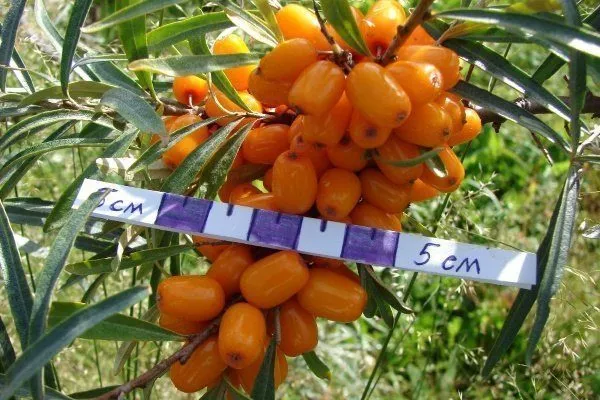
Openwork
These low-growing shrubs are distinguished by their decorative appearance, and their berries are large. This is a large-fruited variety, yielding approximately 6 kg of fruit per bush. Fruiting begins in the fourth to first year after planting. The yield is 5-6 kg per bush.
An early-ripening, versatile variety with large berries, up to 1 g each. The berries are a rich orange color and cylindrical in shape. A winter-hardy variety, the tart berries are used to make excellent purees, jellies, preserves, wines, and much more. It tolerates low moisture levels and heat well.
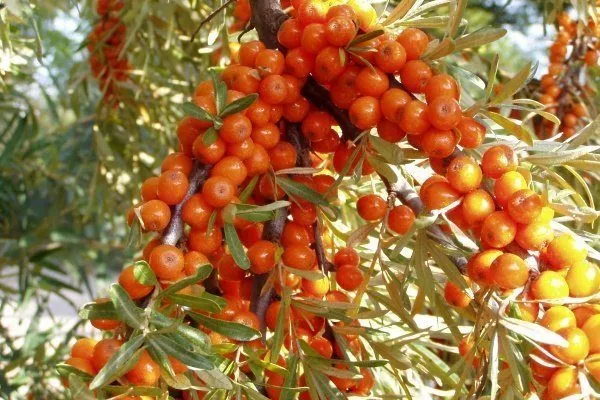
Zlata
The bushes are medium-sized, with a slightly spreading crown. They have thorns. They produce stable yields—an average of 15 kg per bush. Fruiting begins 3-4 years after planting.
A late-ripening variety, its berries ripen in late August. Large berries, about 1 g each, reach 1.3 g each. The flavor is sweet and sour. The fruit is straw-colored. This sun-loving variety is disease-resistant.
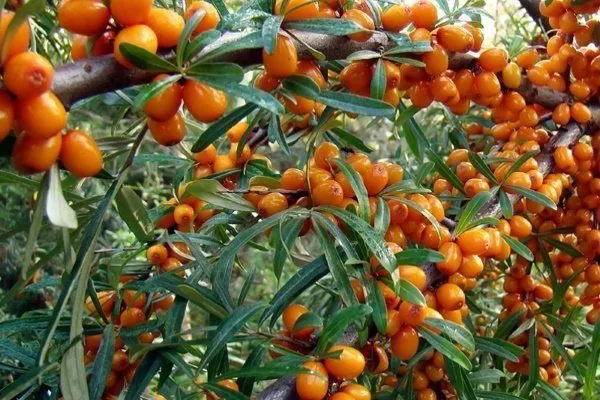
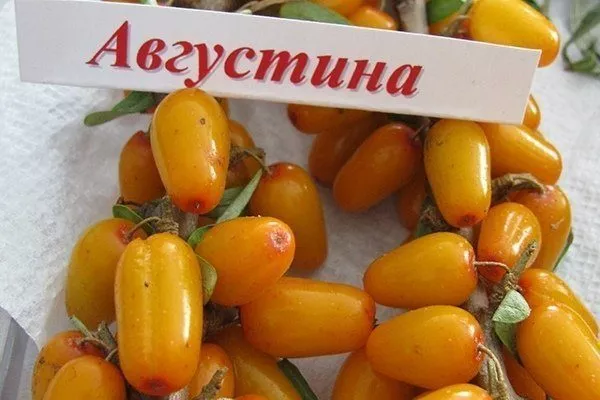
Augustine
The mature plant has a medium-spreading crown. Thorns are very rare, making berry picking easy and enjoyable. The yield is 16-18 kg of berries per plant.
In terms of ripening time, 'Augustina' is an early variety. The fruits are ready by the end of July. In northern regions, ripening shifts to August. The fruits are bright orange and ovoid. They weigh 1.1 g, with a maximum of 1.4 g. They have a tart flavor. Ripe bunches are easy to pick – they separate cleanly. The variety is resistant to fungal infections and pests, and tolerates drought and frost.
High-yielding varieties
Sea buckthorn combines ornamental beauty with economic benefits. If the plant is being grown for fruit, the variety's yield is important. Some bushes yield only 5-6 kg, while others yield 20-25 kg per bush. If sea buckthorn is being grown for berries, for home canning, or on an industrial scale, it's beneficial to use the highest-yielding varieties.
Abundant
The bushes are medium to tall, with a rounded, relatively spreading crown. The yield is 14-16 kg, or 20-24 kg with intensive cultivation. The berries are easy to pick—they don't get crushed. They begin bearing fruit in the third or fourth year after planting.
A late-ripening, versatile variety. The fruits are standard—cylindrical, dark orange. Fruit weight is 0.86 g. Not particularly sour. Prefers sunny locations. Resistant to diseases and extreme weather.
Botanical aromatic
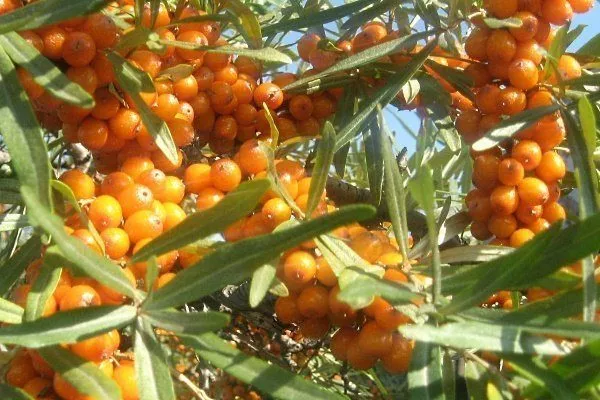
Medium-sized shrubs with an umbrella-shaped crown. Average yield is 9-15 kg, with a maximum of 25 kg. Soft thorns are rare, short, and concentrated only on the upper branches.
A high-yielding early variety. Ripens in August. The fruits are large, weighing 0.6-0.7 g. The round-oblong berries are shiny, orange-red in color, with a reddish spot at the top. The berries are versatile and do not crush during transportation. They are immune to endomycosis.
Chuiskaya
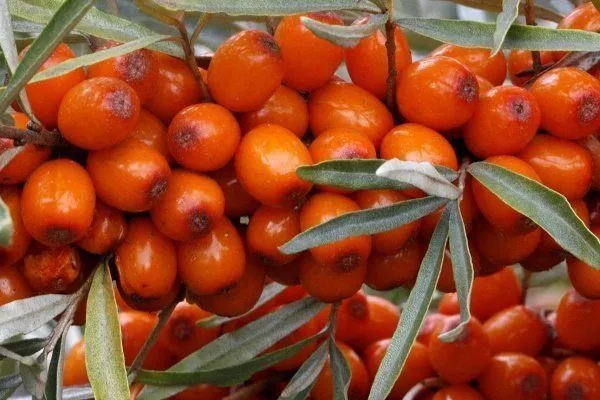
The bush is low-growing with a sparse, spreading crown. The average yield is 11-12 kg per bush, and with intensive cultivation, up to 24 kg. Very few thorns are present, which is important for easy berry picking.
Ripening time: mid-August. This is a late-ripening variety. The bright orange fruits weigh 0.9-1 g. The variety is self-sterile and requires pollination.
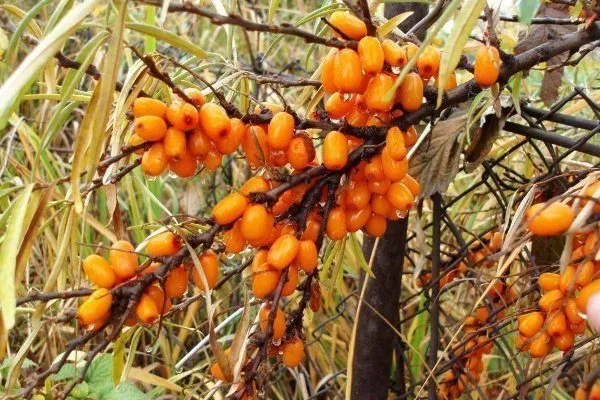
Botanical
The bushes are quite tall, reaching 3.5-4 m. The crown is pyramidal. The yield of berries per plant is 8-15 kg, with a maximum of 20 kg.
Mid-early ripening. The fruits are yellow-orange, fairly large, weighing up to 0.9 g. The skin is thick and the fruit is dry. The fruit is used for industrial purposes. A disadvantage is that it ripens quickly, making it difficult to transport. A hardy variety with a high immunity.
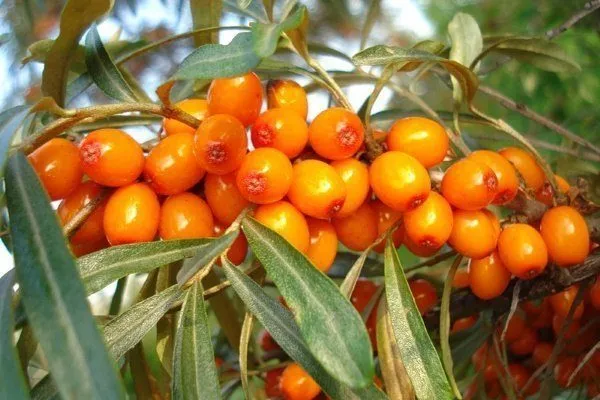
Panteleevskaya
The plant has a moderate growth habit and a spherical crown. It has minimal thorns. The yield per bush is 10-20 kg. The fruits are not crushed during harvesting.
Late ripening – the berries are picked in the last ten days of September. They have average shelf life during transportation. The fruits are red-orange in color, weighing up to 0.7 g and elongated oval in shape. The peduncle is long – 5-8 mm. The variety is winter-hardy and has good disease resistance.
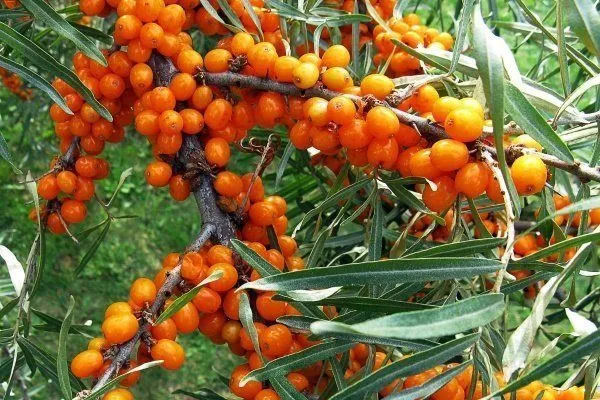
A gift to the garden
Compact shrubs with few thorns. Umbrella-shaped crown. Very high yield – 20-25 kg per bush.
Berry harvesting begins in late August; this variety is considered mid-season. The plant is not only productive but also large-fruited, with berries weighing 0.8 g or more. Their color is a rich orange, but their flavor is mild—astringent and sour. It has excellent immunity and cold resistance.
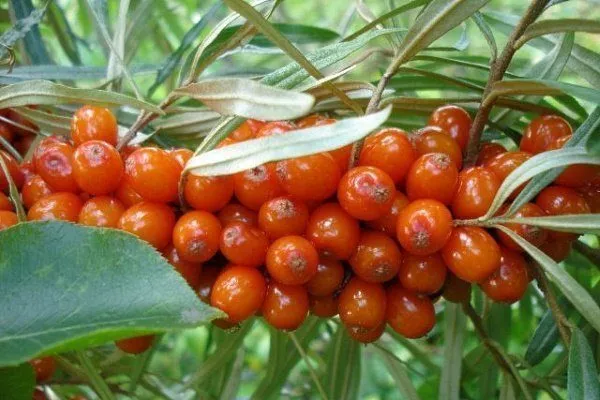
Gift of Moscow State University
The bushes with spreading crowns reach a height of 3 m. A single plant produces up to 20 kg of sweet and sour fruit. The stalks are 5 mm long and the fruit peels off easily, even when dry.
This is an early-ripening variety. The berries, as they ripen, acquire a beautiful, bright orange color—the tree is primarily ornamental. Each berry weighs 0.7 g. The fruits are versatile, rich in vitamin C, and do not bruise during transportation. The plant is hardy and rarely prone to disease.
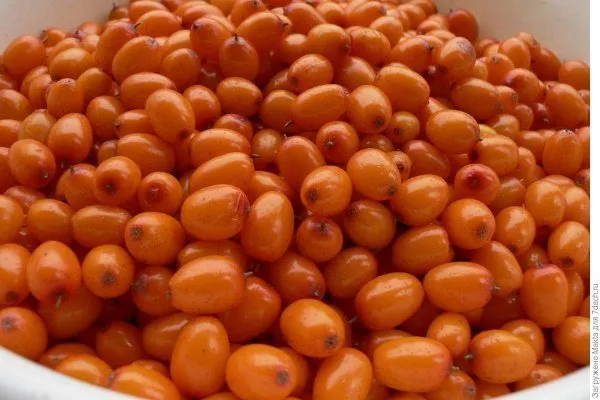
Low-growing varieties
Harvesting sea buckthorn by hand is painstaking work. Fortunately, the berries are densely packed, making the harvester's job easier. Difficulties arise if the plant is tall. To reach the berries on the upper branches, various tools must be used. If the plant is short, the berries can be quickly harvested without the need for ladders. Dwarf varieties are those that grow no taller than 2.5 meters.
Amber
A low-growing shrub with a sparse crown. An old, proven variety. It yields an average of 10 kg of berries. It is virtually thornless. The leaves have a grayish pubescence. Fruit appears in the fourth year after planting.
Ripening occurs in early September. The cylindrical, orange berries weigh 0.6-0.7 g. The berry harvest is abundant, with consistent annual yields. Fruiting lasts 10-12 years. The maximum yield is harvested at age 5 – 13-14 kg. A resilient and robust plant in all respects.
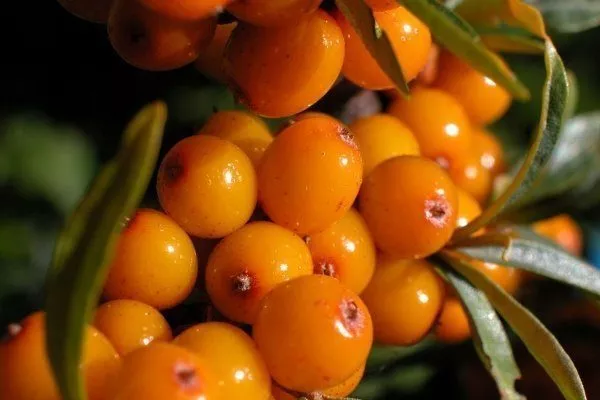
Inya
A low-growing shrub with a sparse crown. The plant is short and has very few thorns. A single bush yields 14 kg of berries.
An early-ripening, winter-hardy variety. The berries are red-orange with a blush, large, weighing 1 g. The berries are delicious.
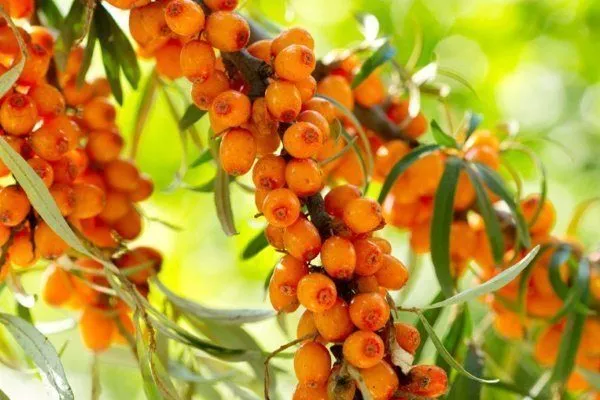
Thumbelina
This shrub looks great in small garden plots, reaching no more than 1.5 m in height. It has a compact crown and very few thorns on the shoots. A single plant yields 20 kg.
The berries ripen in the first half of August; they are dark orange and quite large, weighing 0.7 g. They have a tart flavor. They are virtually pest-resistant and winter-hardy.
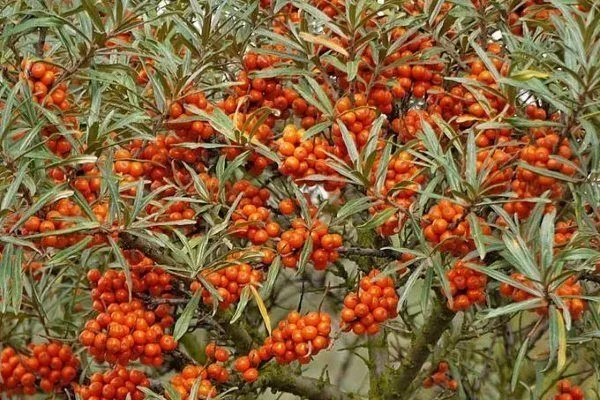
To obtain high-quality juice that does not separate into fractions, varieties that produce the highest quality juice are used: Vasilisa, Nadezhda, and Nizhegorodsky Souvenir.
Squad
A low-growing shrub with a compact crown. It's very easy to pick – the berries are tightly packed, the picking is dry, there are no thorns, and, most importantly, no ladder is needed. A single plant yields approximately 10-11 kg of berries.
An early-ripening variety. The orange-red, oval-round fruits weigh 0.8 g. The flavor is refreshing. The fruits are suitable for table use. The variety is resistant to diseases and frost.
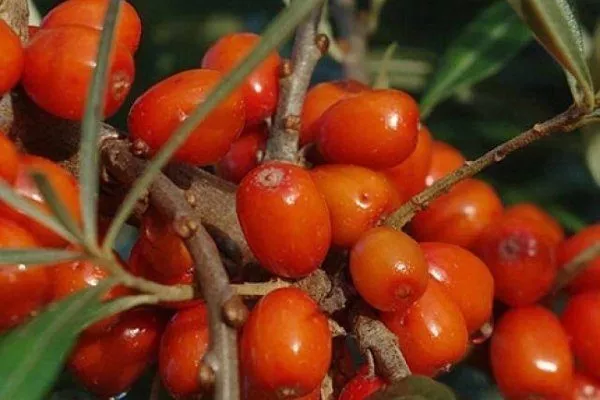
Moscow beauty
A low plant with a compact crown and few thorns. Yield: 15 kg of berries.
The berries are harvested in the second half of August. They have a sweet and sour taste. The fruit is dry to the touch. They are a piercing orange color and weigh 0.6 g.
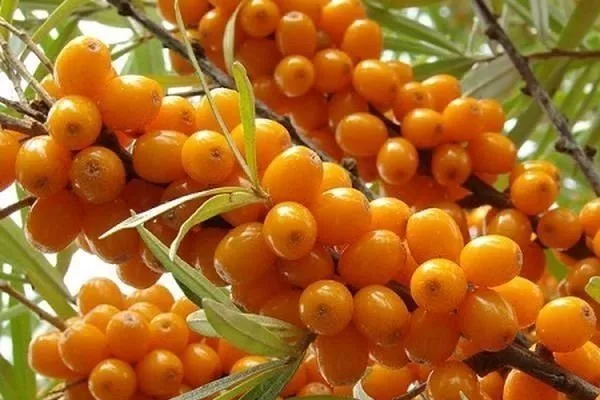
Baikal ruby
An easy-to-harvest variety. One of the most vitamin-rich. Thorns are few. Low-growing, compact bushes—up to 1 m tall—produce 12-13 kg of fruit.
Harvest time: second half of August. The coral-colored berries are medium-sized, weighing approximately 0.5 g. They are high in vitamin C. They are a very winter-hardy and resilient plant.
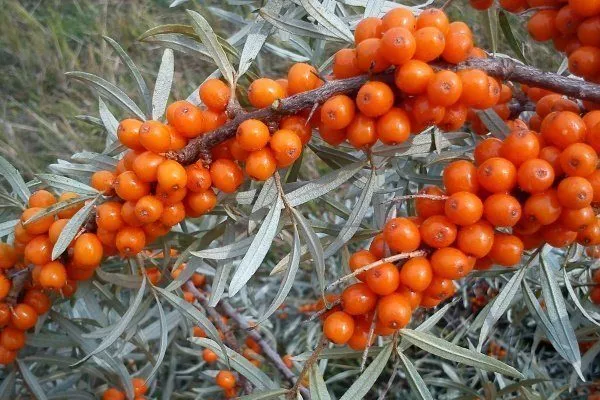
Chulyshmanka
Medium-sized bushes with a broadly oval crown. The yield per bush is 10-17 kg. Few thorns.
Ripens in late summer-early fall. The fruits are bright orange, weighing 0.6 g. Tolerates dry periods. Slightly tart flavor. High in vitamin C and carotenoids.
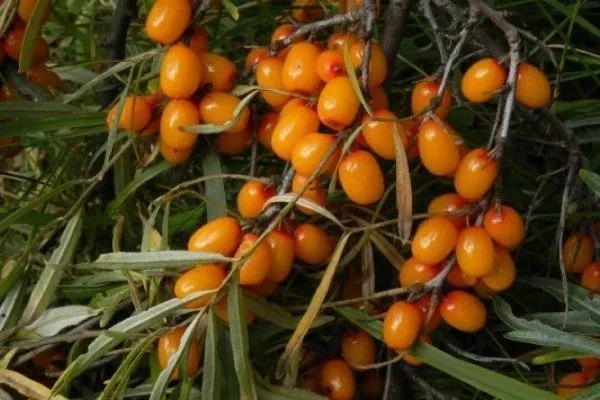
Bayan goal
Low-growing bushes – 1-1.2 m tall. The crown is compact. The shoots are thornless. The yield per bush is 13-14 kg. It bears fruit in the third year after planting.
This late-summer variety ripens in mid-August. The berries are bright orange with a blush at the tips. They weigh 0.55-0.65 g. They are resistant to sea buckthorn moth and desiccation.
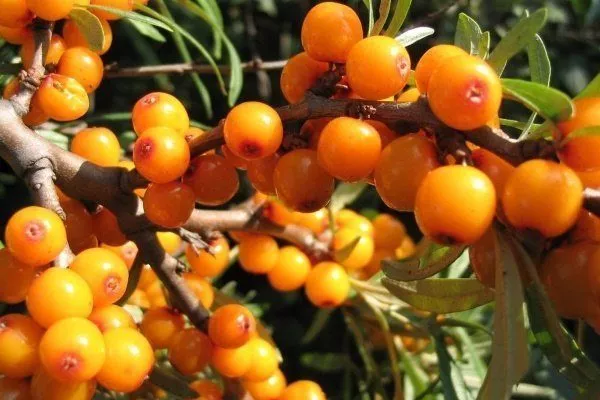
Frost-resistant varieties
Sea buckthorn is prized in the north. In the south, where fruit is plentiful, this plant is used more often as an ornamental or for medicinal purposes. In northern regions, however, sea buckthorn is an excellent source of vitamins and the raw material for various delicacies. To thrive and bear fruit in harsh conditions, sea buckthorn must withstand very low temperatures.
Jam
A winter-hardy, thornless, and large-fruited variety. The bushes are low-growing and highly decorative, especially during ripening. The yield per bush is 9-12 kg. Fruiting begins in the fourth year of planting.
A mid-season variety, the berries ripen in early September. The berries are oblong, orange-red, and weigh 0.8-0.9 g. Frost-resistant, withstands temperatures down to -35°C. Drought-resistant. It grows poorly in acidic and heavy soils. It has limited resistance to sea buckthorn flies. The berries have a dessert-like flavor.
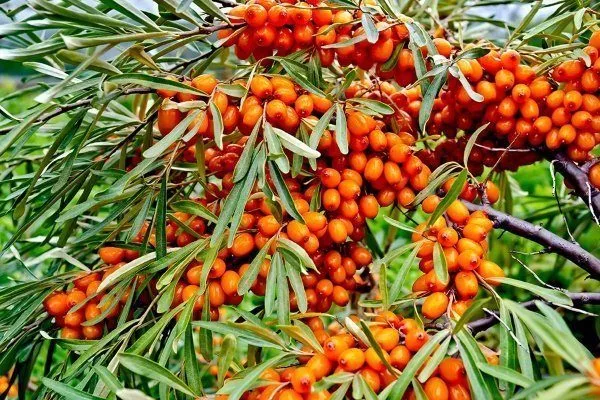
Golden ear
This variety is not only frost-resistant but also very productive. Medium-sized bushes with compact crowns yield 13 to 28 kg of berries. It has few thorns.
The berries ripen in late August. The orange, blush-tinged fruits grow to 0.5-0.6 g. The berries are used for industrial purposes. The flavor is satisfactory. They are resistant to low temperatures.
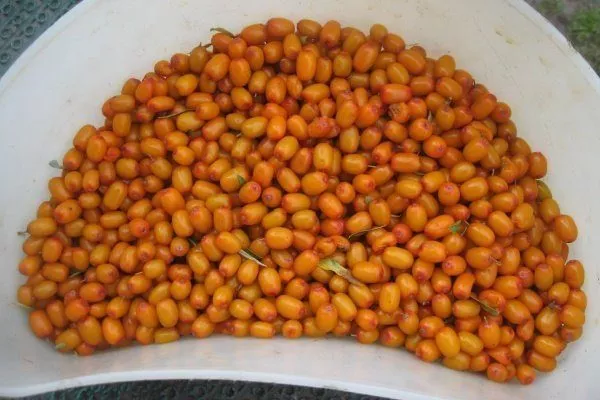
Trofimovskaya
Tall, compact shrubs with umbrella-shaped crowns. They have a medium number of thorns. Fruiting begins 4-5 years after planting. The yield per bush is 8-10 kg.
This mid-season variety is highly winter-hardy. Harvesting begins in the first ten days of September. The berries are medium to large, weighing 0.6-0.7 g. They are elongated-oval and red-orange in color. The skin is thick and pubescent. These berries are versatile.
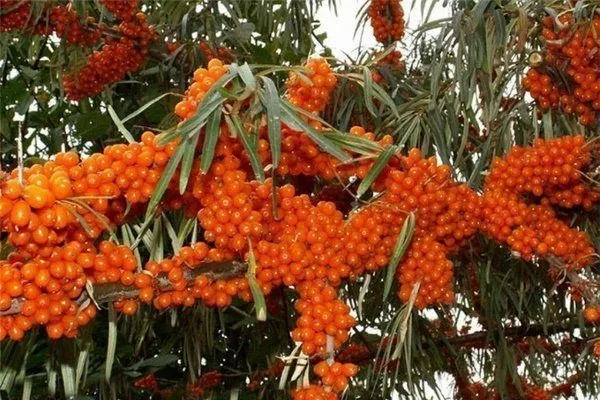
Pepper
The bushes are medium-height, with a moderately spreading crown and a moderate number of thorns. The yield is moderate: 8-13 kg of berries are harvested per bush.
This is a mid-season variety. The fruits are ovoid, orange, shiny, and scaly. The berries are used for industrial purposes and have a slightly tart taste. They also have a fragrant flavor.
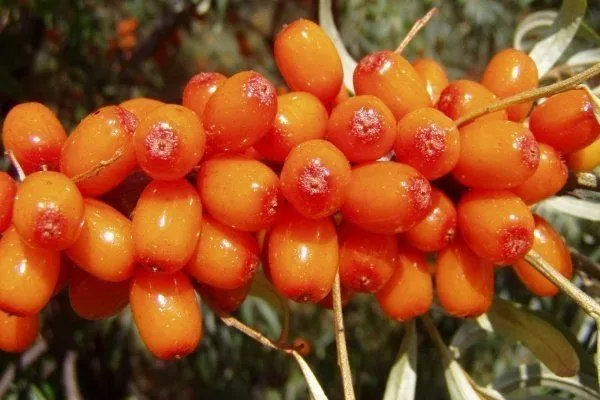
Ayula
The bushes are medium-height, with a broadly oval crown. They are completely thornless, making harvesting easy. The yield per bush is 14-20 kg.
The berries ripen in early autumn. They are highly winter-hardy and drought-tolerant. The berries are dark orange with a bright blush. They have a good, slightly tart flavor. They weigh 0.7-0.8 g and are resistant to sea buckthorn flies.
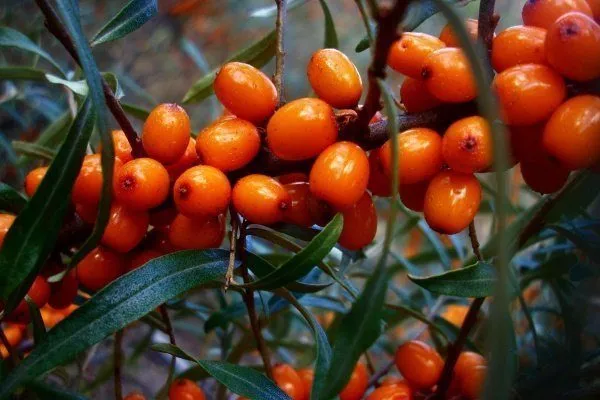
Gift of Katun
The plant is tall, growing up to 3 m in height. The crown is compact and oval. Thorns are minimal or absent. A single plant yields 14-26 kg of fruit. The maximum yield is 6-7 years after planting.
The berries ripen in late summer. The berries are ovoid-shaped, orange, and weigh 0.75 g. They have a blush near the stem. The flavor is moderately sour, without a bitter aftertaste. These versatile fruits are suitable for any purpose. They are highly frost-resistant.
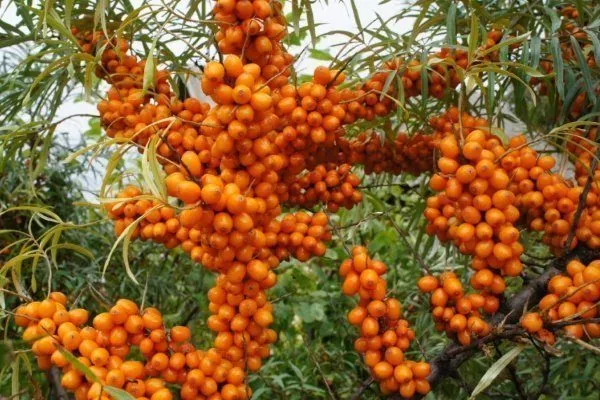
Otradnaya
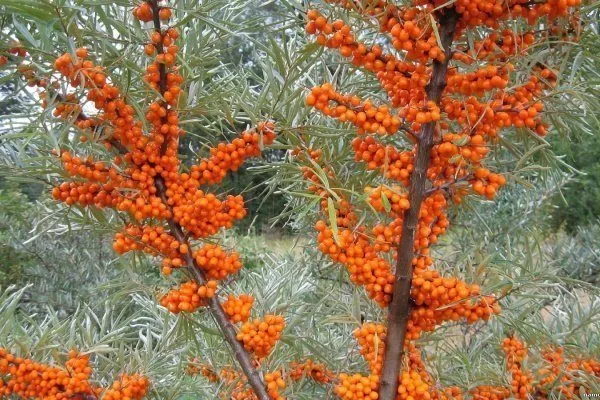
The bush is vigorous, with a compressed, pyramidal crown. The yield per bush is 13 kg. A drawback is the presence of thorns.
A mid-season variety. The fruits are slightly tart, with a mild aroma, and are red with orange hues. The skin is shiny and medium thick. High frost resistance.
Male varieties
Sea buckthorn is a dioecious plant. Female plants bear flowers with pistils, while male plants bear flowers with stamens. Male plants produce pollen, which is carried by the wind. For a female plant to bear fruit, a male plant must be nearby. A male plant does not bear fruit and is needed only for pollination. One male plant is sufficient for 5-8 female plants—the number depends on the sea buckthorn variety.
Breeders have developed special "male" varieties—they don't bear fruit, but rather produce large quantities of pollen. One tree of this variety can "fertilize" 10-20 female plants of any variety.
Dwarf
Pollinator bushes are medium-sized, growing to 2-2.5 m in height. The crown is compact. There are few thorns, but this is irrelevant, as there is no need to harvest fruit from male plants.
This variety has a high pollen production. The plant is winter-hardy, and its generative buds easily withstand severe frosts. Its disease immunity is impeccable.
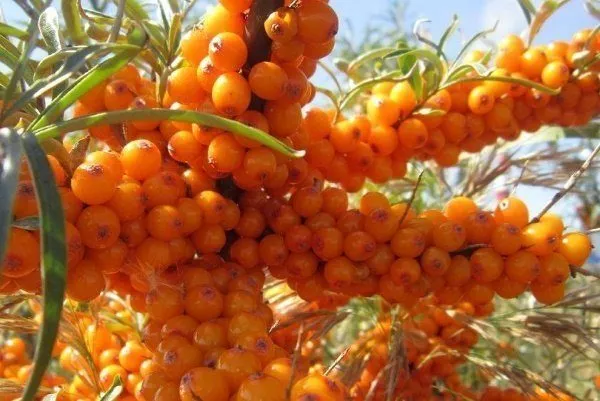
Aley
Vigorous male shrubs without thorns. This sterile plant has a strong, spreading crown. Buds are large, internodes are shortened.
A highly resistant, frost-hardy variety. Produces 95% viable pollen.
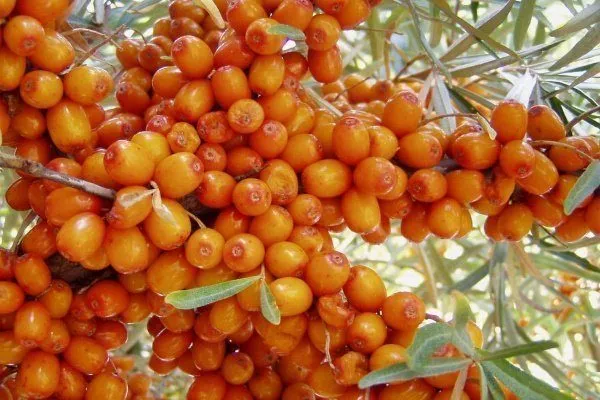
Orange sea buckthorn
Most sea buckthorn varieties have bright orange berries—the distinctive color of this plant. However, orange isn't the only color sea buckthorn berries come in.
Lights of the Yenisei
The bushes are tall and spreading, producing 8-9 kg of berries. They have thorns, but they are located only at the base of the shoots. The spines are short and few in number.
An early variety. Berry weight is 0.6 g. The fruits are a traditional orange color, have a pleasant, refreshing aroma, and a sweet and sour taste. Resistant to drought, frost, and disease.
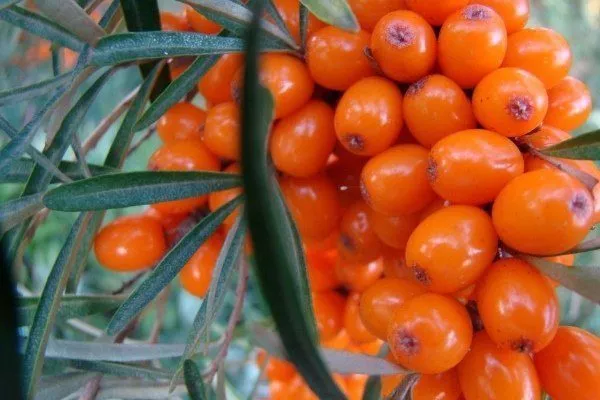
Sayan
The bush is medium-height and compact. It has few thorns. One plant produces 11-16 kg of berries. It bears fruit in the third year.
A mid-early sea buckthorn. The berries are medium-sized, orange in color, with reddish tips. Resistant to fusarium wilt. The flavor is tart. The berries are thick-skinned.
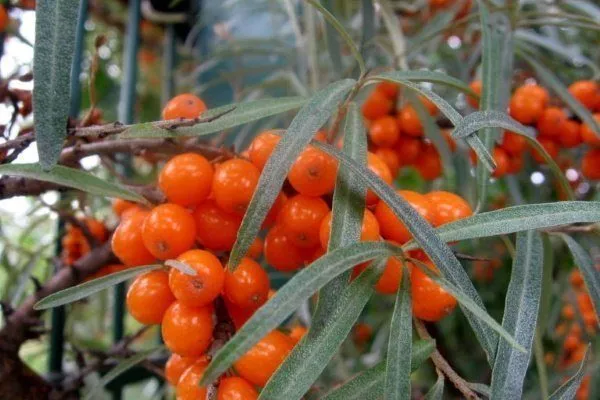
Ayaganga
A large-fruited variety with compact, medium-sized bushes and moderate foliage. The crown is rounded. One plant produces 8-11 kg of berries.
The berries ripen in the second ten days of September. Drought resistance is average. The orange fruits are medium-sized, weighing 0.55 g. They are barrel-shaped. The flavor is excellent. They are distinguished by high winter hardiness of their flower buds.
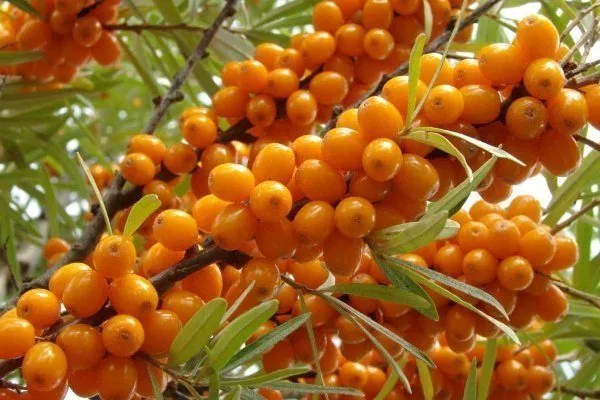
Red-fruited sea buckthorn
Red sea buckthorn berries are rare. Even after extensive breeding, red-fruited varieties remain very rare.
Rowan
Shrubs with narrow pyramidal crowns. The yield per bush is up to 6 kg. They have sparse, isolated thorns, making harvesting difficult.
This is a mid-season variety. The berries are dark red and glossy. They are aromatic and slightly bitter. They are resistant to fungal diseases.
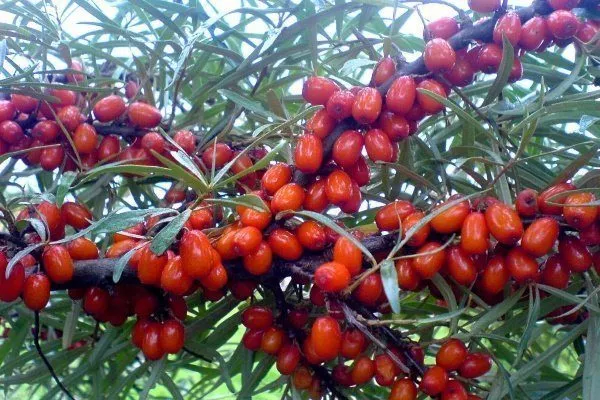
Siberian blush
Shrubs with narrow, pyramidal crowns. The yield per bush is up to 6 kg. They have sparse, isolated thorns.
This is a mid-season variety. The berries are dark red and glossy. They are aromatic and slightly bitter. They are resistant to fungal diseases.
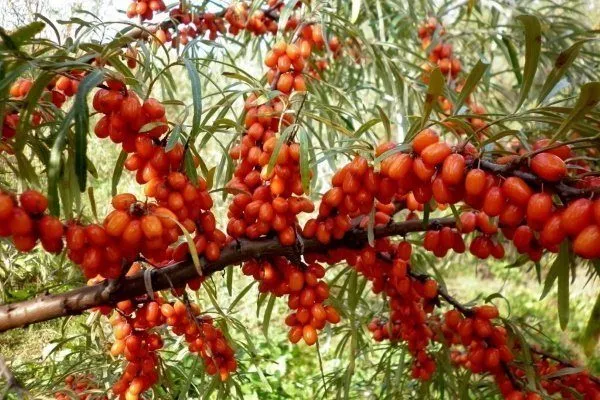
Red-fruited
The plants are vigorous and spreading, with thorns along their entire length, making harvesting difficult. The crown is slightly pyramidal. One bush produces about 5-6 kg of berries.
An early variety with red, tart, delicately aromatic fruits. Weight: 0.6 g. Flavor: average. Fruit for industrial use. Frost resistance: average.
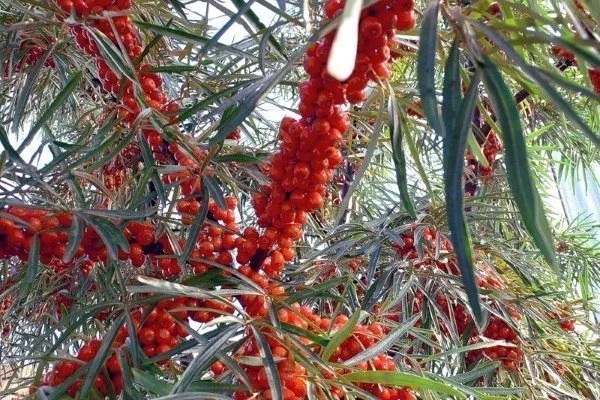
Red Torch
A medium-height shrub with a slightly spreading crown. The yield is average—about 6 kg per bush. The shoots are covered with a few thorns.
A late-ripening variety. It can withstand temperatures down to -40°C. It rarely gets sick and is highly resistant to pests. The fruits are red with an orange tint. Weight: 0.7 g.
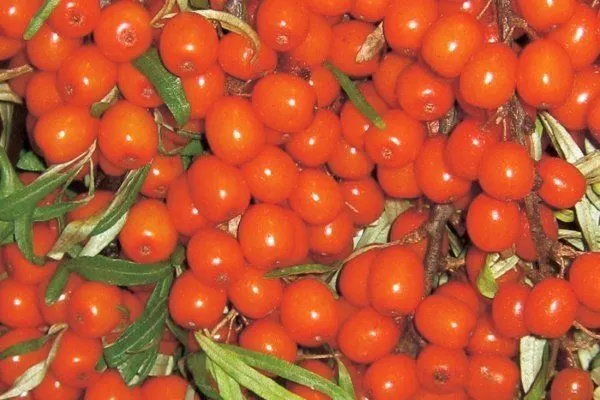
Lemon-green sea buckthorn
Along with orange and red berries, sea buckthorn can also produce lemon-green fruits, giving the plant an exotic appearance.
Christmas tree
This variety is of interest to gardeners who appreciate the decorative qualities of their plants, in addition to the harvest. The shrub resembles a small fir tree. It grows 1.5-1.8 m tall and has a dense, compact crown. It is thornless.
This variety was developed by treating seeds with chemical mutagens. It is currently undergoing trials. "Yolochka" is not a stable variety and is subject to mutation. Its advantages include resistance to fungal diseases and cold, and resistance to suckers.
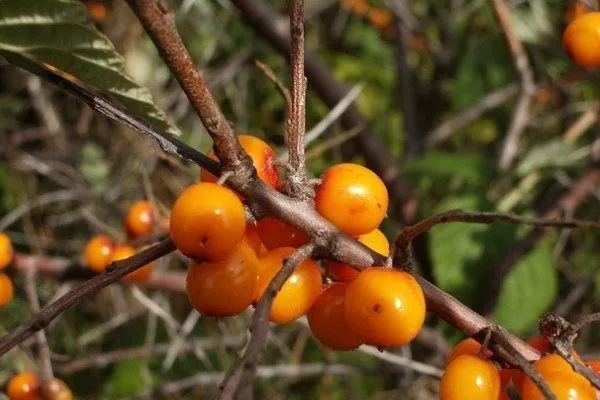
Early ripening varieties
Early varieties are ready for harvest in the first ten days of August, or even earlier—at the end of July. Early-ripening sea buckthorn won't keep you waiting long for the long-awaited harvest.
Minuses
The bushes grow up to 2.9 m tall. The crown is medium-dense and spreading. Thorns are absent entirely. One plant produces 14-25 kg of fruit.
This is an extremely early variety. The berries are ready in the first half of August. The fruits are quite large, conical, yellow-orange, sweet and sour, weighing about 0.7 g. This variety is winter-hardy and resistant to fusarium.
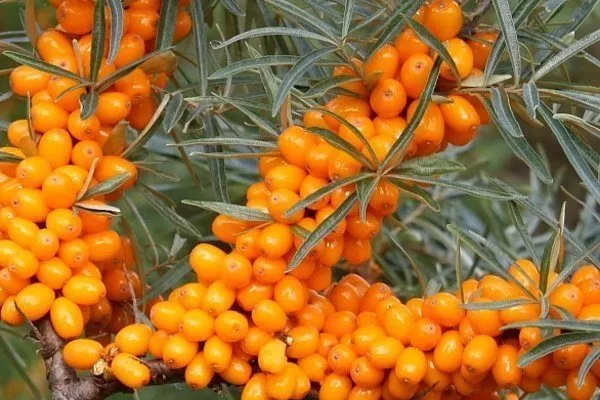
Botanical hobby
A tall, woody shrub, reaching 3.5-4 m in height. The crown is pyramidal. It has few thorns. A single plant yields 7-15 kg of berries. The fruit stalks are thin and long.
An early-ripening sea buckthorn with elongated, oval, orange-yellow berries. Weight: 0.7-0.85 g. Cons: the berries overripen extremely quickly and are difficult to transport. Winter hardiness and immunity are high.
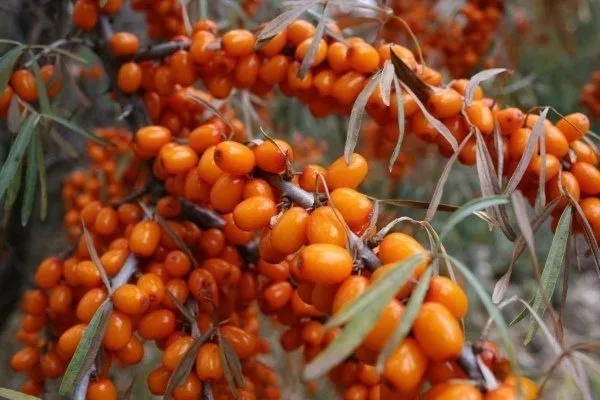
Vladimirka
The 'Vladimirka' variety is currently undergoing variety testing. It is a vigorous tree, 3.6 m tall, with a rounded, dense crown. The shoots are thorned at the ends with 3-4 mm thorns. A single plant produces 5 to 13 kg of berries.
An early-ripening variety with small orange berries. A drawback is the fruit's tendency to break off wet.
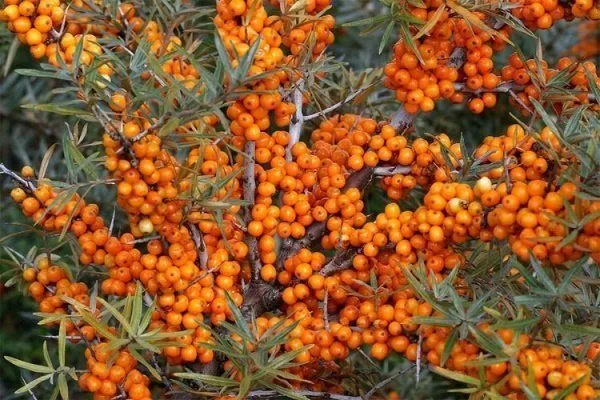
Zakharovskaya
The shrub is low-growing. The crown is moderately spreading. One plant produces up to 10 kg of fruit. It is thornless.
An early variety. The fruits are sunny yellow, weighing approximately 0.5 g. They have a slightly tart flavor and intense aroma. A hardy variety with excellent immunity.
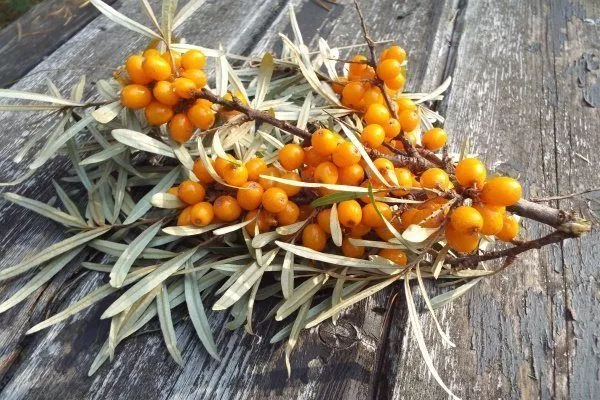
Nugget
The plant is medium-sized, reaching 2-2.5 m in height. The crown is broadly rounded. Thorns are present, but not numerous. The yield per bush is 5-15 kg. It bears fruit in the fourth year.
An early-ripening variety with large orange berries. Each berry weighs 0.6 g. Oval shape. Sweet and sour flavor. Produces crops for 10-12 years. Insufficient resistance to wilt.
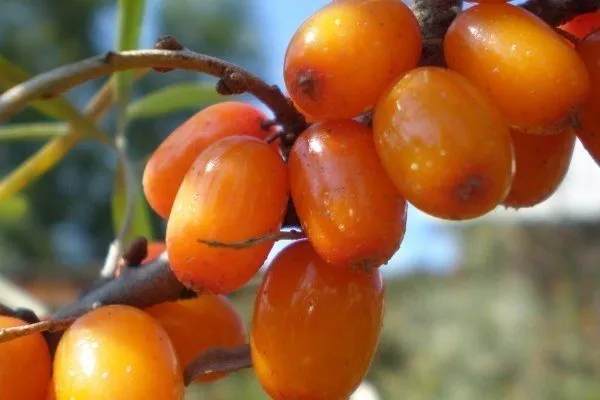
Pearl oyster
The bushes grow up to 2.5 m. The crown is oval. Thorns are extremely rare. One bush produces 10-12 kg of berries.
Ultra-early ripening. Large fruits, weighing 0.8 g. Bright orange berries with a dessert flavor. High winter hardiness.
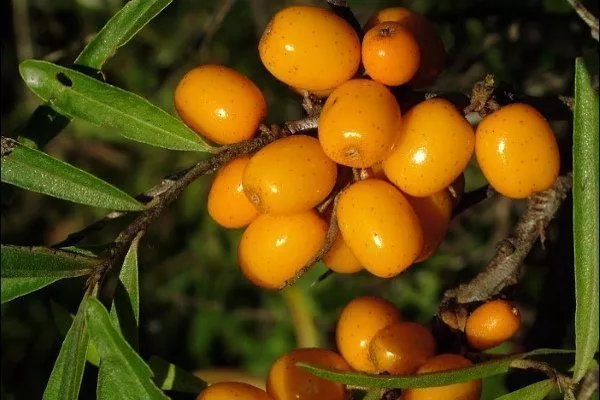
Etna
Medium-sized plants with a spreading, medium-density crown. The yield per bush is 10-15 kg. There are thorns, but they are few in number.
A large-fruited, early variety. The berries are ovoid, red-orange, thin-skinned, and weigh 0.9 g. They have a pleasant flavor and aroma. Requires pollination by a male variety. Disease resistance is high.
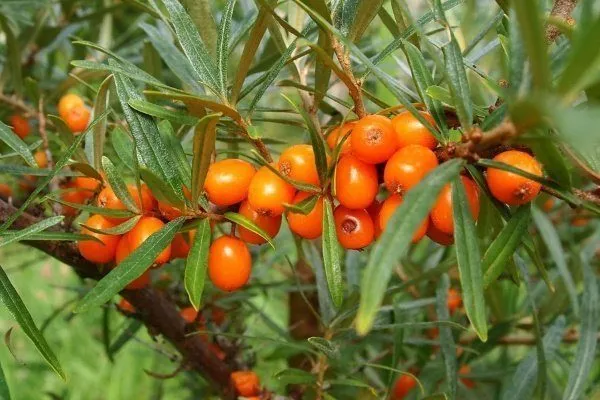
Altai News
The bushes are very tall—some reach 4 meters. They have a rounded, spreading crown. They are almost thornless. The berries are wet-detached. The yield per bush is 12 kg, maximum 27 kg.
Early ripening. Small orange-yellow fruits with red stripes. Flat-round shape. Cons: poor transportability. Berry weight: 0.5 g. Resistant to fusarium.
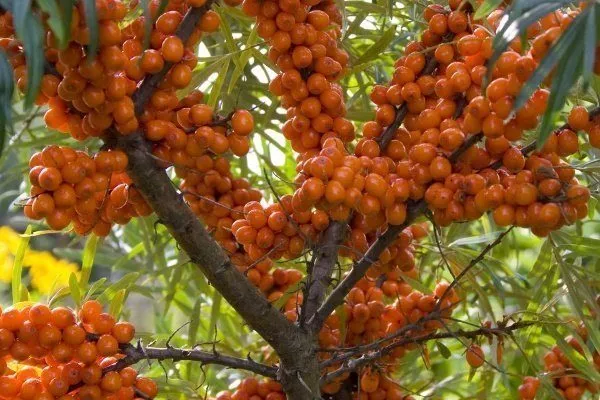
Vitamin
Vigorous shrubs. The crown is oval. There are few thorns. There are shoots with and without thorns. Yield: 6-9 kg. Fruiting begins in the 3rd-4th year.
An early-ripening sea buckthorn with yellowish-orange berries (with a raspberry spot). Each berry weighs 0.6 g. The upper part of the fruit is ribbed. A disadvantage is that it is susceptible to fungal wilt.
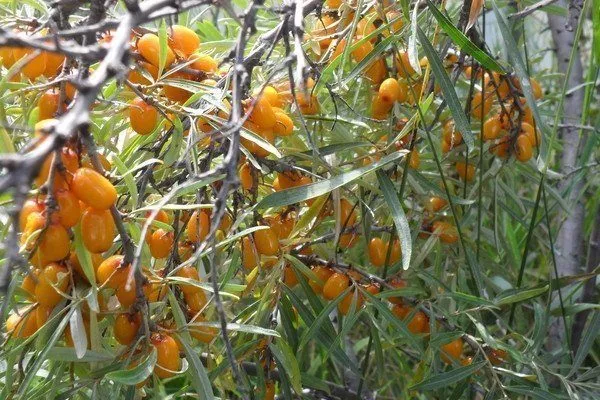
Mid-season varieties
The berries of mid-season varieties ripen in the second half of August or at the beginning of autumn.
Fox
The bushes are medium-height with a loosely spreading crown. This variety is productive – up to 15-20 kg of berries can be harvested from a single bush.
The berries are large, cylindrical, and reddish-orange. The thick-skinned fruits are sweet and aromatic. They received the highest rating on the tasting scale. These versatile fruits are rich in vitamin C. Each berry weighs 0.8 g.
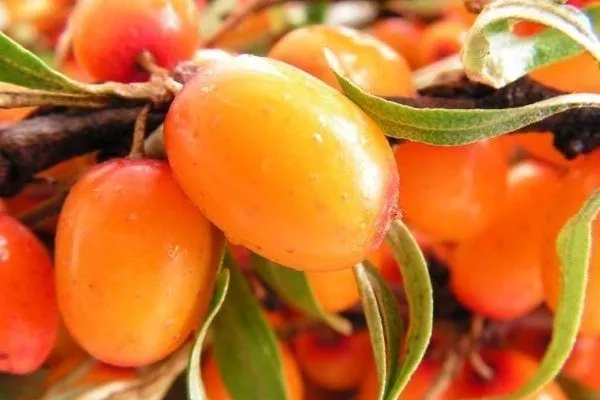
Bead
The crown is spreading, the bush is tall. The shoots have medium-sized thorns. The yield per bush is 13.5-15 kg.
The berries are round, truncated-conical. They are a rich orange in color and weigh 0.5 g. They have a sweet and sour taste and a refreshing aroma. They tolerate drought well.
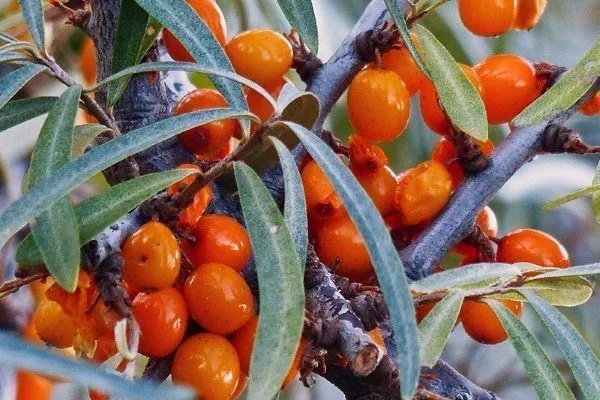
Nivelena
Medium-sized shrubs. The crown is umbrella-shaped and weakly spreading. The thorns are sparse and thin. A bush yields approximately 10 kg of berries.
The fruits weigh 0.5 g, are yellow-orange, and round. They have a sour, aromatic flavor. They do not get crushed during transportation. They have excellent winter hardiness.
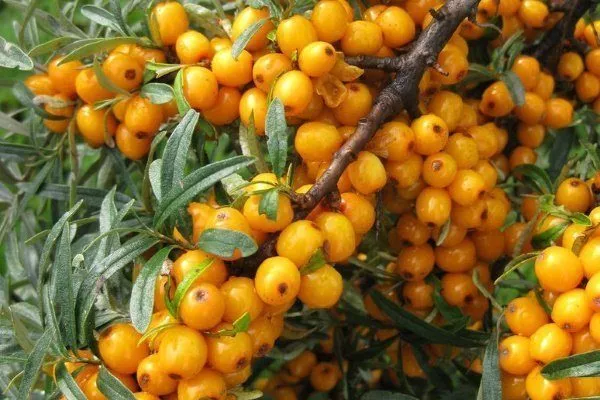
Bonfire
A medium-sized shrub with a gently spreading crown. The shoots are glabrous. The yield per bush is 7-8 kg.
A mid-season, frost-resistant variety with elongated, red-orange fruits. The berries are sweet and sour, refreshing. The fruits are versatile. Weight: 0.7-0.9 g.
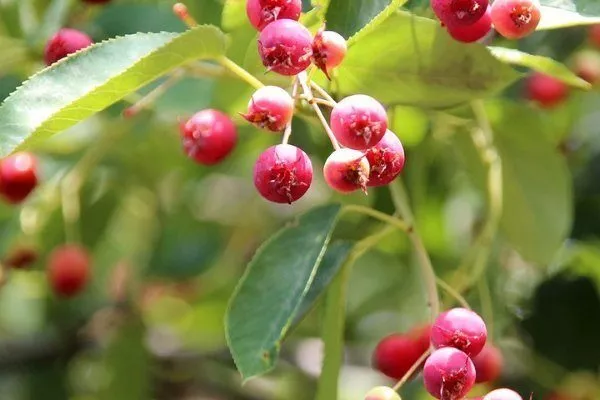
Late-ripening varieties
Late-ripening varieties produce berries later than all other varieties. They often produce fruit after frost.
Ryzhik
Low-growing shrubs with a relatively spreading crown and glabrous shoots. This variety is productive, with one plant yielding 12-14 kg of fruit.
A late-ripening variety with dark-red, pointed-cylindrical fruits. Berries weigh 0.7-0.8 g. They have thick skin and a tart flavor. They do not bruise during transportation and are suitable for any purpose.
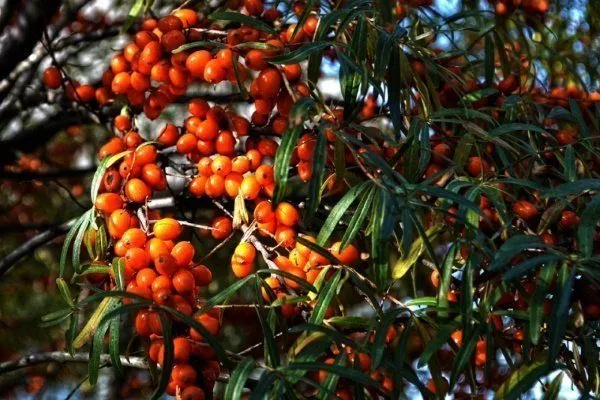
Orange
A high-yielding variety. Medium-height bushes with an oval crown. Thorns are minimal. Yields 13-15 kg, maximum 25 kg.
A late-ripening, winter-hardy variety with oval, orange-red, tart-sour fruits. The berries are not crushed during harvesting. They have a high vitamin C content. A disadvantage is the risk of fungal damping-off.
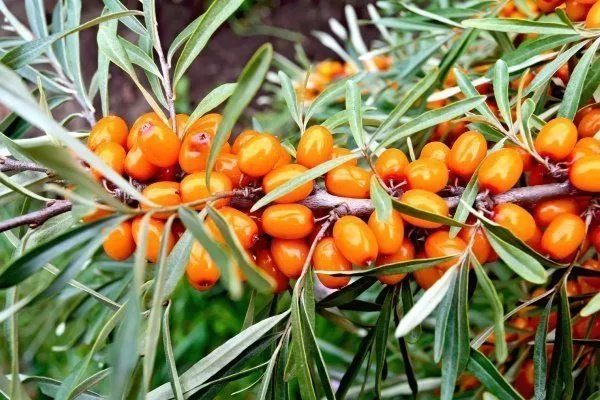
Zyryanka
The bush height is 2.2-2.5 m. The crown is oval. Thorns are single. The yield per bush is 13 kg. The fruits are not easily crushed and transport well.
The berries are light orange, cylindrical, and slightly tapered toward the top. Blush spots appear on the orange background. They weigh 0.6-0.7 g. They are resistant to fusarium wilt. The fruit has a slightly tart flavor.
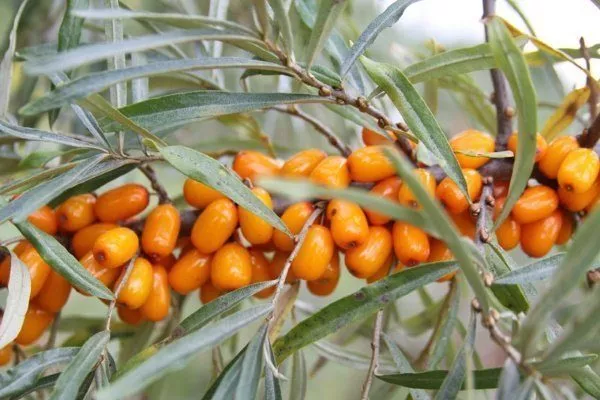
Baltic Surprise
The plants are very tall, reaching 3 meters. The crown is highly spreading. Thorns are few. One bush produces an average of 8 kg of berries.
The fruits are small, weighing 0.25-0.35 g. They are red-orange in color, moderately acidic, and aromatic. The variety is virtually immune to wilt.
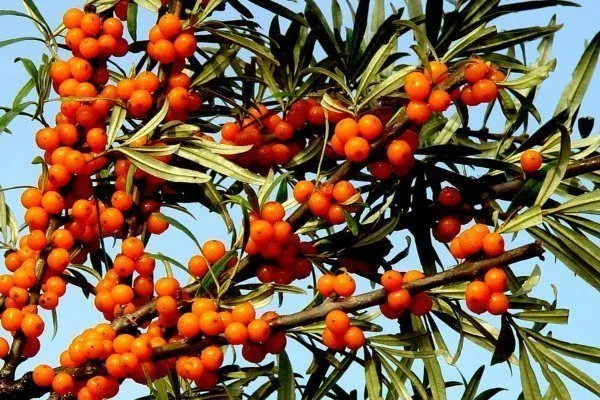
Amber necklace
Medium-sized bushes, gently spreading. Shoots are not pubescent. Harvest: up to 14 kg of berries. The fruit is versatile.
A late-ripening variety with large, light-orange fruits. It is winter-hardy and has excellent immunity. Each berry weighs 1.1 g.
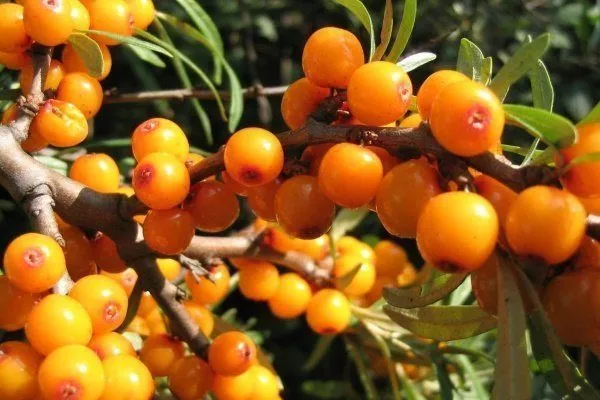
Mendeleevskaya
The shrub grows up to 2 m tall. The crown is dense and spreading. One bush produces up to 8 kg of berries.
A late-ripening variety with oval, deep-yellow berries. Fruit weight is 0.5-0.65 g. This variety is distinguished by its high vitamin C content.
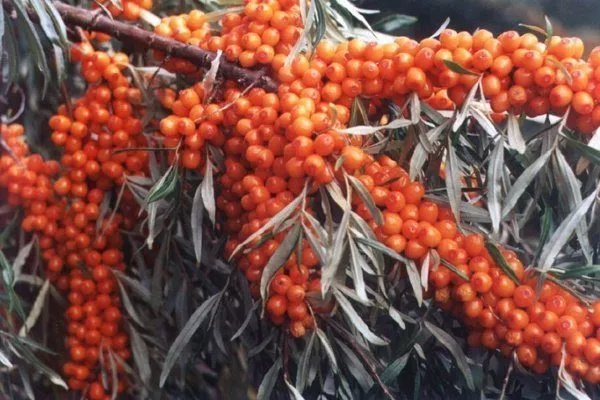
Yakhontovaya
A new late-ripening variety. The bushes are medium-sized with a moderately spreading crown. Very few thorns make harvesting easy. A single bush yields 10 kg of berries.
Large, reddish, speckled berries weigh 0.8 g. The skin is thin but firm. The flavor is sweet and sour. Round-oval shape. Resistant to drought, cold, and infections.
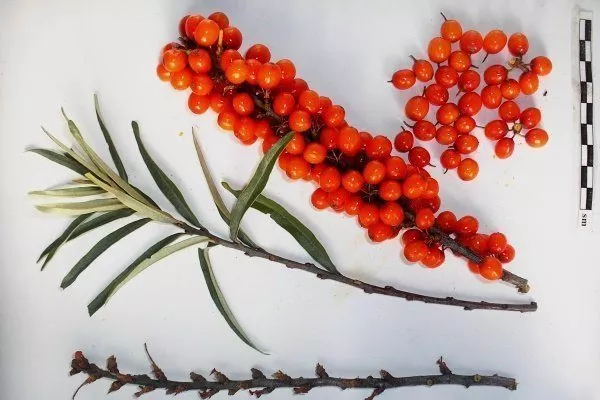
Galerite
The bushes are medium-height, up to 2 m, with a spreading crown. A single plant reaching peak fruiting yields 10 kg of berries.
An extremely late variety, ripening in mid-September. The fruits are slightly conical and light orange. A reddish spot appears at the top. The skin is firm and shiny. The flavor is slightly tart and bitter. Berry weight: 0.8-0.9 g.
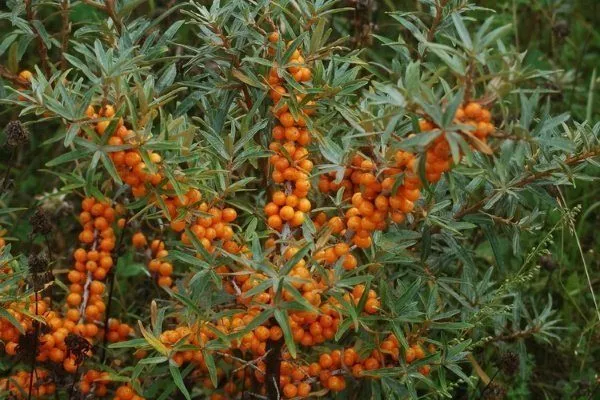
Lady fingers
New. This variety was recently accepted for variety testing. The bushes are medium-height. The crown is slightly spreading. Yields up to 6 kg per plant.
A late-ripening dessert variety. Fruit weight is 1.1-1.3 g. Awarded the highest rating on the tasting scale. The cylindrical, sweet and sour fruits are orange in color and versatile.
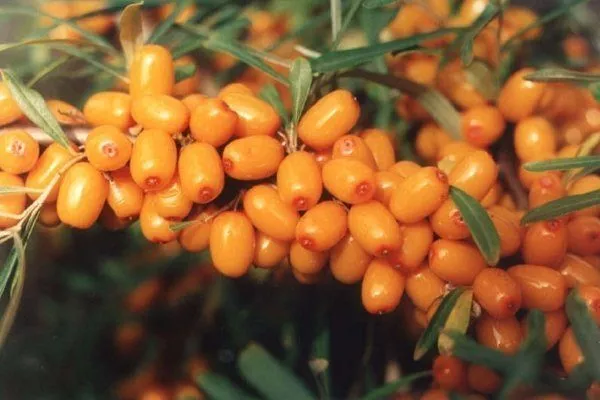
Comparative tables of sea buckthorn varieties
When choosing varieties for their gardens, gardeners must evaluate them based on a variety of criteria—ripening time, taste, yield, frost resistance, etc.
Table 1 shows a comparison of the largest-fruited varieties by yield and berry weight.
Table 1
| Variety | Fruit weight, g | Yield, kg per bush |
| Openwork | 1 | 5-6 |
| Augustine | 0.9 | 12-13 |
| Elizabeth | 0.8-0.9 | 5-14 |
| Essel | 1-1.2 | 7-8 |
| Naran | 0.9 | 12-13 |
| Leycor | 1.1-1.2 | 10-15 |
Varieties recommended for different regions of Russia are presented in Table 2.
Table 2
| The best varieties for the European part of Russia | Yield, kg per bush | The best varieties for Siberia | Yield, kg per bush | The best varieties for the Moscow region | Yield, kg per bush |
| Augustinka | 16-18 | Excellent | 9-10 | Moscow beauty | 14-15 |
| Orange | 12-22 | Giant | 8-10 | Botanical hobby | 7-15 |
| Nivelena | 9-11 | Trofimovskaya | 8-10 | A gift to the garden | 20-25 |
| Botanical | 8-15 | Chuiskaya | 11-12 | Pepper | 8-13 |
Table 3 contains varieties that are leaders according to certain evaluation criteria, or stand out among other varieties due to some advantages.
Table 3
| Evaluation criteria | Varieties |
| The most frost-resistant | Otradnaya, Dar Katuni, Ayula, Perchik, Dzhemovaya, Trofimovskaya, Zolotoy Pochatok |
| The most delicious | Favorite, Ruet, Tenga, Moskvichka, Moscow Pineapple, Nizhny Novgorod Sweet, Klavdiya |
| The most useful | Pepper, Moscow beauty |
| Without spikes | Solnechnaya, Sokratovskaya, Zhivko, Velikan, Chechek, Altai, Podruga, Prevoskhodnaya |
When choosing a sea buckthorn variety, it's important to determine the purpose of planting the tree and consider the growing conditions. Most varieties are frost-hardy, so gardeners can focus on the taste, color, size, intended use of the fruit, and yield when searching for the optimal variety.