
The Sunny sea buckthorn is not only a valuable plant for gardeners but also a true gift of nature, boasting many unique qualities. This hybrid boasts high yields and adaptability to a variety of climates. With proper care, you can grow a plant with a strong immune system, producing vibrant and healthy fruits.
History of selection and characteristics
This is a self-sterile female variety developed by specialists from the Federal Altai Scientific Center for Agrobiotechnology and the Krasnoyarsk Scientific Center of the Siberian Branch of the Russian Academy of Sciences in 2003.
A mature bush yields approximately 9 kg of versatile fruits. These are used to make drinks, preserves, marmalade, and marshmallows. Sea buckthorn is also in demand for medicinal purposes.
Introduction to the variety
It is one of the most fascinating and promising crops, dating back to the times of Ancient Greece. The golden fruits of this plant possess high healing powers, which Greek physicians used to restore the health of warriors.
Appearance
A medium-sized shrub with a spreading crown, it can reach heights of 2 to 2.8 meters. The shoots are covered with large green leaves. The branches have minimal or no thorns.
Fruits and their taste
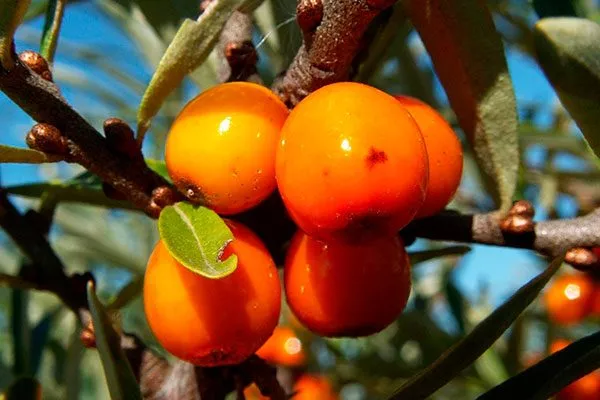
Large, oval-shaped, and weighing approximately 0.7 g, they are yellow-orange in color. The flesh is juicy, and the flavor is sweet and sour. According to a tasting evaluation, this variety received 4.7 out of 5 possible points. They contain approximately 8.2% sugars, 11.5% carotenoids, 86 mg/% vitamin C, and 6.2% oil.
Fruiting
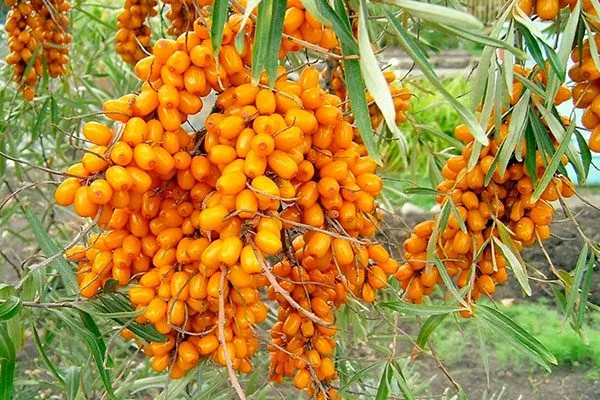
The Solnechnaya sea buckthorn is an early-bearing variety, allowing for the first harvest to be collected from three-year-old bushes. Harvesting typically begins in the second half of August.
Beneficial properties
The culture has many beneficial properties. This is due to its high content of biologically active substances:
- Vitamins and antioxidants. The plant is rich in vitamins C, E, B-complex, carotenoids (provitamin A), which help strengthen the immune system and protect cells from oxidative stress.
- Minerals. The berries contain a significant amount of minerals: potassium, calcium, magnesium, phosphorus, iron and zinc, which are necessary for maintaining the health of bones, heart and other organs.
- Beneficial fatty acids. Sea buckthorn is rich in Omega-3, Omega-6 and Omega-9 fatty acids, which play an important role in maintaining cardiovascular health, lowering cholesterol levels and maintaining healthy skin and hair.
- Anti-inflammatory properties. Due to the content of flavonoids and other biologically active substances, the culture has anti-inflammatory properties.
- Digestive support. The fiber in the composition helps improve digestion and stimulates intestinal peristalsis, improving the condition of the gastric mucosa.
How to plant?
When gardening, it's important to keep certain aspects in mind. Follow planting guidelines to ensure the plant takes root and thrives.
Planting dates
Carry out the procedure in the fall or spring. The optimal time for spring planting is from early March to the first half of April, when the plant is dormant and the soil is sufficiently moist, which favors its survival.
Selection and storage of planting material
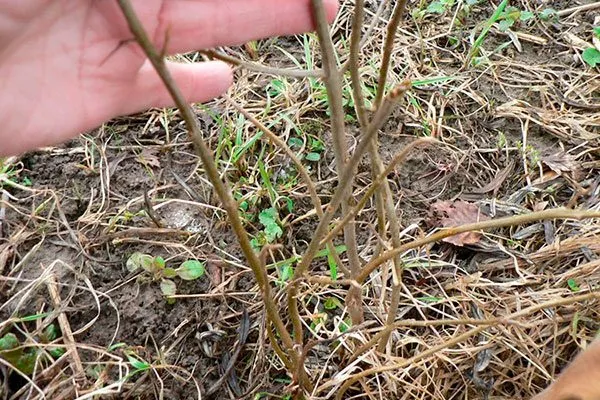
The optimal age to purchase a seedling is 2-3 years. It should have a developed root system at least 20 cm long and be 35 to 50 cm tall. It's important that the bark is free of cracks or peeling.
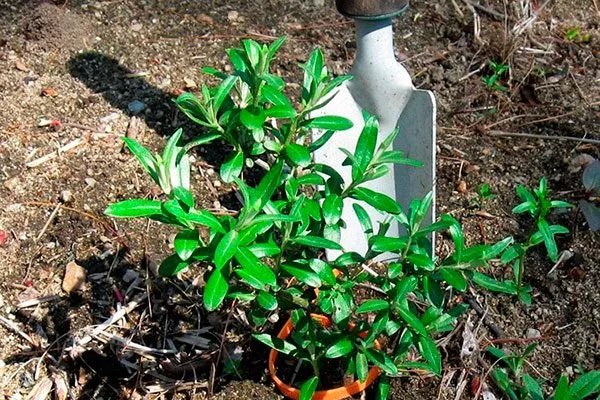
If the purchased seedling fails to root during the season, bury it in open ground in the fall and plant it in the chosen location after winter. To do this, dig a trench up to 50 cm deep in the area, with the crown facing south. Set the seedling at a 45° angle and cover it with spruce branches. In winter, create a snow mound.
Selecting a planting site and soil
The hybrid doesn't transplant well, so plant it directly in its permanent location in the garden. The main requirement for the site is good access to sunlight. To avoid unnecessary shade, avoid locations near fences or buildings.
The best option is a south-facing garden, away from large trees. Plant lawn grass underneath the sea buckthorn. Avoid planting it near vegetable beds due to its shallow root system, which can cause damage when digging. When planting in groups, space the bushes at least 2 meters apart.
Choose well-drained and fertile soils, such as loam, sandy loam, and chernozem. The optimal soil pH is neutral, and the groundwater table should be no more than 1 meter below the surface. To improve the soil composition and enrich it with nutrients, add humus, ash, and superphosphate in the fall.
Planting technology
To successfully plant sea buckthorn, prepare a hole in advance, taking into account the size of the seedling's root system—50 x 50 cm. Drive a wooden support into the hole next to it to secure the plant later.
Landing algorithm:
- Place the plant in the center of the hole, carefully spreading out the roots.
- Cover with soil, making sure that the root collar of the seedling is 5-6 cm above ground level.
- Compact the soil thoroughly to prevent the formation of air pockets.
- Tie the seedling to the previously driven support.
Water the plant and mulch the area around the trunk with straw or sawdust.
Further care
Once established, it's important to provide the plant with proper care. Follow simple agricultural practices.
Watering
A mature plant requires sufficient natural rainfall to maintain moisture. However, during prolonged droughts, moisture shortages may occur, so provide additional watering.
Water the young seedling as the soil dries out, avoiding stagnant water and focusing on current weather conditions.
Weed removal and mulching
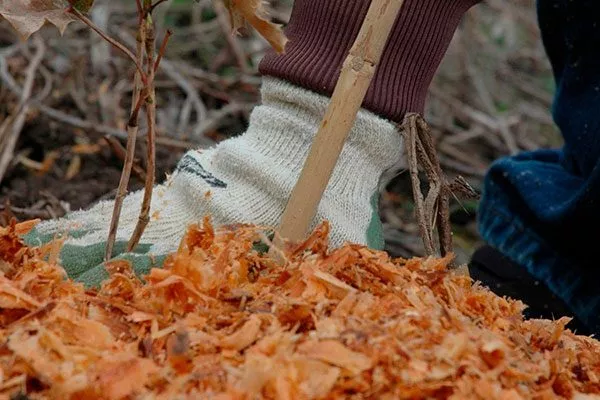
Weed and loosen the soil to avoid damaging the root system with tools. Instead, mow down weeds and cover the area around the tree trunk with mulch. This helps retain moisture in the soil and prevents weed growth.
Top dressing
In the spring, feed the crop with micronutrients. Apply fertilizer three years after planting. During this time, apply nitrogen-containing compounds to the root zone. Every 3-4 years, use compost mixed with superphosphate to improve soil fertility.
To increase yield during the flowering phase, apply foliar fertilizer using Effekton or potassium humate. During fruit set, apply a fertilizer based on double superphosphate, potassium sulfate, and a Universal micro complex mixture.
Trimming
During the first two to three years, it's important to properly shape the crown to facilitate harvesting and prevent the plant from becoming overcrowded. Carefully remove any shoots that are growing incorrectly from the bush. Perform sanitary pruning annually—in spring and fall—to remove dead or damaged parts.
Harvesting
Harvest in August-September. To determine ripeness, pay attention to the fruit's color: when ripe, it turns yellow-orange.
Preparing for winter
To ensure better winter hardiness, insulate the root zone with a layer of spruce branches or turf. Protect the trees from rodents by whitewashing the trunks and covering them with wire mesh.
Reproduction
Gardeners can grow new Solnechnaya sea buckthorn plants themselves using several methods. Grafting, layering, cuttings, and division are all helpful for increasing the number of seedlings in the garden.
Cuttings
This method is carried out using hardwood or green cuttings. For propagation by hardwood cuttings, prepare the planting material in November-December or in late March-early April. Two-year-old shoots 15-20 cm long are ideal for planting.
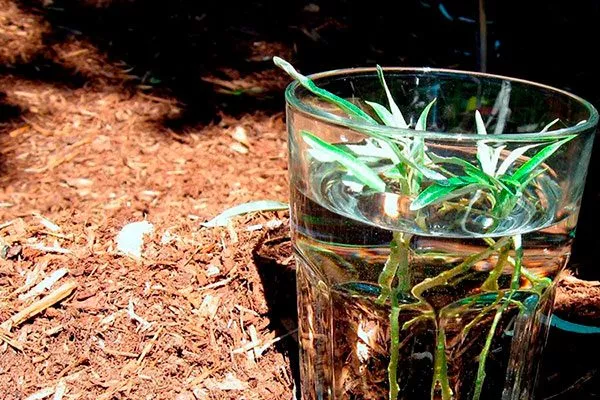
- ✓ The soil temperature for rooting should not be below 12°C.
- ✓ The air humidity around the cuttings should be maintained at 85-90%.
Wrap cuttings collected in the fall in cloth, place them in a plastic bag, and store them in the ground until spring. Before rooting, soak the cuttings in water with a growth stimulant for three days, then plant them in the soil, leaving two or three buds above the surface.
Plant green cuttings in sterile soil in the spring, then sprinkle them with sand. To ensure the plants adapt well, mist them regularly.
Layering method
In the spring, select a lateral branch with good growth from the mother bush. Bend it toward the ground and place it in a specially prepared furrow, covering it with soil. Regularly moisten the soil around the rooting cutting throughout the season. After a year, separate it from the mother bush and transplant it to its permanent location in the garden.
Dividing the bush
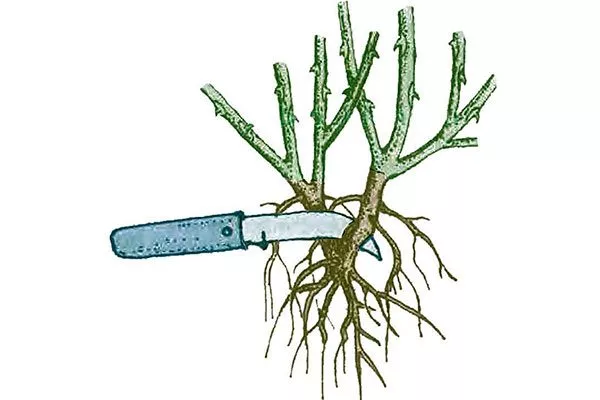
Follow these steps: dig the bush out of the ground and trim all old branches. Using pruning shears, divide the plant into several sections, each with roots and shoots. Treat the cut area with charcoal. Immediately root the resulting bushes in open ground.
Graft
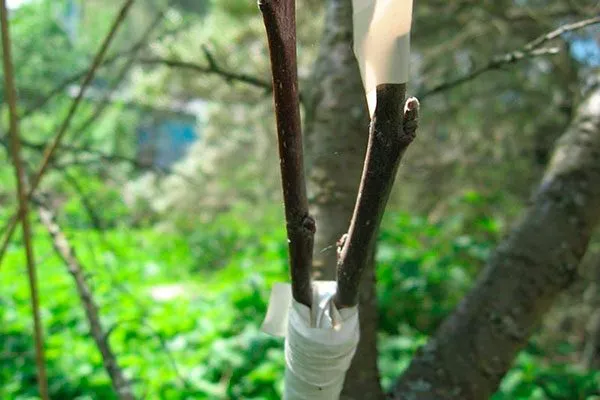
To graft a male bush to a female, use the following method. In April, prepare a two-year-old bush to serve as a rootstock. Prune the trunk to leave a single healthy shoot, which will grow for two seasons, pinching regularly to increase its thickness.
Diseases and pests
The Solnechnaya variety is generally resistant to most diseases. However, if not properly cared for, it can be susceptible to various diseases and pests:
- Black crayfish. It manifests itself as dark spots on shoots, which over time destroy the bark and change the color of the wood. Treatment involves removing the affected areas and treating them with copper sulfate.
- Endomycosis. A fungus that attacks berries causes a gray slime. Treatment involves treatment with copper oxychloride or Bordeaux mixture.
- Gray and brown rot. Symptoms include berry wrinkling and dark spots. Destroy affected plants.
- Sea buckthorn moth. Caterpillars feed inside buds and berry pulp. To control them, treat plants with the insecticide Karbofos.
- Sea buckthorn fly. The larvae feed on fruit and can cause the loss of the entire crop. An effective control method is treatment with the insecticide Chlorophos.
- Sea buckthorn gall mite. The pest feeds on leaf sap, causing growths and threatening the plant's health. Control involves treatment with Malathion or folk remedies, such as garlic or tobacco infusion.
Inspect your bushes regularly to prevent disease development or begin fighting insects in a timely manner.
Reviews
Sea buckthorn "Sunny" is an excellent choice for those who value not only beauty and productivity, but also ease of cultivation. Its self-fertility, excellent taste, and disease resistance make it ideal for gardening. Consistent care is essential for good harvests.