
Caring for red sea buckthorn is easy; you just need to follow a few basic rules and understand the shrub's characteristics. Read on to learn more about Shepherdia species, the benefits of their fruits, the specific features of growing and caring for them, as well as how to propagate red sea buckthorn, and much more.
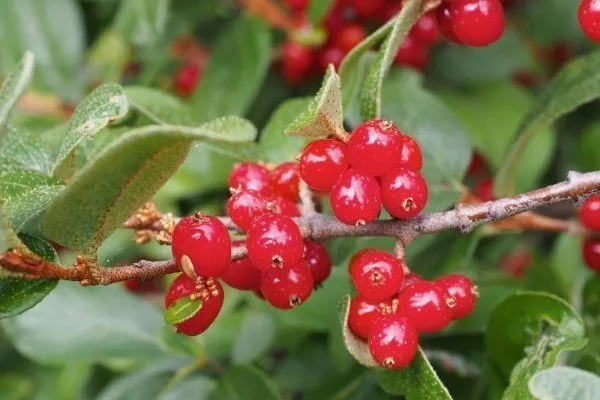
Plant characteristics
Red sea buckthorn, buffalo berry, bison berry, and rabbit berry are all names for Shepherdia. In Russia, it's rarely found in gardens, although it's an easy-to-grow plant that tolerates our harsh climate well. It grows naturally in Canada and the United States.
There are only 3 types of this culture:
- Shepherdia argentea. It is grown for its berries. It is a deciduous shrub—withered leaves may remain hanging on the branches, which reach 4.5 cm in height, with thorny shoots. The leaves are small—4-5 cm long, green, and elliptical. They are covered with down on both sides and acquire a silvery sheen in the sun.
The fruits ripen in August, clinging to the branches like sea buckthorn. They are harvested after the first frost, which improves their flavor—they become less tart, more tender, and sweeter. - Shepherdia canadensis. This is an ornamental plant. Its main distinguishing feature is the absence of thorns on the shoots. The leaves are pubescent, glossy, and olive-colored. The berries are small, yellow-orange, and inedible. The shrub rarely exceeds 2.5 meters in height.
- Shepherdia rotundifolia. This is an endemic plant, meaning it grows in a limited range; in this case, it's found only in Colorado. It has low frost hardiness and is unsuitable for most Russian regions. Its branches are covered in numerous growths. The berries are not edible.
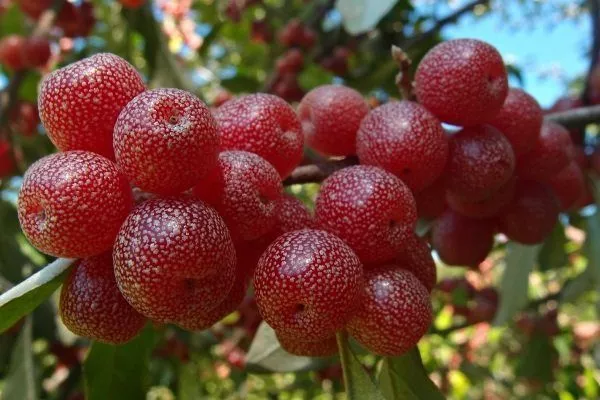
red sea buckthorn "Shepherdia silvery"
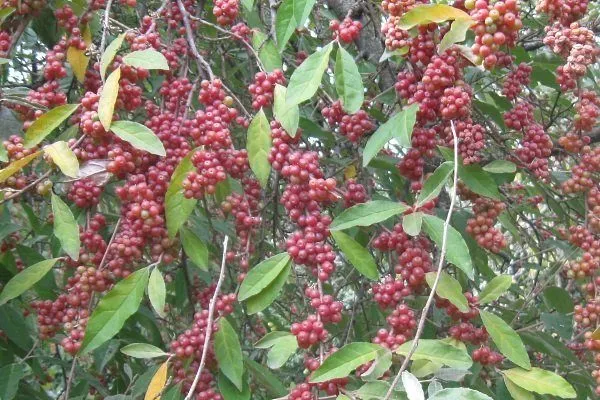
Sea buckthorn "Shepherdia canadensis"
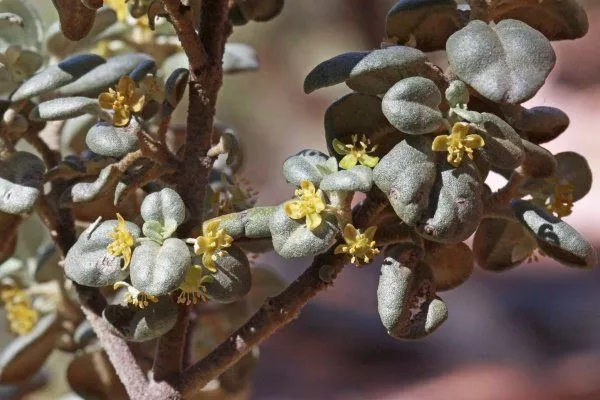
Sea buckthorn "Shepherdia rotundifolia"
Description of fruits and shrubs
Only the silver shepherdia is suitable for growing in gardens in the vast expanses of Russia. It bears fruit every year—up to 15 kg of berries can be harvested from a single bush. Landscape designers love to use it in their compositions.
Thanks to its strongly curved, intertwined shoots, especially near the ground, which form impenetrable thickets, and its numerous sharp thorns, the plant is ideal for forming a hedge.
Flowering begins as soon as the air warms to 7-9°C. First, tiny yellow and cream-colored flowers bloom in clusters, then the shrub becomes covered with leaves. The flowers last up to 1.5 weeks and attract a large number of insects to the area.
By late summer, the berries form. They are spherical, red-orange or scarlet in color, and small—5-6 mm in diameter. Characteristic white spots are scattered across the surface of the berries. It is recommended to harvest them after the first frost.
Chemical composition, properties and uses of berries
Red sea buckthorn berries contain:
- Vitamin C - the concentration of ascorbic acid in the fruit is higher than in lemon or black currant;
- vitamins A, P;
- pectin;
- carotene;
- tannins, which give the berries astringency;
- anthocyanins are pigment substances;
- flavonoids;
- organic acids.
This diverse composition of substances gives the berry beneficial properties:
- it strengthens and improves immunity;
- improves vision;
- is a preventative measure against atherosclerosis, colds and viral diseases;
- improves the functioning of the cardiovascular, digestive and nervous systems;
- has a diuretic and choleretic effect.
The berries should not be consumed by people with individual intolerance, pregnant women, women who are breastfeeding, or those with a history of stomach or duodenal ulcers.
The berries are rarely eaten fresh due to their tart flavor. They are used to make delicious sauces for meat dishes, jams, jellies, and compotes.
Advantages and disadvantages of Shepherdia
If you haven't yet decided whether to plant this crop on your property, the advantages and disadvantages will help you decide.
The advantages of Shepherdia include:
- unpretentiousness;
- high winter hardiness;
- immunity to various diseases and pests;
- ease of reproduction.
The culture also has its downsides:
- dioecious plant;
- thorny branches.
Subtleties of cultivation
When cultivating Shepherdia, there are several nuances that need to be kept in mind.
The presence of male and female trees is mandatory.
As mentioned above, this plant is dioecious, meaning one bush produces only female flowers, while the other produces male flowers. To obtain a harvest, both a female and a male plant must be planted. The optimal number in a plot is considered to be four female plants and one male. They are distinguished by the shape of their buds and the structure of their flowers.
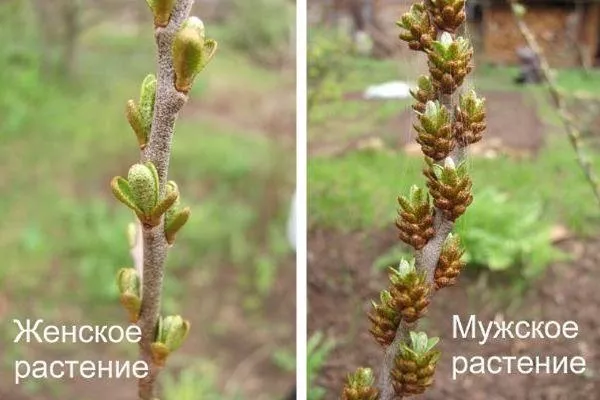
The female plant has pointed buds, which are tightly pressed against the shoot. The male plant has larger, rounder buds. Their flowers lack a pistil, but instead feature six long stamens. Pollination occurs through insects.
We recommend reading the article about How to plant and grow sea buckthorn.
Fruiting period and frost resistance
Depending on the propagation method, the bush begins to bear fruit at different times:
- After planting the seeds, the first berries can be tasted in 5-6 years, sometimes the period can extend up to 10 years.
- When planting a root shoot or cutting, the harvest is obtained already in the 3rd-4th year.
The plant easily tolerates severe frosts, surviving temperatures down to -45°C. It can be grown, including in regions with risky farming, such as the Urals or Siberia.
You can read about how to care for sea buckthorn in the fall. Here.
Soil requirements
Shepherdia is undemanding when it comes to soil conditions. In nature, it grows in rocky, sandy, or saline soils. This is because the plant's roots extract nitrogen from the environment through nodules.
However, it will be "grateful" if planted in fertile, well-drained soil. The only requirement is a groundwater table greater than 1 meter deep.
Reproduction of Shepherdia
There are 3 ways to propagate red sea buckthorn.
Seminal
You can collect the seeds yourself. Select the largest berries and leave them in the sun. Once the pulp has dried, clean the seeds. Plant them immediately in open ground in the fall. Germination rate decreases during storage.
The downside of this method is that you can't immediately determine the plant's sex. The optimal time for planting seeds is early November. They are planted 2-3 cm deep in the soil and mulch humus. The mulch thickness is 8-10 cm.
When snow cover forms, a snowdrift is piled onto the bed. By mid-April, the first shoots appear. They are fed with nitrogen fertilizer 2-3 times to accelerate the growth of green mass. By autumn, the bush grows to 12-15 cm and is transplanted to its permanent location.
By cuttings
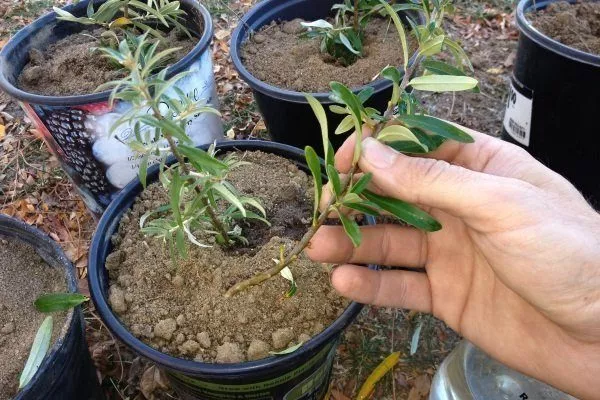
This is a more popular method than the previous one. Cuttings are taken in late June or early July. The apical or middle portion of a non-lignified one-year-old shoot is suitable for this purpose. They are cut at a 45° angle.
For 24 hours, the cuttings are soaked with the lower cut end in a rooting stimulant solution (Kornevin or Heteroauxin). They are then planted in small cups filled with sterilized and moistened soil at a 60° angle.
- ✓ Maintaining constant soil moisture without over-watering.
- ✓ Maintain a temperature of 23-25°C and avoid direct sunlight.
The cuttings are planted 3-4 cm deep, removing the lower leaves. Be sure to keep the soil moist at all times. Cover the cups with plastic and place them in a bright spot away from direct sunlight. Rooting occurs at a temperature of 23-25°C for 20-25 days.
Root suckers
This is the easiest method of propagation. The bush produces quite a lot of shoots, which need to be removed. These shoots form at a distance of 1.5-2 cm from the mother plant. It's best to use two-year-old shoots for propagation.
Dig up the soil and carefully separate the cutting. All cuts are sprinkled with crushed activated charcoal or wood ash for disinfection. Then plant it in its permanent location and water it well.
If it's hot outside, cover the plant with white covering material. In cold weather, use a cut-off plastic bottle. Remove the covering when new leaves appear on the cutting.
Crown shaping and thinning
The plant grows quickly and branches well. It's best to limit its height—this will make harvesting and maintenance easier. A height of 2-2.5 m is sufficient, with side shoots trimmed back to the first forks. This should be done every 3-5 years.
As the bush ages, growth slows. A 7-8-year-old Shepherdia requires rejuvenation pruning. All shoots at this age are removed, and the remaining ones are shortened to the growth of the last 2-3 years. This drastic pruning stimulates the plant to branch out and produce larger berries.
Every year in spring and autumn, sanitary pruning is carried out - cutting out broken, dried or thickening shoots.
Berry picking
The fastest way to pick ripe berries is to lay a piece of cloth under the tree and vigorously shake the branches. If the berries are picked before frost, each one is picked by hand, without pressing too hard. Be sure to pick them with a short stalk attached. This increases the shelf life of the harvest.
Where can I buy seedlings?
Silver Shepherdia seeds or seedlings can be purchased from nurseries, specialized stores, or reputable online stores. However, the plant's seeds have a short shelf life—only two years—so it's preferable to order or purchase seedlings.
- ✓ Check for both female and male plants to ensure pollination.
- ✓ Check for signs of disease or pests on leaves and shoots.
Sea buckthorn is a beautiful shrub with healthy berries that will truly enhance your garden. The plant requires specialized care, and the information provided in this article will help you understand the specifics of growing red sea buckthorn.
What an unusual variety! I didn't even know sea buckthorn could be red.
I planted this plant a couple of years ago. This year, I really appreciated its berries. But I haven't done much research on buffalo berries since planting them, only realizing they're related to the familiar sea buckthorn. So, when I saw this article, I read it with interest. There are a couple of things that surprised me about it. First, it says the berries have a distinctive, tart flavor and are only suitable for sweet preserves and sauces. But our buffalo berries aren't tart at all; they're sweet and delicious. I can't describe the aroma precisely, but it's pleasant. When I tried them slightly unripe, they were tart. Now, they're very sweet. Perhaps the tartness will be noticeable if you eat them in handfuls, chewing on them and including the seeds? Then perhaps the tartness comes from the seeds; they're quite large for a berry of this size (comparable in size to a raspberry pit).
And the second point is about dioecy. I have one sea buckthorn tree, and this year it was covered in berries. Maybe it pollinates with the common sea buckthorn, which we also have in our garden? Or does one of the neighbors have a male plant? But it turned out that just one bush was enough.