
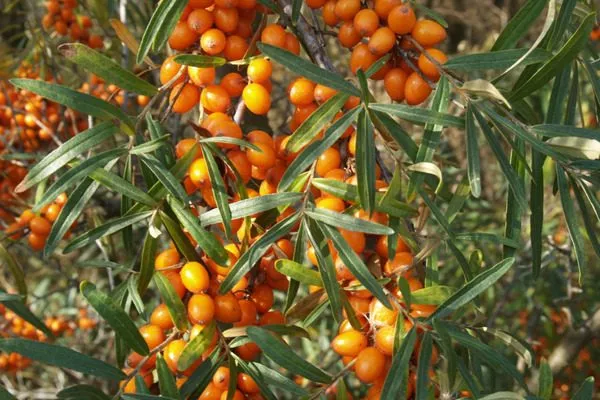
The Prevoskhodnaya sea buckthorn variety has been around for a long time, so it has earned its place among the most sought-after varieties. It is self-sterile (producing only female flowers), produces abundant crops, and has excellent transportability and shelf life. It ripens in late summer and is hardy to Zone 4. Its distinguishing feature is its complete absence of thorns.
History of origin
The sea buckthorn variety Prevoskhodnaya is the creation of breeders E. I. Panteleeva, I. P. Kalinina, O. A. Nikonova and E. E. Shishkina. The development was carried out on the platform of the Federal Altai Scientific Center for Agrobiotechnology.
The official registration of this species dates back to 1979, but its recognition and inclusion in the State Register took place eight years later, in 1987.
Description of appearance
The shrub is medium-sized, reaching a height of 250 cm. Its crown is quite spreading and sparse. Other characteristic features:
- the crown shape is spherical;
- the shoots are of medium thickness and have brown bark at the bottom and dark green at the top;
- the bark has a whitish coating like ripples;
- lanceolate leaves, the length of which reaches up to 5-6 cm, and the width up to 0.5-0.7 cm;
- the leaf blade often bends downwards, but sometimes to the side;
- leaf color is classic green;
- There is a yellow coating on the underside of the leaf blade.
Characteristics of fruits and their taste
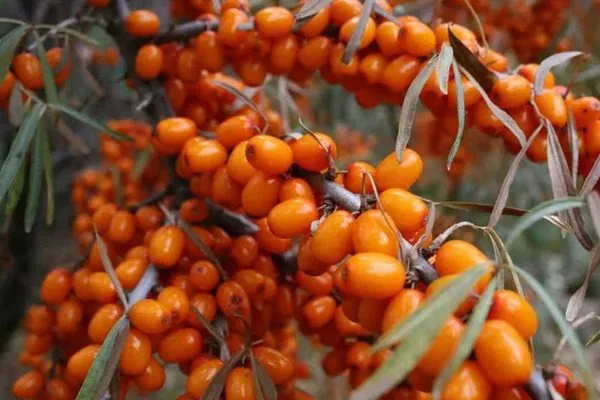
The berries are considered large, weighing between 0.6 and 0.9 g. The variety has a dry picking pattern, requiring moderate effort. Other characteristics:
- form - oval;
- color - orange, very rich;
- parameters of the peduncle – 0.4-0.5 cm;
- pulp – medium-dense;
- taste - sweet and sour.
The juicy pulp contains about 6-6.5% sugar, 1.8-2.1% acids, 5.5-5.6% oils, and 131% vitamin C.
Early maturity, ripening time, yield
The Prevoskhodnaya variety begins to bear fruit in the fourth year after planting and continues to produce abundant harvests annually for up to 12 years, and sometimes even more.
Despite the short waiting period for the first harvest, the efficiency of this variety is high: the average yield is about 103 centners per hectare, and from one bush - 7-7.2 kg or 0.9-1.7 kg per 1 sq. m.
Application
Sea buckthorn 'Excellent' is a female, medium-sized variety that has proven itself thanks to its versatile and large berries.
The plant is used not only for its fruit but also in landscape design for gardens, parks, and coastal areas. Sea buckthorn is well suited for single and group plantings and looks spectacular on slopes.
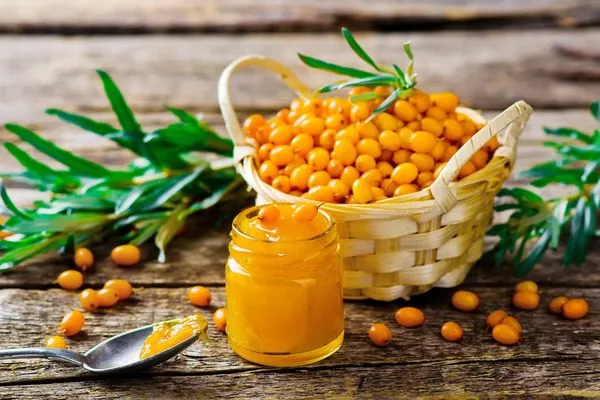
The berries can be eaten fresh or processed. They are used to make jam, compote, desserts, and medicinal oil.
Climate conditions
This variety boasts high drought tolerance, making it an ideal choice for areas with limited rainfall. Its good frost tolerance allows it to adapt to Zone 4 conditions and be grown even in colder climates.
Pollination
Due to the presence of purely female buds, the presence of a pollinator nearby is essential for successful fruiting. Suitable varieties include Gnome, Aley, and Hikul. The variety itself cannot act as a pollinator.
Disease/pest resistance
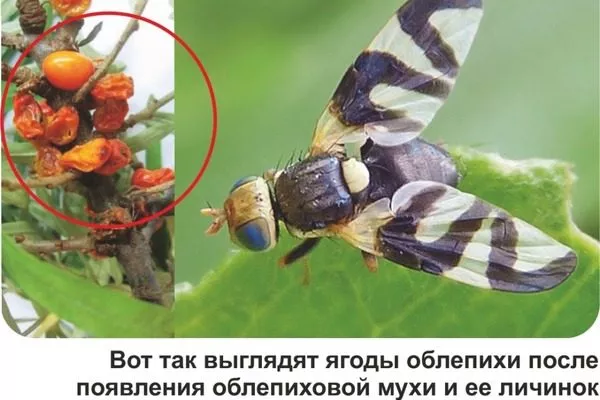
The fruits can be damaged by sea buckthorn flies, and the leaves by spider mites if not properly protected. The variety is resistant to wilt and other common diseases.
Subtleties of planting
Choose a sunny, wind-protected location for planting the Superior, avoiding areas with high groundwater levels. The soil should be light, fertile, and moisture-retentive.
Boarding time:
- Spring: from the first days of April until the second half of May.
- Autumn: from September 10 to October 10.
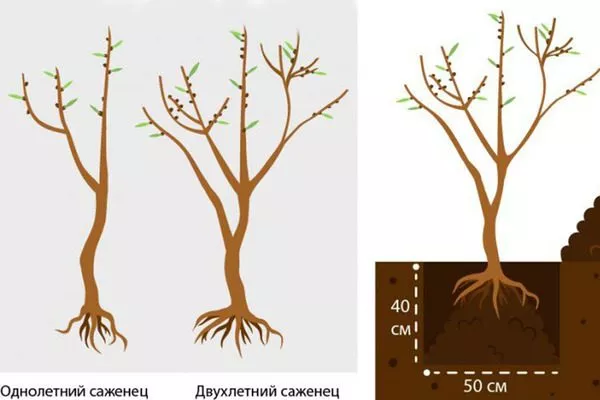
The timing may vary depending on the region and weather conditions. A 15-centimeter layer of drainage material (crushed rock, pebbles, or broken red brick) is placed in the planting hole. The soil mixture for the hole is prepared from:
- top fertile layer – 2 parts;
- humus, peat and river sand - 1 part each.
Place the seedling on the mound you've created, cover it with the mixture, compact the soil, water it well, and mulch it with well-rotted manure. The root collar should be 5-7 cm above the bed level.
Agricultural cultivation techniques
Sea buckthorn is drought-resistant, but requires regular watering during hot periods. Young seedlings require moisture: initially, they are watered daily, with 35-40 liters of water per bush. It is important to moisten the soil to a depth of 55-65 cm. Mature fruiting bushes are watered four times per season, using 60 liters of water.
Other events:
- After watering or rain, loosen the soil. Loosen the soil around the bush to a depth of about 6-8 cm, as sea buckthorn roots are located superficially. Loosen the soil between rows to a depth of 10-15 cm. If the roots become visible, mulch them with a mixture of peat and sand.
- Sea buckthorn is fertilized in three stages (dosage for one bush):
- Until May 10 – fertilize with ammonium nitrate (10 g per 5 l of water).
- In the first ten days of June, add 10 g of potassium sulfate and 25 g of double superphosphate per 5 liters of water.
- In mid-October – use 100-120 g of charcoal in the tree trunk circle.
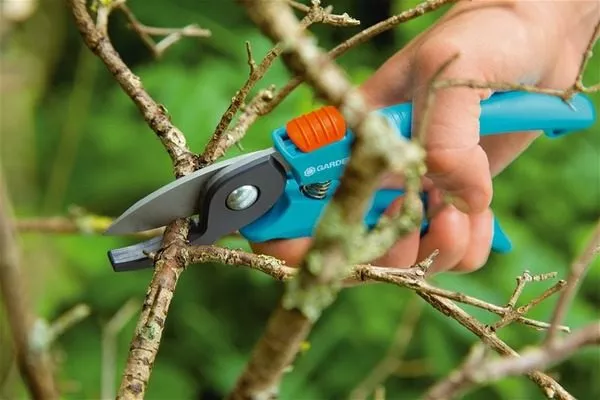
- Sea buckthorn is pruned after the snow melts (before the sap begins to flow) and before winter (during the plant's dormant period). During pruning, all old, dried, damaged, abnormally grown, thickening, and diseased branches are removed, promoting healthy growth and development.
Gardeners' reviews
The Superior sea buckthorn lives up to its name – it's productive, delicious, and easy to care for. It can be planted at any time of year and grown in all regions of Russia. It's crucial to purchase high-quality seedlings, which directly impacts the speed and success of the plant's survival.