
Sea buckthorn with the romantic name "Favorite" is characterized by its tall, sparse crown, excellent fertility, and sweet fruits. This old variety is virtually thornless, making harvesting much easier. It is suitable for cultivation in harsh climates.
History of origin
The developers of the new variety are E.I. Panteleeva, N.I. Davydenko, I.P. Kalinina, O.A. Nikonova, and E.E. Shishkina. They contributed to agronomy by creating a unique variety by crossing Shcherbinka-1 with the offspring of Kudyrga-1 (a representative of the Chulyshman ecotype) in 1967.
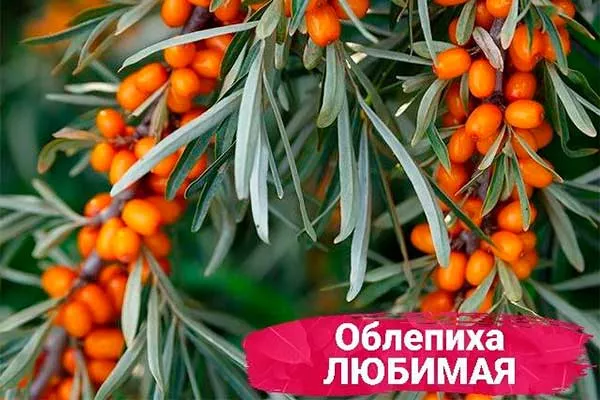
The resulting plants are characterized by moderate growth and a crown resembling a flattened circle. Thorn scores range from 1.5 to 2 points, depending on the age of the bush. The variety was selected as an elite cultivar in 1972, submitted for state variety testing in 1987, and finally registered in the State Register in 1995.
Morphological features
Lyubimaya has a distinctive feature: abundant budding begins before the leaves appear. It grows at a moderate rate, and its flavor is sweet—tasters have given it a 4.5-5 star rating.
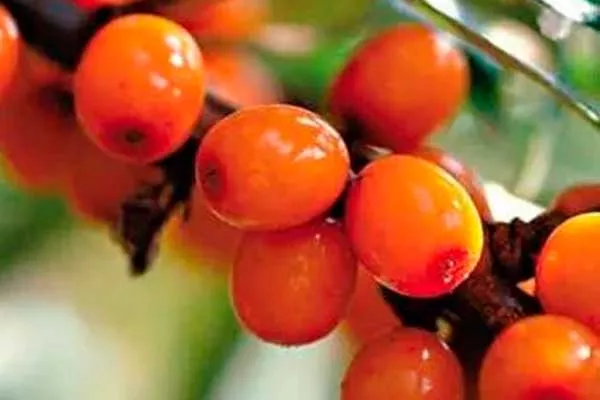
Sea buckthorn berries are quite large, weighing a minimum of 0.66 g and a maximum of 0.8 g. They have a distinct aroma, and their flavor is considered dessert-like and sweet. The sugar content is 7.0-7.3%, and the acidity is only 0.7-0.8%, while the oil content is 5%.
Other characteristic features:
- skin – bright orange;
- form - cylindrical-oval;
- peel – compacted;
- peduncle – long;
- type of separation – dry, the effort required is at a medium level.
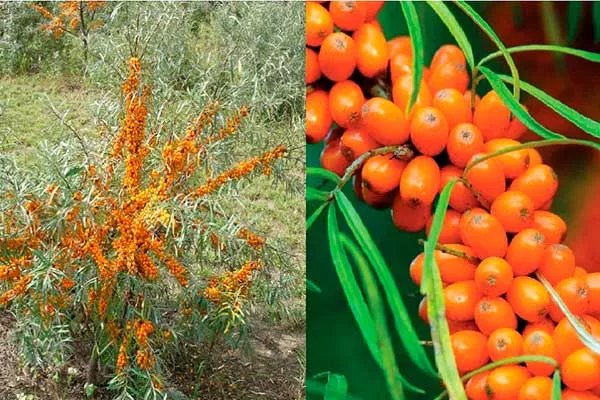
The 'Favorite' sea buckthorn is a shrub that grows up to 250 cm. The crown of an adult plant is spreading, while that of a young plant is straight – the branches are initially erect and strong, but later become flexible.
Peculiarities:
- color of the bark on the shoots – light brown when young, becomes dark in adulthood;
- leaf blades – medium-sized, refined, with pointed ends, light green in color;
- Features of leaves – the underside has a silvery pubescence;
- foliage shape – broadly lanceolate, flattened;
- thorns – there are almost none, and those present are short;
- flowers – cup-shaped, bright yellow;
- root system – superficial type, highly branched.
Characteristics
Favorite is considered a frost-resistant variety that is able to resist all specific diseases and pests.
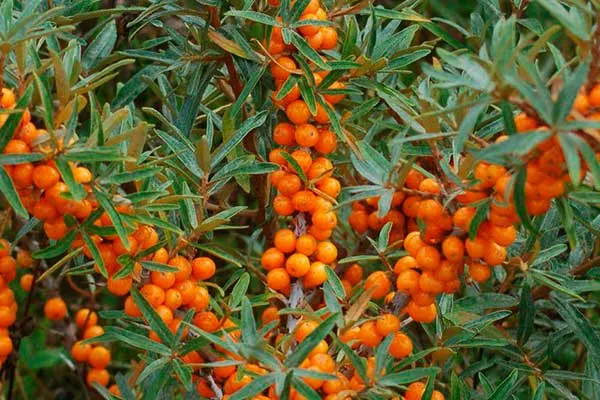
Lyubimaya begins bearing fruit four years after planting outdoors. This variety is considered early-ripening, with berries ripening in late August. The yield per bush ranges from 8-14 kg, or 0.8 kg/sq. m, with an average yield per hectare reaching 84 centners.
Pollination
Sea buckthorn is a dioecious plant, requiring both male and female plants to successfully fertilize and bear fruit. Lyubimaya is considered a female sea buckthorn, so it requires male pollinating varieties such as Gnome, Aley, Hikul, Dear Friend, or Ural.
Application
These bright orange berries have numerous beneficial properties and are used in more than just the food industry. They are excellent both fresh and processed into preserves, compotes, and jams. Ripe fruits are used to extract valuable sea buckthorn oil, which is used both topically and internally.
Sea buckthorn has also found its place in landscape design. The shrub is often used by designers for landscaping parks and coastal areas, and is planted both individually and in groups. Sea buckthorn is also grown commercially for medicinal purposes.
Climate conditions
This variety can withstand temperatures down to -35 degrees Celsius without special shelter, making it cultivated even in Siberia and the Urals. The bushes do not tolerate drought well, so in southern regions, it is best to plant the crop in partial shade. Particular attention should also be paid to maintaining the moisture around the trunk.
Advantages and disadvantages of the variety
Over many years of cultivation, this favorite has proven itself to be a positive choice. Among its many advantages, the following stand out:
There are also negative aspects:
Landing features
When planting sea buckthorn, it's important to use year-old seedlings, as they root faster. To ensure you have both fresh and processed sea buckthorn on your table year-round, it's recommended to plant at least three female plants and one male for pollination.
- ✓ The presence of several branches on a seedling indicates good growth potential.
- ✓ The root system must be developed, without signs of rot or damage.
Other characteristics of the variety for planting:
- Deadlines. Spring is the ideal time for planting, as the plant adapts to new conditions more easily during this period.
- Place. Sea buckthorn prefers sunny locations, so choose an open site on the south, southwest, or southeast side of the garden. In the south, plant it in partial shade. Planting sea buckthorn in low-lying areas where water can stagnate is not recommended.
- Priming. Sandy, sandy loam, and light clay soils are suitable. If the soil is too clayey and heavy, add 25-30 kg of sand per square meter. The soil should be neutral, with a pH of around 6.5, and the groundwater level should not exceed 1.2-1.5 m.
- Selection of planting material. Buy seedlings from specialized gardening stores or nurseries. Check that the bark is not peeling and there are no visible surface damages.
Choose seedlings with several branches, a trunk at least 40-45 cm high and 5-7 mm in diameter, as well as a root system at least 20 cm long with numerous fibrous and 3-4 skeletal roots. - Site preparation. It's best to prepare the site in the fall. Apply 12-15 kg of organic matter, 35-40 g of phosphorus, and 15-20 g of potassium fertilizer per square meter. If necessary, lime the area.
Step by step planting process:
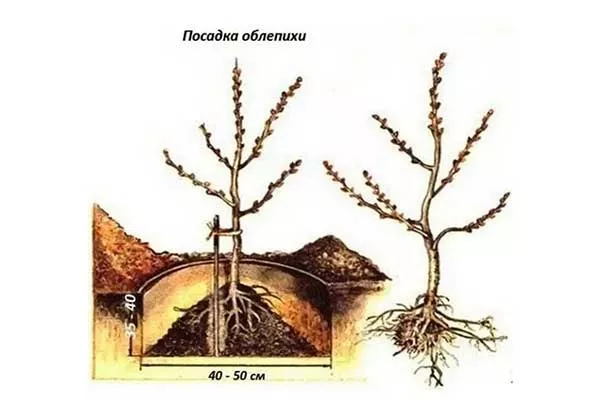
- Dig a hole 50 cm deep and 60 cm wide.
- Create a small mound of soil in the center.
- Place the seedling in the hole so that the root collar is slightly deepened on sandy-clay soil or is 4-5 cm above ground level on clay substrate.
- Spread the roots over the mound and fill the hole, compacting it thoroughly.
- Insert a wooden stick at a distance of 8-12 cm from the seedling and tie the young tree to it.
- Make a depression around it with a ridge of earth and water it (20-25 liters of water).
- Mulch the tree trunk circle with wood chips or dry manure.
Plant care
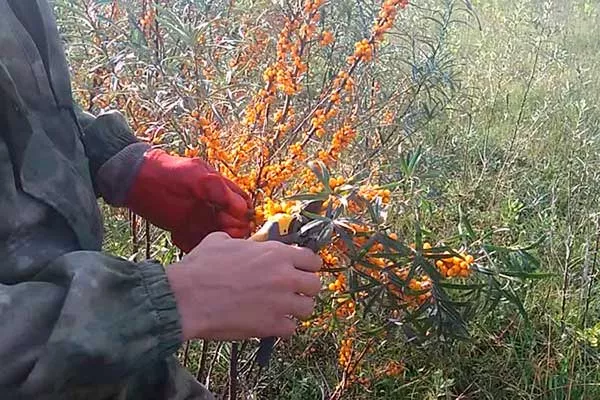
Sea buckthorn care includes pruning, watering, and fertilizing. The effectiveness of these measures directly impacts the yield and health of the plant. Three types of pruning are performed:
- Formation. If you're planting a well-branched two-year-old seedling, initial pruning is not required. If the seedling has no branches, prune it, leaving the trunk 30 cm above the ground. In the second year, leave 3-4 of the strongest young branches and one central shoot, shortening them so that their tops are level.
In the third year, the branches are shortened by one quarter of their length. - Sanitary pruning. Remove all damaged, infected, or frozen branches, as well as those that crowd the crown. It's important to prune above-ground shoots.
- Anti-aging pruning. Starting in the sixth or seventh year of life, pruning is performed, removing all branches that are drooping or have stopped growing and bearing fruit. New growth energy is directed toward healthy, strong shoots, renewing the crown in stages, replacing 1-3 branches annually. This approach will completely rejuvenate the crown in 3-4 years.
Other events:
- Watering. The plant prefers moderately moist soil, especially during the active growth period. Regular watering is recommended, based on the following watering rate: 30-40 liters per 1 square meter of the trunk area for young plants and 60-80 liters for mature plants.
It is important to control the soil moisture level and avoid over-watering, which can trigger the development of diseases. - Top dressing. No additional fertilizing is required during the first year after planting outdoors. In subsequent years, it's important to apply fertilizer regularly and on time:
- Before mid-May, add ammonium nitrate at a rate of 20-25 g per 10 liters of water - 5-5.5 liters per adult plant.
- In the first ten days of June, use 20-25 g of potassium sulfate and 45-55 g of double superphosphate per 10 liters of water.
- In mid-October, add 100-150 g of wood ash to the tree trunk circle to increase fertility.
Preparing for winter
Although sea buckthorn tolerates frost well, it is damaged by piercing winds, so you can protect young plants from winter cold by wrapping them in thick white paper or using agrofibre for this purpose.
Preparing more mature sea buckthorn for cold weather includes the following measures:
- watering is carried out before the onset of winter - at least 80 liters per bush;
- the trunks are covered with a layer of clean lime;
- The root zone is mulched with peat mixed with spruce branches to a height of 10 cm.
Diseases and pests
The favorite plant resists all diseases and pests, but for this to happen, its immune system must be strong. Therefore, the gardener must strictly adhere to all agricultural requirements.
Harvesting and storage
The berries reach maturity in August, usually during the first two weeks of the month. Ripening time may vary depending on the climate of the growing region.
Peculiarities:
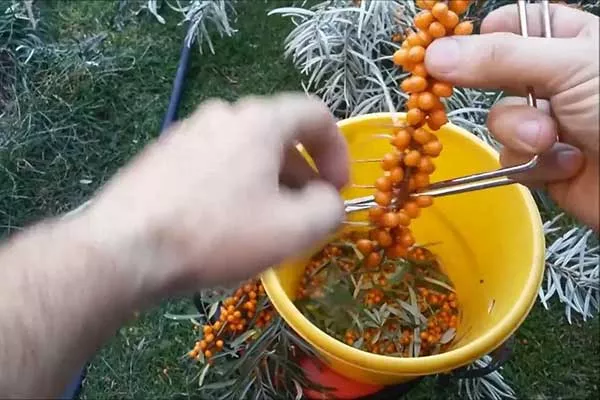
- Harvesting is carried out as the berries ripen and is best done in dry weather.
- It is recommended to consume freshly picked berries immediately or process them within 2-3 hours after picking.
- To temporarily preserve freshness, sea buckthorn is placed in plastic containers and stored in the refrigerator at a temperature of 0 to +6 degrees.
- If you need to preserve berries for a longer period, they can be frozen, dried in the oven, or naturally dried.
Reviews
The "Favorite" sea buckthorn not only has a beautiful name, but is also distinguished by its excellent taste, abundant harvests, low maintenance, and decorative qualities. But most importantly, the number of thorns on the shoots is very limited. Therefore, picking large berries is not as difficult as on other shrubs.