
Sea buckthorn is a tree-like shrub widely cultivated as a fruit and ornamental crop. This unique plant is a valuable commercial crop and simply a beautiful shrub. Let's learn how to plant and grow sea buckthorn in your garden.
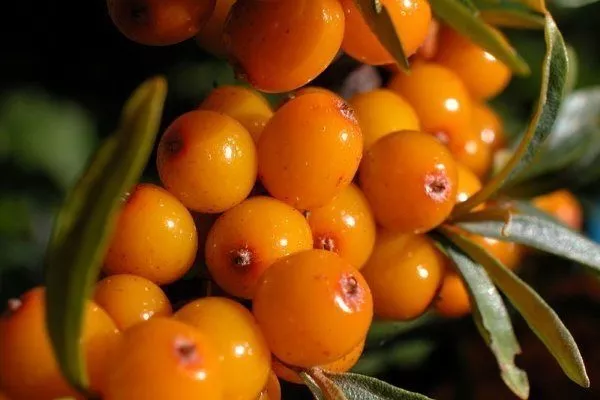
Sea buckthorn
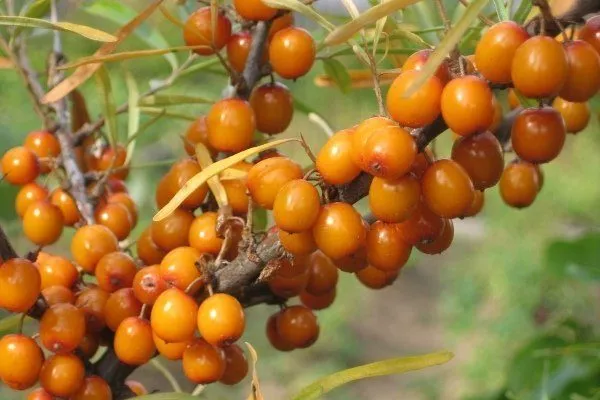
All parts of the sea buckthorn are beneficial for the human body - the leaves, the bark, and the drupes
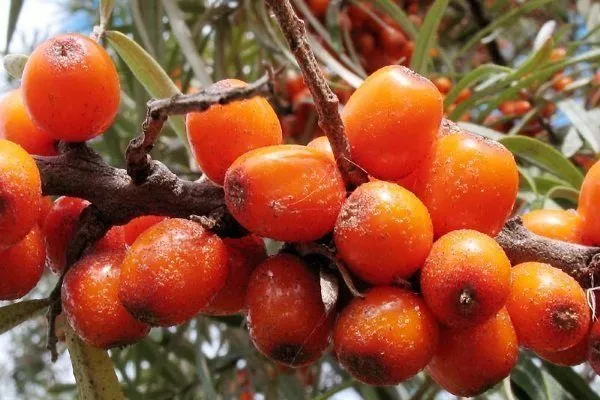
Sea buckthorn fruits should be collected after the first frosts - then they will lose their tart taste
Historical information
Sea buckthorn (Hippóphae rhamnoídes) belongs to the Elaeagnaceae family of the genus Hippophae. The generic name "hippophaes" comes from the Greek words hippos, meaning horse, and phaos, meaning shine. The Greeks believed that horses acquired shiny skin by eating sea buckthorn leaves. This species of sea buckthorn is called rhamnoides because of its resemblance to the thorny shrub of the same name.
It's unknown when sea buckthorn first appeared in Russia. It's mentioned in the works of 18th-century botanists traveling through Siberia. However, it's clear that it arrived here much earlier. Its history goes back to ancient times—its fruits were used for medicinal purposes in ancient China and Greece.
Botanical description of the berry crop
Sea buckthorn is a vibrant plant—it's easily identified by its distinctive features. The tree is especially noticeable during the fruiting season—the bush is densely covered with brightly colored yellow or orange berries.
Shrub, leaves
Sea buckthorn is a woody, branched shrub. The branches are covered with sharp thorns. The plant reaches a height of 4-6 m. The crown diameter is 3-5 m. The branches are woody, and the bark is brownish or yellowish-gray.
The plant is dioecious—the flowers are small, greenish-brown or yellow-green. Male plants bear staminate flowers, while female plants bear pistillate flowers. The pistillate flowers are clustered on short stems, 5-10 in a row.
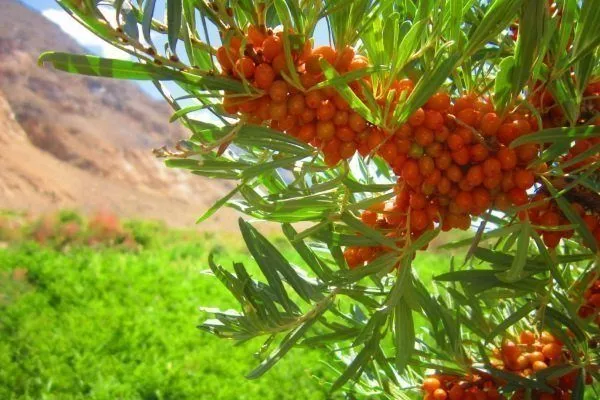
The leaves are linear-lanceolate. The upper surface is green, the lower surface is silvery-white. The petioles are short. The leaves, narrow and stiff, are about 7 cm long.
Fruit
The drupes are spherical or oval in shape, 12 mm long, and contain a single seed. The color of the berries depends on the variety and can be orange, yellow, or red. The aroma has hints of pineapple. The taste is sweet.
Sea buckthorn berries are edible, but they are usually harvested after the first frost—they become less tart then. If left unharvested, they will hang around until spring—a real treat for birds.
Characteristics of sea buckthorn
Sea buckthorn is a fruitful plant, growing which allows each bush to yield a bucket or more of its priceless fruit. Sea buckthorn is a treasure trove of medicinal properties and an attractive commercial opportunity.
Distribution and ecology
Sea buckthorn, or common buckthorn, grows wild in Europe, Asia, the Caucasus, India, and Pakistan. In Russia, it is found throughout almost the entire region, from the Northern Caucasus to Siberia. Sea buckthorn is especially abundant along riverbanks and lakeshores, as the plant prefers moist soil.
The shrub tolerates air pollution well and can be planted for landscaping purposes in ecologically unfavorable areas.
Sea buckthorn is a commercially grown crop. In Altai alone, approximately 5,000 hectares are planted with it.
Flowering period and ripening time
Flowering and ripening periods:
- The plant blooms in April-May, before the leaves emerge. The blooming period lasts from 6 to 12 days. During the flowering period, the plant resembles a fluffy cloud.
- Fruiting begins in late August and continues until early October. The berries fully ripen in the fall, in September–October. The exact timing depends on the variety and growing region. Early varieties ripen in August.
Yield indicators, fruiting periods
The yield of a cultivated sea buckthorn is 10-15 kg per bush. The plant reaches its peak yield at 5-6 years of age. After that, yields decrease. Fruiting begins 3-4 years after planting. The plant's lifespan is 25-30 years. To prolong fruiting, gardeners regularly perform rejuvenating pruning.
Sea buckthorn leaves are collected at the end of summer and used for medicinal purposes, the bark is harvested in early spring.
Taste characteristics
Fresh sea buckthorn berries are an acquired taste. They have a distinctive, slightly sweet flavor with a hint of bitterness. Their flavor improves after frost—frozen sea buckthorn becomes sweet and sour.
In Siberia, sea buckthorn is often called "Russian pineapple" – after frost, the berries acquire a special pineapple flavor and aroma.
Scope of application
Sea buckthorn is used in many industries, especially its fruits. This plant serves as a raw material for the preparation of various products used in medicine and cosmetics, and its fruits are also valuable for culinary purposes.
Areas of application of sea buckthorn:
- Cosmetology. Sea buckthorn-based ointments and creams help prevent hair loss, improve hair structure, improve skin condition, and prevent skin aging.
- Cooking. The fruits are used to make wines, marmalade, candy fillings, sweet preserves, juices and much more.
- Household needs. Sea buckthorn is beautiful – it's used in landscape design, for example, to create hedges. This plant is a good honey plant and is planted in apiaries. The shrubs can prevent landslides by holding the soil in place with their roots.
- Medicine. The fruits are natural multivitamins. The fruits and leaves are used to make preparations for chronic liver and stomach diseases, purulent wounds, and so on. The leaves and branches are used to make medications for rheumatism and joint diseases. The fruits are used to make various medications, including tinctures, suppositories, ointments, creams, and so on.
The following video provides an overview of the 'Rushinovidnaya' sea buckthorn variety and describes its medicinal properties:
Resistance to diseases and pests
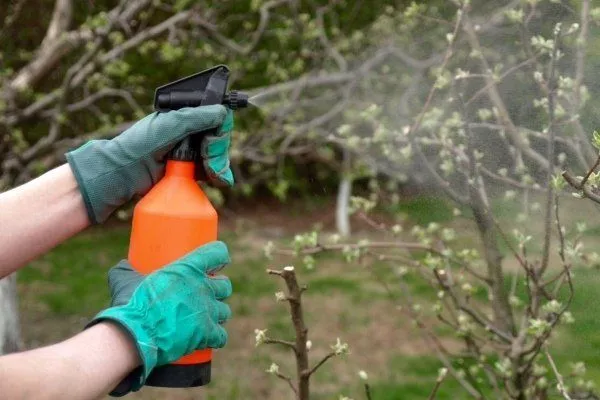
Mature sea buckthorn rarely gets sick. However, there are a number of diseases and pests that require early protection through preventative spraying. Sea buckthorn is sprayed twice—before and after fruiting—with a 1% Bordeaux mixture solution.
Chemical composition
Sea buckthorn fruits and leaves contain a wealth of useful substances:
- Leaves. They contain coumarins, folic acid, inositol, serotonin, and vitamins B1, B2, B6, C, and PP. The presence of serotonin is responsible for the plant's anti-radiation effectiveness.
- Fruit. They contain fatty oil (8%), which contains carotenoids, flavonoids, phospholipids, coumarins, ascorbic and nicotinic acids, serotonin, folic acid and much more.
All parts of the plant contain phytoncides and tannins. The exact chemical composition depends on the region where the sea buckthorn grows and the time of harvest. The fruit oil contains up to 300 mg% carotenoids and up to 160 mg% vitamin E.
Sea buckthorn berries are rich in trace elements and vitamins A, B, C, PP, H, and E. 100 g of berries contain 82 kcal. Nutritional value per 100 g:
- proteins – 1.2 g;
- fats – 5.4 g;
- carbohydrates – 5.7 g.
100 g of sea buckthorn contains the daily requirement of vitamins and minerals necessary for a person.
Advantages and disadvantages of the variety
Benefits of sea buckthorn:
- endurance – the plant is frost-resistant and undemanding to care;
- ease of reproduction;
- resistance to most shrub diseases;
- the usefulness of the plant - fruits and leaves;
- transportability.
Flaws:
- the need to plant pollinators - male plants;
- difficulties in collecting fruits;
- thorns on the branches.
Landing rules
Sea buckthorn is easy to grow, but if planted incorrectly and improperly, you can't expect a high yield. Its immunity, productivity, and future life depend on proper planting.
Recommended timeframes
Sea buckthorn is planted in spring or fall. If winters are harsh, like in Siberia, the best time to plant is April or May. The plant should be dormant during planting.
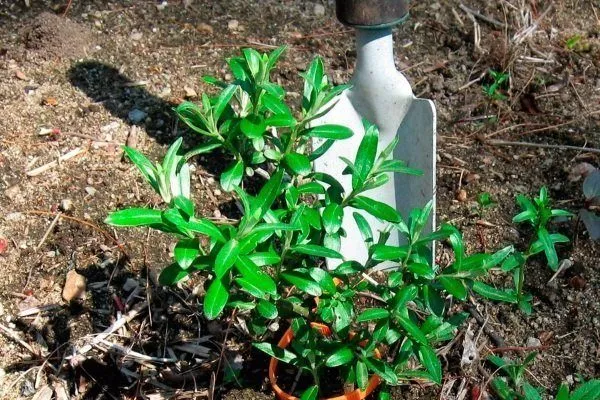
In warmer climates, autumn planting is acceptable, but the key is to allow the plant to establish roots before frost. Sea buckthorn should be planted 1-1.5 months before frost.
Choosing a suitable location
Site requirements for planting sea buckthorn:
- Good sun exposure. Bushes planted in the shade grow poorly and wither.
- Sea buckthorn grows best in light, sandy soils. It does not tolerate heavy clay soils well.
- This crop loves high air humidity and grows especially well near bodies of water.
- There should be enough space around the seedlings to grow – a branchy bush needs space.
- The plant doesn't tolerate any type of proximity—it's not recommended to plant it near fruit trees or berry bushes. The best option is the outskirts of the plot, on the south side.
- ✓ The soil pH level should be between 6.0-6.5 for optimal sea buckthorn growth.
- ✓ The depth of groundwater should not exceed 1.5 meters to avoid root rot.
Soil preparation
Prepare the planting site in advance; if spring planting is planned, prepare it in the fall. If the soil is poor, it's advisable not only to dig a hole but also to add fertilizers that improve soil fertility and composition. If the soil is acidic, add wood ash. For clay soils, add sand at a rate of 2 buckets per square meter. In any case, it's advisable to add organic matter such as manure, compost, and humus (1 bucket per square meter).
Selection and preparation of seedlings
The best planting material is one-year-old seedlings. Signs of a seedling suitable for planting:
- height – approximately 40 cm;
- the presence of 2-4 skeletal roots, 15-20 cm long;
- a smooth trunk should have developed lateral shoots;
- the bark is smooth and not peeling.
Don't forget to buy one male seedling for every 3-4 female seedlings. Before planting, be sure to soak the seedlings in water for several hours, or even better, in a Kornevin solution.
Algorithm and landing scheme
The procedure for planting sea buckthorn seedlings:
- Dig holes at intervals of 1.5-2 m. The depth and width of the hole is 80 cm.
- Add compost or nutrient-rich soil mixture to the bottom of the hole – mix the fertile soil layer with humus or compost, and also add fertilizers that are traditionally applied when planting trees – superphosphate and others.
- Form a mound of soil, place the seedling on it, and spread out its roots. Position the seedling so that its root collar is 3-5 cm deep—sea buckthorn can produce adventitious roots from the trunk.
- Cover the roots with fertile soil. As you fill, shake the seedling and compact the soil with your hands to ensure there are no empty spaces between the roots. Once the roots are covered, carefully compact the soil again.
- Water the seedling with 2-3 buckets of water. Once the moisture has been absorbed, sprinkle the area around the tree trunk with straw, peat, or dry grass.
Subsequent care of the culture
Sea buckthorn is an unpretentious crop, but if a gardener expects a decent harvest, care is essential.
You can find additional information on how to properly care for sea buckthorn in the fall. Here.
Frequency of watering
Watering frequency depends on weather conditions. Sea buckthorn is watered only in dry weather, as needed. Young plants receive 3-4 buckets of water, while mature plants receive 6-8 buckets. In late summer, water consumption increases by half. The soil around the tree trunk is loosened to ensure oxygen reaches the roots.
Top dressing
Seedlings fertilized at planting do not require additional feeding for the first two years of life. Fruiting plants require potassium and phosphorus. For a bucket of water, use:
- 1 tbsp. potassium fertilizer (chlorine-free);
- 2 tbsp. double superphosphate;
- 2 tsp. "Uniflor-micro".
The prepared mixture is poured under the roots during fruit growth. Another option is to fertilize the sea buckthorn with AVA fertilizer every three years. Table 1 lists sea buckthorn fertilizers.
Table 1
| Fertilizer | Characteristic |
| AVA | A complex mineral fertilizer for accelerating growth, increasing resistance to weather conditions, and increasing yields. |
| Rossa | Complex liquid fertilizer for root feeding, seed soaking, and rooting cuttings. |
| Effecton | A bioactive fertilizer containing enzymes and humic substances. Improves photosynthesis and boosts immunity. Recommended for use in northern climates. |
| Potassium humate with microelements | Liquid mineral-organic fertilizer. Used for soil cultivation. |
Pruning shrubs
Sea buckthorn tends to spread. If left unpruned, the plants will form dense thickets. The main pruning method for sea buckthorn is to shape the plant into a bush or tree. To encourage bush growth, shoots growing from the undergrowth are left. Three to four of the strongest shoots are retained.
Sea buckthorn is pruned at any time except winter:
- Spring. In early spring, perform sanitary pruning, removing all dead, damaged, and diseased branches. Then, trim off any shoots that are crowding the crown. Young bushes undergo formative pruning. Skeletal branches are shortened by 1/3.
When the plant begins to bear fruit, formative pruning stops, as flower buds will form at the tops of the shoots. - Summer. In mid-summer, branches that have not produced growth are pruned.
- Autumn. Sanitary pruning is carried out - before winter, all unnecessary branches must be removed so that the plant does not waste energy on feeding them.
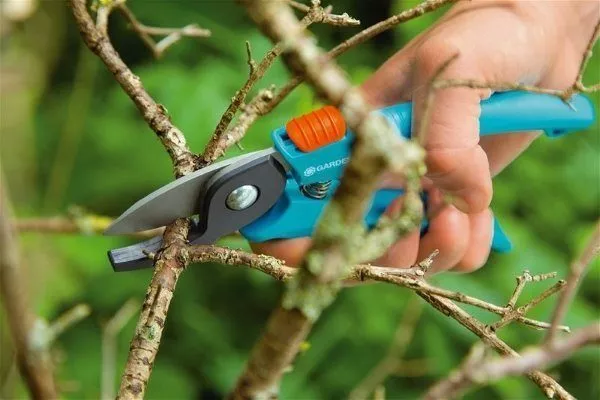
Pruning is done with sharp and disinfected tools such as pruning shears, hacksaws, or garden knives. The cut areas are sealed with garden pitch.
Preparing for winter
Sea buckthorn is a frost-hardy plant that doesn't require winter protection. Preparing for winter involves the following steps:
- sanitary pruning – this is carried out in late autumn, when the plant is dormant;
- Moisture-charging irrigation to increase the frost resistance of plants - in the temperate zone it is carried out from the end of September, after the harvest;
- young seedlings mulch tree trunk circles.
- Carry out a moisture-recharging watering 2 weeks before the onset of stable frosts.
- Insulate the tree trunk circle with a 10-15 cm layer of mulch to protect the roots from freezing.
- Wrap the trunks of young seedlings with burlap or special covering material to protect them from frost cracks.
Diseases and pests, methods of control and prevention
Sea buckthorn has few enemies and is resistant to diseases common to fruit trees. However, there are several diseases and pests that can not only deprive a gardener of a harvest but also destroy the plant.
Dangerous diseases and pests are listed in Table 2.
Table 2
| Diseases/pests | Symptoms/harm | How to fight? |
| Scab | Spots and ulcers appear on the bark, leaves, and later on the fruits, and the plant dries out. | Pruning and burning of diseased branches. Treatment with 3% Nitrofen. |
| Endomycosis | The fruits become wrinkled, and the disease gradually spreads throughout the plant. Dried berries retain fungal spores. | Spray with Bordeaux mixture in spring and fall. If diseased berries appear, collect and destroy them. |
| Fusarium wilt | Leaves and young shoots wither. Berries and leaves fall off. | Timely thinning of bushes. Maintaining proper spacing between bushes when planting. Pruning and burning diseased branches. |
| Spider mite | A small, invisible insect. It attacks buds and flower buds. Leaves are covered in webbing. | Spraying with Fitoverm, Aktara and similar insecticides. |
| Aphid | A small insect that sucks the sap from the plant. Leaves and shoot tips curl up, revealing a solid layer of insects. The plant weakens. | Control of ants that carry aphids. Treatment with Fitoverm and ammonia solution. |
Collection and processing
The leaves are used medicinally and are harvested in May. The fruits are harvested after ripening—in September-October, when they turn yellow (orange) and firm. Harvesting is done only in dry weather. The harvested fruits are cleared of debris, unripe, and diseased specimens.
Sea buckthorn is often harvested after frost, when the berries can be easily shaken from the branches. If there's only one bush, the berries can be picked by hand; if there are several bushes, mechanical tools are essential. To harvest sea buckthorn, use tongs, slingshots, and special harvesters—all of which can be purchased at the store or made at home.
Sea buckthorn berries are used to make oil, dried, frozen, made into jams and compotes, and ground with sugar. Fresh berries are stored in wooden barrels, while frozen ones are stored in bags. Fresh sea buckthorn should be stored in a cool place for no more than three days, while frozen berries can be kept in freezers for up to six months.
Sea buckthorn oil is especially prized. It's prepared as follows:
- The juice is carefully squeezed out of the ripe fruits.
- The pomace is dried in an oven (dryer) at 50 °C.
- Dry pulp is ground in a coffee grinder or mortar.
- The ground pulp is poured with vegetable oil in a ratio of 1:15.
- Let it steep for 3 weeks. Drain the liquid – the oil is ready.
Sea buckthorn reviews
Sea buckthorn is a healthy, beautiful, and easy-to-grow plant, a joy to grow. However, enjoying the taste of sea buckthorn jam or making the famous sea buckthorn oil requires some effort; harvesting the berries is the most challenging stage of cultivating this plant.