
Sea buckthorn can be propagated using several different methods. Each has its own advantages and disadvantages. By examining each method in more detail, you can choose the one that suits you best.
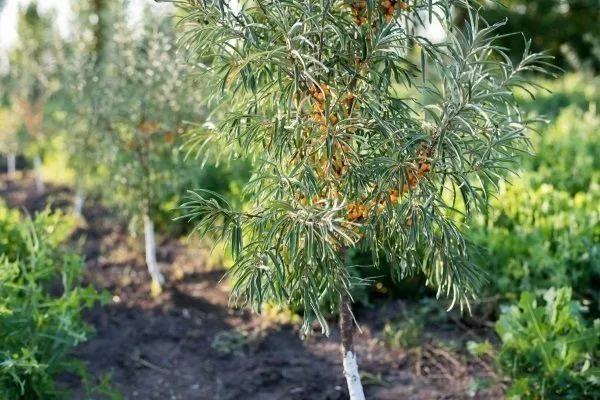
Methods of sea buckthorn propagation
There are several ways to propagate these plants: by root suckers, green or woody cuttings, dividing the bush, layering and seeds.
| Name | Ripening period | Productivity | Disease resistance |
|---|---|---|---|
| Root shoots | 2 years | High | Average |
| Cuttings | 1 year | Very high | High |
| By dividing the bush | 1 year | High | High |
| Layering | 2 years | Average | High |
| Seeds | 3 years | Low | Low |
Root shoots
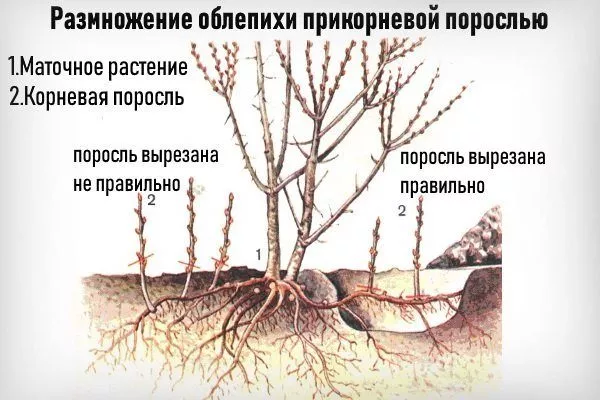
One of the simplest methods of propagation is by rootstock. The procedure itself is very simple to perform:
- By roughly chopping the root with a shovel, we obtain planting material—suckers or damaged root parts. Later, a root sucker will emerge. Give it special care—earth up the soil, and never let it dry out.
- In the spring (of next year), loosen the resulting mound. Work carefully, being careful not to damage anything.
- Then take a knife and, using sideways movements of the blade, separate the shoot from the mother plant. The root shoot will no longer need it; by then, it will have grown its own roots.
- After these steps, transplant the cutting to the new location you prepared in the fall. Continue watering and fertilizing it as needed.
Cuttings
Cuttings are one of the most common propagation methods. They don't require much labor and are generally very enjoyable for most gardeners.
Lignified cuttings
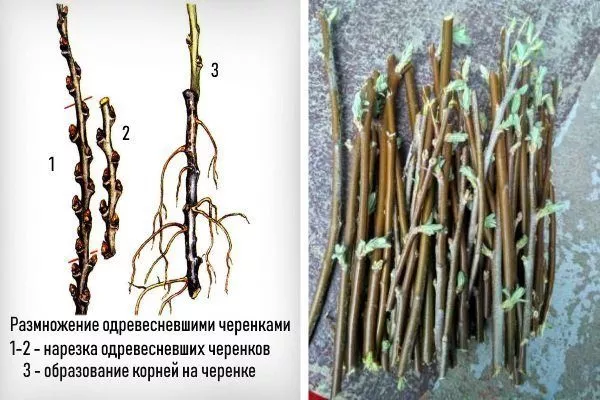
Prepare cuttings in the fall (November). Select those that are 5 mm or more thick. Hide and bury them under the snow, where they will remain until spring. When spring arrives, cut the cuttings. After this, they will be 20 cm long.
Help the cuttings develop buds and prepare the root buds. To do this, soak the cuttings in water for 12-15 days. During this time, they will be ready for planting.
Now all that's left is the bed itself, which is prepared in advance. The seeding area should be at least 1 meter wide, and the bed should be slightly elevated above the ground. However, it shouldn't be too high.
Planting should take place at a temperature of 5 degrees Celsius (41 degrees Fahrenheit). Moisten the seedlings additionally just before planting. Place them in the soil so that the tip, with the swollen buds protruding, remains above the soil surface. After planting, water and fertilize the soil.
You'll need to monitor the soil condition and moisture daily. Watering frequency varies depending on the cuttings: every four days for long cuttings (20 cm), and daily for shorter cuttings.
By late autumn, they'll reach their standard size, and by the end of the year, they're ready for transplanting. They should be repotted when they reach the following dimensions: root length 20 cm, shoot height 50 cm, and diameter 8 mm.
Green cuttings
Reproduction occurs during the summer—June-July. Follow these steps:
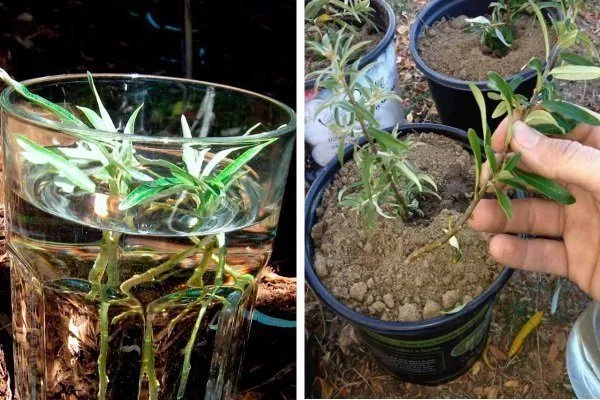
- Using a sharp knife, trim the cutting at the top and bottom so that the finished length is 10 cm. It's a good idea to treat it with a growth medium to promote rooting.
- After 16 hours, plant the cuttings in soil, deepening them to a depth of 4 cm, and cover with a jar or plastic wrap. They thrive best in light soil; peat is an excellent choice.
- The soil should always be moist—check it regularly. You can use a fine sieve to water the plant.
- Remove the film or jar when the cuttings take root, and transplant them to a permanent location after 12 months, after the sprouts have become accustomed to the soil.
By dividing the bush
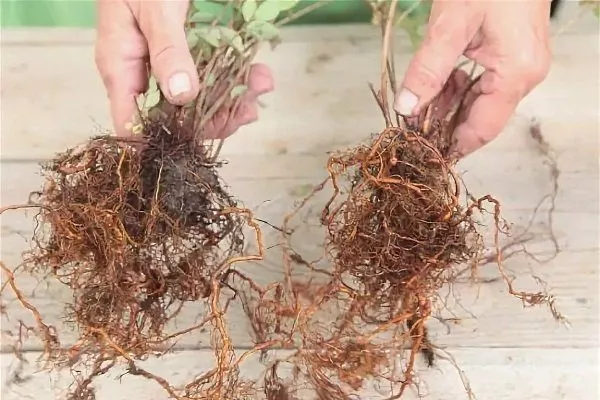
This method is most often used to transplant plants from one location to another. It can be done in both spring and fall, but frost must be avoided.
The procedure is very simple:
- Dig up the plant bushes, cutting off dry, old branches and leaving young ones.
- Afterwards, shake off the soil from the roots and separate them into sections. Garden pruning shears are useful for this.
- Carry out division carefully, without damaging the developed roots.
- Remove old roots. This ensures the root system of each bush is healthy.
- Transplant the resulting bush to a new location that you have prepared for it in advance.
Layering
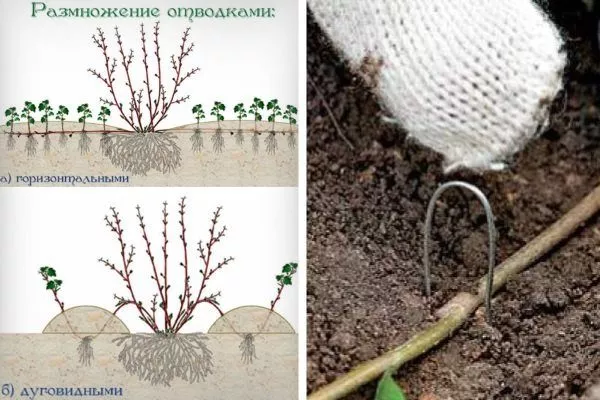
This method helps preserve all the qualities and characteristics of the mother plant, making the new plant identical. The resulting seedlings are distinguished by their quality.
The procedure is as follows:
- Press the lower branches of the sea buckthorn firmly into the soil, securing them in place with strong wire, pushing it into the soil. Cover the cutting with humus, leaving only one end exposed.
- In summer, water generously, and by autumn the sprout will take root.
- In early spring, cut off the grown shoots from the bush of the plant being propagated, selecting the strongest ones, and transplant them to a permanent location.
Seeds
Propagating plants this way isn't very profitable, despite being the easiest of the methods listed. It takes a long time for fruiting to occur, and the maternal traits are almost never retained in the new plant. Furthermore, more than half of the seedlings will be male.
Propagation of sea buckthorn by seeds is as follows:
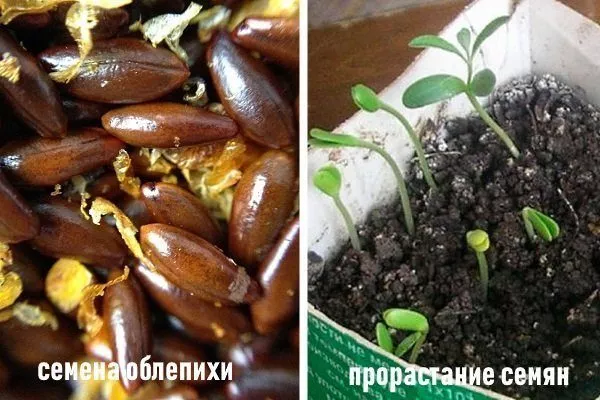
- The seeds are extracted from the berries themselves. All the juice is squeezed out of the fruit, the skin and pulp are removed, and the seeds themselves are washed and dried in the shade.
- After harvesting, ensure the seeds and embryos have a place to live. To do this, place them in any bag other than plastic, without tying them or blocking their airflow. Keep them in a warm, dry room.
- Under the right conditions, seeds can live for 2 to 3 years.
- Start planting seeds in early spring or before frost, in November.
- Many species of sea buckthorn have seeds that do not have a dormant period and germinate almost immediately after drying.
- The ideal time to sow sea buckthorn seeds is late autumn. Then they germinate almost simultaneously, and seedlings emerge before late summer. This helps the root system develop well.
Helpful tips for planting and care
There are rules and helpful tips for working with sea buckthorn. Be aware that working with sea buckthorn in spring and fall differs significantly.
The following rules apply for spring planting:
- When planting only in spring, monitor the temperature.
- Sea buckthorn needs to be planted before the heat sets in and before frost sets in.
- Use manure, peat, and straw as fertilizer.
- It is not prohibited to use growth activators, as they will accelerate the growth of the plant and shoots.
- The plant requires the most careful care in the first period after planting - watering, fertilizing, and protection from the sun.
In autumn, as in spring, there are rules that gardeners adhere to:
- Pay special attention to the rhizomes of the seedlings, as weak roots will not be able to take root.
- If you missed the sowing deadline and cold weather sets in, bury the seedlings until spring.
- To help a young tree survive the winter, cover it with available materials (paper, blankets, snow, film).
- Manure is not suitable for fertilizing plants. It will damage the roots.
- Tie the plant to a stake - this will help protect it from the wind and provide good support.
How to care for sea buckthorn in autumn – read on Here.
Before planting a seedling, the site needs proper care. Here are some tips for that:
- If planting is done in the fall, remove all leaves from the bed.
- Dip the roots of the seedling in a clay slurry before planting - an excellent fertilizing method.
- To rehydrate the roots after they have dried out, dip them in a bucket of water and leave them there for 2-3 hours.
We recommend that you also read the article about How to plant and grow sea buckthorn.
Several pests can occur on sea buckthorn. These include parasites such as leafhoppers, aphids, bugs, leaf rollers, moths, and flies. Each pest requires specific measures to rid the plant of them:
- If aphid populations are high, the plant is sprayed with specific products. Actellic and Fufanon are excellent options.
- The same methods work against other pests, but the timing varies. For example, against leafhoppers, products work in spring and summer, while against bedbugs, they work in spring.
- You can spray the plant immediately after flowering in the spring. This will act as a preventative measure.
Pruning is the removal of certain parts of a shoot. This process initiates important life changes and processes that benefit the plant. It promotes longevity, abundant fruiting, and maintains the plant's health and beauty.
In spring, pruning is necessary to remove old branches and those broken during the winter. This pruning is called sanitary pruning and is done fairly early in the season—before the sap begins to flow. Formative pruning is also performed around this time, but only on young trees.
There's also rejuvenation pruning, which is used on plants aged 5-6 years. In this case, 1-3 large branches are removed from the plant. In return, the plant grows new and younger shoots.
- ✓ The optimal diameter of the root system for division should be at least 30 cm.
- ✓ The minimum number of buds on each division is 3-4 to ensure rapid recovery.
Remember that you shouldn't prune more than three branches during rejuvenation pruning. This will negatively impact the sea buckthorn's health.
In the fall, the process is similar. Before frost sets in, cut off broken and dry branches, along with any diseased ones that will only harm the plant. Burn any branches affected by fungus. Work carefully, and leave the cut smooth and even.
In this video, an expert discusses sea buckthorn, its characteristics, and care principles:
What mistakes can be made when propagating sea buckthorn?
Everyone makes mistakes, whether related to replanting, sowing, growing, or pruning. These include:
- Forgetting about fertilizers. Sea buckthorn, like any other plant, requires potassium, phosphorus, and nitrogen.
- Store seeds in tightly sealed bags. Without air, the seeds will die.
- Store seeds in unfavorable conditions - the room should not have high humidity.
- Start sowing in summer or winter. These are the two most unfavorable seasons for sea buckthorn.
- A bed that is too small will be a problem for the plant's rhizome to grow.
- You work carelessly, damaging the stem, leaves, and most importantly, the root. This is especially true if you're transplanting seedlings.
- Pay attention to watering; it's very important. If drought sets in, the plant will quickly die.
- Improper removal of root suckers leads to the plant's failure to grow and ultimately to its death. Avoid doing this roughly or pulling out the suckers by hand. If done correctly, the sea buckthorn will quickly establish roots.
- Most gardeners resort to the most difficult method of propagation. If you're inexperienced, start with the simplest: seeds.
The method for propagating sea buckthorn can be selected based on your skills, climate conditions, and time. Timing is also crucial, as some methods are best used in spring, while others are best used in autumn.
I really liked the article because I have one sea buckthorn tree growing in my garden, but I didn't know how to propagate it. I'll try layering and cuttings. Fortunately, everything is explained in accessible language.