
Sea buckthorn with the royal name Elizabeth possesses truly regal characteristics – this variety delights with abundant and consistent harvests, produces large fruits, is virtually thornless, and ripens late. Its decorative qualities attract not only gardeners and consumers, but also landscape designers.
History of selection
The originators are Elizaveta Ivanovna Panteleeva and Tamara Mikhailovna Pletneva, who work at the Altai Federal State Budgetary Scientific University. Research began in 1981, but Elizaveta was only added to the country's State Register in 2006.
The working material was Panteleevskaya's seed material, which had undergone chemical treatments to introduce genetic mutations.
Features of the sea buckthorn variety
This sea buckthorn is rich in vitamin C, containing 71-71.3 mg. The plant is quite hardy and suitable for many regions of our country, with universal applications.
What does the plant look like?
The bush is considered a dwarf, as its height is approximately 250 cm. With plenty of sun and favorable conditions, it can grow up to 300 cm. It has the following characteristics:
- crown – oval-spherical, compact and medium in density;
- shoots – upright, strong;
- bark – on the main trunk it is dark brown, on the branches it is grey-green;
- leaf blades – classic elongated shape;
- thorns – almost absent.

The shrub's decorative appeal comes from its foliage, which has a green hue but with a slight sheen. The leaves are darker in the upper part of the crown, while those below have a silvery-olive sheen.
Berries and taste
The taste is characterized as sweet and sour, as the pulp contains almost 9% sugar and 1.2% acid. External description:
- form - by cylinder type;
- weight - 0.8-1 g;
- the length of one berry is 10-12 mm;
- pulp – dense, but juicy;
- peel color – bright orange;
- dimensions of the peduncle – 0.5-0.6 cm.
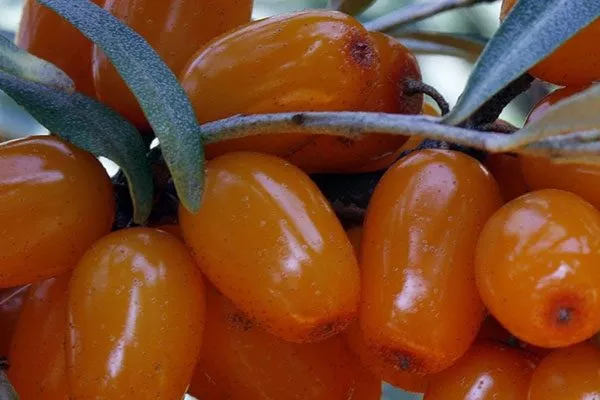
The fruit is picked dry, so moderate pressure is required. This prevents the berries from falling prematurely or under adverse conditions.
When does it ripen and bloom?
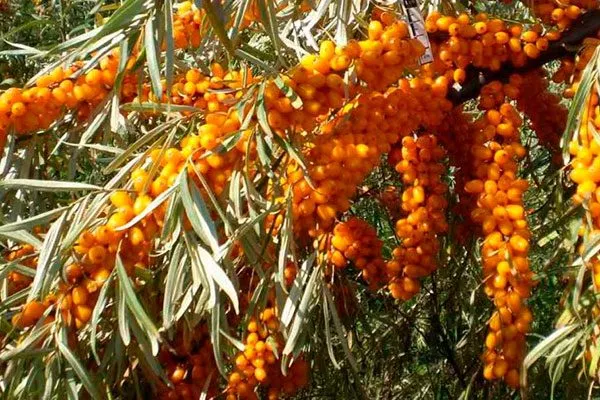
This late-ripening variety begins budding in April-May. Its fruits ripen after August 20th, classifying Elizaveta as a late-ripening sea buckthorn variety.
The subtleties of fruiting and fertility
This variety is highly productive—more than 10-12 kg of berries can be harvested from a single mature bush. The plant begins bearing fruit regularly from its fourth year. The bush's fruiting period lasts 10-13 years. After this period, it is advisable to rejuvenate the plant or replace it with new specimens.
Scope of use of berries
The berries are considered dessert berries, so they can be eaten fresh or used in various culinary dishes and desserts. In cooking, this variety of sea buckthorn is used to make juices, jams, jellies, and marmalades, as well as an additive to cottage cheese and a filling for pies, pancakes, and muffins.
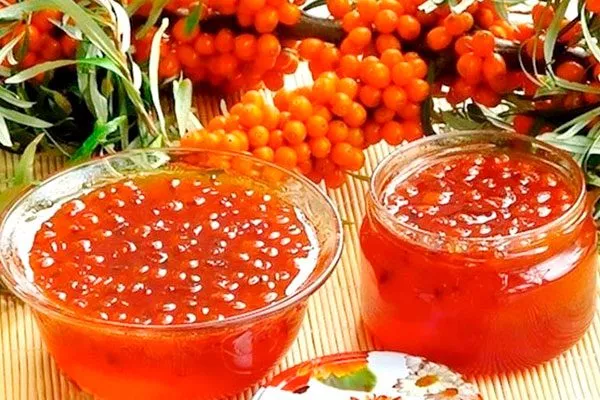
The berries are often used to make aromatic tea, sbiten, and various liqueurs and infusions. Sea buckthorn is also used to create unique sauces that make a delicious complement to meat and fish dishes. The berries are also used in folk medicine.
Diseases and pests: resistance
The Elizaveta variety of sea buckthorn has high resistance to diseases and pests, which contributes to its successful cultivation if care and prevention rules are followed.
Advantages and disadvantages of the variety
Many gardeners note that the bush is not very tall, making it easy to pick berries, but the variety also has other positive aspects.
Despite the aforementioned shortcomings, the variety is considered one of the best for cultivation due to its large fruit size and dessert-quality berries.
The subtleties of planting work
Growing Elizabeth requires considering several important aspects. Key factors include choosing the right planting location and time, as well as carefully preparing the planting material, which will ultimately ensure the successful growth and development of this berry crop:
- When to plant. The best time to plant sea buckthorn is spring or fall. In spring, add organic mixtures to the soil. Fall planting requires especially careful inspection of the seedling's root shoots for damage, and the plant should be covered with a protective material until spring.
- Where to place. The ideal planting location is a southern, well-lit part of the garden. This sea buckthorn grows well in sandy soils with a neutral or slightly alkaline pH.
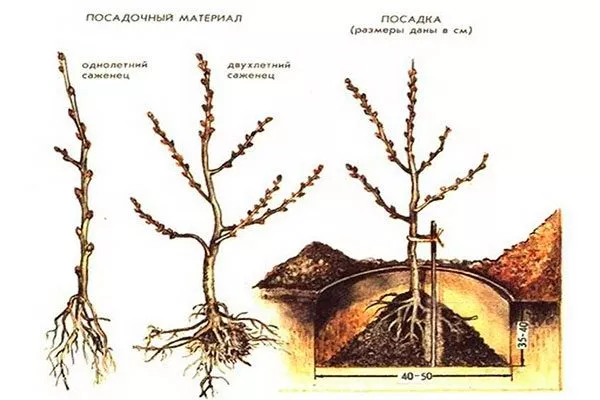
Sea buckthorn has a wide root system, which precludes close proximity to other plants. Choose locations near fences or small buildings. - How to prepare a place. The planting hole is prepared in advance: a month in advance for fall planting or six months in advance for spring planting. Dig a hole 50-55 cm in diameter and depth, then fill it with a mixture of rotted manure, coarse river sand, and ash.
- Selection and preparation of planting material. When choosing seedlings, pay attention to their integrity and root health. To ensure fertilization and fruit production, purchase one male and one female plant.
- Planting sea buckthorn. The work includes the following steps:
- Preparing the hole and soil.
- Place the bush in the center of the hole with careful distribution of the root system.
- Filling the hole with substrate.
- Compaction of soil.
- Abundant watering and mulching with a mixture of wood sawdust and high-moor peat.
Critical soil parameters for successful planting- ✓ The soil pH level should be strictly within 6.5-7.5 for optimal nutrient absorption.
- ✓ The depth of groundwater is at least 1.5 meters to prevent rotting of the root system.
How to care for the crop further?
Elizabeth requires special care. It's advisable to establish a specific watering schedule, provide regular fertilizing, and take measures to protect the plant from diseases and pests.
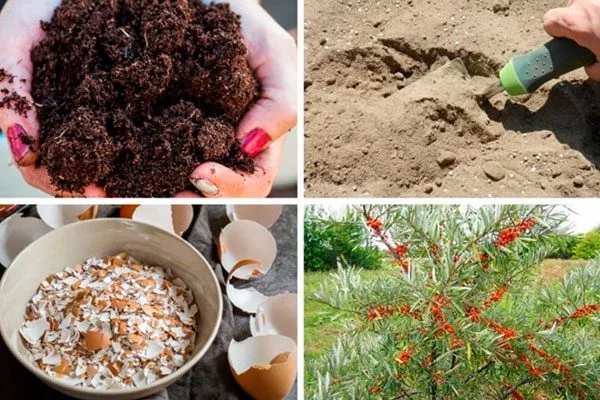
Varietal characteristics:
- Watering. Despite its drought tolerance, it's important to maintain optimal soil moisture levels. Drought can negatively impact the plant, but excess moisture is also harmful. The amount of water and the frequency of watering depend on the climate of the region where the shrub is grown. On average, a mature tree requires about 35 liters of water per watering.
- Top dressing. During the first three years of its life, sea buckthorn requires no additional feeding. After this period, ammonium nitrate is recommended, and after flowering, liquid potassium humate. In the fall, a mixture of wood ash, superphosphate, and potassium salt is beneficial.
- Soil cultivation. After watering or rain, it is important to loosen and weed the soil to ensure oxygen reaches the plant roots.
- Pruning shrubs. Elizabeth grows to about 2.5 meters in height, but regular pruning is necessary to maintain a neat crown and improve yield. It is recommended to do this twice a year: in early spring and before winter.
During pruning, all damaged, dried, or diseased shoots are removed to prevent the spread of diseases and ensure better plant growth.
- In early spring, apply ammonium nitrate at a rate of 20 g per 1 m² of the tree trunk circle.
- After flowering, fertilize with liquid potassium humate according to the manufacturer’s instructions.
- In autumn, apply a mixture of wood ash (200 g), superphosphate (50 g) and potassium salt (30 g) per 1 m².
Preparing for winter
Elizabeth easily tolerates extreme frosts, so other than mulching the trunk area and installing mesh wrapping (to protect against rodents), you won’t have to do anything.
Diseases and pests, methods of control and prevention
Elizabeth is highly disease-resistant, as evidenced by numerous positive reviews. However, failure to follow proper care may result in disease or pest attacks.
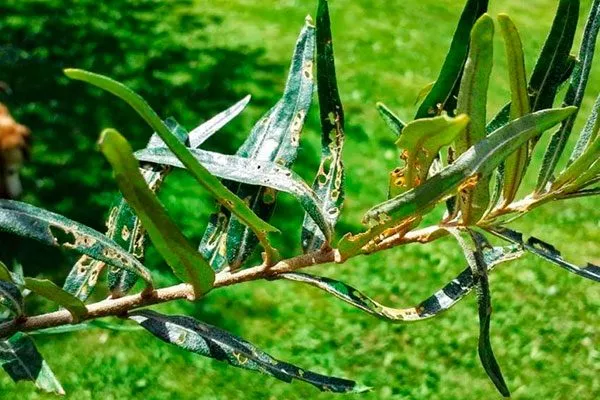
Diseases and methods of their prevention/treatment:
- Endomycosis. Double spraying with copper oxychloride: the first – immediately after the bush blooms, the second – in July.
- Blackleg. Water the seedlings every few days with a solution of potassium permanganate.
- Scab. Treating the bush with Bordeaux mixture a month before harvesting.
Pests and methods of control:
- Sea buckthorn moth. Spraying the plant during the period of bud swelling with a solution of Karbofos.
- Gall mite. In case of minor damage, use a decoction of onion peel, and in case of serious damage, use insecticides.
- Sea buckthorn fly. In mid-July, the bush is treated with a solution of Chlorophos.
Reviews
Sea buckthorn 'Elizaveta' is versatile—the berries are used in cooking, and the bushes are used in landscaping. Thanks to its winter hardiness and resilience, this variety is cultivated in all regions of our country. It is grown in both private gardens and commercial orchards. The key is to strictly follow expert recommendations and adhere to the finer points of cultivation.