
Sea buckthorn (Jamovaya) is a valuable plant for gardeners of all experience levels. Its low maintenance, high yield, and beneficial properties make it an ideal choice for enriching the garden and everyday menu. By following recommendations for proper planting, care, and disease prevention, you can grow healthy and high-yielding bushes.
History of selection
It was developed by Russian breeders Panteleeva E. I., Pletneva T. M., Kurdyukova V. V., Chepurnova T. M. and Zubarev Yu. A. in 2011. This variety is universal and is known for its high yield.
General idea of the variety
Sea buckthorn "Dzhemovaya" is an excellent choice for those planning to grow a high-yielding and reliable variety. Reviews are generally positive, and problems with cultivation only arise in isolated cases.
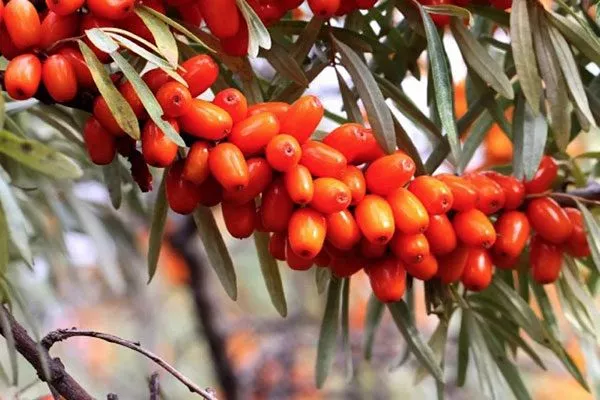
Berries
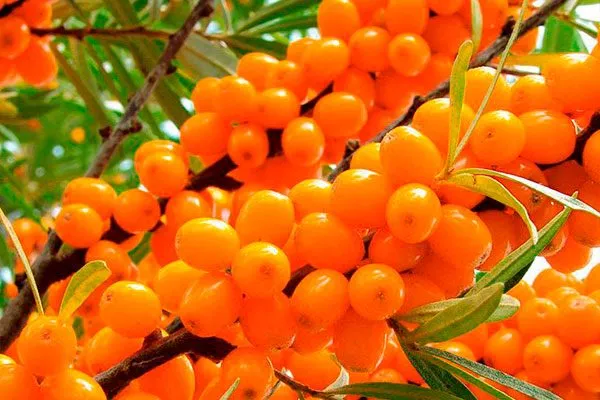
It is highly valued for the excellent taste of its fruits—they are sweet and sour, and received a score of 4.4 out of 5 possible points in taste tests. This variety belongs to the large-fruited sea buckthorn species, with berries weighing between 0.8 and 0.9 g.
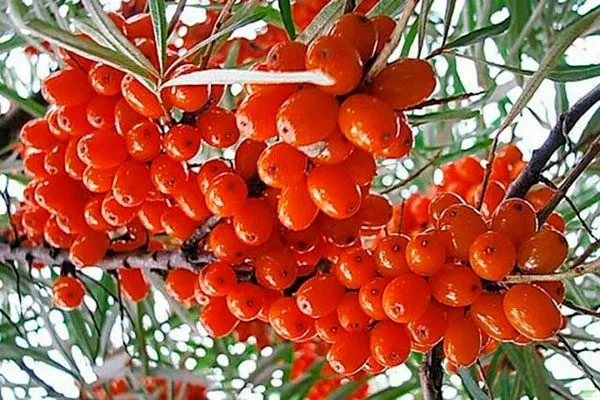
Bushes
The bushes reach a height of up to 2.5 m, and their upright shoots are thornless, making harvesting much easier. The dark green leaves are medium-sized and slightly concave in the middle. The bush's rounded crown is characterized by moderate density.
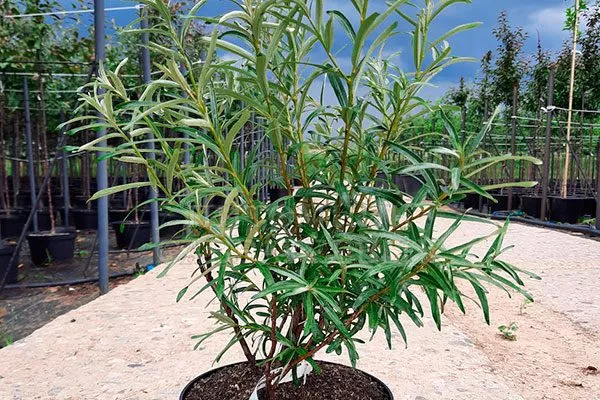
Beneficial properties
The berries are rich in vitamins (groups B, C, P, A, K, E), dietary fiber, organic acids, tannins, macro- and microelements (calcium, magnesium, potassium, manganese).
Sea buckthorn is one of the few multivitamin crops that helps strengthen the immune system, maintain healthy skin, normalize metabolism, and perform many other beneficial functions.
Flowering period and ripening time
Female trees begin flowering in early to mid-May, producing yellowish, unscented flowers. Ripening times are average, allowing harvesting to begin as early as early fall. However, due to climatic variations across different regions of the country, these timings may vary.
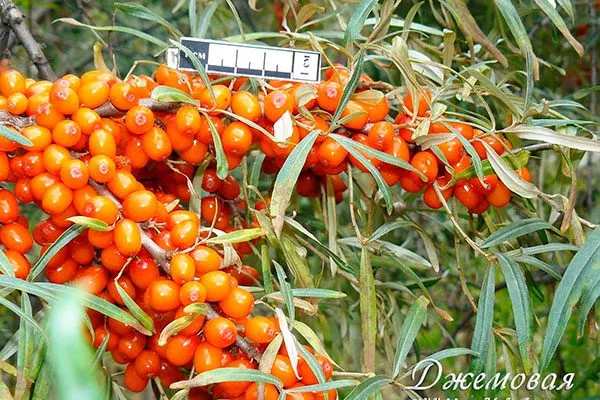
Yield indicators, fruiting periods
This variety is renowned for its high yield, reaching approximately 12 kg of fruit per bush. It begins bearing fruit in the fourth year after planting.
To achieve maximum yield, a male pollinator is required. Recommended varieties for pollination include Ural, Gnome, Mily Drug, Adam, and Aley.
Application of berries
The berries have a dessert-like flavor, making them ideal for processing and preserving for the winter. Their juicy, dense pulp makes them suitable for making juices, jams, and other preserves. Freezing them preserves their nutritional properties and flavor for a long time.
Resistance to diseases and pests
The variety is resistant to most diseases and pests, with one exception: the sea buckthorn fly. This pest frequently attacks Dzhemovaya bushes, posing a potential threat to the harvest.
Advantages and disadvantages of the variety
This crop is popular among Russian gardeners due to a number of positive characteristics. Sea buckthorn has many advantages:
Landing rules
To ensure the bush adapts successfully, it's important to plant it correctly in its permanent location. Follow these recommendations.
- ✓ The optimal planting depth for a seedling should be 5-7 cm deeper than in the pot to stimulate the development of additional roots.
- ✓ The distance between male and female plants should be no more than 10 m for effective pollination.
Recommended timeframes
If the seedling has an open root system (without a root ball), plant it immediately after the soil thaws, around late March or early April. For seedlings with a closed root system, autumn planting is best. Cultivate at least one month before the onset of permanent frost.
Choosing a suitable location
When choosing a location for your crop, consider several important requirements. Here are the main ones:
- To ensure successful pollination, place both male and female plants in the area.
- Choose sunny, well-lit areas. Avoid placing the plants under trees or near tall crops that may create shade.
- The roots are strong and spreading. Avoid planting near groundwater to avoid chilling the roots due to temperature fluctuations.
When planting a male plant, consider the wind direction to ensure good pollination and pollen reaching the pistils of the female plant.
Soil preparation
Dig a hole measuring 50 x 50 cm. The hole should be deep enough to accommodate the plant's root system, which will be slightly deeper than it was in the pot or container in which you purchased the seedling.
Selection and preparation of seedlings
Follow these key steps.
- Carefully inspect the seedling. Look for signs of disease and pests. Choose healthy specimens without visible damage.
- Assess the root system's development. A healthy seedling should have 4-6 branched roots (skeletal roots), which ensure good soil penetration and rapid establishment.
- The height of the above-ground part should be about 20 cm. This allows for easy adaptation to new conditions after cultivation.
- If you plan to plant in the spring, soak the seedling's roots in water for several hours, especially if they appear dry. This helps the roots absorb moisture more quickly and prepare for active growth.
- 24 hours before planting, place the roots of the seedling in a solution of rooting agent (1 g per 1 liter of water) to stimulate root formation.
- Before planting, trim all damaged roots back to healthy tissue.
When mulching in the fall, remove all foliage before planting. This helps conserve energy and helps the roots better adapt to winter conditions.
Algorithm and landing scheme
The recommended planting pattern is 3 m between rows and 2.5 m between plants. Increase this distance depending on conditions and the desired plant size. Dig a separate hole measuring 50 x 50 cm for each seedling.
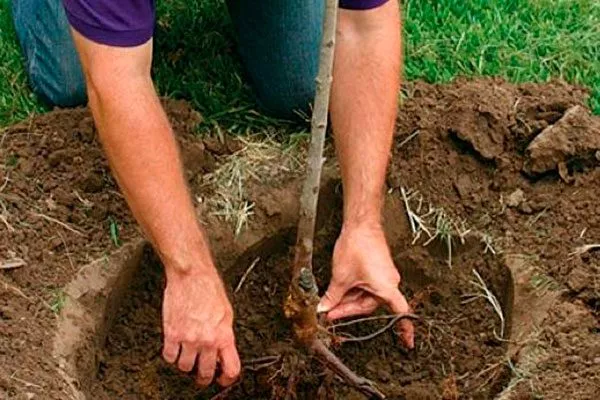
Follow the recommendations:
- Place a layer of drainage material, such as river sand, at the bottom of the hole. This will help drain excess moisture and prevent root rot.
- Add 10 kg of organic fertilizer, such as compost or humus, to the hole. This will provide the plant with essential nutrients for healthy growth.
- Add mineral fertilizer, such as 200 g of superphosphate. This will help stimulate root development and overall plant health.
- Place the seedling in the center of the hole so that the roots are evenly distributed. Cover them with a loose top layer of soil until the hole is completely filled.
- Lightly compact the soil around the seedling and water well to provide initial moisture to the roots.
Subsequent care of the culture
Growing this crop is easy even for novice gardeners and doesn't present any particular difficulties. Simply follow some simple agricultural practices.
Necessary measures
Provide simple care. These include:
- Watering. After planting, monitor the soil moisture. It shouldn't dry out. As the plant adapts to the new conditions and takes root, reduce watering, and during hot periods, water only when absolutely necessary.
- Top dressing. The crop is undemanding regarding soil fertility. In the first year after planting, it may not require any fertilization at all if the soil has been prepared in advance.
In subsequent years, apply nitrogen-containing fertilizers in the spring to promote fruiting, and phosphorus-potassium fertilizers in the summer and fall to improve fruiting and plant health.
Pruning shrubs
The bush is characterized by weak growth and a sparse crown, so it doesn't require intensive shaping. Only autumn sanitary pruning, "to the ring," is recommended, which involves removing diseased and damaged branches.
Preparing for winter
The plant is highly winter-hardy, so mature plants do not require winter protection. During the first year after planting, mulch the area around the trunk to protect the root system from possible frost damage.
Autumn care includes adding fertilizers rich in potassium and phosphorus to the soil. These nutrients promote healthy plant growth and prepare it for winter.
Dangerous diseases and pests
Provide regular care to prevent potential diseases and protect against pests. Here are the basic recommendations for prevention and control:
| Disease/Pest | Prevention/Signs of the disease | Control measures |
| Sea buckthorn fly | Mulching the tree trunk circle with a 15 cm layer. | Chemical treatments: Intavir, Iskra, Fitoverm. Folk remedies: digging the soil in late autumn, treating with tansy infusion. |
| Sea buckthorn moth | Spring spraying with a solution of biological preparations. | Chemical agents: chlorophos (0.4%) during the budding period, metaphos (0.3%) during the budding period. |
| Sea buckthorn aphid/Gall mite | Timely removal of weeds and plant debris. | Chemical preparations: Intavir, Kleschevit. Folk remedies: repellents made from tobacco, onion peel, or garlic. |
| Fusarium wilt | Swellings on the bark of shoots, redness, wilting of leaves, fruits are colored, but do not fill out. | Sanitary pruning with removal of affected parts, burning of cut shoots. |
| Scab | Black ulcers and spots on the bark and leaves, especially on young branches and fruits. | Autumn pruning of affected parts, spring treatment with Bordeaux mixture. |
| Endomycosis | Light spots on the fruits, bursting berries with grayish slimy pulp. | Removing affected fruits and branches, spraying with Bordeaux mixture. |
Reviews
Sea buckthorn "Dzhemovaya" is one of the most popular varieties among gardeners and amateur gardeners. Attractive qualities, such as large, juicy fruits and resistance to disease and frost, make this shrub an ideal choice for producing tasty and healthy berries. The key is to ensure timely and proper care.