
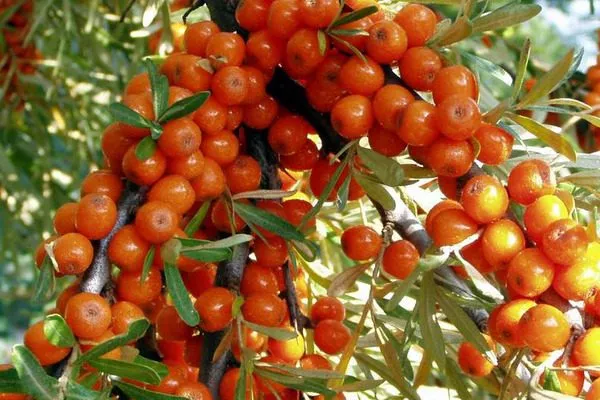
Sea buckthorn Azhurnaya is a popular domestic variety, attracting gardeners with its large fruits and smooth, completely thornless stems. This sea buckthorn delights its owners not only with its high yields but also with its attractive appearance. It is especially beautiful during the fruiting season.
Who bred the Azhurnaya variety?
The Azhurnaya variety was developed by domestic breeders at the Federal Altai Scientific Center for Agrobiotechnology. This scientific institution is the originator of the variety.
Description of the plant
The Azhurnaya variety is a tall, spreading shrub with a compact yet dense crown. It is quite decorative and can grow from 3 to 5 meters in height. The shoots are curved and covered with light brown bark with a bluish tint. The leaves are large, lanceolate, green, strongly concave, and spineless.
Description of fruits
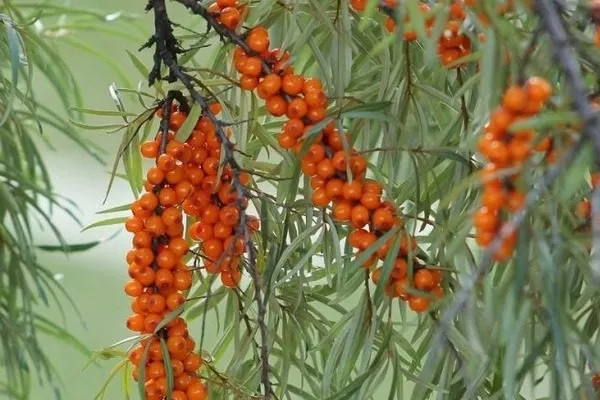
The Azhurnaya sea buckthorn produces bright and attractive cylindrical fruits. When ripe, they turn orange or bright orange. The average weight of one fruit is 1-1.2 g. The stalk length is 5-6 mm.
Taste and application
The berries of the Azhurnaya sea buckthorn have a slightly tart but quite pleasant taste. The pulp is aromatic. The tasting score is 4.9.
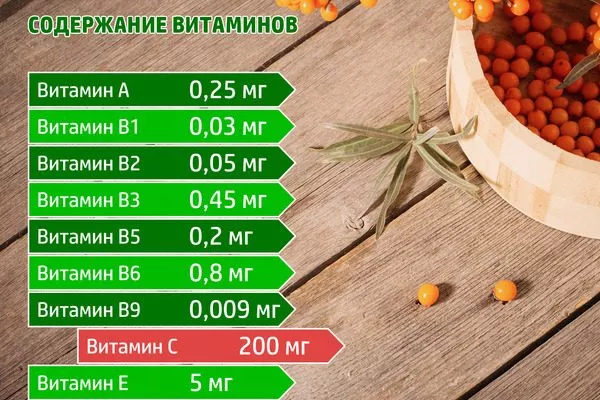
The fruits contain:
- sugars - 8.8%;
- acids - 1.5%;
- Vitamin C - 111.6 mg/%;
- carotenoids - 12.7 mg/%;
- oils - 6.2%.
Early maturity and yield
The lacy sea buckthorn begins to bear fruit in the fourth year after planting. This variety is versatile and ripens early, maturing in mid-August and late September. The average yield in commercial cultivation is 64 centners per hectare. A single bush yields approximately 10 kg.
Pros and cons
Sea buckthorn "Azhurnaya" is popular among gardeners and summer residents for good reason. This variety has many qualities that are valued in this crop.
Pros:
Cons:
Landing features
Sea buckthorn Azhurnaya is planted using standard techniques for this crop. However, there are some points that require special attention.
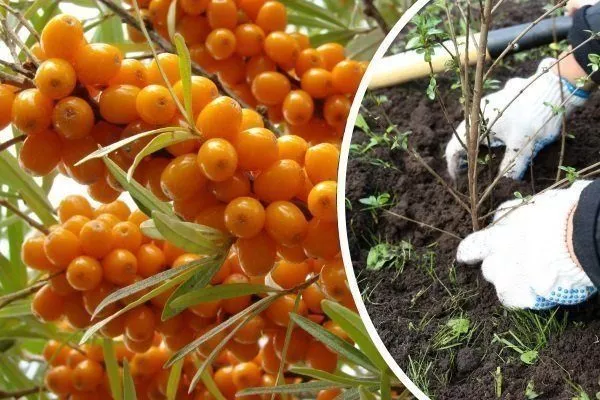
Features of planting sea buckthorn Azhurnaya:
- Sea buckthorn Azhurnaya grows and bears fruit well in sunny locations. It is not recommended to plant it in areas where snow accumulates in winter, as the weight of the snow can break the thin branches. This variety can also grow in partial shade, although this will negatively impact its appearance—the shoots will stretch and the flowering will be sparse.
- Sea buckthorn Azhurnaya grows best in fertile loamy soils. These should be loose and permeable.
- Planting is done in spring - in March-May, or in autumn - in September-October.
- The distance between adjacent plants is 1 m.
- A drainage layer, such as small pebbles, is placed at the bottom of the planting hole to prevent moisture stagnation and mold infection of the plant.
How to care for the Openwork Sea Buckthorn?
Sea buckthorn Azhurnaya requires certain care to maintain vigorous growth, health, beauty and abundant fruiting.
How to care for sea buckthorn:
- The main pruning is done in the spring—sanitary and formative. All dry, broken, and damaged branches are trimmed, and exposed cuts are treated with fungicides.
Throughout the growing season, thin, elongated branches are also pruned, as are woody branches that interfere with bud formation and development. Branches frozen over the winter are carefully trimmed, and the cuts are soaked in 3% copper sulfate. - Sea buckthorn roots are covered in nodules containing nitrogen-absorbing microorganisms, which require a constant supply of fresh air. Therefore, the soil around the tree trunks is regularly loosened, taking care not to bury the hoe too deeply. Sea buckthorn roots are close to the surface, and if damaged, there is a risk of rot.
- In areas with regular rainfall, sea buckthorn doesn't require irrigation—it gets enough water from precipitation. During dry periods, water the plant only after the soil has dried out to a depth of 15-20 cm. It's important to remember that stagnant water can cause serious damage to sea buckthorn.
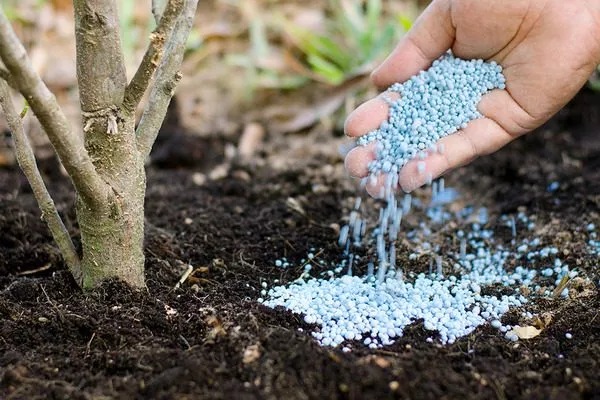
- In spring, nitrogen-containing fertilizers are applied to stimulate bud formation. At the beginning of flowering and in the lead-up to winter, the plant requires potassium and phosphorus supplements.
Diseases and pests
Sea buckthorn Azhurnaya has a fairly high resistance to diseases and pests, but under unfavorable circumstances - damp and cold weather, lack of fertilizer, or other violations of agricultural practices - the crop can be affected by various infections, and insect attacks are also possible.
The main diseases and pests of sea buckthorn:
- Mycotic wilt. This is accompanied by curling, yellowing, and leaf drop. Fruit discoloration is premature, and the bark becomes swollen and brown. It is recommended to dig up and burn the plant. The affected area should be disinfected, but sea buckthorn should not be replanted in this area.
- Endomycosis. Whitish specimens appear among the ripening fruits. They have liquid flesh and a sour taste. As a preventative measure, it is recommended to treat the plants with a 3% Bordeaux mixture.
- Sea buckthorn aphid. This pest damages plants by sucking the sap first from the buds and then from the leaves, causing them to turn yellow prematurely and fall off. It can be controlled with an infusion of tomato or potato tops.
- Sea buckthorn gall mite. It feeds first on bud sap, and then on leaves, where swellings appear. Garlic infusion can be used to combat the mite.
Collection and storage
Harvesting is recommended in dry weather. This will prevent damage to the berries, as well as deterioration in their flavor and presentation. The fruits cling quite firmly to the branches, so it's best not to rush harvesting; wait until they're fully ripe. Some gardeners wait for frost to make the harvesting process easier, as the berries are easier to separate from the branches.
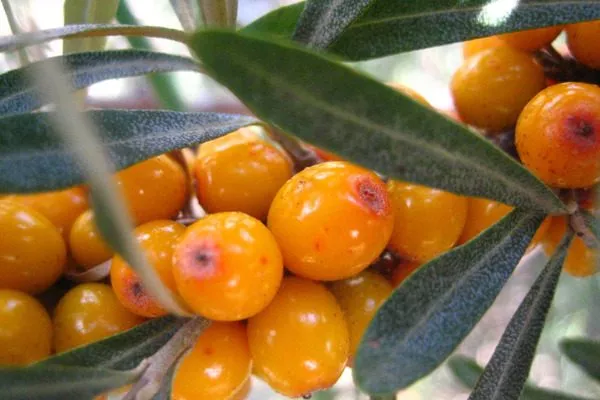
Since the Azhurnaya sea buckthorn is thornless, picking the berries is fairly easy. However, the process is labor-intensive and time-consuming, so it's recommended to use special sea buckthorn harvesting tools. Regular kitchen tongs, a comb, or various homemade pickers made from household items can all be helpful.
Reviews
The Azhurnaya sea buckthorn is a versatile variety that will grace any garden or dacha. Even with minimal care and challenging weather conditions, a single tree (or bush) will reliably provide its owners with a bucket of vitamin-rich, healthy, and delicious berries every summer.