
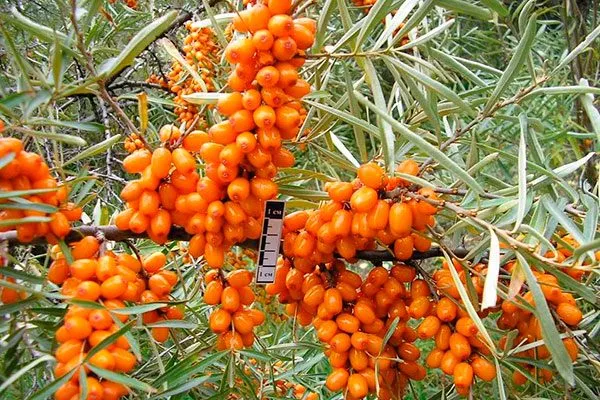
Altai is a large-fruited sea buckthorn variety that ripens early in the fall. It is a dessert variety renowned for its remarkable flavor and rich aroma. Gardeners love it not only for its abundant and high-quality harvest, but also for its high winter hardiness and strong immune system.
History of selection
This berry variety was developed by E. I. Panteleeva, an employee of the M. A. Lisavenko Research Institute of Strawberries and Vegetables (Altai). It was obtained in 1981 by crossing the Katunsky ecotype and Shcherbinka 1.
In 1997, the Altayskaya variety was submitted for state testing and approved for agricultural use. It was added to the Russian Federation State Register in 2006 as a variety intended for cultivation in the following regions:
- West Siberian;
- Ural;
- East Siberian;
- Far Eastern.
Gardeners successfully grow berries of this variety in their garden plots located in other regions of the country, especially in its European part.
Description of berry crops
Altai has many distinctive characteristics. Its main distinguishing features are:
- increased frost resistance;
- very strong immunity;
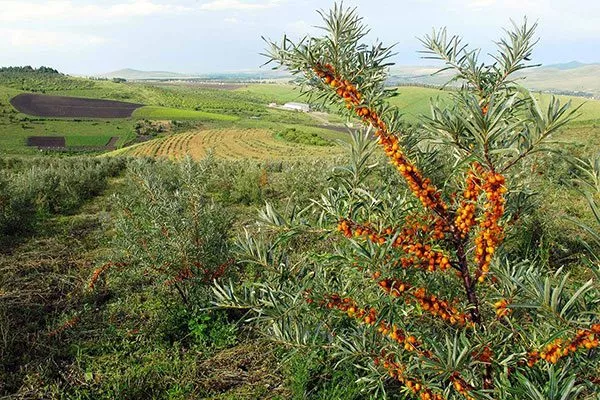
- the absence of thorns on the shoots makes harvesting easier.
- ✓ The distance between female and male plants should be no more than 30 m for effective pollination.
- ✓ Preferred pollinator varieties: Polmix or Oil, which have high pollen productivity.
General information about the shrub
Bushes of this cultivar are considered medium-growing in terms of their growth rate. They are distinguished by the following characteristics:
- "height" - 3-4 m;
- lush, but not very spreading crown;
- flexible, elastic, smooth branches of silvery-gray (young shoots) or brown color;
- absence of thorns;
- leaves are small (up to 6 cm long), narrow, grey-green on the outside, silvery on the back.
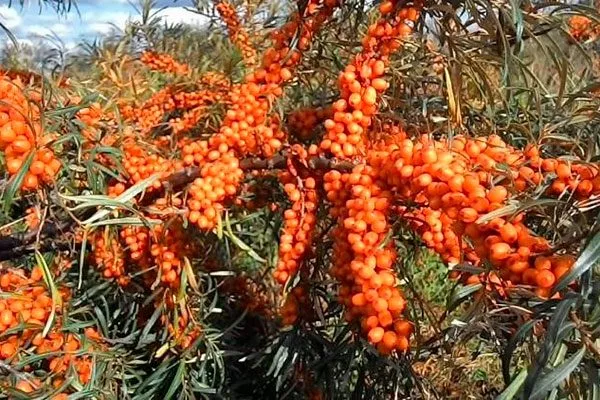
Altai sea buckthorn shrubs have a flexible crown. Their easy-to-shape form makes them widely used in landscape design. They truly enhance any garden plot.
Berries
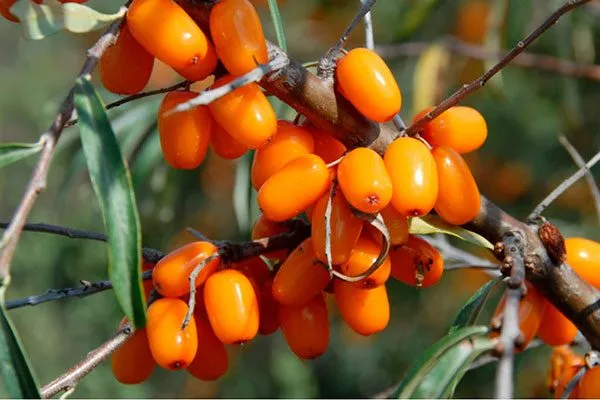
The berries of this sea buckthorn variety tend to sit firmly on the branches, forming clusters of bright orange fruit. They grow especially densely at the ends of the shoots.
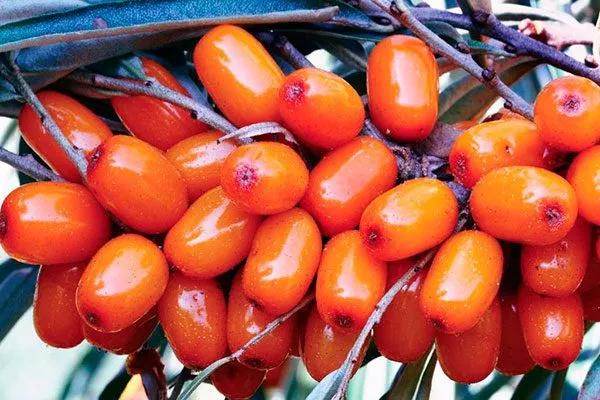
Altai berries have the following characteristics:
- oval shape;
- weight - 0.7-0.9 g;
- thin and delicate skin, bright orange in color;
- fleshy, juicy and very aromatic light-colored pulp.
Experts rate the taste of this sea buckthorn as excellent. The berries are sweet, but not cloying, with a slight tartness. After freezing, their flavor develops apple-pineapple notes. The tasting score for this variety is 5 out of 5.
The pulp of the fruits of this variety is rich in substances beneficial for human health:
- ascorbic acid (100 g contains 900 mg of vitamin C);
- tocopherol;
- carotenoids (carotene content - 60%);
- vitamins of group B (B1, B2, B6, B9);
- folic acid;
- flavonoids;
- organic acids, in particular citric and malic;
- tannins;
- phospholipids;
- sugars;
- fatty oils (8%);
- microelements (cobalt, copper, iron, silicon and others).
Flowering period and ripening time
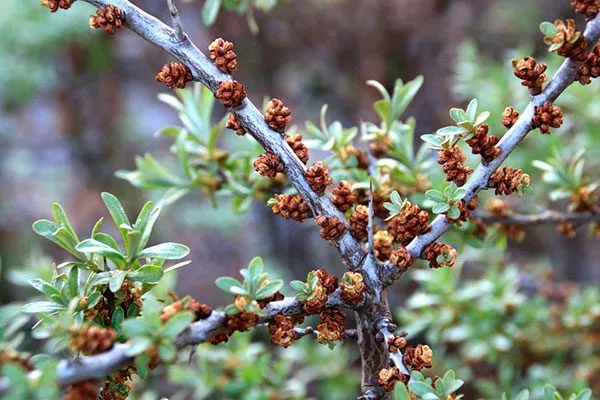
In the first half of May, the Altai lily bushes, grown in the temperate climate, produce numerous small white flowers with a subtle fragrance. Flowering begins before the leaves emerge. In northern regions, it begins later, lasting 14 days.
Yield indicators, fruiting periods
This sea buckthorn begins bearing fruit in the third year after planting in the garden. By the age of six, the plant reaches its peak productivity. Its yield indicators are as follows:
- 10 kg from 1 bush - for three-year-old seedlings;
- up to 15 kg - for six-year-old plants;
- 16 kg - produced by mature plants if pollinator varieties such as Miloy Druga, Ural, Adam grow nearby;
- 7000 kg per 1 hectare of planting - if the variety is grown on an industrial scale.
Application of berries
The Altai harvest has wide application not only in cooking, but also in the confectionery industry, medicine, and cosmetology.
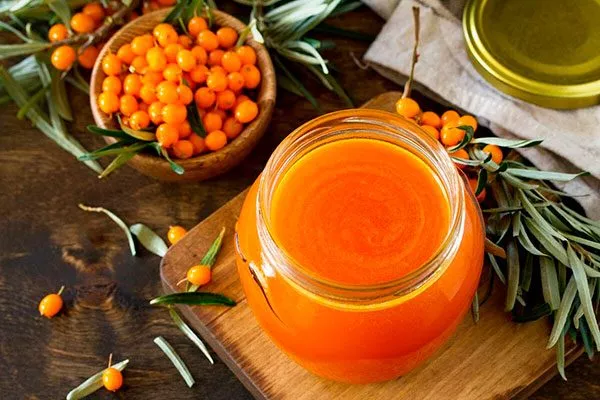
Housewives use berries of this variety as follows:
- eaten fresh;
- added to desserts;
- they are used to make jam, preserves, marmalade, pastille, jelly, compote, jelly, and syrup;
- processed to obtain juice (its sugar content is 10%, acid content is 1%);
- grind into puree with sugar;
- canned;
- freeze;
- They make liqueurs, wine, and infusions.
This variety of sea buckthorn has healing properties: antioxidant, antibacterial, analgesic, and anti-inflammatory. These properties have led to its widespread use in folk medicine. Eating the fruits of the Altai sea buckthorn can provide the following therapeutic benefits:
- improve metabolism;
- normalize digestion;
- strengthen the immune system and increase vitality;
- solve the problem of hypo- and avitaminosis.
The berries of this species are used in folk medicine to prepare the following remedies:
- decoction for the treatment of gastrointestinal diseases, gout, tonsillitis, stomatitis, anemia, exhaustion of the body;
- sea buckthorn oil (it is used externally for burns, trophic ulcers, eczema, bedsores and for cosmetic purposes).
Resistance to diseases and pests
This variety is renowned for its robust immunity. Its bushes are virtually never susceptible to disease or insect pests.
Advantages and disadvantages
Comparison of the varieties of sea buckthorn Altai sweet and Altai
Nurseries and agricultural companies sell seedlings of a sea buckthorn variety called "Altai Sweet." It differs slightly from the Altai variety in its characteristics.
Table:
| Variety | Berry weight, g | Taste | Yield, kg per bush | Bush height, m | Ripening period | Is pruning necessary? |
| Altai | 0.7-0.9 | sweet and sour | up to 16 | up to 4 | beginning of September | Yes |
| Altai sweet | 0.7-1 | sweet | 7-8 | up to 3 | end of September | No |
Landing rules
Plant this sea buckthorn in your garden in spring or fall. Spring planting is preferred. The optimal time to plant Altai sea buckthorn in temperate climates is from mid-April to the third ten days of May.
This variety is demanding when it comes to growing conditions. For growing it, choose a site with the following characteristics:
- Sunny. Sea buckthorn bushes of this variety grow anywhere, but they only delight gardeners with good fruiting in good light.
- Avoid waterlogged soil. Stagnant water in the soil negatively affects this plant. The groundwater table in the area chosen for planting should be at least 1 meter deep.
- Loamy or sandy loam soil that is permeable to moisture and air. The plant prefers neutral soil. If your site is acidic, lime it beforehand.
- Planting berry crops on slopes for stabilization is acceptable. This is possible due to the extensive root growth of Altai berry plants.
Prepare the site for spring planting of the seedling in the fall:
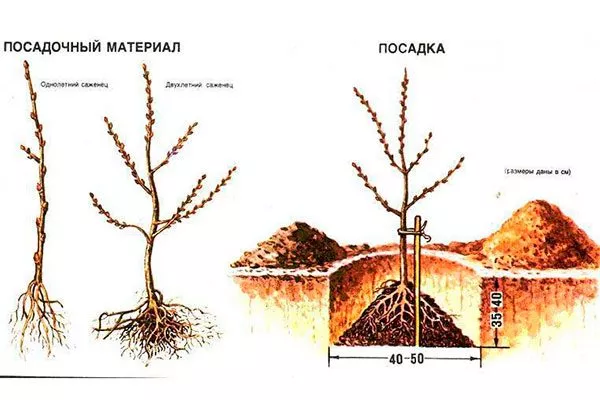
- Dig a planting hole (50x50x50 cm). If you plan to plant several seedlings, keep a distance of 250-300 cm between holes. The distance between rows is 400-500 cm.
- Remove the bottom infertile layer of soil from the hole.
- Mix the remaining soil with fertilizer and return it to the hole. Use humus or compost (14 kg), superphosphate (200-300 g), and potassium sulfate (30-40 g). Over the winter, the fertilizer will be distributed throughout the hole by the snow. Microorganisms will create a favorable environment for the development of the sea buckthorn root system.
Plant the seedlings in the spring. Follow these steps:
- Soak the roots in water for a couple of hours.
- Before placing them in the hole, dip them in a clay slurry.
- Remove excess soil from the planting hole.
- Place the seedling there, making sure its root collar is buried 8-10 cm deep.
- Straighten the sea buckthorn roots.
- Cover them with soil and compact it.
- Water the seedling generously. Use 30-40 liters of water per plant.
- Mulch the tree trunk circle with peat, sawdust, and humus (layer thickness 3-5 cm).
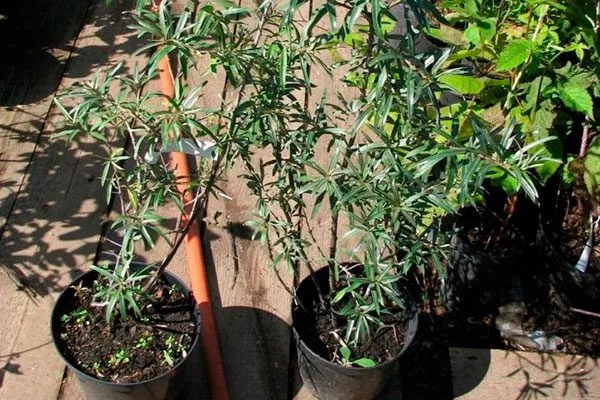
When purchasing a potted seedling, carefully remove it from the container along with the root ball. This type of plant requires slightly less soil when planting.
Caring for the crop
Altai is an easy-to-care-for variety. For good fruiting, its bushes require the following care:
- Systematic wateringSea buckthorn is very moisture-loving. Water it at least five times during the growing season. A young bush will need 30-40 liters of water, while a mature bush will need 80-100 liters. This plant needs good irrigation most when fruit sets on its branches.
- Top dressingFertilize your sea buckthorn planting with superphosphate annually. Apply 15-20 g per square meter. Combine this application with soil loosening. Phosphorus is essential for good flowering and fruit set.
In early spring, fertilize the bushes with urea to stimulate growth. To promote healthy sea buckthorn, use wood ash as a top dressing in May. Sprinkle it around the trunk. Apply compost as mulch every three years.
Work all dry mixtures into the soil shallowly. Don't forget to irrigate. Deep digging is prohibited, as the Altai scaly-leaved root system typically extends shallowly (no deeper than 50 cm). Also, keep in mind that its root system extends 2.5 times beyond the crown radius. - WeedingRegularly remove weeds from the area around the sea buckthorn tree.
Is pruning necessary?
A distinctive feature of this berry variety is its dense crown, which requires regular thinning. Here's how to care for it:
- perform sanitary pruning (remove all dry and damaged branches);
- formative;
- rejuvenating.
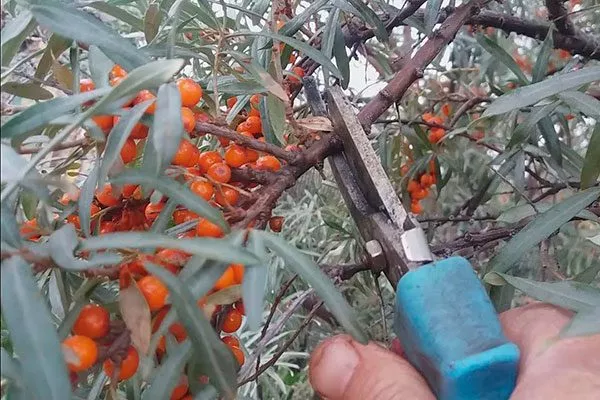
Every year in the fall, shorten one-year-old branches by 20-25 cm. Once the bush reaches eight years of age, rejuvenate it by partially pruning three- and four-year-old shoots. Perform formative pruning in early spring.
Preparing for winter
Sea buckthorn bushes of this variety require no winter preparation. They are frost-hardy and tolerate temperatures down to -40°C (with snow cover). During the first year after planting, it's still worth mulching the area around the tree trunk with a 25-30 cm layer of fallen leaves.
Harvesting, processing, and storage
Harvest the Altayskaya grapes in the fall after the first frost. Although the berries ripen early, late harvesting is easier and will only improve their flavor. Ripe grapes are less likely to fall off.
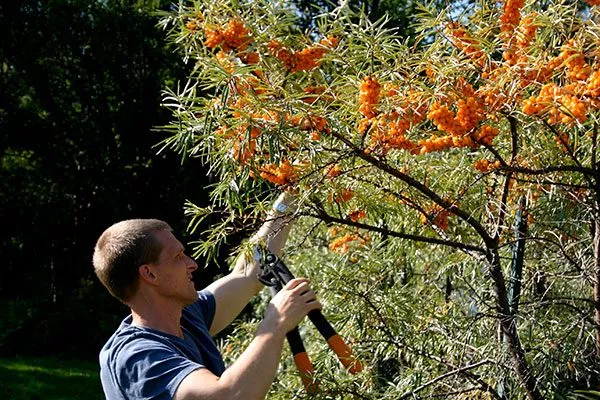
Follow these rules:
- do not pick berries from the bush to avoid damaging them;
- carefully cut the bunches with pruning shears or garden shears;
- Place a tarpaulin or sheet under the bush to collect fallen fruits.
Store fresh berries in a cool, dark place. Their shelf life in these conditions is 3 days. To extend this life to 6 months, keep them in the refrigerator. Drying or freezing the harvest will ensure longer shelf life.
Dry the Altai harvest like this:
- Place the berries on a tarpaulin.
- Remove leaves and other debris.
- Place the berries on a sieve and leave them in the fresh air in the shade for 3-5 days.
Diseases and pests, methods of control and prevention
This crop is rarely affected by pests such as sea buckthorn flies or green aphids. As a preventative measure, treat the bush with Fufanon in the spring after the leaves emerge.
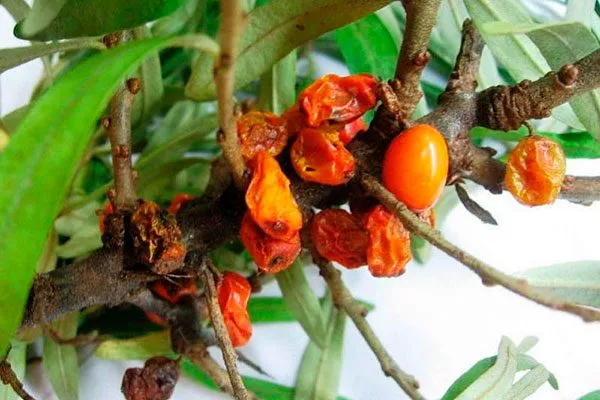
Altai is disease-resistant. In very rare cases, it is affected by the following infections:
- scab;
- endomycosis.
To prevent disease, treat sea buckthorn in the spring with Bordeaux mixture (concentration - 1%).
Reviews
Altai sea buckthorn is a popular garden variety among gardeners. It produces tasty and healthy berries, is easy to care for, and is resistant to disease. It's an excellent choice for those looking for an early and abundant harvest of vitamin-rich fruits in their garden.