
Aley is a sea buckthorn variety that does not produce fruit. Despite its infertility, it is popular among Russian gardeners. It is the best pollinator for other berry varieties, producing abundant viable pollen. The variety is winter-hardy and resistant to drying out.
History of origin
This sea buckthorn variety is a product of Soviet breeding in 1985. It was developed by staff at the Lisavenko Research Institute of Horticulture (Siberia) by crossing the Katunskaya variety with the Novost Altaya variety.
In 1988, the variety was added to the state register. It is recommended for cultivation in Western Siberia, particularly in the Altai Krai, as well as in the Krasnoyarsk Krai and the Republic of Khakassia.
Features of the sea buckthorn variety Aley
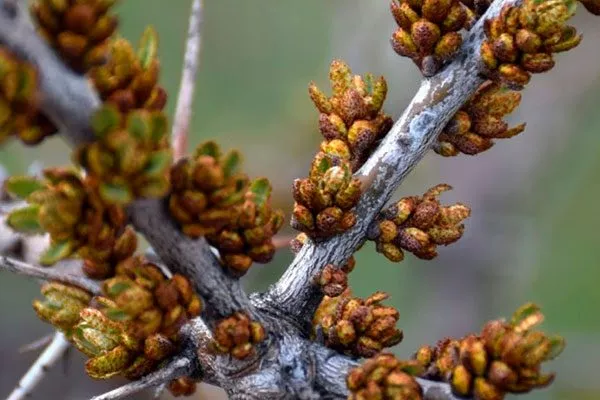
The main feature of this variety is that it's male. You won't find a single berry on its bushes. It also has other distinctive characteristics:
- drought resistance;
- increased frost resistance (seedlings, young shoots, and flower buds are not afraid of winter temperatures down to -45°C, and they do not suffer from recurrent spring frosts);
- strong immunity (the plant is not susceptible to most sea buckthorn diseases and pests);
- duration of flowering;
- the formation of a large amount of pollen and its high viability (95%).
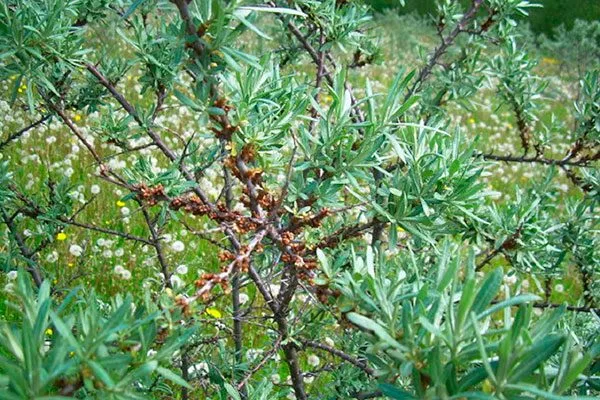
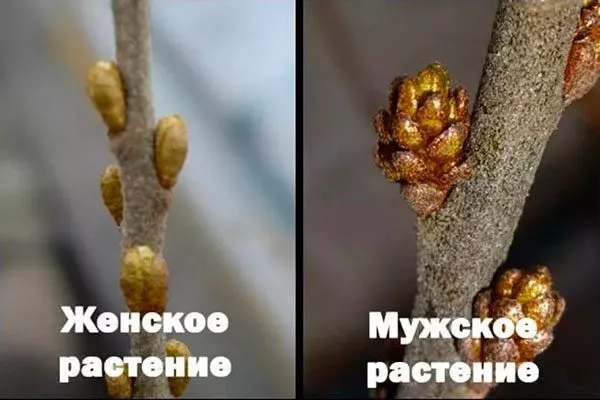
What is the difference between male and female sea buckthorn?
This garden crop bears fruit only when male and female plants grow side by side. The former are incapable of forming fruit. Only the female sea buckthorn produces fruit after it has been pollinated. This is impossible without pollen, which is provided by the flowers of the male plants.
Aley is a striking example of the male variety. It is suitable for pollination of virtually any female variety. Experienced gardeners use it as an ideal partner for the thornless Lybid variety.
Appearance of the bush
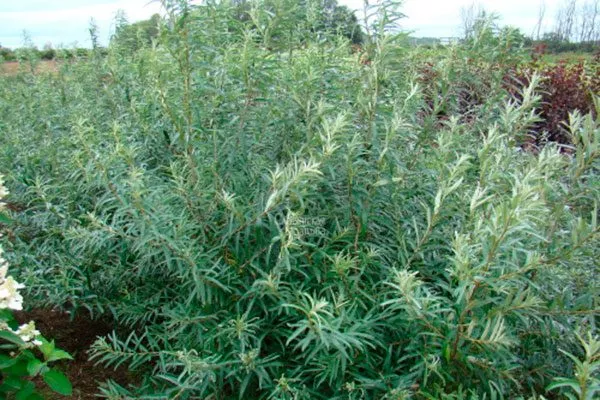
This berry variety has a powerful root system, twice the diameter of its crown. The bush itself has the following characteristics:
- multi-stemmed;
- "height" - 3-3.8 m;
- spreading;
- prone to crown thickening;
- shoots devoid of thorns;
- large kidneys;
- foliage: narrow, with an alternate arrangement on the branches, having a light green color with a silvery tint;
- numerous small flowers.
The Alei variety begins flowering in late April or early May. The buds open before the leaves, and their number is four times greater than that of other sea buckthorn varieties.
Pros and cons of the Aley variety
This type of sea buckthorn has many advantages, such as:
Plants of this variety also have several disadvantages:
The subtleties of planting work
Plant this berry variety in the spring, when the soil warms to 12-15°C. In the central part of the country, this is April. Fall planting is also acceptable. Make sure to plant before mid-October to avoid frost and temperature fluctuations from interfering with rooting.
- Two weeks before planting, dig the area to a depth of 30 cm.
- Add organic fertilizers (humus or compost) at a rate of 5 kg per 1 sq. m.
- Check the soil pH and adjust it to 6-7 if necessary.
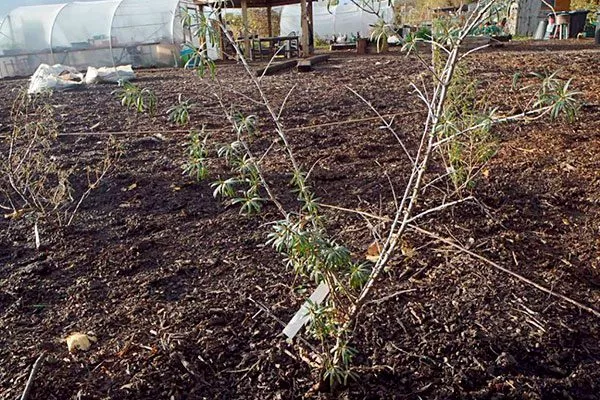
Choose the right garden plot for growing the Aley variety. It should meet the following requirements:
- be well lit by the sun;
- other berry crops such as raspberries, blackberries, currants and strawberries should not grow on it, so that there is no nutritional deficiency and the bushes are not susceptible to diseases (these plants are susceptible to the same diseases);
- with light soil, fertile, loamy or sandy loam, provided with moisture, with a pH of 6-7;
- with a groundwater level of no more than 2 m.
- ✓ Check the root system of the seedling for rot and damage.
- ✓ Make sure the bark of the seedling is elastic and free of blemishes.
Plant the Aley sea buckthorn in your garden, following these step-by-step instructions:
- Dig planting holes 2.5-3 m apart. Their dimensions (depth, width, length) are 0.5 x 0.4 x 0.4 m or 0.6 x 0.5 x 0.5 m. Determine their size based on the volume of the seedling's root system.
- At the bottom of each hole, pour a layer of expanded clay or broken brick, and on top of it, add a soil mixture made by combining peat with humus and sand.
- Add nitroammophoska (consumption - 60-80 g per 1 plant) or superphosphate (100 g) and potassium sulfate (60 g).
- Place the seedling in the center of the hole, spreading its roots. Water it. Cover with fertile soil. Root the plant's root collar to a depth of 15 cm.
- Firm the soil under the sea buckthorn. Water it generously and mulch with a layer of dry leaves, wood shavings, or peat.
Plant care
After planting a bush of this variety, ensure it receives proper care to prevent diseases and pest infestations. This includes the following measures:
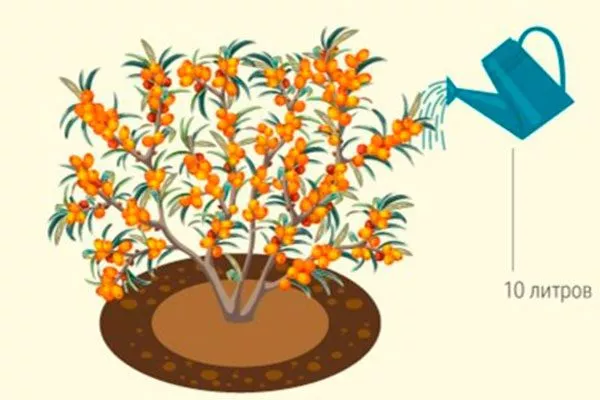
- WateringDo this twice a week or less frequently, preventing the soil from drying out. Overwatering is also not recommended.

- Loosening the soilLoosen the soil around the tree trunk shallowly. Do this once or twice a month.
- FertilizationFertilize the bushes starting at three years of age with potassium and phosphorus compounds. Apply ammonium nitrate to the trunk circle (20 g per square meter) until the plant is five years old.
- TrimmingPerform preventative maintenance in the fall, removing dead and diseased branches from the shrub. Perform shaping pruning to give the crown a neat appearance. This procedure is recommended for plants up to six years of age.
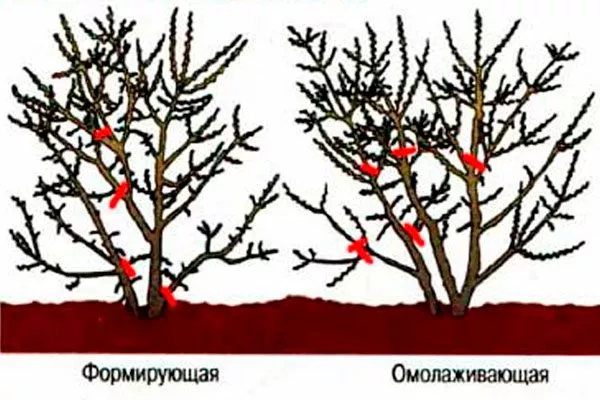
Propagation of the Aley shrub
Experienced gardeners propagate this variety of bushes using various methods other than sowing seeds. In the latter case, the berry loses its varietal characteristics.
Cuttings
Gardeners most often resort to this method of propagating the Aley sea buckthorn bush. In early May, they take cuttings from last year's growth. Each cutting is about the size of a pencil (length and thickness). You can also propagate this garden plant using green cuttings. To do this, follow these step-by-step instructions:
- Take cuttings from the current year's growth in early August. Make the bottom cut at an angle and the top cut straight. Remove any leaves.
- Place the cutting at an angle in a Kornevin solution for 5 days or simply in water.
- Place it at an angle in sand mixed with fertile soil. Do this at an angle.
- Water. Cover with a jar. You'll need to remove the cover twice a day to moisten the soil and spray the cutting.
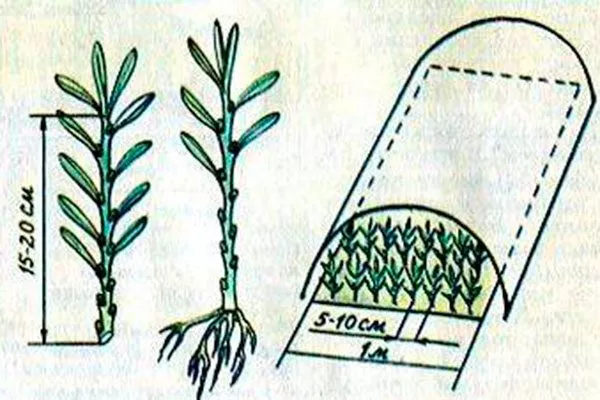
Once the leaves appear, remove the covering. Leave the plants in the same location to overwinter. In May, you can transplant the resulting planting material to its permanent location in the garden.
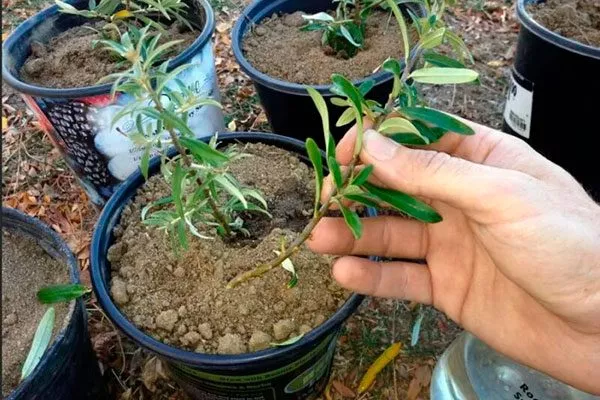
Propagation by layering
Propagate the Aley sea buckthorn by layering in the spring. Here's how:
- Bend one of the lower branches to the ground.
- Pin it down. Root the branch 1 meter from the mother bush. Do not shorten its end.
- Fill the pinned section with moist soil. Cover the area with plastic wrap.
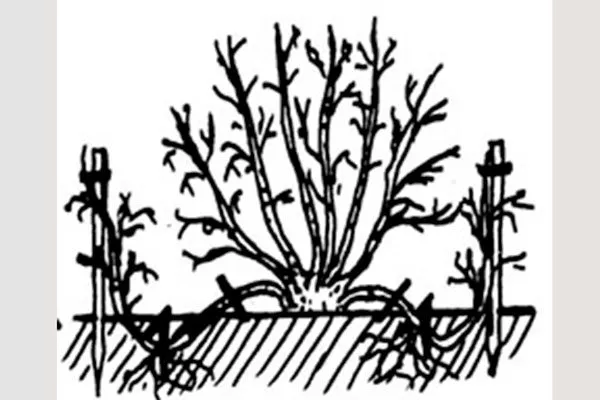
Overgrowth
Use this propagation method if you want quick results. New shoots are produced by damaging the roots of an adult plant. Simply make shallow wounds with a spade blade.
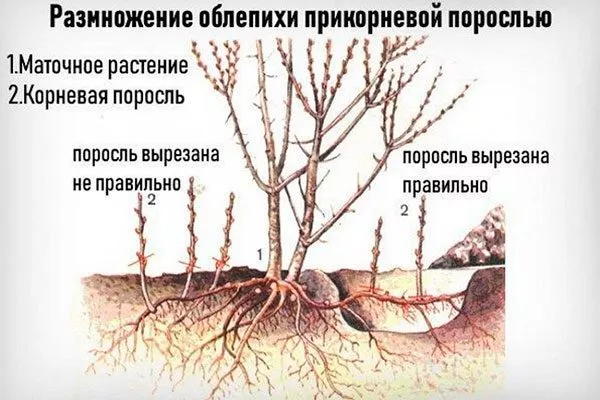
Provide the shoots with proper care:
- moisten the soil;
- hill up the sprouts.
In the second year of growth, separate the shoots from the mother plant. Do it like this:
- Dig up the root area.
- Free the roots of the young shoot.
- Use a knife to cut the root coming from the mother plant. Try to do this in one motion.
- Keep the root ball around the young root system.
Transplant the resulting plant to its permanent location in the garden. Water it and feed it with nutrient solutions.
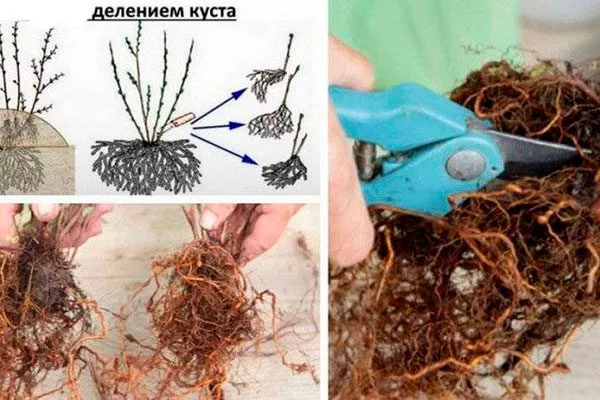
Dividing the root system for the purpose of propagating the bush
To propagate the Aley sea buckthorn using this method, follow the step-by-step instructions:
- Dig out the bush completely.
- Trim its branches and root system.
- Use pruning shears to divide the plant into several sections. Each section should have a root and branches with viable buds.
- Treat all cuts with powdered charcoal.
- Plant the seedlings in pre-prepared holes.
Graft
This method involves grafting a male bud onto a female plant. It allows the gardener to avoid planting a pollinator variety in the garden.
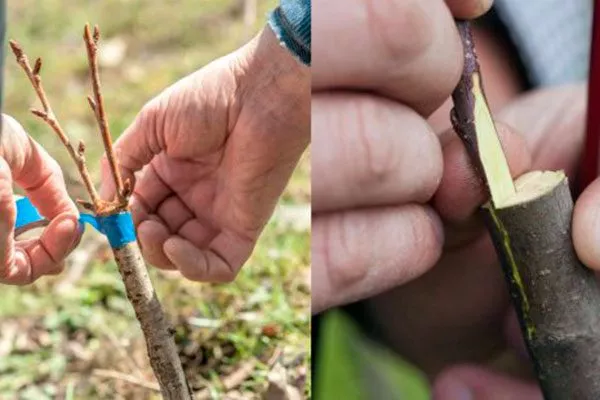
Carry out the vaccination as follows:
- In spring, cut the trunk of a two-year-old female plant slightly above the neck.
- Leave one strong shoot 10 cm high.
- Grow it out over the summer. Pinch it to form a thick trunk.
- The following spring, when the shoot reaches a height of 0.5 m, perform a copulipation (joining the oblique cuts of the scion and rootstock, and then fixing the resulting connection with a binding tape) with the Aley variety at a distance of 10 cm from the neck.
Diseases and pests
Aley is a strong and healthy sea buckthorn variety. It has good immunity and is resistant to many diseases. However, under unfavorable weather conditions and poor agricultural practices, its bushes are susceptible to fungal, bacterial, and viral diseases and pest infestations.
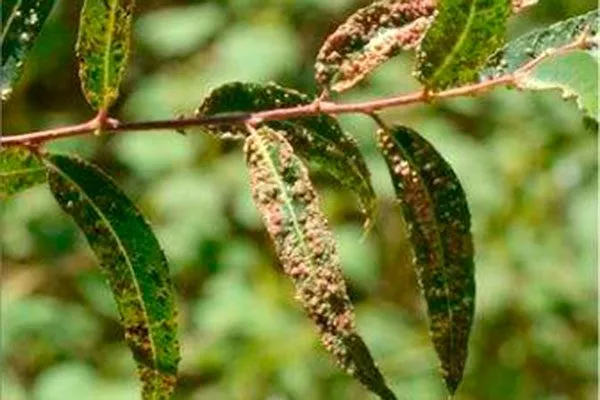
Plants of the Aley variety are threatened by diseases and pests, which experienced gardeners include in their list:
- Black crayfishA diseased bush develops dark spots on the bark of large branches, which begins to crack and turn black, eventually falling off. To save the sea buckthorn, immediately remove the damaged bark and treat it with copper sulfate. Apply mullein to the affected areas of the branches.
- Black legThis disease affects young bushes, weakening the shoots. It manifests itself in the lower part of the plant, where it meets the ground. To solve the problem, use a weak solution of potassium permanganate.
- ParshaGardeners diagnose the disease by the cankers that appear on the leaves and stems. To save the sea buckthorn, resort to sanitary pruning of the bush and treatment of the affected parts with Bordeaux mixture.
- Sea buckthorn mothThis parasite destroys plant buds. To eradicate it, spray the planting with Karbofos.
- Aphids, gall mitesThese insects damage young shoots and leaves. To kill them, spray the sea buckthorn bush with Karbofos. Alternatively, try iodine solution, soapy water, garlic infusion, or onion peel decoction.
Gardeners' reviews
Aley is a popular male sea buckthorn variety, recognized by Russian gardeners as one of the best pollinators for this berry crop. This single bush is sufficient to ensure maximum fruiting for 5-6 female plants.