
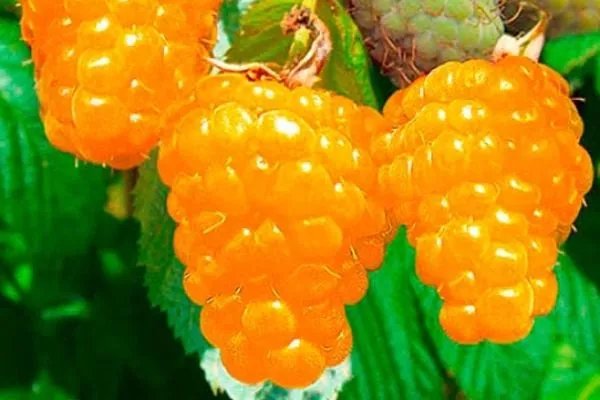
The Zolotye Domey raspberry is a remontant variety with golden-yellow berries, beautiful and productive. This raspberry easily becomes a garden centerpiece and a reliable source of fresh berries for the family table.
Description of the plant
The Zolotye Kupola raspberry bush is spreading, medium-sized, and well-branched, reaching a height of 1.3-1.5 m. The shoots are drooping, well-foliated, and evenly covered with hard thorns. The formation of replacement shoots is moderate—up to 5-6.
Berries, their taste and uses
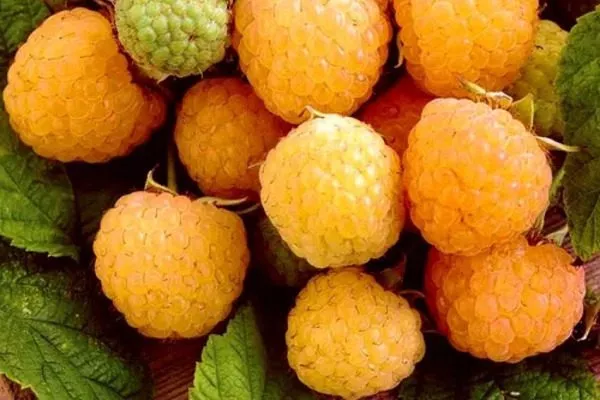
The Zolotye Domey variety produces large, round, and hemispherical berries. Ripe fruits are golden-yellow, and when overripe, they take on an apricot hue. The aroma is rich, raspberry-like, with vibrant fruity notes.
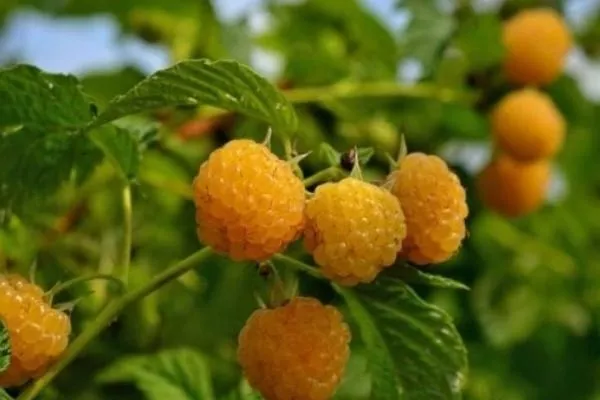
Each berry weighs between 3.7 and 4 grams. Individual specimens can reach 6 grams. The berries have short, easily detached stems. The berries are slightly pubescent. This variety is suitable for all purposes—the berries are eaten fresh, used to make fillings, various desserts, jams, compotes, and other winter preserves.
History of the variety's creation
The everbearing raspberry "Zolotye Domey" was developed by Russian breeders. This versatile variety was created at the All-Russian Scientific Research Institute of Horticulture and Fruit Growing. It was added to the State Register in 2004. It is hardy and suitable for cultivation in most regions of Russia.
Pros and cons
Raspberries with golden-yellow berries easily win the hearts of gardeners, and with so many advantages, it's not difficult. But before planting this variety in your garden, it's worth familiarizing yourself with all its advantages and disadvantages.
Choosing a location
The success of growing the Golden Domes variety depends largely on growing conditions—soil quality, lighting, groundwater levels, etc.
Requirements for a site for yellow raspberries:
- The location should be open and moderately lit. A south-facing plot with some midday shade is preferable. However, completely shaded areas are strictly contraindicated.
- Soils with neutral pH and a low water table are preferred. The optimal pH for this raspberry is 5.6-6.2.
- It is advisable to choose a location on a slight elevation to ensure good drainage of rain and melt water.
Soil preparation and planting
To ensure that the Golden Domes raspberry takes root successfully, grows and develops quickly, and then bears fruit successfully, it must be planted correctly.
Landing features:
- Before planting raspberries, add organic fertilizers, such as compost, to the soil. This improves the soil structure and enriches it with nutrients.
- Two weeks before planting, dig planting holes or trenches. The recommended depth is 50 cm. The distance between rows is 2 m. Add organic matter at a rate of 10 liters per square meter. Beforehand, add a 20 cm-thick drainage layer to the bottom.
- The recommended distance between adjacent seedlings is 60-90 cm. Planting raspberries closer together will prevent air circulation. To ensure stability, plant seedlings deep enough to reach the root system.
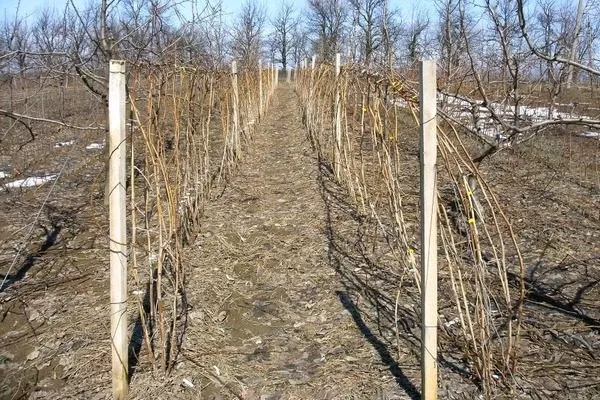
The planted seedlings are watered with settled water and tied to pre-installed supports. The soil around the raspberries is covered with humus or straw.
Features of cultivation
Raspberry growth and yield directly depend on proper care. Raspberry bushes require regular watering and fertilizing. They also require pruning, staking, preventative treatment, and, if necessary, curative treatment.
Features of caring for the Golden Domes raspberry:
- Watering. Due to their shallow roots, raspberries are sensitive to moisture stress. Water the raspberry patch as the soil dries out. The frequency and amount of watering increases during flowering, fruit ripening, and drought periods. The recommended watering rate is 30-40 liters per square meter.
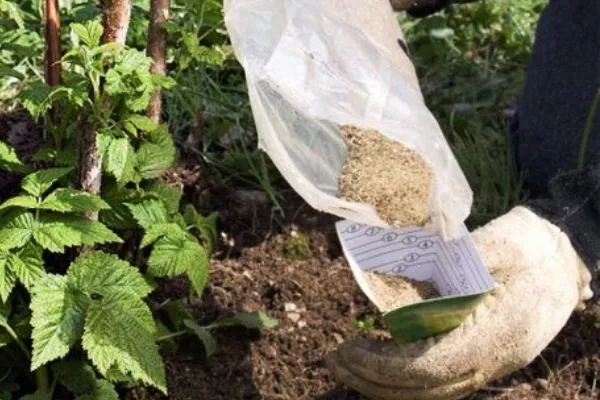
- Top dressing. They begin in the third year after planting. In the spring, compost, humus, or other organic matter is added. During the flowering and fruit set stages, the plants are fed with mineral fertilizers high in potassium and phosphorus.
In the fall, apply both organic and mineral fertilizers. Wood ash is recommended. - Preparing for winter. In the south, the Zolotye Domey raspberry does not require shelter, as it easily tolerates mild southern winters; its frost resistance is limited to -22°C. In regions with harsh winters, shoots are either cut back to the ground or bent to the ground, dug in, and covered with straw.
- Trimming. This agricultural practice is crucial for any everbearing variety. Autumn pruning is performed annually. It is mandatory. All two-year-old shoots that have borne fruit are removed. Only replacement shoots are left for the winter, shortened to 20-30 cm.
In the spring, sanitary pruning is performed. All diseased, dry, damaged, and weakened shoots are removed. Replacement shoots that have successfully survived the winter are pruned back to 20-30 cm. In the summer, the bushes are thinned to prevent overgrowth. Pruning young growth easily prevents many diseases. - Diseases and pests. This variety has a strong natural immunity developed through selective breeding. This everbearing raspberry is virtually immune to fungi, viruses, and harmful insects, especially with proper care and favorable growing conditions.
Despite good immunity, to avoid the risk of damage from diseases and pests, the bushes are regularly sprayed with fungicides and insecticides.
How to propagate?
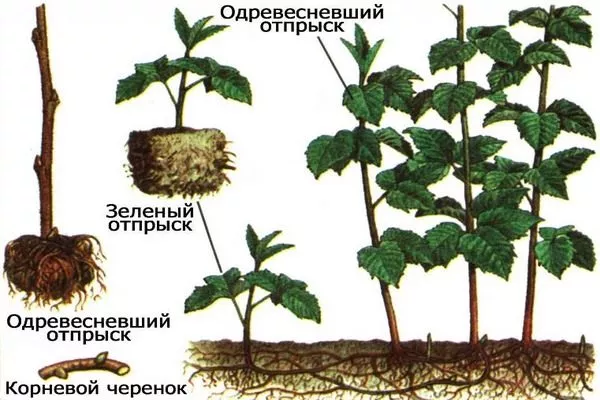
The Zolotye Domey raspberry propagates easily vegetatively. There are several propagation methods, and each gardener chooses the one they find easiest and/or most effective.
How to propagate raspberries:
- By dividing the bush. This is the simplest method. However, it's only suitable for mature, healthy, and strong plants. The bush is dug up and divided into sections, each containing a piece of rhizome and soil—no need to shake it off.
- Rooting cuttings. To help the cutting take root, it is placed in water or well-drained soil.
- By layering. A healthy, strong shoot is secured to the ground. Once it has rooted, it is separated and planted in its permanent location.
Harvesting and storage
Although the yellow-fruited Zolotye Domey variety is not prone to overripening, it's best to pick them as soon as they reach maturity. Harvest times depend on the weather; in the south, the berries are ready as early as early July, while in the center, they ripen in late summer.
It's best not to re-stow harvested raspberries; instead, store them immediately in the refrigerator or a specially equipped refrigeration unit. There's no need to wash the berries before storing them. At favorable temperatures, the berries will stay fresh and maintain their marketable appearance for up to a week.
Reviews
The Zolotye Kupola raspberry will appeal to anyone who believes raspberries can be yellow, not just red. This yellow-fruited, everbearing variety, distinguished by its long fruiting period, easily becomes a garden highlight and a reliable source of large, tasty, and aromatic berries.