
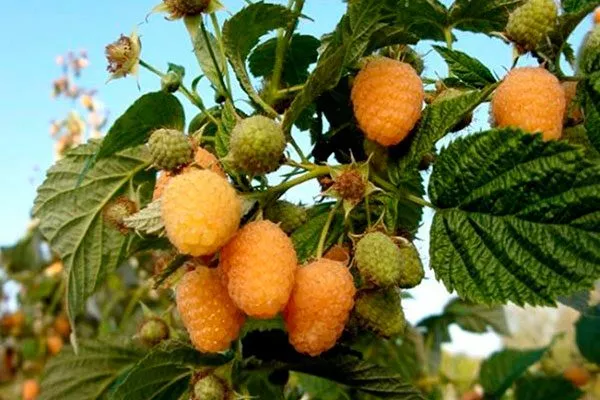
The Zolotaya Osen (Golden Autumn) raspberry is very popular among gardeners in our country. It thrives in sunny areas but is not very tolerant of frost or drought. With proper and timely care, it guarantees strong plants and a bountiful harvest.
Description of the variety
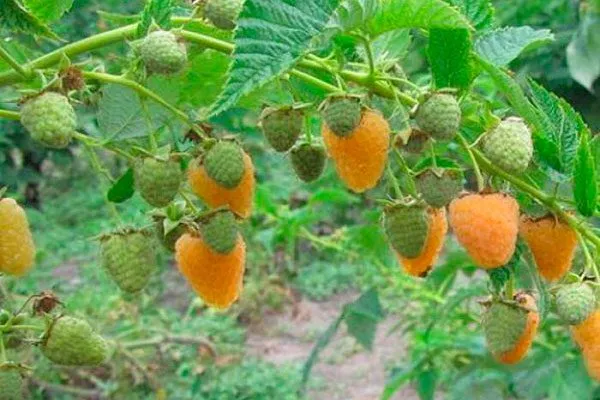
This is a remontant variety, meaning it bears fruit both in summer and fall. The first harvest is already reaped in the first year after planting. The variety's value lies in its ability to harvest from summer to fall.
Origin and distribution
Russian breeders S. Evdokimov and I. Kazakov developed this variety in 2001. It is recommended for cultivation throughout Russia. It is popular in many regions, including the central and southern regions, the Caucasus, and Crimea.
Specifications and Features
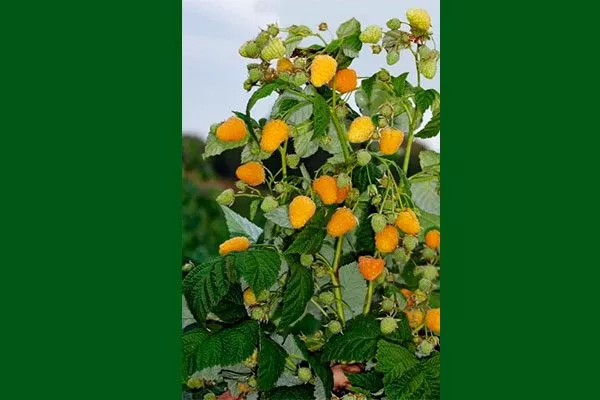
The bushes have a loose spread and medium growth vigour, reaching a height of 150 to 160 cm. This variety produces 5 to 7 new shoots per bush annually. During the first year, these shoots are light green, then turn brown with a whitish bloom and acquire a moderately drooping and fine structure.
Other characteristics of the variety:
- Spikes – located at the bottom of the bush, short and soft.
- Leaves - dark green, small, with a wrinkled structure.
- Fruits – Large, golden-yellow berries. They have an oval or conical shape and weigh on average up to 5 g, but can reach 7 g. Ripe berries are firm, ensuring a long shelf life and excellent transportability.
- Drupes – small and uniform.
- Taste - thin, sweet with a slight sourness.
- Aroma – weak.
- ✓ First year shoots are light green, which distinguishes them from other varieties.
- ✓ The presence of short and soft thorns only in the lower part of the bush.
This variety has universal use: the berries can be eaten fresh or used to prepare various preserves and desserts.
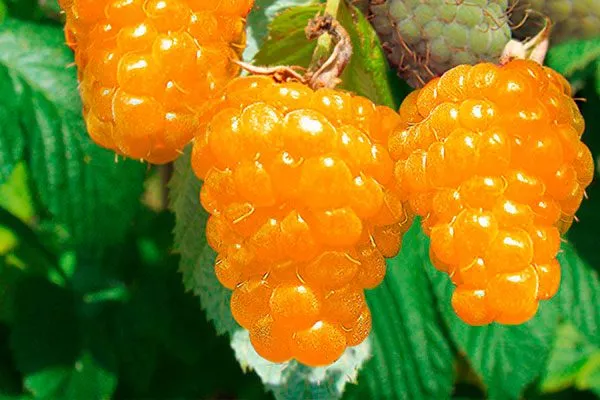
Its distinctive feature is its more pronounced sweetness compared to regular red varieties. It is hypoallergenic, making it safe for people with allergies, small children, and pregnant women. It does not cause skin redness or gastrointestinal upset.
Soil requirements
The plant prefers loose, fertile soil with good drainage. It's important that the soil be moderately moist but not waterlogged, as standing water can negatively affect the plant's roots.
- ✓ The pH level should be strictly within 5.5-6.5, the use of lime to adjust the pH is not recommended due to the sensitivity of the variety.
- ✓ The soil should have high drainage capacity, avoid areas with stagnant water even after heavy rains.
The optimal pH is between 5.5 and 6.5. Acidic or neutral soil is suitable for planting. High salt content in the soil is not recommended, as it can cause stress to the plants.
Advantages and disadvantages
This variety is popular among gardeners and vegetable growers due to its many advantages. These include:
Planting technology
Soak bare-root seedlings in water with a root growth stimulant for 2-3 days. Water closed-root plants generously and carefully remove them from the container.
Follow the recommendations:
- It takes root best and produces a good harvest in sunny areas with slightly moist soil.
- Make sure that the groundwater level is deeper than 1 m from the roots.
- The culture prefers places near the walls of a house or fence, where there are no drafts or strong winds.
- Good predecessors for this crop include mustard, lupine, rye, and peas. Avoid planting it after potatoes, tomatoes, and peppers.
When planting in groups, dig a hole and place no more than 4 plants per square meter. When planting in rows, space plants 70 cm apart, and 100-120 cm between rows. Prune tall seedlings to a height of 2-3 buds. After planting, firm the soil around the plants, water (5 liters of water per plant), and then mulch with peat.
Methods for planting Golden Autumn raspberries
There are several convenient methods for planting seedlings. Each has its own characteristics and advantages.
Trench method
This method is especially suitable for large-scale plantings. Follow these instructions:
- Dig trenches about 40-50 cm wide and about 40 cm deep.
- Add organic fertilizers such as compost or rotted manure to the bottom.
- Distribute the seedlings along the trench at a distance of 40-50 cm from each other.
- Smooth out the roots and carefully fill them with soil, gently compacting it around the roots.
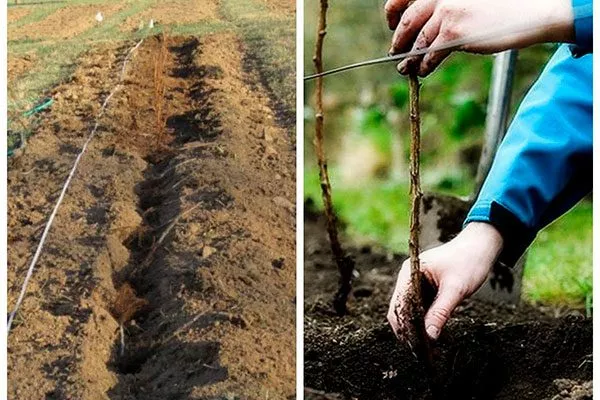
After the procedure, water thoroughly to remove air pockets and ensure better root-soil contact.
Separate planting holes
This method is suitable for smaller gardens or when there is a limited number of seedlings. Step-by-step algorithm:
- Dig holes about 40-50 cm deep and wide.
- Add organic fertilizer to the bottom of each hole.
- Place one seedling in each hole, smooth out the roots and fill them with soil, compacting it thoroughly around the roots.
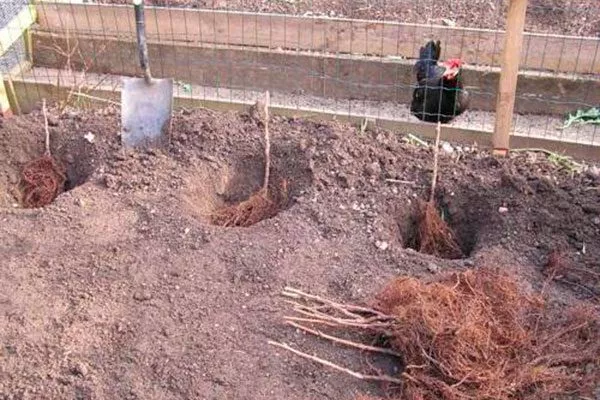
General tips
The best time to plant is early spring or fall, when the soil is sufficiently moist and not frozen. Be sure to mulch the soil around the seedlings to help retain moisture, reduce weed growth, and protect the roots from extreme temperatures.
Caring for Golden Autumn raspberries
Caring for this crop requires consistency and attention to several key aspects. Follow these simple agricultural practices:
- Watering. In drought conditions, the crop suffers from reduced yields, as the berries begin to dry out and fall off due to lack of moisture. Maintain the soil consistently moist. Avoid overwatering to prevent root rot.

Water the bushes with warm water, ensuring it penetrates to a depth of 30 cm. Water once a week, increasing the frequency during periods without rain. - Trimming. Perform this procedure twice a year. In the spring, begin pruning during bud formation to remove frozen and damaged branches.
Perform autumn pruning after the harvest: shorten two-year-old shoots to 5-7 cm from the ground. This helps preserve healthy branches and stimulates their growth in the following season. - Transplanting and thinning. Replant the bushes at the same time as thinning, leaving 8-9 healthy shoots per square meter. Remove or replant the remaining shoots. Complete replanting of raspberry bushes is recommended every 10 years, preferably in early spring or fall.
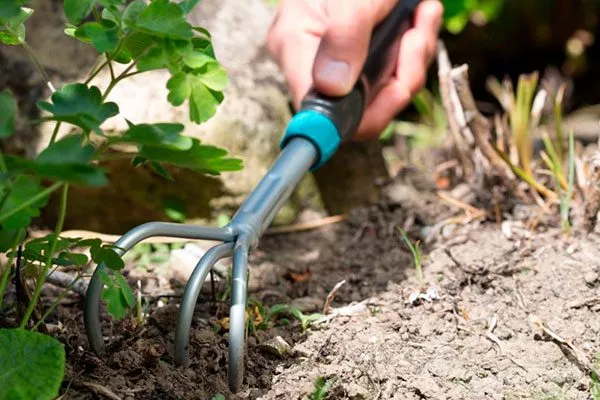
- Loosening. In the spring, before the buds swell, loosen the soil to a depth of 8 cm and remove weeds. This provides the roots with access to oxygen, stimulating active shoot growth.
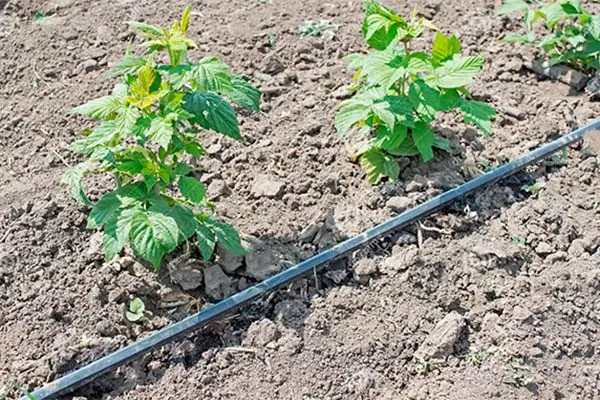
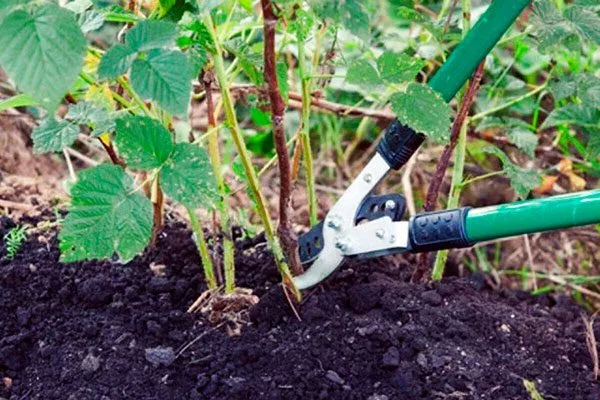
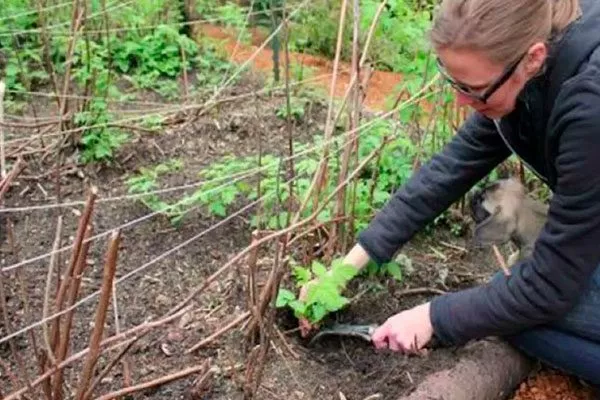
Fertilize your crops in several stages, starting in early spring and continuing through the end of the fruiting season. Here are the basic recommendations:
- In the spring. After the snow melts and the soil warms up a little, apply nitrogen fertilizer to stimulate the growth of shoots and leaves.
Use urea or ammonium nitrate at a rate of 20-30 g per 1 sq. m. Dilute the fertilizer in water and water it under the roots or scatter it over the soil surface. - During the budding period. Carry out the procedure in late spring or early summer. Use complex mineral fertilizers with high phosphorus and potassium content (such as nitroammophoska). Apply at a rate of 30-40 g per 1 sq. m.
- In summer. Apply fertilizer during the fruiting period and once every 2-3 weeks. At this stage, the plant requires organic fertilizers (mullein or bird droppings infusion) or mineral complexes with microelements.
Dilute the mullein infusion in a ratio of 1:10, and bird droppings in a ratio of 1:20. Water at the roots. - In autumn. Fertilize the bushes after harvesting, in late September or early October. Use potassium-phosphorus fertilizers to prepare for winter: 30-40 g of superphosphate and 20-30 g of potassium sulfate per square meter.
All these measures will help ensure healthy growth and abundant fruiting, promoting successful development on your site.
Shelter for the winter
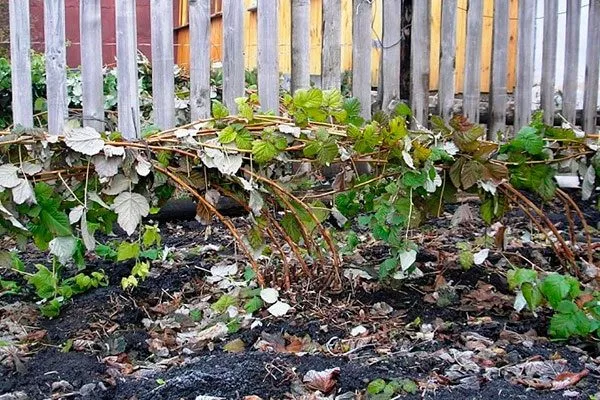
In northern regions, where winter temperatures reach -22 to -30°C, bushes require reliable protection. Bend the shoots to the ground and secure them with metal rods. Cover the roots with non-woven material, then cover with sawdust, hay, or leaves.
Diseases and pests, methods of control
The crop has low immunity to diseases and pests, so carry out preventative treatments in the spring, before bud break. Begin the second and third sprays before berry set.
Chemical treatments are not allowed during flowering. Perform preventative measures before flowering begins or postpone them until after flowering has finished.
For pest control, use insecticides:
- Brunka;
- Oleocuprite;
- Sulfazin.
Use fungicides against fungal diseases:
- Operkot;
- Inva-Vir;
- Calypso;
- Karate;
- Kung Fu.
How to propagate yellow raspberry Golden Autumn?
Propagation can be accomplished using various methods, the most popular of which are root suckers, cuttings, and division. Below is a detailed description of each of these methods.
Propagation by root suckers
This is the simplest and most common method of propagation. Follow these instructions:
- In early spring or autumn, select healthy young shoots (offshoots) that have grown some distance from the mother bush.
- Make sure they have a well-developed root system of their own.
- Carefully dig up the shoots, being careful not to damage the roots.
- Replant them in a new location, providing good watering and mulching to maintain moisture.
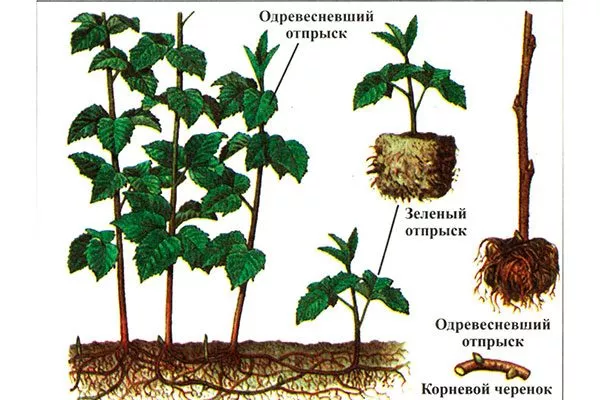
This method allows you to obtain new plants without the need for special skills or equipment, and is well suited for beginning gardeners.
Cuttings
This method is ideal for propagation aimed at obtaining large quantities from a small number of plants. Step-by-step algorithm:
- Take cuttings in early spring, when shoots are just beginning to grow, or in late summer.
- Select healthy shoots and cut them into 10-15 cm long pieces, each with several buds.
- Root in a bucket of damp sand or directly in the soil in the garden bed. Covering the plant with plastic will help maintain high humidity and temperature, promoting successful rooting.
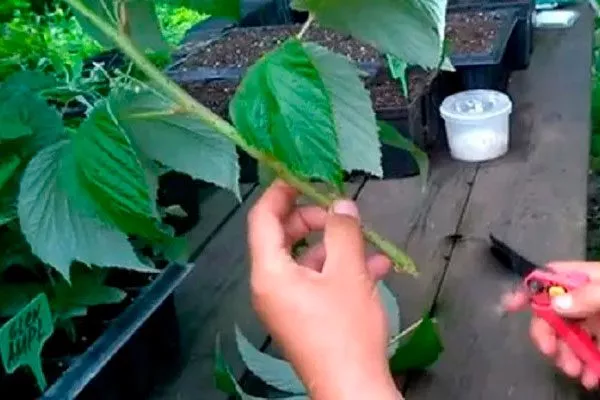
This method allows gardeners to significantly increase the number of bushes per season using available materials and simple techniques.
Dividing the bush
This method is suitable for mature, well-grown plants. Divide them in early spring or after fruiting has finished in the fall. Carefully dig up the entire bush and divide it into several sections, each containing a portion of the roots and several shoots.
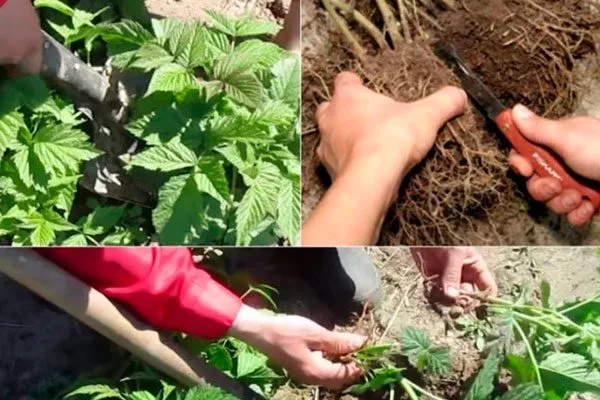
Replant the divided sections in a new location. This method allows you to rejuvenate old and overgrown plants, providing them with better conditions for growth and fruiting in the new location.
Gardeners' reviews
The Golden Autumn raspberry is a true symbol of confidence in a successful harvest and the joy of fresh, juicy berries. It attracts the attention of both novice and experienced gardeners. With proper care and attention to detail, you can enjoy its magnificent fruits from spring until frost.