
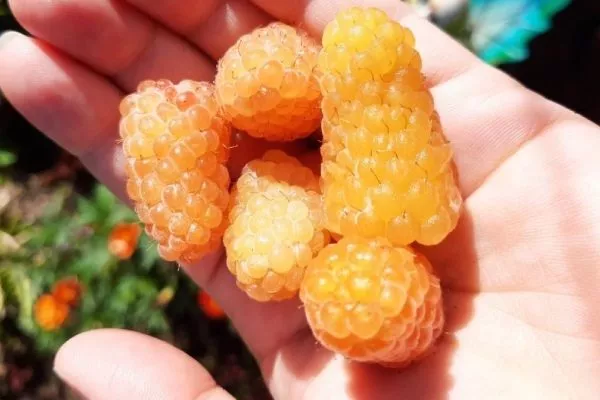
Yellow Giant is the name of a popular everbearing large-fruited raspberry variety. Domestic gardeners have come to appreciate it for its early maturity, attractive appearance, and remarkable flavor, producing berries with a beautiful amber color, as well as its low maintenance requirements. By growing it in your garden, you'll be able to harvest twice a season.
History of the variety's development
The Yellow Giant was born in 1979 thanks to the efforts of Professor V.V. Kichin, an employee of the Institute of Horticulture at the All-Russian Scientific Research Institute of Horticulture and Seed Breeding (VSTISP) in Moscow. To develop a high-yielding and winter-hardy raspberry variety, he crossed Maroseyka with Ivanovskaya. This achievement was added to the Russian Federation State Register in 2008.
Introduction to the variety
This berry variety is renowned for its excellent technical characteristics. An experienced gardener can easily identify it by sight, just by looking at the bushes and fruit.
External characteristics of the bush and berries, their taste and purpose
Plants of this variety are vigorous, strong-growing, and spreading. Their root systems are well developed. Over the course of a season, they produce 8-10 strong shoots and 6-7 root suckers. The Yellow Giant bush also has other distinctive features:
- tall - from 1.5 m to 2.5 m;
- thickened and strong shoots of medium length, distinguished by two- to four-order branching;
- thorns: few in number, green in color, medium in size, covering the shoot along its entire length;
- foliage: medium-sized, corrugated with a serrated edge, dark green;
- flowers: numerous, large, white, bisexual (the variety is self-fertile, does not require cross-pollination).
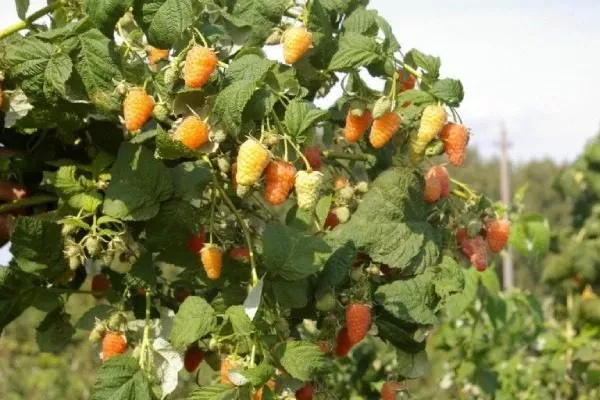
Each fruiting branch produces 2 dozen or more raspberries with the following characteristics:
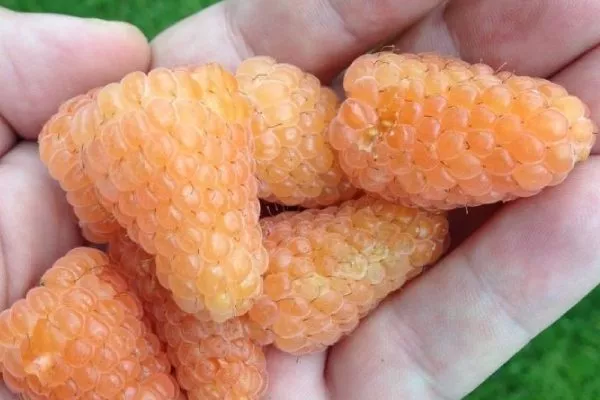
- large size (fruit length - from 2 cm);
- weight - 5-10 g;
- shape close to round-conical;
- yellow color, which becomes darker as the berry ripens;
- slightly pubescent skin with a coating;
- consists of homogeneous drupes of medium size, securely fastened together;
- pulp: juicy and aromatic, melts in the mouth, containing a small number of small seeds.
The Yellow Giant is renowned for its rich raspberry aroma and remarkable flavor, dominated by sugary sweetness and a hint of tartness. It has a tasting score of 5.
This variety of raspberry is not only delicious but also healthy. Its pulp is rich in valuable nutrients:
- pectins;
- fruit acids;
- minerals;
- tannins;
- vitamins (B1, B2, B6, C, E, PP).
The Yellow Giant harvest has a universal purpose:
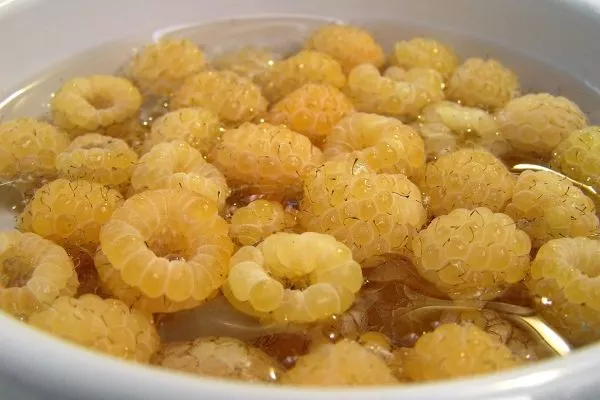
- the fruits are eaten fresh;
- added to desserts;
- they make compote, jam, preserves, and marmalade from them;
- they make liqueur;
- canned;
- dry.
Ripening time
The first berries appear on the bushes the same year they are planted. If you plant them in the spring, you'll be able to enjoy raspberries in late summer. You can harvest up to 0.5 kg of fruit from a single shoot. Once fully ripe, they remain attached to the branches for a long time.
Raspberry bushes bloom in June. The berries ripen early. Fruiting periods:
- beginning of July – ripening of the first berries;
- starting from the last ten days of July until mid-August - mass harvesting of fruits;
- early autumn – obtaining a small second harvest from the tops of annual shoots.
Growing regions
The Yellow Giant is listed in the Russian Federation State Register as a berry crop intended for cultivation in the Northwestern region. The variety is cultivated in the Moscow region, in areas with harsh climates, and in the south. It thrives everywhere thanks to its excellent drought and frost resistance.
Productivity
This raspberry variety is renowned for its consistent yield. The average yield is 5 kg per bush. With enhanced cultivation, this can increase to 8 kg.
Frost resistance and preparation for winter
This variety has excellent winter hardiness: the bushes can withstand temperatures down to -30°C. Zones 3-4. Young plants, as well as bushes growing in regions with harsh winters, require frost protection.
Prepare your raspberry patch for winter as follows:
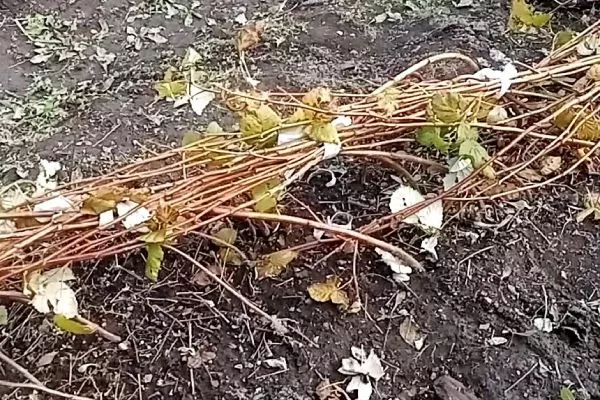
- with the onset of autumn, cut the shoots to a height of 2 m;
- bend them to the ground;
- cover with hay;
- Cover the shoots with snow.
Basics of Growing
The Yellow Giant is renowned for its low-maintenance nature. Simply following standard gardening practices will ensure its bushes remain disease-free and produce abundant fruit.
Features of planting operations
When choosing a location for planting raspberries, choose a site with the following characteristics:
- sunny or in light shade;
- protected from gusty winds and drafts;
- with a flat surface;
- without close groundwater table;
- with well-drained, fertile, loose soil, slightly acidic or neutral.
- ✓ Soil pH should be between 5.5-6.5 for optimal growth.
- ✓ The soil should have high moisture capacity, but at the same time be well drained.
Plant Yellow Giant in spring or fall in one of two ways:
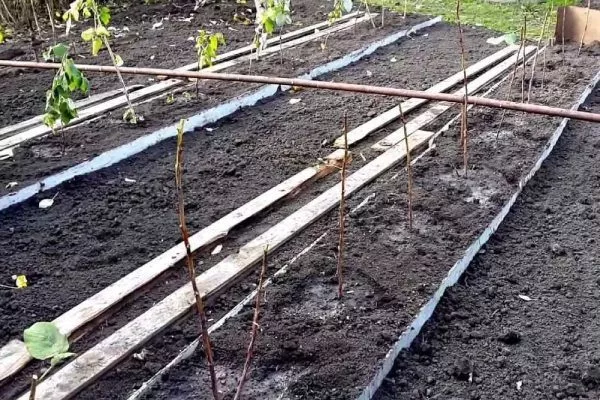
- trench (with this method the bushes are arranged in rows);
- nesting (each bush is planted in a separate hole and tied to a support in the form of a peg).
Trench planting is preferable. Follow this pattern:
- ditch width - 0.5-0.6 m;
- depth - 0.4 m;
- length - determined by the length of the area allocated for the raspberry patch;
- distance between rows - 1.5-2 m;
- the distance between bushes when planting is 0.7-0.8 m.
Line the bottom of the trench with compost. Add a 10 cm layer of fertilizer. When planting raspberry bushes, try to keep their root collar level with the soil surface.
Trimming
An important part of caring for yellow-fruited raspberries is pruning. Follow these guidelines:
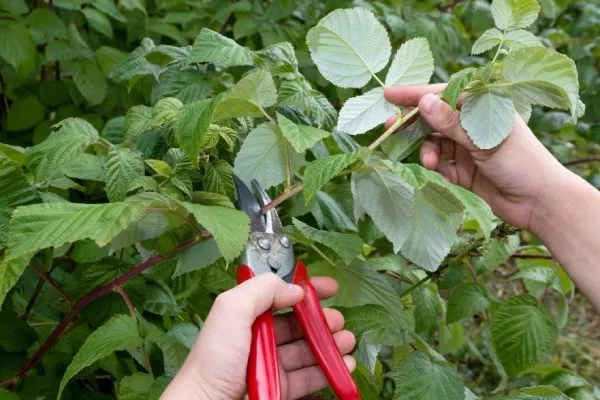
- carry out sanitary pruning, removing broken, diseased, dry shoots;
- pinch off the growth points on all shoots in the spring to encourage stronger branching of the bush and increase the yield;
- After harvesting the first crop, cut off the parts of the bush that have already produced berries (this measure will promote a second wave of fruiting on new shoots);
- In the fall, after the leaves have fallen, cut off all shoots, unless you are growing the variety as a remontant one (in this case, only one-year-old branches will bear fruit once per season).
Watering and fertilizing
Water the Yellow Giant raspberry at least 5 times during the season:
- at the beginning of the growing season;
- during intensive growth of the bush;
- during its flowering period;
- at the moment of formation of the fruit ovary;
- after harvesting.
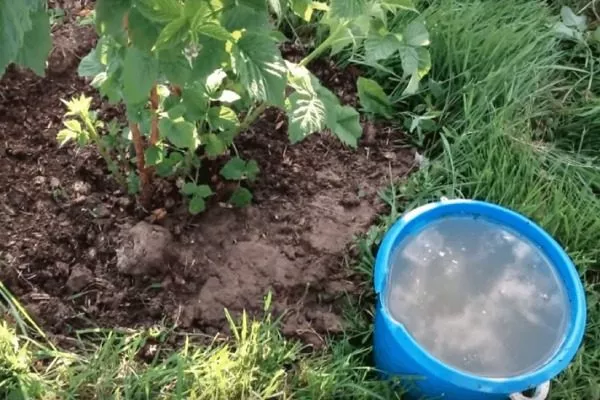
If the summer is rainy, reduce watering to 3 times a day. Use 30 to 50 liters of water per plant. Water the raspberries at the roots, avoiding getting wet on the foliage.
To ensure proper development of the berry crop and its abundant fruiting, do not forget to feed the raspberry bush:
- In the fall, before planting yellow-fruited bushes, enrich the soil with rotted manure. Apply 25 kg per square meter. Also add superphosphate (60 g per square meter).
- During the growing season, water the raspberry bush several times with a fertilizer solution rich in manganese, potassium, boron, iron, and phosphorus. Feed the raspberry bush at least three times with wood ash.
- Mulch the area around the trunks of your bushes with humus. This will provide additional nutrition for the plant.
Prevention and protection from pests and diseases
The Yellow Giant raspberry rarely suffers from diseases or pests. However, if agricultural practices are not followed, the plant is susceptible to infection due to adverse weather conditions or unsuitable growing conditions:
- chlorosis;
- curliness;
- yellow mosaic.
Raspberry disease manifests itself as yellowing, deformed foliage, and dieback. This problem leads to reduced yields.
If the care is insufficient or of poor quality, the Yellow Giant bushes suffer from insect infestations:
- strawberry-raspberry weevil;
- raspberry aphid;
- raspberry bud moth.
Parasites feast on juicy yellow fruits, spoil them, and reduce the productivity of the crop.
To prevent the development of diseases and pest attacks, adhere to preventative measures:
- do not neglect regular fertilizing of bushes;
- do not allow the soil to become over-watered or the area to become waterlogged;
- remove weeds;
- prune the shrub regularly;
- loosen the soil underneath it;
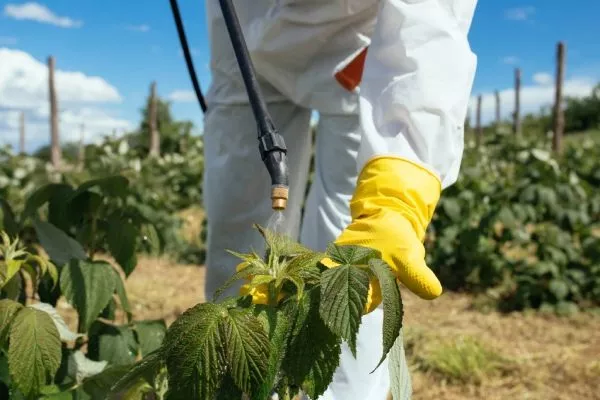
- Carry out preventive treatments of raspberry plantings with purchased fungicides (Brunka, Bordeaux mixture 3%) and insecticides (Karbofos, Iskra, Fufanon).
Shelter for the winter
In areas with mild climates and abundant snow cover, the plant doesn't need to be covered. Covering the soil under the bushes with humus is sufficient.
In areas with harsh winters, provide raspberry bushes with shelter:
- If you leave shoots for the next season in the fall, bend them to the ground, cover them with hay and non-woven material;
- If you prune all the shoots after the leaves have fallen, generously sprinkle the stumps with sawdust and cover them with agrofibre.
Harvesting
Pick berries from the bushes as they ripen. Place a non-woven cloth under the raspberries to catch fallen fruit. Collect raspberries in small containers to avoid crushing or deforming them.
Reproduction
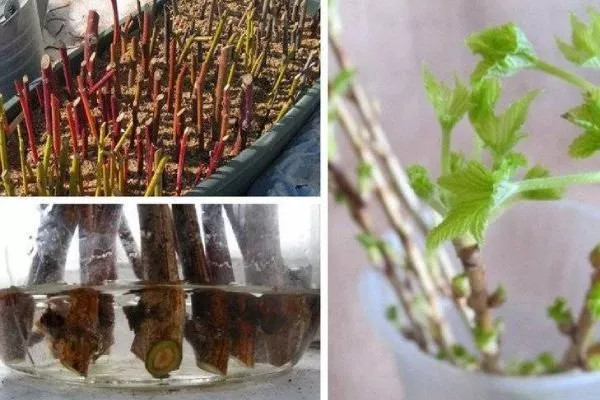
Propagate this raspberry variety by cuttings. Use root suckers to obtain planting material. Follow these steps:
- Take cuttings from the green upper part and the bleached lower part. Collect them in the summer during the period of intensive new shoot and root growth. The leaves on the cuttings should not be fully formed.
- Trim the cutting and plant it in a mixture of peat and river sand (1:1) to a depth of 5–10 cm.
- Cover the planting with plastic film. Remove it periodically to prevent overheating and allow air to reach the plant. Rooting will occur within 20-25 days at a temperature of +25°C.
- After a month, transplant the cuttings into open ground.
Advantages and disadvantages
The yellow giant is loved by summer residents for its many advantages:
This variety of garden culture is not without its disadvantages:
Review of reviews
The Yellow Giant is a wonderful variety for growing in a garden. It's resistant to cold, disease, and pests. The berries are not only beautiful and delicious, but also healthy. And the care for this variety is very standard.